
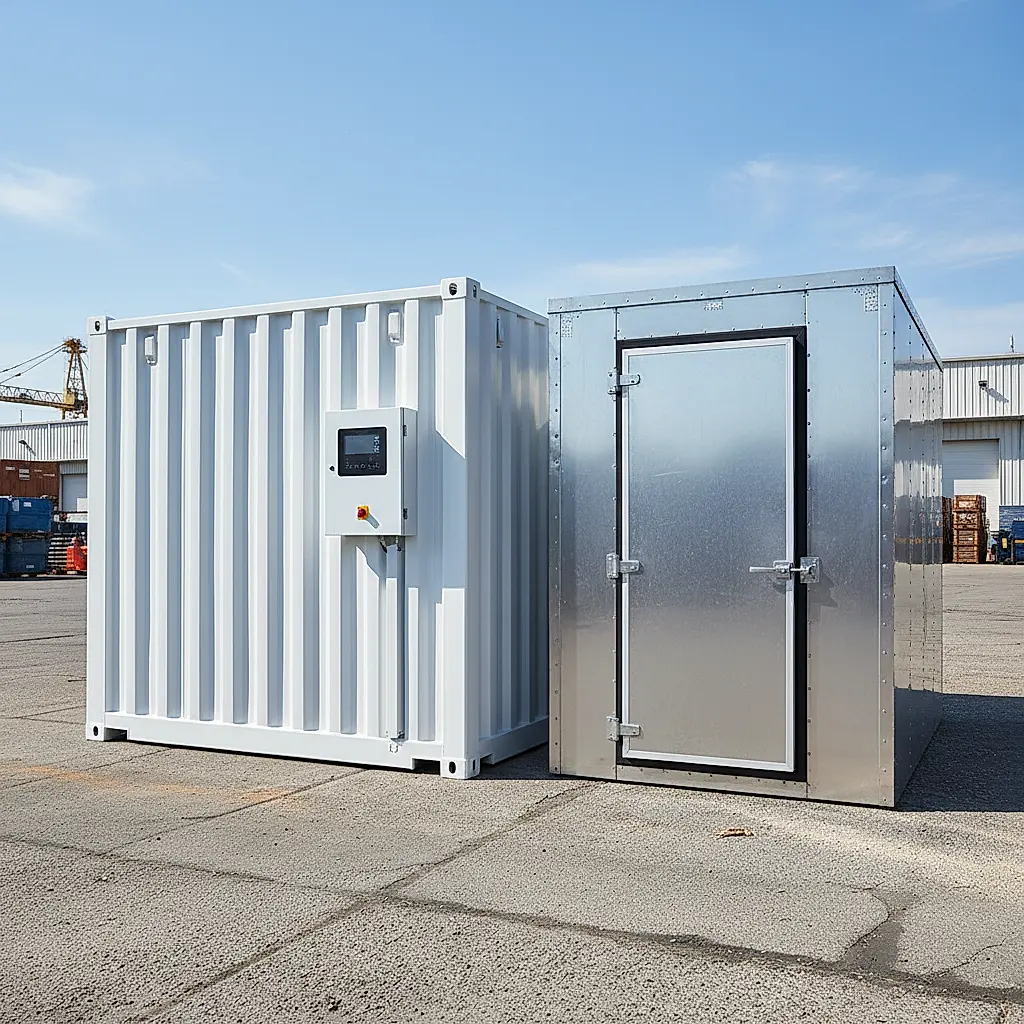
Compare a 20ft reefer container and a walk-in cooler for commercial cold storage. Learn the cost factors, site needs, and questions to ask before you buy.
Start With the Real Decision: Portable vs. Built-In Cold Storage
If you need reliable cold storage for a business, farm, food operation, or special project, two options often come up: a 20ft refrigerated shipping container (often called a reefer) and a walk-in cooler. Both can hold temperature-controlled goods, but they are different products with different cost structures, site requirements, and timelines.
This guide walks through the practical differences so you can ask better questions, compare quotes fairly, and decide which path fits your operation. It does not quote prices, because pricing changes with condition, equipment, freight, and local labor. For current availability and pricing, confirm details with the Newport team.
How a 20ft Reefer Container Works
A 20ft reefer is a shipping container built with insulated walls, a self-contained refrigeration unit, and a controlled interior space. Nominal dimensions are roughly 20 feet long and 8 feet wide, with standard or high-cube height options. Exact interior dimensions, weight limits, and temperature ranges vary by unit, so check the individual listing and the CSC plate for the specific container you are considering.
Key traits
- Self-contained refrigeration: The unit is mounted on the container and is designed to hold a set temperature range.
- Portable in principle: It can be moved by truck or crane, but moving it requires planning and equipment.
- Weather-resistant shell: The container structure is built for outdoor storage.
- Used and new options: Condition, hours on the refrigeration unit, and maintenance history matter a great deal.
What to verify before buying
- The operating temperature range you actually need
- Power requirements: voltage, phase, and amperage
- Whether the unit has been tested and how recently
- Door seals, gaskets, and interior condition
- Any needed repairs or parts availability
How a Walk-In Cooler Works
A walk-in cooler is a built-in room, typically assembled on site from insulated panels and a separate refrigeration system. It is designed around a specific floor plan, door location, and shelving layout. Because it is built in place, it can be tailored to a building, but it is not easily relocated.
Key traits
- Custom footprint: Panels and doors are configured to fit your space.
- Separate refrigeration: The condensing unit and evaporator are specified for your load and room size.
- Indoor installation: Usually installed inside a building with proper drainage, ventilation, and electrical service.
- Permitting and trades: Local building, electrical, and mechanical requirements may apply.
What to verify before buying
- Local permit and inspection requirements
- Electrical service capacity at the site
- Floor and drainage conditions
- Insulation thickness and panel rating for your climate and use
- Service and warranty terms from the installer
Comparing Cost Factors Without Guesswork
The purchase price is only one part of the total cost. A fair comparison looks at the whole picture over time.
Upfront costs
- Reefer: Container price, refrigeration unit condition, any repairs, delivery, and site preparation.
- Walk-in cooler: Panels, doors, refrigeration equipment, installation labor, electrical work, and permits.
Ongoing costs
- Reefer: Electricity to run the unit, maintenance, and parts. Older units may use more power.
- Walk-in cooler: Electricity, maintenance, and occasional repairs to panels or equipment.
Site and infrastructure costs
- Reefer: May need a level pad, power run, and access for a truck or crane. Confirm site access and delivery requirements with the Newport team.
- Walk-in cooler: Needs interior space, proper electrical service, and often building modifications.
Time costs
- Reefer: Can be delivered as a unit, but lead time depends on availability and transport.
- Walk-in cooler: Construction and installation can take weeks or longer depending on permits and trades.
Because these numbers vary so much by location and project, ask for itemized quotes rather than a single lump sum. That makes it easier to see what you are actually paying for.
Site Planning: What Each Option Needs
Site planning is where many projects succeed or stall. Neither option is automatically easier; each has its own constraints.
For a reefer container
- A level, stable surface that can support the loaded container
- Clearance for the refrigeration unit and airflow
- A power source that matches the unit's requirements
- Access for the delivery vehicle and any lifting equipment
- Local rules about outdoor equipment and noise
For a walk-in cooler
- Interior floor space with room for doors and service access
- Electrical service sized for the refrigeration load
- Drainage or condensate management
- Fire, building, and health department considerations if applicable
- A plan for future expansion or relocation
If you are unsure which constraints apply to your site, ask before you buy. A short conversation can prevent an expensive mistake.
When a 20ft Reefer May Be the Better Fit
A reefer can make sense when:
- You need cold storage but do not have a suitable building interior.
- You want a unit that can potentially be relocated later.
- You need to add capacity quickly and can accommodate delivery access.
- Your operation can support the power and maintenance needs of a refrigerated container.
It is not a magic solution. If your site cannot provide power or access, a reefer may not work without additional investment.
When a Walk-In Cooler May Be the Better Fit
A walk-in cooler can make sense when:
- You already have interior space and electrical service.
- You want a layout tailored to your workflow and shelving.
- You prefer equipment that is integrated into your building.
- You are prepared for permitting and installation timelines.
Again, confirm local requirements with your authority having jurisdiction. Do not assume that one option avoids permits or inspections.
Questions to Ask Before You Commit
Use this checklist to compare quotes and options:
- What exact temperature range do I need, and can this unit hold it in my climate?
- What are the power requirements, and does my site meet them?
- What is the condition and service history of the refrigeration unit?
- What maintenance is recommended, and who can service it locally?
- What are the delivery access requirements, and is my site ready?
- What permits, inspections, or local rules apply?
- What is included in the quote, and what is excluded?
- What is the expected lifespan and replacement plan?
If a seller cannot answer these questions clearly, that is a signal to slow down.
Understanding ROI Without Overpromising
Return on investment depends on your use case, local energy costs, maintenance, and how long you keep the asset. A reefer that runs continuously will have different operating costs than one used seasonally. A walk-in cooler built into a building may add value to the property, but it is not easily removed.
Instead of relying on a generic ROI claim, build a simple model:
- Estimate your upfront cost from itemized quotes.
- Estimate monthly electricity and maintenance.
- Estimate how many years you expect to use it.
- Compare total cost of ownership, not just purchase price.
Then decide which option gives you the flexibility and reliability you need.
Frequently Asked Questions
Is a 20ft reefer container cheaper than a walk-in cooler?
It depends on the unit, its condition, your site, and local labor. A used reefer may have a lower upfront cost than a built walk-in cooler, but delivery, power, and maintenance can change the math. Ask for itemized quotes for both options and compare total cost of ownership.
Can I use a reefer container indoors?
Reefers are designed for outdoor use, but indoor placement may be possible if ventilation, power, and clearance requirements are met. Check with the Newport team and local officials before planning an indoor installation.
Do I need a permit for a reefer or a walk-in cooler?
Permit requirements vary by location and use. Do not assume either option is exempt. Contact your local building, electrical, and health departments to confirm what applies to your project.
How much power does a 20ft reefer need?
Power requirements vary by unit and operating temperature. Check the specific listing and the unit's data plate, and have a qualified electrician confirm your site can support it.
Can a reefer container be moved later?
Yes, in principle, but moving a loaded or unloaded reefer requires planning, equipment, and a suitable new site. Confirm logistics and costs with the Newport team before you rely on relocation.
Next Steps
Start by defining your temperature range, space, and power availability. Then compare specific units and quotes rather than general claims.
We are happy to help you confirm listing details, availability, pricing, site access, and delivery requirements so you can make a confident decision.
Plan the next step
Confirm the container and the delivery plan.
Browse current listings, then speak with the Newport team to verify the unit, total pricing, site access, and delivery requirements before payment.