
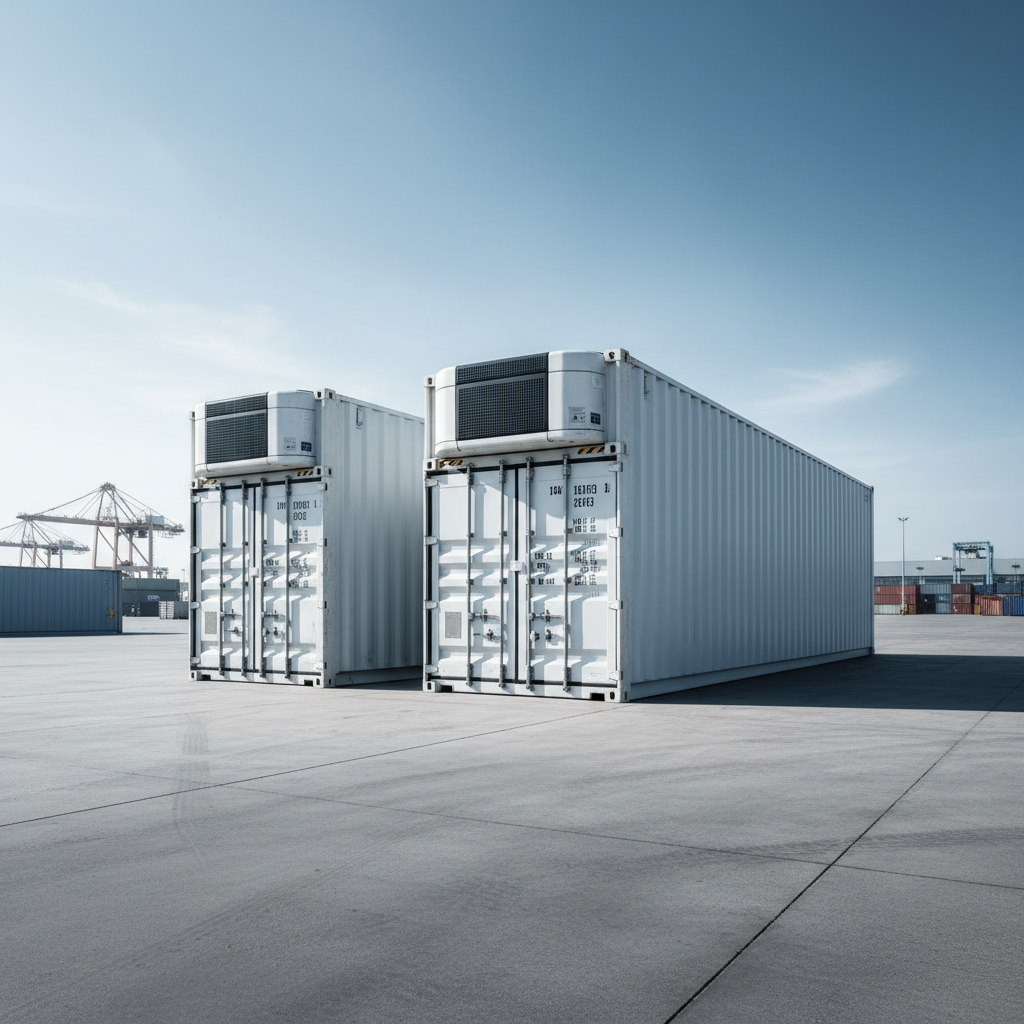
Compare 20ft and 40ft refrigerated containers for capacity, power needs, site fit, and total cost factors. Get practical guidance before you buy.
Understanding Reefer Containers Before You Compare Sizes
Refrigerated shipping containers, often called reefers, are insulated containers with an integrated refrigeration unit. They are used to move or store temperature-sensitive goods such as produce, frozen foods, pharmaceuticals, and some industrial materials. If you are weighing a 20ft reefer against a 40ft reefer, the decision usually comes down to how much you need to hold, what temperature range you need to maintain, where the unit will sit, and how you will power it.
This article focuses on the practical differences between the two common sizes. It does not quote prices, because pricing changes with condition, age, refrigerant type, availability, and delivery location. For current listings and pricing, always check the individual product page or speak with the Newport team.
Size, Capacity, and Layout Differences
External and internal dimensions
A nominal 20ft container is about 20 feet long, 8 feet wide, and 8 feet 6 inches high in standard height, with high-cube versions slightly taller. A nominal 40ft container is about 40 feet long and the same approximate width, also available in standard and high-cube heights. Reefer containers typically have thicker walls and ceiling insulation than dry containers, so internal dimensions are smaller than a same-length dry container.
Exact internal dimensions vary by manufacturer and model. Do not rely on general numbers for planning a racking system, pallet layout, or product stack. Check the individual listing and the container's CSC plate or data plate for the specific unit you are considering.
Usable volume and pallet positions
A 40ft reefer generally holds roughly twice the usable volume of a 20ft reefer, but the exact number of pallets or cartons depends on pallet size, stacking height, and whether you need aisle space for loading and inspection. Common planning questions include:
- How many pallets do you need to store at once?
- Will you load with a forklift, pallet jack, or by hand?
- Do you need to keep a clear aisle for inventory access?
- Are you storing the same product continuously, or rotating stock?
If your volume is modest or seasonal, a 20ft reefer may be sufficient. If you expect to scale up or need to hold multiple product lines at once, a 40ft reefer can reduce the number of units and power connections you need on site.
Door openings and access
Reefer doors are heavy and include seals and hardware that differ from dry containers. Door opening dimensions matter if you plan to move pallets in and out with equipment. Confirm the door opening width and height for the exact model, and make sure your loading equipment can fit through it safely.
Power, Temperature, and Operating Considerations
Power supply requirements
Reefer units run on electricity and typically require a dedicated power source with the correct voltage, amperage, and plug configuration. Requirements vary widely by unit and by the temperature set point. A unit holding frozen goods may run its compressor more often than one holding chilled goods, which affects power draw.
Before you buy, ask:
- What voltage and phase does the unit require?
- What plug or receptacle type is needed?
- Does the unit require a generator, or can it connect to grid power?
- Will your electrical panel support the load?
These are site-specific questions. A licensed electrician should evaluate your setup. The Newport team can tell you what the listing specifies, but only your electrician can confirm what your site can safely support.
Temperature range and product needs
Reefers are designed to hold temperature, not to rapidly pull down a large load of warm product. If you load warm goods, the unit may struggle to reach the set point quickly. Pre-cooling the container and loading pre-chilled product is a common practice in commercial cold storage.
Different products need different temperature ranges. Fresh produce, frozen foods, and pharmaceuticals each have their own requirements. Confirm the unit's achievable temperature range and discuss your product with a qualified professional if you are unsure.
Defrost cycles and humidity
Reefer units cycle through defrost periods, which can temporarily affect temperature and humidity inside the box. If you store products sensitive to moisture or temperature swings, ask about the unit's defrost settings and whether adjustments are possible. Some units offer humidity control, but not all do.
Cost Factors Beyond the Purchase Price
What affects the price of a reefer container
Reefer pricing depends on several variables:
- Condition and age: New, used, and refurbished units carry different price points.
- Refrigerant type: Some refrigerants are being phased down under environmental regulations, which can affect availability and service costs.
- Unit brand and model: Carrier, Thermo King, and other brands have different parts availability and service networks.
- Size: A 40ft reefer generally costs more than a 20ft reefer in similar condition, but the gap varies.
- Location and availability: Units closer to you may cost less to deliver, but local inventory fluctuates.
Because these factors change, no article can give you a reliable current price. Check the specific listing or contact Newport for a quote.
Delivery and site access
Delivery costs depend on distance, site access, and the equipment needed to place the container. A 40ft container requires more space to maneuver than a 20ft container. Narrow gates, low branches, soft ground, and tight turns can all affect whether a standard delivery truck can place the unit where you want it.
Before scheduling delivery, walk your site and note:
- Gate width and height
- Overhead wires or branches
- Ground conditions and slope
- Space to open container doors
- Room for the delivery truck to turn around
Share these details with the Newport team so they can advise on delivery options. Do not assume that a 20ft container will avoid permitting requirements or that a 40ft container will require them. Permit rules vary by jurisdiction and intended use. Check with your local authority.
Power connection costs
If you do not already have a suitable power source at the container location, you may need to run conduit, install a receptacle, or set up a generator. These costs can be significant and are separate from the container price. Get an electrician's estimate before you commit to a location.
Maintenance and service
Reefer units have compressors, fans, coils, and controls that require periodic service. Ask about the service history of any used unit, and confirm whether parts and qualified technicians are available in your area. A unit that is inexpensive to buy may be costly to maintain if service is hard to find.
Choosing Between 20ft and 40ft: A Decision Framework
When a 20ft reefer may make sense
- Your storage volume is limited or seasonal.
- Your site has tight access or limited space for a larger container.
- You want to minimize the footprint and power load.
- You need a single temperature zone for a focused product line.
When a 40ft reefer may make sense
- You need to store a larger volume or multiple product lines.
- You want to reduce the number of units and power connections on site.
- Your site has room for a longer container and delivery access.
- You expect to grow your storage needs over time.
Questions to ask before you decide
- What is the exact internal volume I need, and how does that translate to pallets or cartons?
- What temperature range must I maintain, and can the unit hold it under my expected load?
- What power is available at my site, and what will it cost to connect?
- Can a delivery truck access my site and place the container safely?
- What local permits or rules apply to my intended use?
- What is the service history, and who will maintain the unit?
Write down your answers and compare them against the specifications in the listing. If something is unclear, ask Newport before you buy.
Frequently Asked Questions
Is a 40ft reefer always more expensive than a 20ft reefer?
Not always. In similar condition, a 40ft reefer generally costs more because it contains more materials and a larger box. However, used and refurbished pricing varies with age, brand, refrigerant type, and availability. A well-priced 40ft unit could cost less than a newer or specialty 20ft unit. Check current listings and confirm pricing with Newport.
Can I run a reefer container on a standard household outlet?
Reefer units typically require more power than a standard household circuit provides. Voltage, amperage, and plug type vary by model. Do not attempt to connect a reefer without confirming the electrical requirements and having a licensed electrician evaluate your supply. The Newport team can share what the listing specifies, but your electrician should confirm site readiness.
Do I need a permit for a reefer container on my property?
Permit requirements depend on your jurisdiction, zoning, and how you plan to use the container. Some areas treat containers as temporary storage, while others require permits for permanent placement or for refrigeration equipment. Contact your local planning or building department for guidance. Do not assume that container size determines whether a permit is needed.
How much space do I need for delivery?
Delivery space depends on the truck, the container size, and your site layout. A 40ft container needs a longer approach and more turning room than a 20ft container. Measure gates, note overhead obstacles, and check ground conditions. Share site details with Newport so they can help you plan a delivery that works.
What should I check on a used reefer before buying?
Ask about the unit's service history, runtime hours, refrigerant type, and any recent repairs. Inspect the doors, seals, insulation, and refrigeration unit for damage or corrosion. Confirm that the temperature controls function and that the unit holds temperature. If you are not familiar with reefer systems, consider having a qualified technician inspect it. The listing and CSC plate provide specific details for each unit.
Next Steps
If you are ready to compare current inventory, start by reviewing the refrigerated container listings on our shop page. Pay attention to the size, condition, and specifications shown for each unit. When you have questions about power requirements, delivery access, or which size fits your project, reach out to the Newport team. We can help you understand what is available and what to confirm before you buy.
Always confirm listing details, availability, pricing, site access, and delivery requirements with the Newport team before making a purchase decision.
Plan the next step
Confirm the container and the delivery plan.
Browse current listings, then speak with the Newport team to verify the unit, total pricing, site access, and delivery requirements before payment.