
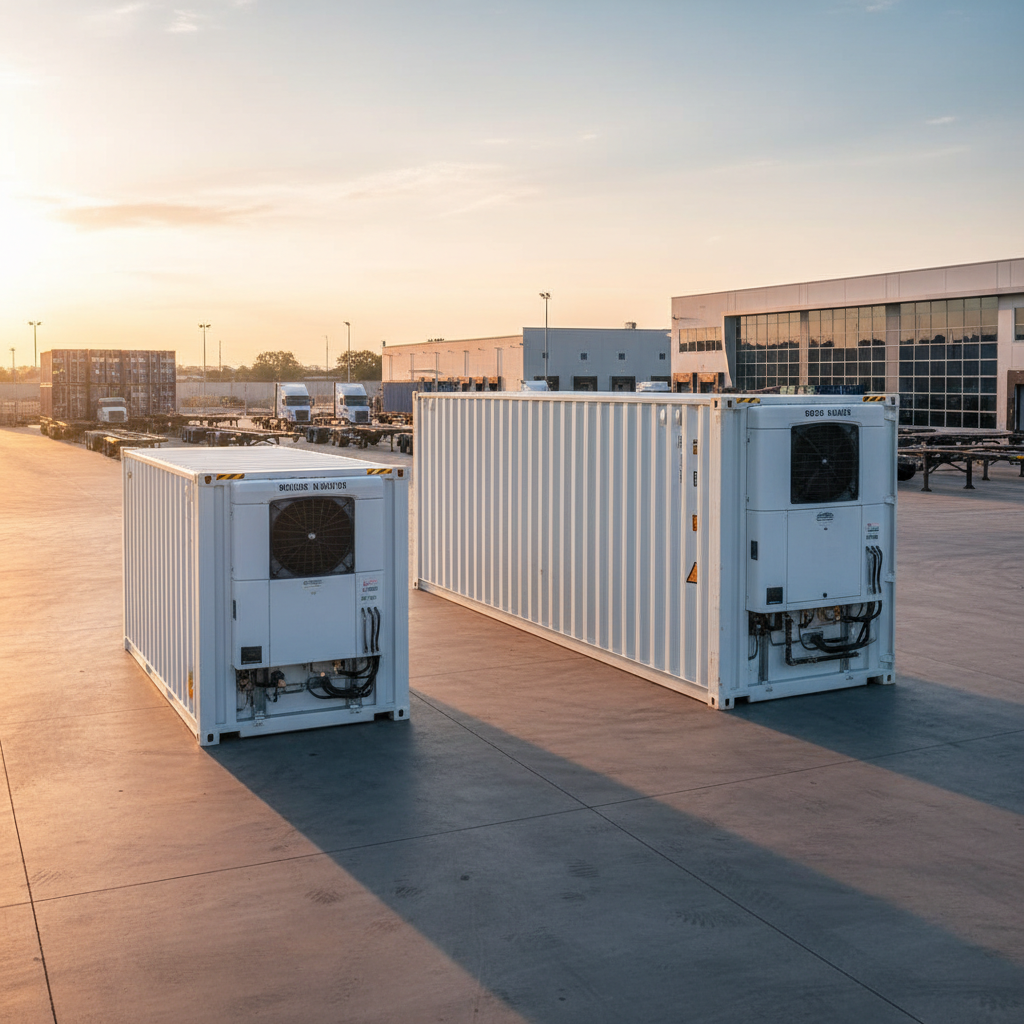
A practical guide to the factors that separate 20ft and 40ft refrigerated container costs, from refrigeration unit brand to insulation and delivery. Learn what to verify before you buy.
Why a Straight 20ft vs 40ft Price Comparison Is Harder Than It Looks
If you are shopping for a refrigerated container, you have probably noticed that two listings of the same length can carry very different asking prices. That is not a pricing trick. A refrigerated container is a temperature-controlled machine built around a steel box, and the cost reflects several independent systems: the box itself, the insulation, the refrigeration unit, the controls, and the condition of all of the above.
Comparing a 20ft unit to a 40ft unit adds another layer. The larger unit uses more materials and more interior volume, but the refrigeration unit on the end may be the same model or a different one entirely. That means the price gap between sizes is not a simple multiple. This article walks through the factors buyers and project planners should weigh, and it flags where you need to confirm details with the Newport team and the individual listing rather than rely on general assumptions.
The Cost Factors That Matter More Than Length
Refrigeration unit brand and model
The refrigeration unit is often the single most expensive component. Carrier and Thermo King are two well-known names in transport refrigeration, and both appear on used and new containers. Brand alone does not set value. What matters is the specific model, its cooling capacity, its age, its service history, and whether parts and technicians are available in your area. A container with a common, serviceable unit may be a better long-term value than one with an obscure model, even if the asking price is higher.
Ask for the unit model and serial number, and confirm what documentation is available. Do not assume that a familiar brand name guarantees a particular condition.
Insulated container vs. reefer
People sometimes use "insulated container" and "refrigerated container" interchangeably, but they are not the same product. An insulated container has thick walls and a sealed envelope but no active refrigeration unit. A true reefer has insulation plus a powered refrigeration system. Because the reefer includes the unit, controls, and often a genset or power connection, its cost is typically higher than a comparable insulated box.
If your goal is to slow temperature swings rather than actively cool a space, an insulated container may be worth discussing. If you need to hold a setpoint, you need a working reefer. Be clear about which problem you are solving before comparing prices.
Condition, age, and hours
Refrigerated containers are often sold as new, one-trip, or used. Used units may have thousands of running hours on the compressor. Condition affects price more than length in many cases. A well-maintained 20ft reefer can cost more than a rough 40ft reefer, and vice versa. Inspect or ask about:
- Compressor and fan condition
- Signs of refrigerant leaks or corrosion
- Door seals and gaskets
- Interior panel damage
- Controller functionality and error codes
- Structural rust, especially around the base and corners
Controls and monitoring
Some units have basic mechanical or simple digital controls. Others support data logging, remote monitoring, or programmable setpoints. These features add cost and complexity. If you do not need them, you may be paying for capability you will not use. If you do need them, confirm exactly what the controller supports.
Power requirements and fuel options
Reefers can run on electric power, on an integrated diesel engine, or on a genset. Each option affects purchase price, operating cost, and where the container can be placed. A unit that only runs on diesel may be cheaper to buy but more expensive to operate. A unit that runs on electric power may be simpler, but it needs a suitable power supply. Confirm the voltage, phase, and amperage requirements with the listing and with a qualified electrician.
How 20ft and 40ft Reefers Differ in Practice
Footprint and interior volume
A 20ft container is nominally about 20 feet long and 8 feet wide. A 40ft container is nominally about 40 feet long and 8 feet wide. Standard height is generally around 8 feet 6 inches, while high-cube units are taller. These are nominal dimensions. Actual internal and external measurements vary by manufacturer and unit, and the refrigeration unit takes up space inside the box. Always check the individual listing for exact dimensions.
The practical difference is volume and floor area. A 40ft reefer gives you roughly twice the length, which matters if you are storing pallets, doing batch cooling, or planning a walk-in style layout. A 20ft reefer fits into tighter sites and may be easier to reposition.
Refrigeration capacity relative to box size
A larger box is harder to cool and holds temperature differently when doors open. The unit on a 40ft reefer is sized for that box, but capacity still depends on the model. If you plan to open doors frequently, load warm product, or operate in high ambient heat, discuss your duty cycle with the Newport team. Do not assume that a bigger box automatically means better performance.
Site access and delivery
A 40ft container needs a longer approach and more turning room than a 20ft unit. That can affect delivery feasibility and cost. It does not automatically mean you need special equipment, but it does mean you should confirm site access before purchase. Share gate widths, overhead obstructions, surface type, and slope with the delivery team. They can tell you what is realistic for your location.
Comparing Quotes Without Getting Misled
When you compare a 20ft reefer quote to a 40ft reefer quote, line up the same variables:
- Unit brand, model, and year
- Running hours, if available
- New, one-trip, or used condition
- Electric, diesel, or genset operation
- Controller features
- Door and seal condition
- Delivery distance and site access
- Any testing or documentation included
If one quote is much lower, find out why. It may be an older unit, a different refrigeration model, a unit that needs service, or a price that excludes delivery. A lower number is not automatically a better deal.
Questions to ask before you commit
- What is the exact model and serial number of the refrigeration unit?
- Can you provide photos of the controller, compressor, and interior?
- What power supply does the unit require?
- Is the unit currently operational, and how was that verified?
- What is included in the price, and what is not?
- What are the delivery requirements for my site?
Frequently Asked Questions
Is a 40ft reefer always more expensive than a 20ft reefer?
Not always. The refrigeration unit, its condition, and its features can outweigh the difference in box size. A well-equipped 20ft unit can cost more than a basic 40ft unit. Compare the full specification, not just the length.
What is the difference between an insulated container and a refrigerated container?
An insulated container has thick walls and a sealed envelope but no active cooling system. A refrigerated container has insulation plus a powered refrigeration unit that can hold a setpoint. They serve different purposes and are priced differently.
Does Carrier vs. Thermo King change the price much?
Brand is only one factor. The specific model, its age, its running hours, and local service availability matter more than the name on the unit. Ask for model details and confirm parts and technician support in your area.
Can I run a refrigerated container on standard site power?
It depends on the unit. Voltage, phase, and amperage requirements vary. Confirm the electrical specification with the listing and have a qualified electrician review your supply before purchase.
Do I need a permit for a refrigerated container?
Requirements vary by jurisdiction and by how the container is used, placed, and connected. Newport does not provide legal or zoning advice. Check with your local authority having jurisdiction before you buy or site the container.
Next Steps
Refrigerated container pricing comes down to the unit, the condition, and the logistics, not just the length. The best way to get a useful comparison is to review current listings and then talk through your temperature, power, and site requirements with the Newport team.
- Browse available units at our shop.
- Share your site details and questions through our contact page.
Confirm listing details, availability, pricing, site access, and delivery requirements with the Newport team before you purchase.
Plan the next step
Confirm the container and the delivery plan.
Browse current listings, then speak with the Newport team to verify the unit, total pricing, site access, and delivery requirements before payment.