
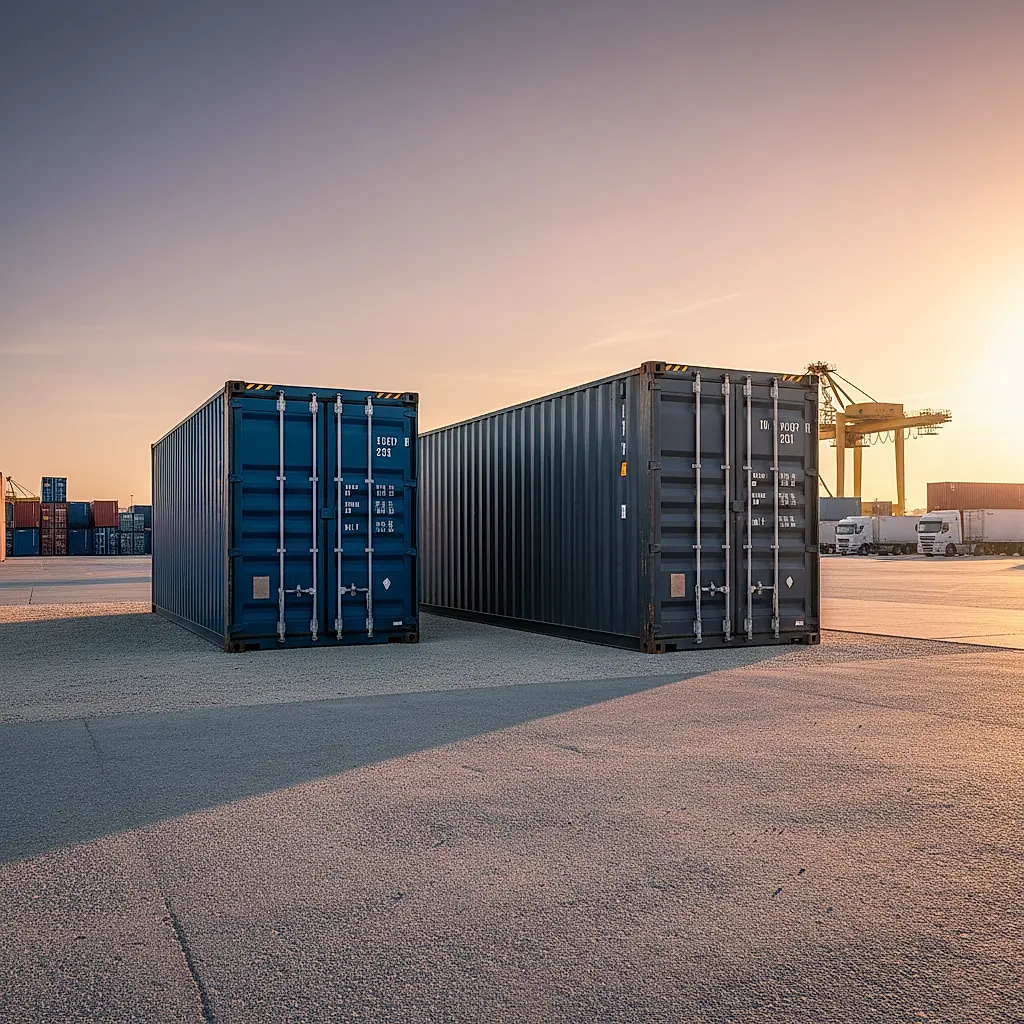
Deciding between a 20ft and 40ft shipping container? Discover how pricing, delivery logistics, and cost per square foot impact your total investment.
When planning a storage, commercial, or residential shipping container project, one of the first and most critical decisions you will face is choosing between a 20-foot and a 40-foot unit. While it seems logical that a container twice the size would cost twice as much, the reality of the shipping container market is quite different. Understanding the nuances of container pricing, structural differences, and delivery logistics can save you thousands of dollars and prevent major headaches down the road.
At Newport Shipping Containers LLC, we help customers navigate these choices daily. In this guide, we will break down the structural differences, analyze the cost per square foot, compare new versus used price dynamics, and detail the delivery requirements that could ultimately decide which size is right for your property.
Understanding the Baseline: 20ft vs. 40ft Dimensions and Capacity
Before diving into the economics, it is essential to understand exactly what you are buying in terms of physical space and structural capacity. Both sizes are built to international ISO standards, meaning they share the same standard width and general construction materials, but their lengths and weight capacities differ significantly.
Standard 20-Foot Container Specifications
- External Dimensions: 20' L x 8' W x 8'6" H
- Internal Dimensions: 19'4" L x 7'8" W x 7'10" H
- Floor Area: Approximately 160 square feet
- Internal Volume: Approximately 1,172 cubic feet
- Tare Weight: Approximately 4,500 to 5,000 lbs
Standard 40-Foot Container Specifications
- External Dimensions: 40' L x 8' W x 8'6" H
- Internal Dimensions: 39'5" L x 7'8" W x 7'10" H
- Floor Area: Approximately 320 square feet
- Internal Volume: Approximately 2,386 cubic feet
- Tare Weight: Approximately 8,000 to 8,500 lbs
High Cube Variations
For both sizes, you may also encounter "High Cube" (HC) containers. These units are 9'6" tall externally, providing an extra foot of vertical headroom. High Cube variations are highly sought after for home conversions and commercial spaces because they allow room for ceiling insulation, wiring, and plumbing without sacrificing comfortable standing room. While 40-foot High Cubes are incredibly common and readily available, 20-foot High Cubes are much rarer and often command a premium price when they are in stock.
Analyzing the Cost Factors: New (One-Trip) vs. Used Containers
Shipping container pricing is not static; it fluctuates based on global steel prices, shipping lane congestion, depot locations, and local supply. However, the price gap between new and used containers remains a consistent factor in a buyer's decision-making process.
One-Trip Containers: The Gold Standard
"One-trip" containers are manufactured overseas, loaded with a single cargo load to facilitate their journey, and then sold upon arrival. They are as close to brand new as you can get in the container industry.
- Pros: Minimal to no cosmetic blemishes, no rust, doors that seal perfectly, and a long lifespan.
- Cons: Higher upfront cost compared to used units.
Used Containers: Practical and Budget-Friendly
Used containers have typically spent 10 to 15 years in international shipping service. They are graded based on their condition, usually falling into "Cargo Worthy" (CW) or "Wind and Watertight" (WWT) categories.
- Pros: Significantly lower purchase price, making them excellent for basic agricultural or industrial storage.
- Cons: Expect dents, surface rust, faded paint, and mismatched colors. They may also require minor maintenance over time to preserve their structural integrity.
What Drives the Price Gap?
The price difference between a one-trip 20ft container and a used 20ft container can be substantial. Interestingly, the price gap between a new and used 40ft container is often narrower on a percentage basis. Because of this, buyers looking for a long-term investment or a modification project often find that a one-trip 40ft container offers excellent long-term value compared to its used counterpart.
Price per Square Foot: The Surprising Economics of Container Sizes
One of the most common misconceptions is that a 40-foot container will cost double the price of a 20-foot container. In reality, the price of a 40-foot container is typically only 20% to 35% higher than a 20-foot container of the same condition grade.
This pricing structure exists because a significant portion of a container's cost is tied to manufacturing labor, corner castings, heavy locking gear, and marine transport handling—costs that are relatively similar for both sizes.
Calculating the Footprint
When you break down the cost per square foot, the 40-foot container is almost always the clear winner:
- A 20-foot container provides 160 square feet of usable floor space.
- A 40-foot container provides 320 square feet of usable floor space.
Because the 40-foot unit offers double the space for only a fraction more in cost, your cost per square foot drops dramatically. If you have the physical space on your property to accommodate a larger unit, buying a 40-foot container is almost always the more economical choice for maximizing your storage capacity per dollar spent.
Delivery and Site Prep: Hidden Costs to Keep in Mind
While the purchase price of a 40-foot container is highly efficient, the delivery and site preparation costs can sometimes offset those savings. It is crucial to evaluate your delivery site thoroughly before making a final decision.
Delivery Vehicle Requirements
- 20-Foot Containers: These can often be delivered using smaller, more agile tilt-bed trucks or medium-duty roll-off trailers. These vehicles can navigate tighter turns, narrower driveways, and softer ground more easily.
- 40-Foot Containers: Delivering a 40-foot container requires a large semi-truck pulling a specialized tilt-bed trailer. The combined length of the truck and trailer can exceed 60 to 70 feet, requiring massive clearance to turn and maneuver.
Site Clearance and Turning Radius
To safely drop a container, the delivery truck needs a straight run-out path.
- A 20-foot container delivery typically requires at least 60 to 75 feet of straight-line clearance.
- A 40-foot container delivery requires at least 110 to 120 feet of straight-line clearance, along with a vertical clearance of 14 to 16 feet to avoid low-hanging tree branches, power lines, and building eaves.
If your site is located down a winding gravel road, has tight gates, or features steep inclines, delivering a 40-foot container may be physically impossible or require expensive crane services. In these scenarios, purchasing two 20-foot containers may be the only viable option, even if it costs more per square foot.
Foundation and Site Preparation
Because of its length, a 40-foot container is more susceptible to structural twisting if placed on uneven ground. If the site is not perfectly level, the container frame can flex slightly, causing the heavy cargo doors to bind and become difficult or impossible to open. Preparing a level gravel pad, concrete footings, or railroad tie foundation is highly recommended for 40-foot units, which adds to your overall project budget.
Frequently Asked Questions
Is a 40ft container always a better deal than a 20ft container?
From a strict cost-per-square-foot perspective, yes. However, if you have limited space, tight delivery access, or only need to store a small volume of items, a 20ft container may still be the more practical and cost-effective choice once delivery and site prep are factored in.
Can I move a 40ft container myself after it is delivered?
Moving a 40ft container requires heavy machinery, such as a large crane, a heavy-duty forklift, or a specialized tilt-bed truck. A 20ft container is much easier to reposition on-site using standard farm tractors or mid-sized construction equipment, provided they have the appropriate lifting capacity.
Do I need a permit for a 20ft or 40ft container?
Permit requirements vary widely by city, county, and zoning district. Often, local municipalities view a 20ft container as a temporary storage shed, which may face fewer restrictions. A 40ft container is more likely to require a permanent structure permit or face strict zoning ordinances. Always check with your local building department before purchasing.
Are used containers safe for personal storage?
Yes, as long as they are graded as Wind and Watertight (WWT) or Cargo Worthy (CW). These grades ensure that the container has no holes, the door seals are intact, and the wooden floor is structurally sound, keeping your belongings safe from rain, wind, and pests.
Making Your Decision with Newport Shipping Containers LLC
Choosing between a 20ft and a 40ft shipping container involves balancing your budget, your physical space constraints, and your long-term storage or modification goals. While the 40ft container offers unmatched value per square foot, the 20ft container remains the champion of versatility, maneuverability, and ease of placement.
Because inventory levels, shipping lane costs, and delivery logistics are constantly changing, we highly recommend speaking directly with our experienced team. We can help you assess your site's accessibility, confirm current inventory availability, and provide a comprehensive quote tailored to your location.
Ready to find the perfect container for your project? Browse our current inventory on our shop page or get in touch with us directly through our contact page to discuss your delivery requirements and secure your container today.
Plan the next step
Confirm the container and the delivery plan.
Browse current listings, then speak with the Newport team to verify the unit, total pricing, site access, and delivery requirements before payment.