
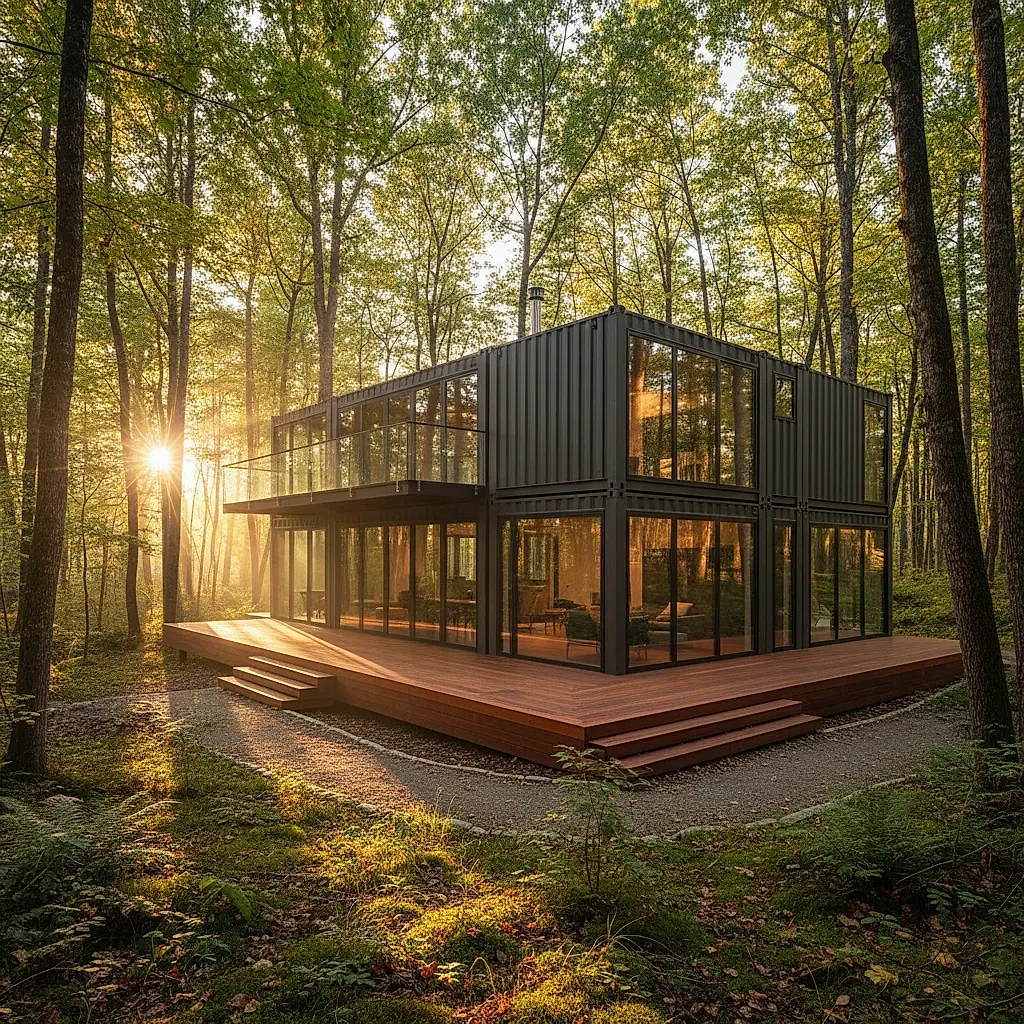
Planning a three-bedroom container home? Learn the cost categories, decisions, and questions to ask before you commit to a budget.
A three-bedroom shipping container home can be a compelling project, but the cost conversation is rarely as simple as a single number. Container prices, site work, modifications, and local requirements all interact. This guide walks through the major cost categories so you can build a realistic budget and ask better questions before you buy.
Why a Single '3 Bedroom Container Home Cost' Number Is Misleading
Search results often promise a clean price for a three-bedroom container home. In practice, the total depends on decisions you make long before construction begins. Two projects with the same bedroom count can land in very different budget ranges.
Key variables include:
- How many containers you use and their condition. New one-trip units, used wind-and-water-tight units, and modified units carry different price points.
- Whether you buy locally or ship long distance. Freight is a real line item and varies by route and access.
- How much fabrication happens off-site. Cutting, framing, and finishing in a shop can reduce on-site labor but adds shop cost.
- Site conditions. Slope, soil, utilities, and access affect foundation and preparation work.
- Local code and permitting requirements. These vary by jurisdiction and can change your design.
- Finish level. A basic shell and a fully finished home are different products with different budgets.
Because these variables are project-specific, treat any published figure as a starting reference, not a quote. Confirm current pricing and availability with the Newport team for the specific units you are considering.
The Main Cost Categories to Budget For
A useful budget separates costs into buckets. That way, when one category changes, you can see the effect clearly.
1. Container acquisition
This is the cost of the boxes themselves. Factors include size, condition, quantity, and whether modifications are included. Standard nominal lengths are commonly 20 feet and 40 feet, with 40-foot high-cube units also available. Exact internal and external dimensions, payload ratings, and condition details should be confirmed on the individual listing and the container's CSC plate.
2. Delivery and offloading
Delivery cost depends on distance, route, site access, and the equipment needed to place the container. Some sites allow a tilt-bed trailer to slide a container into place; others require a crane or other lifting equipment. Do not assume your site qualifies for a particular method. Confirm access, overhead clearance, and surface conditions with the delivery team before scheduling.
3. Site preparation and foundation
This category often surprises first-time builders. It can include:
- Clearing and grading
- Foundation or pier system
- Utility trenching and connections
- Drainage and erosion control
- Driveway or access improvements
Local soil, slope, and code requirements drive this number. A geotechnical review or site visit may be needed.
4. Design and engineering
Container structures require careful planning around cutouts, reinforcement, and load paths. Structural engineering, architectural drawings, and permit sets are part of this category. Requirements vary by location, so confirm what your jurisdiction expects.
5. Fabrication and modifications
This covers cutting openings for doors and windows, welding reinforcement, framing, insulation, electrical rough-in, plumbing rough-in, and interior finishes. The more work done in a controlled shop, the less weather risk on site, but shop time is still a cost.
6. Finishes and systems
Flooring, wall coverings, cabinetry, fixtures, HVAC, electrical panels, water heating, and appliances all fall here. Finish level is one of the largest swing factors in any home budget.
7. Permits, inspections, and fees
Permit costs and inspection schedules are set locally. Some jurisdictions have specific rules for container structures; others treat them like conventional construction. Always verify with the local authority having jurisdiction.
8. Contingency
A contingency line is not optional. Site work, weather, and design changes routinely create variance. A healthy contingency protects your project from stalling mid-build.
How Container Size and Layout Affect Your Budget
Three-bedroom layouts can be approached in different ways, and the approach affects cost.
Single-container versus multi-container designs
A single container is a narrow footprint. A three-bedroom home typically requires either multiple containers or a combination of containers and conventional framing. Multi-container designs increase acquisition and delivery costs but can reduce the amount of custom framing needed. There is no universal rule that one approach is cheaper; it depends on your design and site.
Stacking and side-by-side configurations
Stacking creates two stories on a smaller footprint. Side-by-side configurations create a wider single-story layout. Each has implications for foundation, stairs, roof, and structural reinforcement. Discuss these options with a designer or engineer early.
Cutouts and structural reinforcement
Every door and window opening interrupts the container's original structure. Reinforcement is usually required. The number and size of openings affect fabrication cost. Planning openings carefully can reduce waste and labor.
High-cube versus standard height
High-cube containers offer additional interior height compared with standard units. That can improve comfort and ceiling options, but it also affects delivery height, stacking, and interior planning. Confirm exact dimensions on the listing.
Site Preparation and Delivery: Costs Buyers Often Underestimate
Delivery and site work are where budgets most often drift. Plan these early.
Access and clearance
Measure gates, driveways, turns, and overhead lines. A route that looks fine on a map may not accommodate a delivery truck and trailer. If access is tight, discuss alternatives with the delivery team before you buy.
Ground conditions
Soft ground, slope, and drainage issues can require additional preparation. A container is heavy, and the surface beneath it needs to support the load without shifting. Confirm what your site needs with a qualified contractor.
Utility connections
Water, sewer, power, and internet connections may require trenching, permits, and inspections. Distance from existing utility lines affects cost. Confirm availability and connection requirements with local providers.
Scheduling and storage
If your site is not ready when the container arrives, you may need temporary storage or a second delivery. Coordinating delivery with site readiness avoids extra charges.
Decisions That Change Your Budget the Most
If you want to control cost, focus on these decisions:
- Scope: How much of the home is container-based versus conventionally built?
- Finish level: Basic, mid-range, or high-end finishes.
- Do-it-yourself versus contracted labor: Your own labor can reduce cash cost but adds time and risk.
- Number of openings: Fewer, well-planned openings usually cost less than many scattered ones.
- Site selection: A flat, accessible, utility-ready lot is usually less expensive to develop.
- Timeline: Rushing often increases cost; phased builds can spread spending but may add mobilization fees.
None of these decisions has a single right answer. The goal is to understand the trade-offs before you commit.
Frequently Asked Questions
How much does a three-bedroom container home cost?
There is no single reliable figure because cost depends on container quantity and condition, site work, design, finishes, and local requirements. Build a budget by category and get project-specific quotes. Confirm current container pricing and availability with the Newport team.
How many containers do I need for three bedrooms?
The number depends on your layout, square footage goals, and whether you combine containers with conventional framing. A designer or engineer can help you compare options. Do not assume a fixed container count equals a specific bedroom count.
Do container homes need special permits?
Permit requirements are set by your local jurisdiction and vary widely. Some areas have specific rules for container structures; others apply standard building codes. Always confirm requirements with your local building authority before purchasing.
Can I finance a container home?
Financing options vary by lender and project type. Some lenders treat container homes like conventional construction; others may not. Speak with lenders early and ask what documentation they require.
What should I confirm before buying a container?
Confirm the listing details, condition, dimensions, CSC plate information, availability, pricing, delivery requirements, and site access. Ask the Newport team any questions specific to your project before you commit.
Next Steps: Turn Research into a Real Plan
Start by defining your must-haves and your budget range. Then gather project-specific information rather than relying on generic estimates.
- Review available units and listing details at /shop.
- Contact the Newport team at /contact to discuss availability, pricing, delivery requirements, and site access questions.
- Confirm local permit and inspection requirements with your jurisdiction.
- Consult a structural engineer or designer for your specific layout.
A three-bedroom container home can be a rewarding project when the budget is built on verified details rather than assumptions. Take the time to confirm each category, and your plan will be stronger for it.
Plan the next step
Confirm the container and the delivery plan.
Browse current listings, then speak with the Newport team to verify the unit, total pricing, site access, and delivery requirements before payment.