
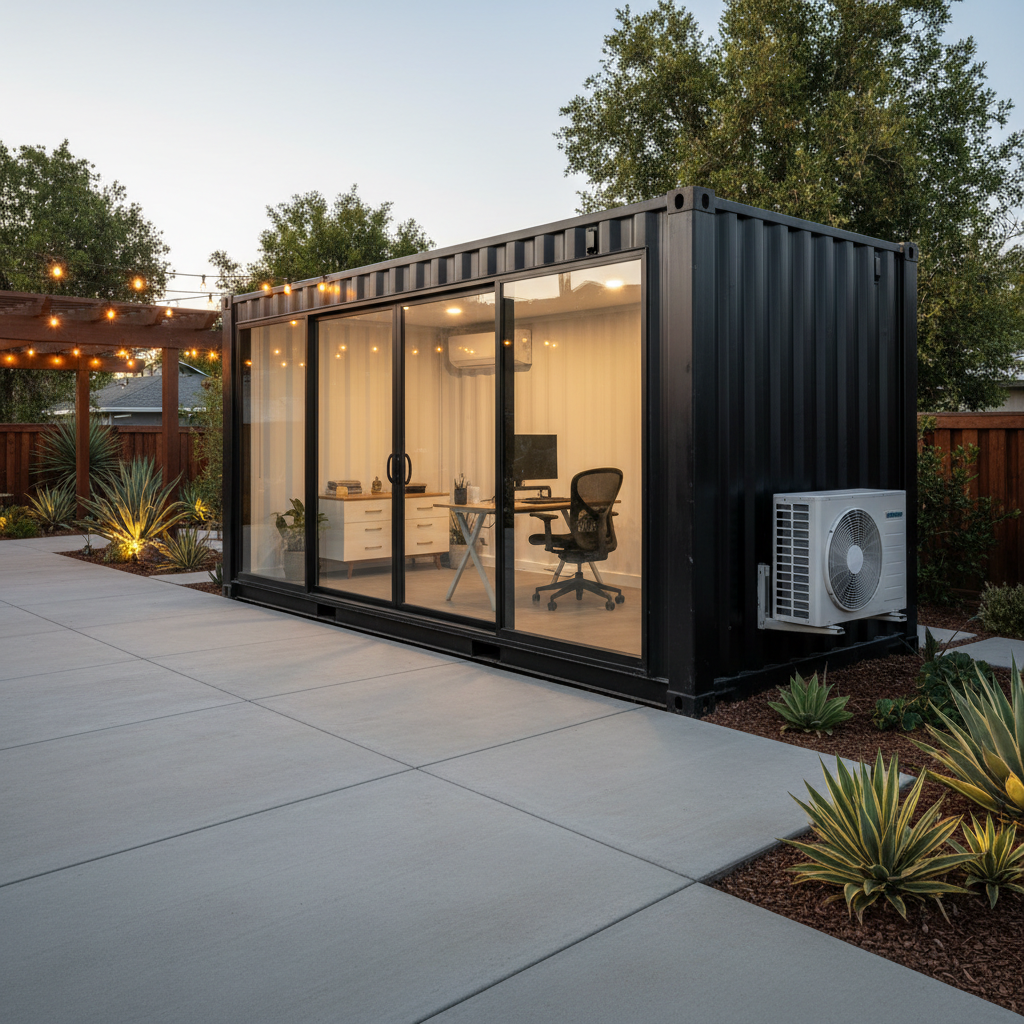
Planning a backyard container office with HVAC? Learn how to choose a container, plan for heating and cooling, and prepare your site without guesswork.
A backyard container office can be a durable, quiet, and surprisingly comfortable workspace. But the difference between a good build and a frustrating one usually comes down to planning — especially when heating, ventilation, and air conditioning (HVAC) are involved.
This guide walks through the decisions that matter most: container selection, insulation and climate control, site access, and the questions to ask before you buy. It is written for homeowners and project planners who want a realistic path forward, not a sales pitch.
Start with the Container Itself
Not every used container is a good candidate for an office. The condition of the shell affects how much work — and how much climate control — your project will need.
Condition matters more than color
Inspect for rust, soft spots in the floor, and door seal condition. Surface rust is common and often manageable. Deep corrosion near the bottom rails or roof is a bigger concern. If you are buying remotely, ask for current photos and a walkaround video.
Standard height vs. high cube
A standard container is roughly 8 feet wide and about 8 feet 6 inches tall on the outside. A high cube adds about a foot of interior height, which can make a finished office feel less enclosed. Exact dimensions vary by manufacturer and unit, so confirm the listing details for the specific container you are considering.
Doors, windows, and framing
Most office conversions cut in a personnel door and at least one window. Where those openings go affects framing, insulation, and where your HVAC equipment can live. Decide early whether you want a single-zone layout or a split layout with a small entry area.
Insulation and HVAC: The Core of Comfort
A bare steel box conducts heat and cold efficiently — which is great for shipping and terrible for working. Insulation and a correctly sized HVAC system are what turn a container into a usable office.
Why insulation comes first
Spray foam, rigid board, or a combination of materials can be used, depending on your budget and climate. The goal is to reduce heat transfer through the walls, ceiling, and floor, and to control condensation. Without insulation, an HVAC unit will run constantly and still struggle on extreme days.
Mini-split vs. other options
Ductless mini-split systems are a common choice for container offices because they do not require ductwork and can both heat and cool. Window units and portable units are lower-cost alternatives, but they take up wall or floor space and may not perform as well in a tightly sealed steel structure. A licensed HVAC contractor should size the system based on your insulation, climate, and window area — not a generic rule of thumb.
Ventilation and air quality
Tight containers need fresh air. Plan for a small ventilation strategy, such as an energy recovery ventilator (ERV) or a dedicated fresh-air intake, especially if the office will be occupied for long stretches. Talk with your contractor about filtration and humidity control for your region.
Electrical capacity
HVAC equipment draws significant power. Before you buy anything, confirm what your electrical service can support and whether a subpanel is needed. A qualified electrician should evaluate the run from your main panel to the container and the load of the HVAC unit, lighting, and outlets.
Site Planning and Delivery Realities
A container office is only as good as the ground it sits on and the path it takes to get there.
Access and equipment
Delivery trucks need a clear path and a safe place to set the container. Trees, fences, low wires, and soft ground can all complicate a drop. Do not assume a particular truck or trailer will fit — confirm site access and delivery requirements with the Newport team before scheduling.
Foundation and drainage
Containers should sit on a level, well-drained base. Common approaches include concrete piers, a gravel pad, or a concrete slab. The right choice depends on your soil, frost depth, and local requirements. Standing water around the base is a long-term problem, so plan drainage before the container arrives.
Permits and local rules
Rules for accessory structures, electrical work, and HVAC installation vary widely by jurisdiction. Some areas treat container structures differently from stick-built buildings. Check with your local planning or building department early. Do not rely on general advice about whether a permit is needed — confirm the requirements for your specific property and intended use.
Budgeting Without Guesswork
It is tempting to look for a single number, but container office costs vary too much for a universal figure. Instead, build your budget from categories.
- Container: price depends on size, condition, and availability.
- Delivery: varies by distance, access, and equipment needed.
- Site work: pad, piers, drainage, and any clearing.
- Insulation and interior finishes: framing, wall coverings, flooring, and ceiling.
- Doors and windows: cutting, framing, and sealing.
- Electrical: subpanel, wiring, outlets, and lighting.
- HVAC: equipment, line set, and installation.
- Permits and inspections: fees vary by location.
Ask each contractor for a written scope. A low bid that excludes insulation or electrical is not a low total cost.
Design Choices That Affect HVAC Load
Small decisions add up when you are conditioning a steel box.
Window size and orientation
Large west-facing windows can overheat a small office in summer. Consider shading, blinds, or a smaller window on the hottest side. North-facing windows generally bring in softer light.
Ceiling and floor treatment
A finished ceiling with insulation above it improves comfort and reduces noise. Flooring choice matters too — a thermal break between the steel floor and your finished floor can reduce condensation risk.
Air sealing
Every penetration — conduit, pipes, and mounting points — should be sealed. Air leaks make HVAC equipment work harder and can let in moisture.
Future flexibility
If you might add a second room or more equipment later, plan electrical and HVAC capacity now. Upgrading later is usually more expensive than sizing for it upfront.
Buying a Container for an Office Conversion
When you shop, focus on the shell and the paperwork.
- Confirm the exterior and interior dimensions on the listing.
- Ask about the CSC plate and any inspection markings if the unit has them.
- Request current photos of the floor, doors, and roof.
- Ask whether the container is wind and water tight.
- Clarify what "used" means for that specific unit — condition grades vary.
For exact specifications, always refer to the individual listing and the container's own markings rather than a general guide.
Working with Contractors
A container office touches several trades: site work, electrical, HVAC, and carpentry. Coordinating them early prevents rework.
- Get a written scope from each trade.
- Confirm who is responsible for cutting openings and sealing them.
- Ask your HVAC contractor to review insulation plans before installation.
- Schedule inspections before closing up walls.
If you are managing the project yourself, keep a simple timeline and a single point of contact for questions.
Frequently Asked Questions
How much does a backyard container office with HVAC cost?
There is no single reliable number because cost depends on container condition, size, site work, insulation, electrical, and the HVAC system you choose. The best approach is to collect itemized quotes for each category and compare the full scope, not just the headline price. Confirm current pricing and availability with the Newport team for the container itself.
What size container works best for an office?
It depends on how many people will use it and what furniture you need. Many homeowners consider 20-foot and 40-foot containers, but the right choice is about layout and comfort, not a formula. Measure your intended desk, seating, and storage, then compare that to the interior dimensions in the specific listing.
Do I need a permit for a container office?
Permit rules vary by location and by how the structure is used and serviced. Some jurisdictions require permits for electrical and HVAC work even when the structure itself is exempt. Contact your local building or planning department to confirm requirements for your property.
Can I add HVAC to a container myself?
HVAC installation involves refrigerant handling, electrical connections, and code compliance. In most cases, this work should be done by licensed professionals. A qualified contractor can also advise on sizing and ventilation, which are easy to get wrong in a steel structure.
Will a container office be comfortable in extreme heat or cold?
With proper insulation, air sealing, and a correctly sized HVAC system, a container office can be comfortable in many climates. Performance depends on your local weather, the quality of the build, and ongoing maintenance. Discuss your climate with your contractor before choosing equipment.
Next Steps
A successful container office starts with a clear plan: choose the right shell, insulate it well, size the HVAC correctly, and prepare the site before delivery.
When you are ready to look at containers, browse our current listings at our shop. If you have questions about site access, delivery requirements, or availability, reach out through our contact page and the Newport team will help you confirm the details for your project.
Plan the next step
Confirm the container and the delivery plan.
Browse current listings, then speak with the Newport team to verify the unit, total pricing, site access, and delivery requirements before payment.