
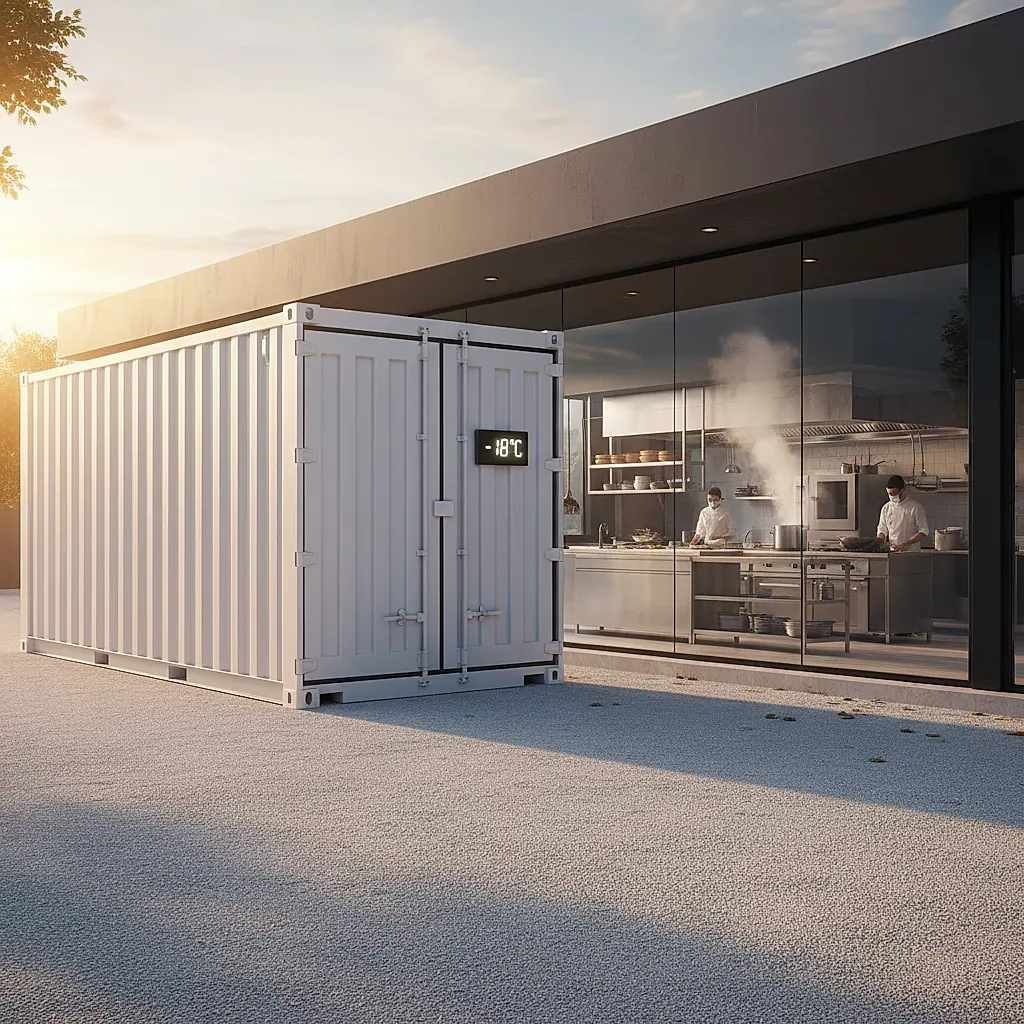
Considering a refrigerated shipping container for restaurant cold storage or blast freezing? Learn how to plan capacity, power, site access, and inspections before you buy.
A refrigerated shipping container—often called a reefer—can give a restaurant, caterer, or food producer extra cold storage without a permanent building project. But the decision is more than picking a size. You need to match temperature needs, power supply, airflow, sanitation, and site access. This guide walks through the practical questions to ask before you buy, and it points you to the Newport team for exact listing details, availability, and delivery requirements.
Start With Your Real Storage Need
Before comparing containers, write down what you actually need to store and how often it turns over.
Temperature zones
Restaurants often need more than one temperature range:
- Refrigerated storage for produce, dairy, proteins, and prepared ingredients.
- Freezer storage for long-term inventory, ice cream, or frozen dough.
- Blast freezing for rapidly bringing hot or warm food through the danger zone.
A standard reefer is designed to hold a set temperature, not necessarily to pull large amounts of warm product down quickly. If blast freezing is part of your plan, that is a different duty cycle and may require different equipment. Confirm the exact capability with the Newport team and the listing details rather than assuming any reefer can do it.
Volume and turnover
Estimate how much product you hold at peak, not average. Consider:
- Seasonal menus and holiday rushes.
- Catering events that require temporary overflow.
- Deliveries that arrive once or twice a week.
- How much space you lose to shelving, pallets, and air circulation.
A container that is packed tight will not cool evenly. Leave room for air to move around the product.
Indoor versus outdoor placement
An outdoor container is exposed to sun, rain, and temperature swings. Shade, ventilation, and orientation can affect how hard the refrigeration unit works. An indoor or covered placement may be easier on the equipment but can create heat and exhaust concerns. Discuss placement with the Newport team and your local code officials.
Understanding Refrigerated Container Basics
A reefer container is a shipping container with an integrated refrigeration unit. It is built to move temperature-sensitive cargo, but using one for food storage involves checks that go beyond a standard dry container.
Nominal dimensions
Refrigerated containers are commonly discussed in nominal lengths such as 20-foot and 40-foot, with standard and high-cube height options. Exact internal and external dimensions vary by manufacturer and unit. Always check the individual listing and the container’s data plate for precise measurements before you plan a layout or a delivery route.
The refrigeration unit
Key parts include:
- The compressor and condenser section.
- Evaporator fans that circulate air inside the box.
- Controls and temperature monitoring.
- Power connection and cable.
Ask how the unit has been maintained, whether it has been run recently, and what documentation is available. A unit that has been sitting idle may need service before it holds temperature reliably.
Power requirements
Reefer units typically run on three-phase power, and some can run on single-phase or generator power depending on the model. Do not assume your building’s electrical service will support the unit. Have a licensed electrician review:
- Voltage and phase.
- Circuit capacity and breaker size.
- Disconnect location and weather protection.
- Standby power or generator options.
Exact electrical specifications belong to the individual listing and the unit’s data plate. Confirm them with the Newport team and your electrician.
Food Safety, Sanitation, and Compliance
Cold storage for food is regulated. Requirements vary by state, county, and city, and by what you are storing and selling.
What to verify locally
- Whether a container can be used for food storage at your location.
- Health department rules for surfaces, drainage, and pest control.
- Zoning or site plan requirements for placing a container on your property.
- Any permit or inspection steps before operation.
This article cannot tell you which permits you need. Contact your local health department, building department, and zoning office early. Bring them your plan so you can address concerns before you buy.
Sanitation in practice
- Use shelving that keeps product off the floor and allows airflow.
- Clean and sanitize surfaces on a schedule.
- Keep raw and ready-to-eat items separated.
- Monitor for condensation, leaks, and standing water.
- Maintain a pest control routine.
- Log temperatures regularly and act on deviations.
Condition of the container
Inspect for:
- Rust, especially around the floor and door seals.
- Door gaskets that are cracked or compressed.
- Dents that affect the refrigeration unit or airflow.
- Odors from previous cargo.
- Floor condition and drainage.
If you are buying used, ask what the container previously carried. Some prior cargoes can leave odors or residues that are difficult to remove.
Sizing, Layout, and Access
Plan the inside before you buy
Sketch your shelving, pallet positions, and walking aisles. Remember that the refrigeration unit takes up space at one end and that you need clearance to load and unload.
Door and aisle clearance
Check:
- Door opening width and height.
- Turning radius for pallet jacks or carts.
- Whether you need a ramp or dock plate.
- Lighting inside the container.
Site access for delivery
Delivery is a common source of surprises. Before you commit, confirm:
- Street width and overhead obstructions.
- Gate width and fence lines.
- Ground strength and slope.
- Space for the delivery truck to maneuver and set the container down.
- Where the container will sit relative to power and your kitchen.
Do not assume a particular truck or trailer type is required. Ask the Newport team what delivery method fits your site, and share photos or measurements if you are unsure.
Foundation and leveling
A container needs a stable, level base. Options may include concrete pads, gravel, or engineered supports. The right choice depends on soil, drainage, and local requirements. Ask the Newport team and a local contractor what works for your site.
New, Used, and Budget Planning
Cold storage container pricing varies with size, condition, refrigeration unit, and market timing. Rather than relying on a generic number, build a budget that includes:
- The container itself.
- Delivery and placement.
- Electrical work and permits.
- Site preparation.
- Shelving and monitoring equipment.
- Ongoing maintenance and service.
- Energy costs.
Questions to ask about a used reefer
- How has the unit been tested?
- What maintenance records exist?
- Are there known issues with the compressor or controls?
- What is the condition of the door seals and floor?
- Is the unit currently holding temperature?
When buying new makes sense
If you need a specific configuration, a longer service life, or a unit with current controls, a new or newer container may fit better. If your need is temporary overflow, a used unit in good condition may be enough. The right answer depends on your duty cycle and risk tolerance.
Maintenance and Monitoring
A reefer is a machine. Plan for service.
- Schedule professional inspections.
- Keep the condenser coils clean.
- Check door seals and hinges.
- Monitor temperature logs daily.
- Watch for unusual noise or cycling.
- Address water intrusion quickly.
Have a plan for power outages. Depending on your operation, that could mean a generator, a backup unit, or moving product to another location. Confirm what your local health rules require for emergency procedures.
Frequently Asked Questions
Can I use a refrigerated shipping container for restaurant food storage?
In many places, yes, but it depends on local health, zoning, and building rules. Contact your local authorities before you buy, and confirm the container’s condition and temperature capability with the Newport team.
What size refrigerated container do I need?
It depends on your product volume, shelving layout, and turnover. Sketch your storage plan and account for airflow and aisle space. Review the individual listing for exact dimensions, and ask the Newport team for guidance.
Can a reefer container be used as a blast freezer?
Not necessarily. Blast freezing requires rapid heat removal and specific equipment. Confirm the unit’s capability with the Newport team and the listing details before assuming it will work for that purpose.
What power does a refrigerated container need?
Reefer units commonly use three-phase power, but configurations vary. Have a licensed electrician review the unit’s data plate and your building’s service. Exact requirements are in the listing and unit documentation.
How much does a cold storage container cost?
Pricing depends on size, condition, refrigeration unit, and market factors. Check current listing details and contact the Newport team for availability and pricing rather than relying on outdated estimates.
Next Steps
Start by defining your temperature needs, volume, and site conditions. Then review available units and ask specific questions about condition, power, and delivery. Browse current options at our shop and reach out with your questions at our contact page. The Newport team can help you confirm listing details, availability, site access, and delivery requirements so you can make a confident decision.
Plan the next step
Confirm the container and the delivery plan.
Browse current listings, then speak with the Newport team to verify the unit, total pricing, site access, and delivery requirements before payment.