
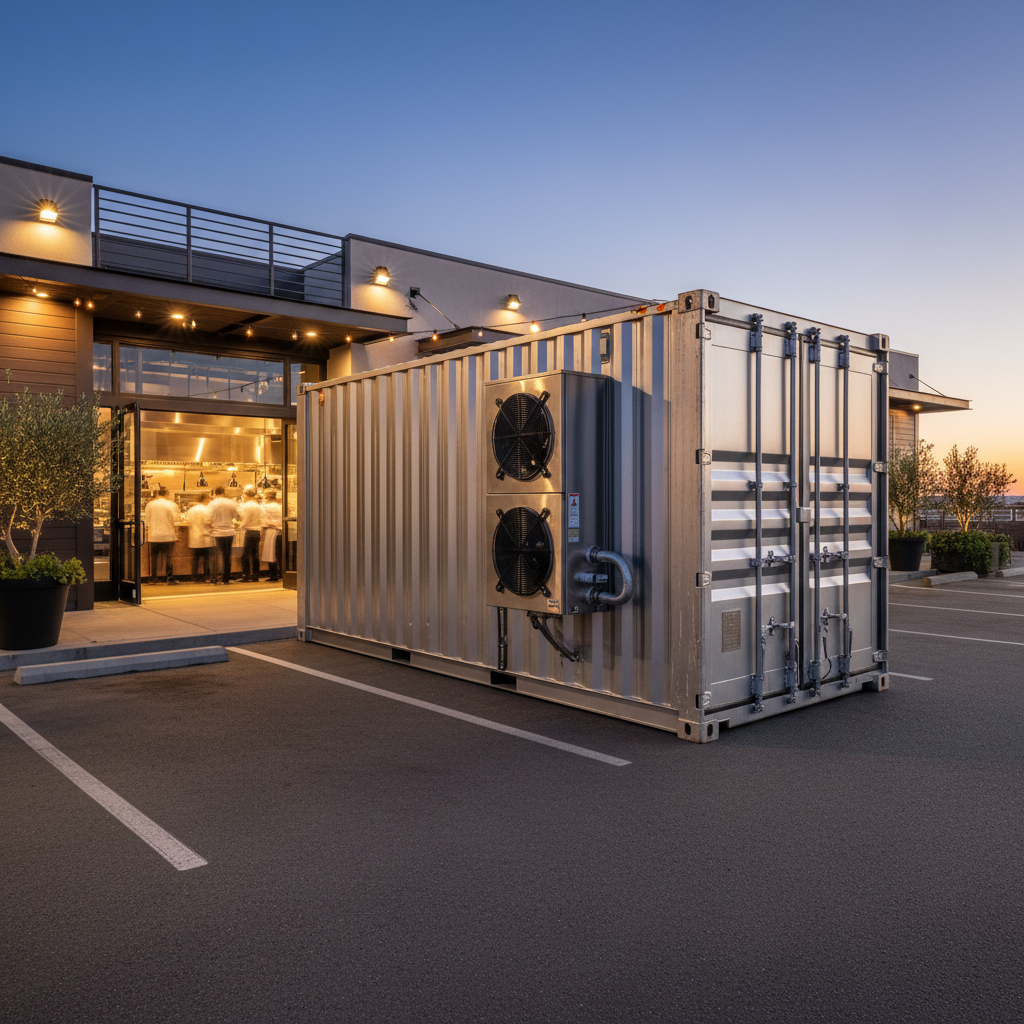
Need extra frozen storage for your restaurant? Learn how refrigerated shipping containers work, compare rental and purchase considerations, and plan a safe outdoor installation.
When your walk-in freezer runs out of room during a busy season, a refrigerated shipping container can add dependable frozen storage without a major building project. But choosing between renting and buying, and getting the unit delivered and powered correctly, takes some planning. This guide walks through the practical questions restaurant owners and facility managers should ask before committing.
What a Commercial Freezer Container Actually Is
A refrigerated shipping container, often called a reefer, is an insulated container with an integrated refrigeration unit. The same basic design that moves temperature-sensitive cargo across oceans can be repurposed as an outdoor walk-in freezer or cooler for restaurant overflow.
Key points to understand:
- Insulated box first. The container's walls, floor, and ceiling are built with insulation, which is why reefers hold temperature far better than a standard dry container.
- The refrigeration unit matters. The nose-mounted unit controls temperature and is the part that needs power, maintenance, and occasional service.
- Not all reefers are equal. Age, compressor condition, insulation integrity, and controller type vary widely from unit to unit.
- Temperature range depends on the specific unit. Do not assume every reefer can hold deep-freeze temperatures. Ask for the listing details and confirm the unit's capable range before you buy or rent.
For restaurant use, the container typically sits outside on a pad or prepared surface, with the doors facing an accessible direction for loading and unloading. Interior finishes are usually basic; many operators add shelving, pallets, or dunnage to keep product off the floor and improve airflow.
Rental vs. Purchase: How to Think Through the Decision
This is the central budget question, and the honest answer is that it depends on how long you need the capacity and how much control you want.
When renting may make sense
- Short, predictable peaks. If you need overflow space for a defined season, a holiday rush, or a temporary event, a rental term can match that window.
- You want to test the concept. Renting lets you see how a container fits your workflow before committing capital.
- You prefer someone else to handle service. Depending on the rental terms, maintenance and repairs may fall to the lessor.
- You do not want a long-term asset. Renting avoids the question of resale or repurposing later.
When buying may make sense
- You need the capacity year-round. Ongoing storage needs often favor ownership over repeated rental cycles.
- You want to customize. Buying gives you freedom to add shelving, lighting, monitoring, or a permanent power connection.
- You can handle maintenance. Ownership means you are responsible for the refrigeration unit, so budget for service.
- You have a long planning horizon. If the container will serve your operation for years, ownership can be the more straightforward path.
Costs to compare
Do not compare only the headline rental rate against a purchase price. Build a full picture:
- Delivery and pickup or delivery and setup
- Power connection and any electrical work
- Ongoing electricity use
- Preventive maintenance and repair reserves
- Monitoring or alarm equipment
- Site preparation, such as a gravel pad or concrete surface
- Insurance and any local requirements
Because pricing, availability, and terms change, confirm current numbers and contract details with the Newport team rather than relying on general figures.
Sizing, Power, and Site Planning Basics
Getting these three items right prevents most headaches.
Size
Refrigerated containers generally follow the same nominal footprints as standard containers. You may see 20-foot and 40-foot options, and height can be standard or high-cube. Exact interior dimensions, door openings, and usable volume vary by unit. Always check the individual listing and the container's data plate for the specifications that apply to that specific box.
Ask yourself:
- How much product do you need to hold at peak?
- Do you need pallet access or hand-stacking?
- Will you store in racks or on the floor?
- How often will staff enter and exit?
Power
Refrigeration units require a suitable power supply. The voltage, amperage, and plug type depend on the unit. A licensed electrician should evaluate your service panel, distance to the container, and whether a dedicated circuit is needed. Do not assume a standard outlet will work.
Site
Plan for:
- A level, well-drained surface that can support the loaded container
- Clearance around the refrigeration unit for airflow and service access
- Safe door swing and a path for staff moving product
- Security, lighting, and protection from vehicle traffic
- Local rules that may apply to outdoor equipment or temporary structures
Site access and delivery requirements vary by location. Confirm with the Newport delivery team what access, surface, and equipment your site needs before scheduling.
Operating a Freezer Container Safely and Efficiently
A reefer is a tool, not a set-and-forget box. A little discipline protects your product and your investment.
Temperature monitoring
- Use a reliable thermometer or monitoring system, and check it regularly.
- Keep a simple log so you can spot trends before they become problems.
- Consider an alarm that alerts someone after hours.
Loading practices
- Leave space around the evaporator so air can circulate.
- Keep product off the bare floor with pallets or shelving.
- Avoid blocking the return air path with tall stacks.
- Organize by date so older product moves first.
Maintenance
- Keep the condenser coils clean and clear of debris.
- Schedule periodic professional service for the refrigeration unit.
- Inspect door gaskets and seals for wear.
- Watch for ice buildup, unusual noises, or cycling that seems off.
Food safety
Your local health authority sets the rules that apply to your operation. Confirm requirements for outdoor storage, temperature records, and inspections with the appropriate local office. This article cannot substitute for that guidance.
Common Mistakes to Avoid
- Buying on price alone. A cheap unit with a tired compressor can cost more in repairs and lost product than a better-maintained one.
- Skipping the electrical plan. Power problems delay startup and can damage equipment.
- Ignoring site drainage. Standing water around the container leads to rust and slipping hazards.
- Overloading the box. A packed container cannot hold temperature evenly.
- Assuming permits are not needed. Requirements vary by jurisdiction. Check with your local authority before installation.
- Forgetting insurance. Confirm how your policy treats an outdoor refrigerated container and the product inside it.
Frequently Asked Questions
Can a refrigerated shipping container be used as a walk-in freezer?
Yes, many operators use reefers for cold and frozen storage. The key is confirming that the specific unit can hold the temperature you need. Capabilities vary by unit, so review the listing details and the unit's data plate, and ask the Newport team about the particular container you are considering.
Is renting or buying better for restaurant overflow?
It depends on duration, budget, and how much control you want. Short or seasonal needs often point toward renting, while year-round capacity and customization often point toward buying. Compare total costs, not just the base rate, and confirm current terms with Newport.
What size freezer container do I need?
Start with the volume of product you must hold at peak, then factor in pallet or shelving layout and aisle space. Nominal lengths such as 20-foot and 40-foot are common, but usable interior space varies. Check the individual listing for exact dimensions rather than estimating from the label alone.
What power does a freezer container require?
It varies by unit. Voltage, amperage, and plug configuration differ, so have a licensed electrician review your site and the unit's requirements. Do not assume a household outlet will suffice.
Do I need a permit for an outdoor freezer container?
Possibly. Rules differ by city, county, and property type, and they can depend on how the container is used and how long it stays. Contact your local planning or code office for guidance specific to your site. Newport cannot determine permit requirements for your location.
Next Steps
If you are weighing a refrigerated container for restaurant overflow, the fastest way to get clarity is to define your needs and then confirm the details.
- Write down your peak storage volume, desired temperature, and how long you need the capacity.
- Sketch your site, including power access, door swing, and delivery path.
- Browse current options in our shop to see what is available.
- Reach out through our contact page to confirm listing details, availability, pricing, site access, and delivery requirements with the Newport team.
A short conversation up front can save significant time and money later.
Plan the next step
Confirm the container and the delivery plan.
Browse current listings, then speak with the Newport team to verify the unit, total pricing, site access, and delivery requirements before payment.