
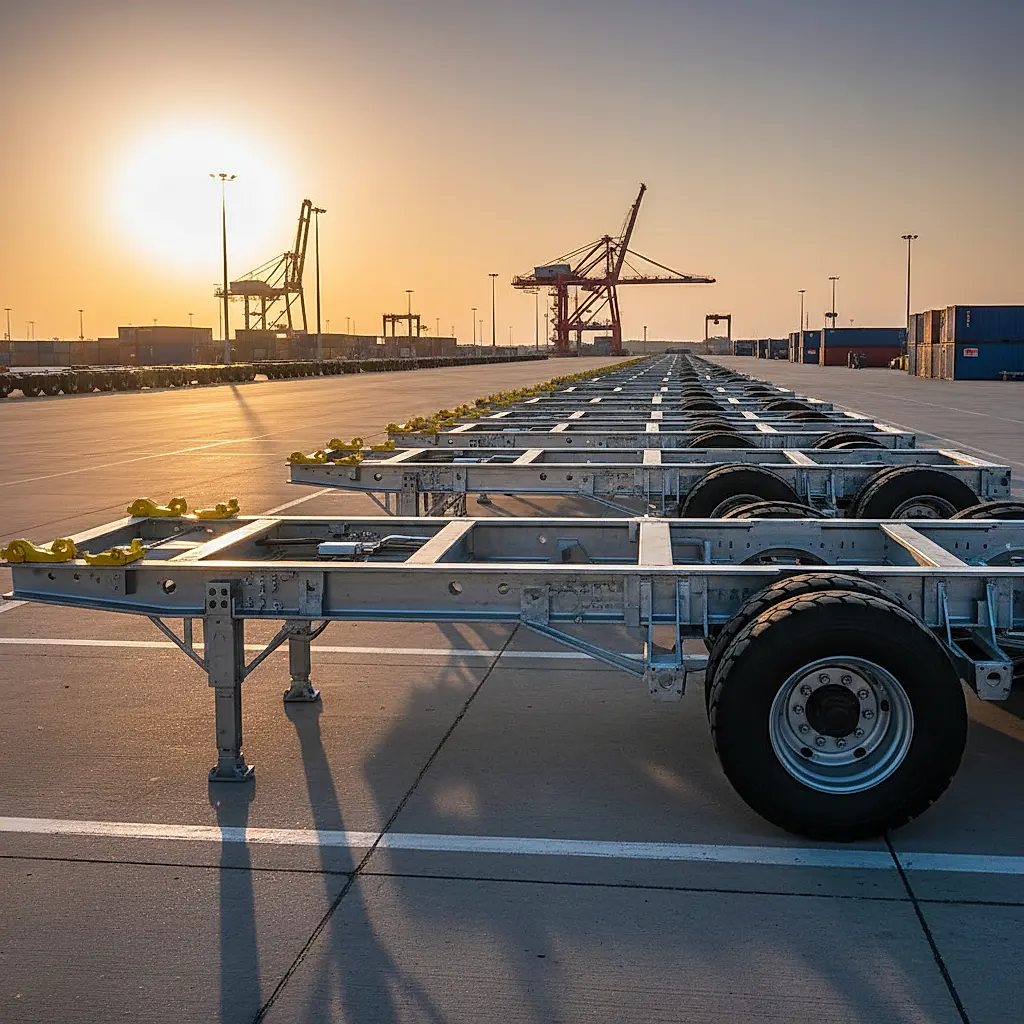
A practical guide to help you understand the difference between a container chassis and a shipping container, plus key questions to ask before you buy.
If you are shopping for equipment to move or store freight, you may have seen listings for both shipping containers and container chassis. They serve very different purposes, and mixing them up can lead to costly mistakes. This guide explains what each item is, when you might need one or the other, and the questions to ask before you buy. We do not publish prices or specs here because those change by listing, condition, and availability. Always confirm current details with the Newport team.
What Is a Shipping Container?
A shipping container is a standardized steel box used to store or transport goods. It is built to be stacked, lifted, and carried by crane, reach stacker, or chassis. Common nominal lengths are 20 feet and 40 feet, with standard and high-cube heights. Exact dimensions, weight limits, and condition vary by unit, so check the individual listing and the CSC plate for the specific container you are considering.
Shipping containers are often used for:
- On-site storage for tools, materials, or inventory
- Temporary or permanent workspace
- Secure storage at job sites, farms, or yards
- Modified structures such as offices or workshops
If your goal is to store or shelter something on your property, a shipping container is usually the product you want.
What Is a Container Chassis?
A container chassis is a wheeled trailer frame designed to hold and move a shipping container over the road. It is not a storage box. It is the rolling undercarriage that a truck tractor connects to when hauling a container. Chassis come in different configurations for 20-foot and 40-foot containers, and some are adjustable or gooseneck designs. They are typically sold to trucking companies, fleets, and logistics operators, not to homeowners looking for storage.
Key points about chassis:
- They are for over-the-road transport, not stationary storage.
- They require a tractor and a licensed driver to move.
- They must be maintained and inspected for safe operation.
- Specifications, age, and condition vary widely between units.
If you need to move containers regularly, a chassis may be part of your equipment plan. If you only need to store goods, you likely do not need a chassis.
Chassis or Container? Match the Tool to the Job
Before you buy, clarify what you are actually trying to do. The decision usually comes down to whether you need to move containers or simply use one.
You probably need a shipping container if:
- You want secure storage on a site you control.
- You need a weather-tight space for equipment or materials.
- You plan to modify or repurpose a steel box.
- You do not own or operate truck tractors.
You probably need a container chassis if:
- You operate a trucking or drayage business.
- You haul containers between ports, rail yards, and customer sites.
- You need to pick up or deliver containers on a regular basis.
- You have the tractors, drivers, and maintenance resources to support a fleet.
Many businesses need both, but they are separate purchases with separate requirements. Do not assume that buying a container includes a chassis, or that buying a chassis includes a container.
New vs. Used Equipment: What to Consider
Both shipping containers and chassis are available new and used. The right choice depends on your budget, timeline, and tolerance for maintenance.
New equipment
- Typically comes with the latest design and coatings.
- May offer a longer useful life before major repairs.
- Usually costs more upfront.
- Availability can be limited depending on current production and demand.
Used equipment
- Often more affordable upfront.
- Condition ranges from nearly new to well-worn.
- May need repairs, repainting, or component replacement.
- Inspection is critical before purchase.
For either category, ask for current photos, inspection details, and any available documentation. Do not rely on general assumptions about age or condition. Confirm the specifics of the exact unit with the Newport team.
Questions to Ask Before You Buy
Because specifications and availability change, a short list of questions can save you time and money.
- What is the exact nominal size and height of this unit?
- What is the current condition, and are there photos or an inspection report?
- Is the CSC plate or data plate available and legible?
- What are the delivery requirements for my site?
- Are there any known repairs or modifications?
- What is included in the sale, and what is not?
- What is the return or inspection policy, if any?
- Who do I contact if I have questions after delivery?
Write down the answers and compare them across listings. If a seller cannot answer basic questions, that is a signal to slow down.
Site Access and Delivery Planning
Delivery is one of the most common sources of surprise. A container or chassis is large and heavy, and not every site can accommodate a delivery truck. Before you buy, think through:
- The width and condition of your access road
- Overhead obstacles such as tree limbs, wires, or bridges
- Ground conditions and slope
- Space to maneuver and unload
- Any local rules or permits that may apply
Requirements vary by location and by the equipment used. Do not assume that a particular size will need fewer permits or that delivery will require specific extra equipment. Confirm site access and delivery details with the Newport team and, where relevant, with your local authority.
Maintenance and Long-Term Ownership
If you buy a shipping container for storage, maintenance is usually minimal: keep the roof clear, check for rust, and ensure doors seal properly. If you buy a chassis, maintenance is more involved because it is road-going equipment. Tires, brakes, lights, and structural components need regular inspection. Fleet owners should have a maintenance schedule and keep records.
For either product, keep documentation. A bill of sale, any inspection notes, and photos at delivery can help if questions arise later.
Frequently Asked Questions
Can I use a shipping container without a chassis?
Yes. A shipping container can be placed on prepared ground, blocks, or a foundation and used for storage or modification. A chassis is only needed when you want to move the container over the road. If you plan to keep the container in one place, you likely do not need a chassis.
Is a 20-foot container easier to deliver than a 40-foot container?
Delivery difficulty depends on the site, the truck, and the equipment used, not just the container length. A shorter container may fit in tighter spaces, but access, ground conditions, and local rules all matter. Confirm delivery requirements with the Newport team before you buy.
Do I need a special license to tow a container chassis?
Licensing rules vary by state and by vehicle combination. A chassis is typically used with a truck tractor and a commercial driver. Check with your state licensing authority and your insurance provider for the requirements that apply to you.
What should I inspect on a used chassis?
Look at the frame for cracks or repairs, check tires and brakes, test lights and wiring, and review any available maintenance records. If you are not experienced with trailer inspection, consider having a qualified mechanic look at it before purchase.
Can I buy a container and a chassis at the same time?
Availability varies. Some sellers offer both, while others specialize in one or the other. Ask the Newport team what is currently available and what can be combined in a single transaction.
Next Steps
Start by deciding whether you need storage or transport equipment. If you need a shipping container, browse current listings at our shop and note the sizes and conditions that fit your project. If you need a chassis or are not sure which product is right, reach out through our contact page and tell us what you are trying to accomplish. We will help you confirm listing details, availability, pricing, site access, and delivery requirements so you can make an informed decision.
Plan the next step
Confirm the container and the delivery plan.
Browse current listings, then speak with the Newport team to verify the unit, total pricing, site access, and delivery requirements before payment.