
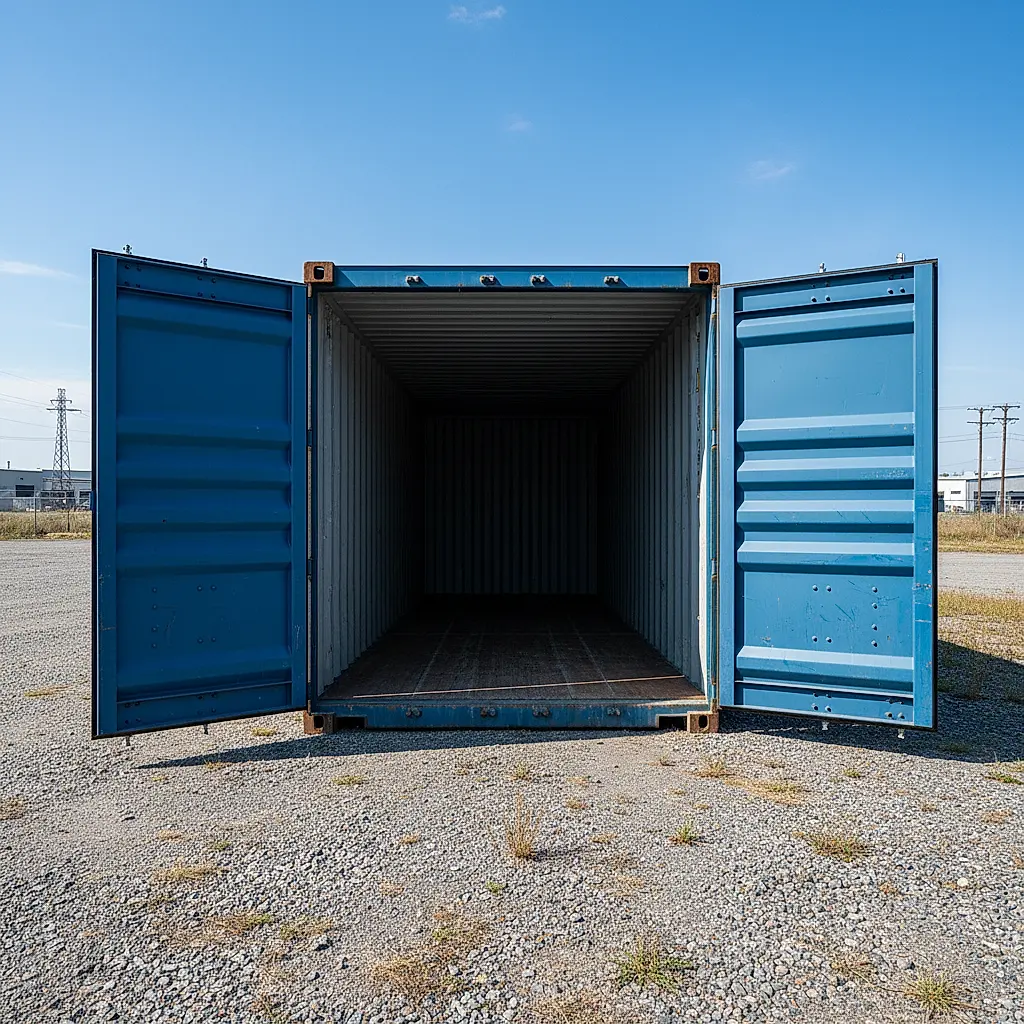
Double door shipping containers offer flexible access for storage, workshops, and inventory. Learn how they work, where they fit, and what to plan before you buy.
Double door shipping containers — sometimes called tunnel containers — are built with a set of doors at each end. That second opening changes how you load, organize, and use the space. This guide explains the practical benefits, common use cases, and the decisions you should work through before buying, so you can choose with confidence.
Because container specifications vary by manufacturer and individual unit, always confirm the exact details on the listing and the container's CSC plate. For anything related to site access, delivery, or local requirements, talk with the Newport team and your local authority before you commit.
What Is a Double Door Shipping Container?
A standard shipping container has doors at one end. A double door container has doors at both ends. The structure is otherwise similar: steel corrugated walls, a steel frame, a weather-resistant roof, and a wooden or steel floor. The second door set is typically the same size and style as the first, with locking bars and handles on each end.
People often call these "tunnel containers" because when both doors are open, you can see straight through the length of the box. That open line of sight is the feature that makes them useful for certain jobs.
How the doors differ from a standard container
On a single-door container, one end is permanently closed. On a double door unit, both ends open. That means:
- You can load or unload from either end without turning the container around.
- You can create a pass-through workspace or storage lane.
- You can open one end for daily access and keep the other end closed for security.
- You can improve airflow through the container when both ends are open and the weather allows.
Door hardware, seals, and locking systems can vary. Check the listing for the specific door configuration, and inspect the gaskets and locking bars if you view the container in person.
Practical Benefits of a Double Door Container
Easier loading and unloading
When you have doors at both ends, you are not forced to work from a single opening. For long items, palletized goods, or equipment that is awkward to maneuver, a second access point can reduce the amount of pushing, dragging, and repositioning. It can also shorten the distance you carry items inside the container.
Better workflow for inventory and projects
A double door container can support a one-way flow: load at one end, work or store in the middle, and remove at the other end. That can be useful when you are managing stock, staging materials for a job, or running a small workshop. The benefit depends on how you organize the interior, not just on the doors themselves.
Flexible access for tight or awkward sites
On some sites, the direction a container faces matters. A double door unit gives you more options because you are not locked into a single access side. If your site layout changes, or if you want to open the container toward a work area, the second door set can help. Site access and placement still need to be confirmed with the delivery team.
Ventilation and light when both ends are open
With both doors open, you can get cross-flow ventilation and more natural light. That can make the container more comfortable to work in during mild weather. It does not replace proper ventilation planning for stored goods, and you should still manage moisture and condensation according to your storage needs.
Security you can control
You can keep both ends locked, or use one end as the main access point and keep the other secured. Locking hardware and seals vary, so confirm what is included on the specific unit. If security is a priority, ask about the lock configuration and consider how you will manage keys or codes.
Common Use Cases for Double Door Containers
Storage and inventory management
Double door containers work well when you need to move goods in and out efficiently. A second opening can help you separate incoming and outgoing stock, or keep frequently used items near one door and long-term storage near the other. The right size depends on your inventory volume, how you shelve or stack items, and how often you need access.
Workshops and maker spaces
A container can serve as a small workshop, and a second door gives you more ways to bring in materials and equipment. Before you plan a workshop, think about ventilation, power, lighting, insulation, and local building or zoning requirements. Those are site-specific questions, so confirm them with your local authority.
Retail, pop-up, and event use
Double door containers are sometimes used for pop-up retail, ticketing, or event support. The pass-through layout can create a natural counter or service point. Check local rules for temporary structures, signage, and occupancy before you plan an event use.
Agricultural and equipment storage
Farm and ranch operations often need to store tools, feed, or equipment. A double door container can make it easier to move long or bulky items. Consider ventilation, pest control, and moisture management for the items you plan to store.
Construction and job site support
On a job site, a container can hold tools and materials. A second door can reduce bottlenecks when crews need to pull items quickly. Delivery access, ground conditions, and site rules should be confirmed before the container arrives.
Transitional or temporary space
Some buyers use containers as temporary space during a build or renovation. A double door unit can be easier to work from because you can open the end that faces your work area. Check local rules for temporary structures and any permit requirements that may apply.
Sizes, Specifications, and What to Confirm
Double door containers are commonly available in nominal lengths such as 20 feet and 40 feet, with standard-height and high-cube options. Nominal length, width, and height are approximate descriptions, not exact measurements for every unit. Exact dimensions, door openings, weight, and capacity vary by manufacturer and by individual container.
Details to verify on the listing
- Nominal size and whether it is standard height or high cube.
- Door opening dimensions at both ends.
- Interior dimensions and floor material.
- Condition: new, one-trip, or used, with any known repairs.
- Locking hardware, seals, and door gaskets.
- Any markings, modifications, or previous cargo history.
Details to verify with the CSC plate and documentation
The CSC plate on the container carries safety approval information. If you need exact payload, gross weight, or capacity figures, use the plate and the manufacturer's documentation rather than assuming a number from a general article. Ask the Newport team which documents are available for the unit you are considering.
Questions that depend on your site
- Will the delivery truck be able to reach the placement spot?
- Is the ground level, firm, and stable enough for the container and the delivery equipment?
- Are there overhead wires, tree branches, or tight turns along the route?
- Do you need a permit or approval from a local authority?
- How will you level and support the container once it is placed?
These are site-specific questions. Confirm them with the Newport delivery team and your local authority. Do not assume that a particular size will need fewer permits or that delivery will require specific extra equipment — those details depend on your location and the unit.
Planning Your Purchase: A Step-by-Step Approach
1. Define how you will use the container
Write down what you plan to store or do inside. Note whether you need frequent access, whether you will work inside, and whether you need power, lighting, or ventilation. That will help you decide between a standard container and a double door unit.
2. Choose a size range, then confirm exact specs
Use nominal sizes as a starting point. Then confirm exact interior and door dimensions on the listing or with the Newport team. If you are planning shelving or equipment, measure your items and compare them to the confirmed dimensions.
3. Decide on condition
New, one-trip, and used containers differ in appearance, wear, and price. Ask what condition the unit is in and whether any repairs or modifications have been made. Confirm availability and pricing directly with Newport.
4. Plan the site
Walk your site and note the route from the road to the placement spot. Take photos and measurements. Share them with the delivery team so they can advise on access. Confirm ground conditions and any local requirements.
5. Plan for foundation and leveling
Containers need a level, stable base. Options can include concrete pads, gravel, or other prepared surfaces. The right choice depends on your soil, drainage, and how long the container will stay. Ask the Newport team for general guidance, and consult a local professional for site-specific advice.
6. Plan for ventilation and moisture
Condensation can be an issue in steel containers. Think about airflow, desiccants, or other moisture-control measures appropriate to your climate and contents. If you will store moisture-sensitive goods, plan accordingly.
7. Confirm delivery details
Ask about delivery scheduling, site access requirements, and what you need to prepare before the truck arrives. Confirm any requirements with the Newport team rather than assuming.
Frequently Asked Questions
Are double door containers more expensive than single door containers?
Pricing varies by size, condition, availability, and market factors. A double door unit may cost more than a comparable single door unit because of the additional door set and hardware. For current pricing on specific units, check the listing or contact Newport directly.
Can I use a double door container as a workshop?
Many people do, but a workshop needs more than a container. Consider ventilation, power, lighting, insulation, and local building or zoning rules. Confirm requirements with your local authority before you plan a workshop use.
Do double door containers leak more than single door containers?
Any container can leak if door gaskets, seals, or roof panels are damaged. A double door unit has two door sets, so there are more seals to inspect and maintain. Check the condition of the gaskets and ask about any known leaks or repairs.
How do I know which size to choose?
Start with what you need to store or do inside, then compare your measurements to the confirmed interior and door dimensions. Nominal sizes are a starting point, not a guarantee of exact fit. Ask the Newport team to confirm the specifications of the unit you are considering.
Can I modify a double door container?
Modifications such as adding vents, windows, or electrical work may be possible, but they can affect the container's structure and safety approvals. Check local requirements and consult qualified professionals. Ask Newport what modifications, if any, have already been made to a specific unit.
Next Steps
A double door shipping container can be a practical choice when you need flexible access, a pass-through layout, or easier loading from either end. The key is to match the container to your actual use, confirm the exact specifications, and plan your site before delivery.
Browse current listings at our shop to see available sizes and conditions. When you are ready to talk through access, delivery, or specifications, contact the Newport team and we will help you confirm the details for your project.
Plan the next step
Confirm the container and the delivery plan.
Browse current listings, then speak with the Newport team to verify the unit, total pricing, site access, and delivery requirements before payment.