
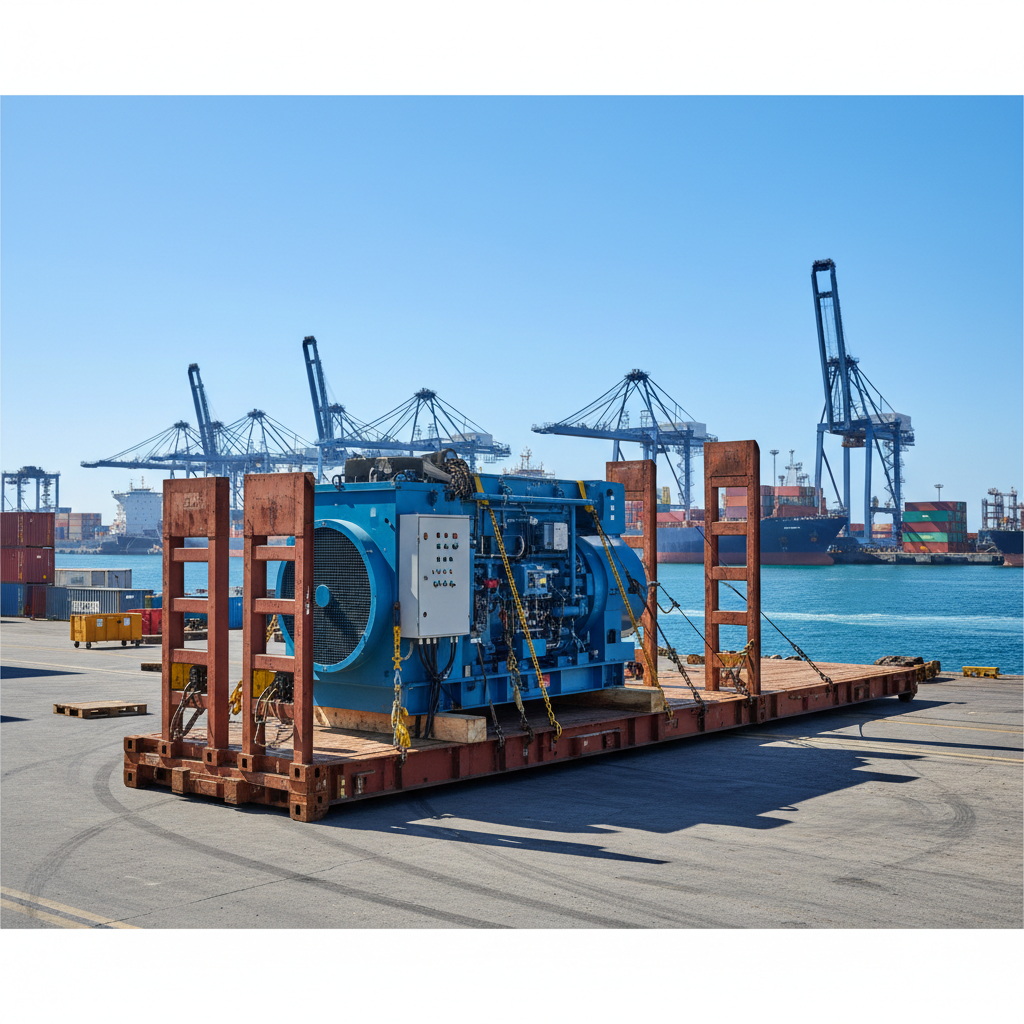
Flat rack containers carry oversized, heavy, or oddly shaped cargo that won't fit in a standard box. Learn how they work, what to check before buying, and how to plan delivery.
Flat rack containers solve a specific problem: cargo that is too tall, too wide, too long, or too awkward for a standard enclosed container. If you are moving machinery, structural steel, vehicles, or fabricated components, a flat rack may be the right tool. This guide explains how flat racks differ from standard containers, what to verify before you buy, and how to plan a safe delivery and loading process.
What Is a Flat Rack Container?
A flat rack is a shipping container platform with a floor and end walls, but no roof and no side walls. The open sides allow cargo to overhang the platform width, and the open top allows tall loads to sit above the container's nominal height. Most flat racks are built with a heavy-duty steel floor and folding or fixed end walls that provide structural stiffness.
Flat racks are common in international freight because they let shippers move cargo that would otherwise require a breakbulk vessel or specialized trailer. For a US buyer, a flat rack can serve as a permanent platform for a fixed installation, a staging base for a fabrication project, or a transport frame for equipment that needs to move between sites.
Flat Rack vs. Standard Container
A standard dry container is a fully enclosed steel box. It protects cargo from weather and provides secure, stackable storage. A flat rack gives up that enclosure in exchange for access and dimensional flexibility. If your cargo fits inside a standard container with room to spare, a standard container is usually simpler and less expensive to handle. If your cargo cannot fit through the doors or must overhang, a flat rack is the more practical choice.
Collapsible and Fixed-End Flat Racks
Flat racks generally come in two styles. Collapsible flat racks have end walls that fold down, which can reduce storage and repositioning costs when the rack is empty. Fixed-end flat racks have rigid end walls that are typically stronger and simpler to inspect. The right choice depends on how often you will move the rack empty and how much cargo restraint you need. Confirm the specific style and condition in the individual listing.
Sizes and Specifications to Confirm
Flat rack containers are commonly discussed in nominal lengths such as 20-foot and 40-foot. Nominal length, width, and height are useful for early planning, but they are not a substitute for the actual specification of the unit you are considering. Container dimensions can vary by manufacturer, age, and design, and the CSC plate on the container is the authoritative source for that unit's ratings and identification.
Key Dimensions to Verify
Ask the Newport team or check the listing for:
- External length, width, and height
- Internal platform length and width
- End wall height and whether it is fixed or folding
- Floor material and condition
- Forklift pocket locations, if present
- Corner casting condition and any repair history
Ratings and the CSC Plate
Every container in international service carries a CSC safety approval plate. The plate lists information such as the container's identification, maximum operating gross mass, and other ratings. Do not rely on a generic spec sheet or a memory of another container. Read the plate on the actual unit, and ask questions if anything is unclear. If you plan to move the container on public roads or by rail, confirm applicable requirements with the carrier and the relevant authority.
Height and Width in Practice
A flat rack's platform height is lower than a standard container's overall height because there are no side walls or roof. That lower deck can make loading easier, but it also means the combined height of the rack plus your cargo may exceed what a standard container would measure. Measure your cargo, measure the rack, and add the two together before you commit to a route or a loading plan.
Buying a Flat Rack: What to Inspect
Flat racks are often used for heavy and irregular loads, so condition matters. A visual inspection and a few targeted questions can prevent expensive surprises.
Structural Checks
- Look for bends, cracks, or deep corrosion in the end walls and floor
- Check the corner castings for deformation or weld repairs
- Inspect the floor for soft spots, holes, or delamination
- Confirm that folding end walls lock and release properly
- Look for twist or sag along the platform length
Documentation and History
Ask what the container was previously used for and whether any repairs were made. If the rack was used for heavy machinery, the floor and end walls may have taken more stress than a visual inspection reveals. When in doubt, have the unit inspected by a qualified third party before purchase.
Matching the Rack to Your Cargo
Before buying, write down your cargo's weight, dimensions, center of gravity, and lifting points. Then compare those numbers to the rack's ratings and dimensions. If your cargo is close to a limit, get guidance from a qualified engineer or rigging professional. Do not assume that a rack that fits one load will safely fit another.
Loading, Securing, and Transport Planning
A flat rack only performs well when the cargo is properly secured and the transport route is planned around the load.
Lashing and Restraint
Flat racks typically have lashing rings or D-rings along the platform and end walls. The number and placement of tie-down points varies by unit. Use rated straps, chains, or binders appropriate for the load, and follow a recognized securement method. If you are not experienced with load securement, hire a qualified rigger or transport professional.
Route and Permit Considerations
An over-width, over-height, or over-length load may require permits, escorts, or specific routes. Requirements vary by state, by local jurisdiction, and by the dimensions and weight of the load. Contact the relevant state transportation authority and your carrier early. Do not assume that a particular container size avoids permits or that a particular route is always acceptable.
Site Access
Before delivery, walk the route from the public road to the final resting spot. Check for overhead wires, low branches, narrow gates, soft ground, and turning radius. A flat rack with cargo may be wider and taller than the delivery vehicle alone. If access is tight, discuss options with the Newport team and your carrier before the delivery date.
Common Uses for Flat Racks
Flat racks are used across many industries. Typical applications include:
- Heavy machinery and industrial equipment
- Structural steel, beams, and fabricated frames
- Vehicles and trailers that exceed standard container dimensions
- Generators, tanks, and skid-mounted systems
- Modular components for construction and plant work
- Temporary platforms and staging bases for projects
If your load is weather-sensitive, plan for tarps or custom covers, because a flat rack does not provide the enclosure of a standard container.
Frequently Asked Questions
Can a flat rack be used for storage?
Yes, but with limits. A flat rack is open to the weather, so it is best for cargo that can tolerate rain, snow, and temperature swings, or for cargo that you cover separately. If you need enclosed, secure storage, a standard dry container is usually the better choice.
Do flat racks come in high-cube versions?
Flat racks are typically described by platform dimensions and end wall height rather than by the standard or high-cube designations used for enclosed containers. Confirm the exact dimensions and ratings of the specific unit in the listing or on the CSC plate.
How do I know if my cargo will fit?
Measure your cargo's length, width, and height, then compare those numbers to the rack's platform and end wall dimensions. Account for overhang, lashing hardware, and any cover. If the fit is close, consult a qualified engineer or rigger before you buy or load.
Can Newport deliver a flat rack to my site?
Delivery options depend on your location, site access, and the equipment available. Share your address, site conditions, and load details with the Newport team, and they can confirm what is possible. Do not assume a particular delivery method or equipment will be used until it is confirmed.
What should I ask before buying a used flat rack?
Ask about prior use, repairs, floor and end wall condition, corner casting condition, and whether the CSC plate is present and legible. Request additional photos or an in-person inspection if you cannot see the unit yourself.
Next Steps
A flat rack is a practical solution when your cargo will not fit in a standard container, but it rewards careful planning. Start by measuring your load and writing down its weight and dimensions. Then review the available units and confirm the details that matter for your project.
Browse current flat rack listings at our shop, and when you are ready to talk through dimensions, condition, or delivery, contact the Newport team. They can help you confirm listing details, availability, pricing, site access, and delivery requirements before you commit.
Plan the next step
Confirm the container and the delivery plan.
Browse current listings, then speak with the Newport team to verify the unit, total pricing, site access, and delivery requirements before payment.