
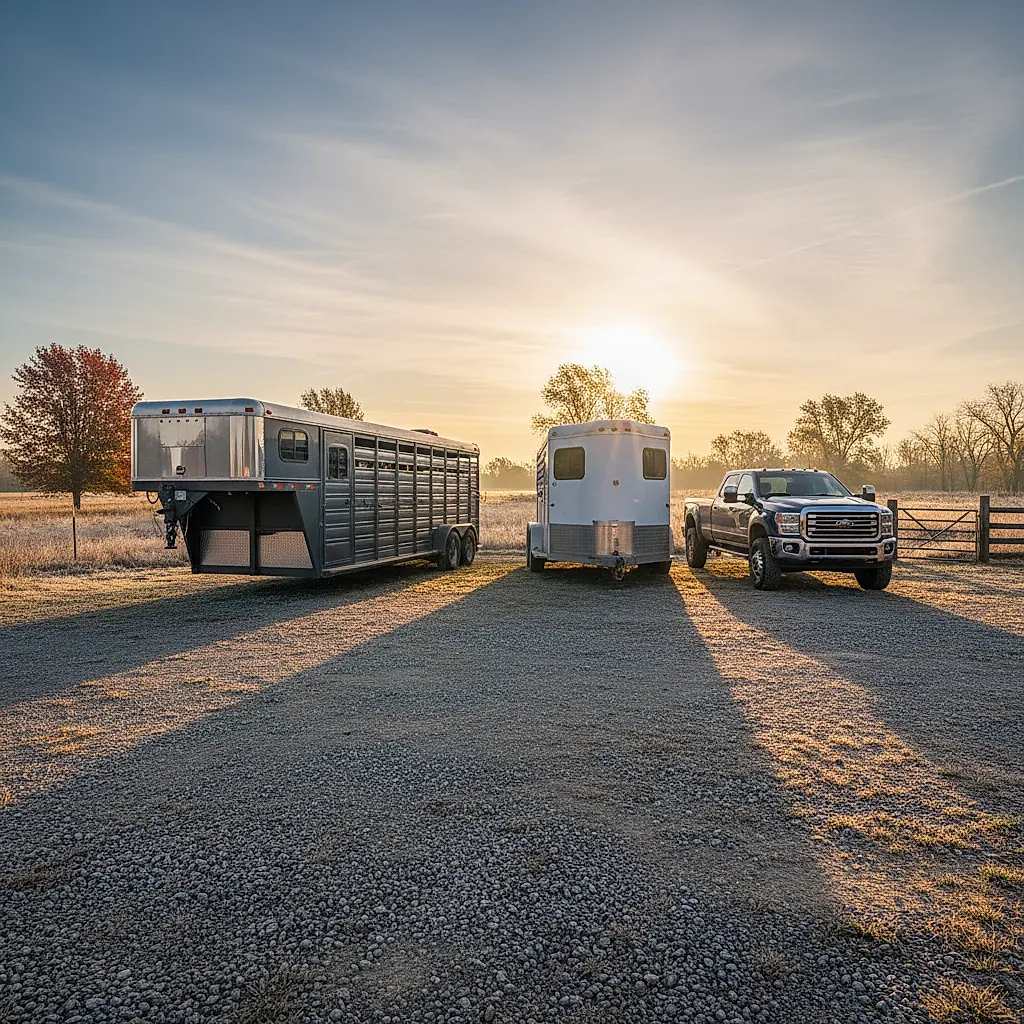
Compare gooseneck and bumper pull trailers for towing stability, hitch setup, and use cases. Learn which configuration may suit your hauling needs.
When you need to move equipment, materials, or goods, the choice between a gooseneck and a bumper pull trailer can shape your towing experience, your vehicle requirements, and your daily routine. Both configurations have loyal users, and neither is universally better. The right pick depends on your load, your tow vehicle, your parking situation, and how often you plan to haul.
This guide walks through the practical differences without hype. We will look at hitch placement, stability characteristics, turning behavior, bed space, and the questions you should ask before buying. Because exact capacities and ratings vary by trailer model and manufacturer, always confirm details on the specific listing, the trailer's certification plate, and with the dealer or builder. For container-related hauling and site planning, the Newport team can help you understand what to confirm before delivery.
How Gooseneck and Bumper Pull Hitches Differ
Bumper pull basics
A bumper pull trailer connects to a hitch mounted at the rear of the tow vehicle, typically under the bumper or at the frame. The coupler sits behind the rear axle. This is the most familiar setup for many drivers because it resembles how small utility and boat trailers attach.
Key traits:
- Hitch point is at the rear of the vehicle.
- The trailer tongue weight is carried behind the rear axle.
- Sway can be influenced by crosswinds, passing vehicles, and load distribution.
- Setup is generally straightforward for drivers new to towing.
Gooseneck basics
A gooseneck trailer uses a coupler that extends over the rear axle, often into the truck bed. The hitch is mounted in the bed, usually above or slightly ahead of the rear axle. This changes how the trailer's weight is carried and how the combination behaves on the road.
Key traits:
- Hitch point is over or near the rear axle.
- The trailer's tongue weight is carried closer to the tow vehicle's center.
- Many drivers report a more planted feel with heavy or long loads.
- The bed-mounted hitch reduces usable bed space when not towing.
Neither design eliminates the need for proper load balancing. Tongue weight, cargo placement, and tire condition all matter. Confirm your tow vehicle's ratings and the trailer's ratings before you commit.
Stability, Sway, and Towing Feel
Stability is one of the most discussed differences. Because a gooseneck hitch sits over the rear axle, the trailer's weight is applied closer to the tow vehicle's center of gravity. That can reduce the leverage that causes the rear of the truck to be pushed around by the trailer. In practice, many drivers find gooseneck setups feel more stable with long or heavy loads, especially at highway speeds.
A bumper pull trailer, by contrast, applies tongue weight behind the rear axle. That leverage can make the rear of the vehicle squat more and can contribute to sway if the load is not balanced. However, bumper pull trailers are not inherently unstable. With correct tongue weight, proper hitch setup, and sensible loading, they can tow very well for many applications.
Factors that affect stability in both configurations:
- Load distribution front to back and side to side.
- Tire pressure and tire condition on both the tow vehicle and trailer.
- Suspension condition and any upgrades.
- Speed, wind, and road surface.
- Hitch adjustment and whether the trailer sits level.
If you are new to towing, a bumper pull setup may feel more approachable because the hitch is behind the vehicle and the connection is easy to see. If you tow long or heavy loads regularly, a gooseneck may offer a more confident feel, but it requires a bed-mounted hitch and a compatible tow vehicle.
Turning, Maneuvering, and Everyday Use
Turning radius and tight spaces
Gooseneck trailers typically turn more tightly than bumper pull trailers of similar length because the pivot point is over the axle rather than behind the vehicle. That can help in tight job sites, driveways, and yards. However, the trailer's front corners can swing differently, and the bed-mounted hitch changes how the trailer tracks in a turn. Practice in an open area before navigating tight spaces.
Bumper pull trailers generally track more predictably behind the vehicle, which some drivers find easier for backing into a straight driveway or parking spot. The rear hitch point gives a familiar pivot for many drivers.
Bed space and daily driving
A gooseneck hitch occupies part of the truck bed. Some hitches are removable or fold down, but the mounting system remains. If you use your truck bed for tools, materials, or a fifth-wheel hitch for other trailers, plan for that interference.
A bumper pull hitch leaves the bed clear. That is a practical advantage if the truck is your daily driver or if you frequently carry cargo in the bed.
Hookup and unhooking
Bumper pull hookup is usually a one-person job with the trailer visible in the mirrors. Gooseneck hookup often requires the driver to line up the coupler over the ball in the bed, which can be harder to see. Many drivers use a spotter, a camera, or a magnetic alignment tool. Neither method is difficult once you have a routine, but the learning curve differs.
Matching the Trailer to Your Tow Vehicle and Load
Before choosing a configuration, start with the load and the tow vehicle.
Questions to answer:
- What is the heaviest load you expect to haul, and how often?
- What is your tow vehicle's rated towing capacity and payload capacity?
- Does your vehicle have a factory tow package, or will you need to add a hitch, wiring, and cooling upgrades?
- Will you need a bed-mounted hitch, and is your truck bed compatible?
- How much bed space do you need when not towing?
- Where will you park and store the trailer?
A trailer that is too light for the load is unsafe. A trailer that is heavier than needed can reduce fuel economy and make maneuvering harder. The goal is to match the trailer to the job with some margin for real-world conditions.
For container hauling, the trailer must be rated for the container's weight and dimensions. Do not assume that a trailer that fits a container's footprint can safely carry its loaded weight. Confirm the trailer's ratings and the container's weight with the listing, the certification plate, and the delivery team.
Site Access, Parking, and Storage
Trailer length and hitch type affect where you can go and where you can park.
- A gooseneck trailer's tighter turning can help in tight sites, but the tow vehicle and trailer combination may be longer overall.
- A bumper pull trailer may be easier to store in a standard garage or carport, depending on height and length.
- Overhead clearance matters for both. Check trees, wires, and building overhangs.
- Ground surface matters. Soft ground, gravel, and slopes can affect traction and stability.
- Turning space at the destination matters more than many buyers expect. Measure gates, driveways, and culverts.
If you are planning a container delivery, share site details with the Newport team early. They can help you understand what information to confirm, such as access width, surface conditions, and overhead obstructions. Exact delivery requirements vary by location and equipment, so confirm those details directly.
Maintenance and Safety Checks
Both configurations share the same basic maintenance needs:
- Inspect tires for pressure, tread, and sidewall damage.
- Check lights, wiring, and connectors before every trip.
- Lubricate hitch components and check for wear.
- Inspect couplers, safety chains, and breakaway systems.
- Confirm load securement and recheck after the first few miles.
- Keep the trailer level and the load balanced.
For gooseneck setups, pay attention to the bed-mounted hitch and its mounting hardware. For bumper pull setups, inspect the receiver, ball mount, and pin. Follow the manufacturer's torque and inspection recommendations. If you are unsure about any component, have a qualified technician inspect it.
Frequently Asked Questions
Is a gooseneck trailer always more stable than a bumper pull?
No. A gooseneck hitch places weight over the rear axle, which many drivers find more stable with heavy or long loads. But stability also depends on load balance, tire condition, suspension, speed, and hitch setup. A properly loaded and maintained bumper pull trailer can be very stable. The right answer depends on your specific combination.
Do I need a special truck for a gooseneck trailer?
You need a tow vehicle that can accept a bed-mounted gooseneck hitch and that is rated for the trailer's weight. Not all trucks are set up for this. Check your vehicle's ratings, the hitch manufacturer's requirements, and the trailer's specifications. A qualified installer can confirm compatibility.
Can I tow a bumper pull trailer with a half-ton truck?
Many half-ton trucks can tow certain bumper pull trailers, but capacity varies widely by configuration, drivetrain, and options. Do not rely on a general rule. Check the specific vehicle's ratings and the trailer's weight. Confirm with the trailer listing and a qualified professional.
Which setup is easier to back up?
Bumper pull trailers often feel more intuitive to back up because the pivot point is behind the vehicle. Gooseneck trailers pivot over the axle, which changes the steering response. With practice, either can be handled well. Start in an open area and use a spotter.
Does a gooseneck trailer require more maintenance?
Both require regular inspection of tires, lights, brakes, and hitch components. A gooseneck adds a bed-mounted hitch that needs periodic inspection and lubrication. Follow the manufacturer's maintenance schedule for your specific equipment.
Next Steps for Your Trailer Decision
Choosing between gooseneck and bumper pull comes down to your load, your tow vehicle, your site, and your comfort level. Start by confirming your vehicle's ratings and the trailer's specifications. Then think about where you will park, how often you will tow, and whether you need your truck bed for other cargo.
If you are also planning a container purchase or delivery, the Newport team can help you review site access and answer questions about what to confirm before delivery. Browse current options at our shop and reach out with your questions at our contact page. We are happy to help you think through the details so you can make a confident decision.
Plan the next step
Confirm the container and the delivery plan.
Browse current listings, then speak with the Newport team to verify the unit, total pricing, site access, and delivery requirements before payment.