
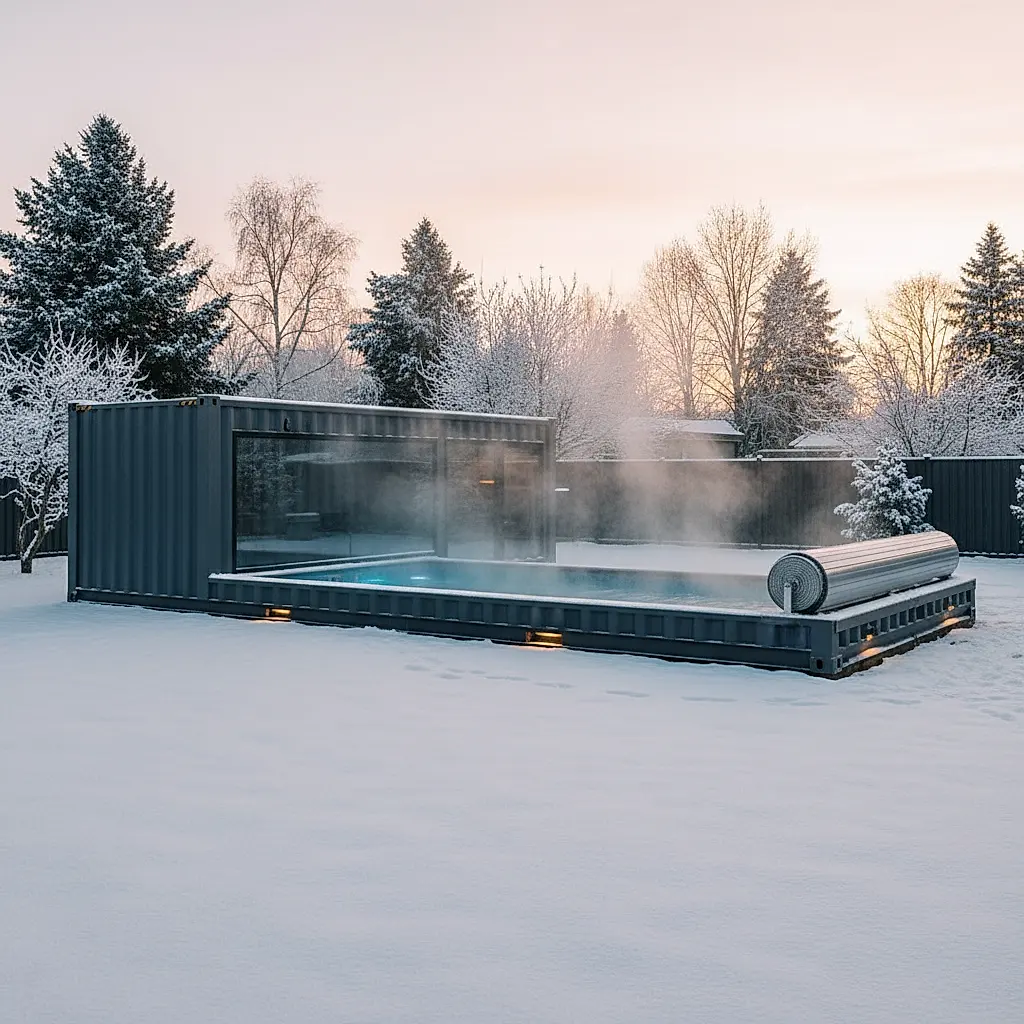
Planning a heated shipping container pool? Learn how to think through heating options, winter maintenance, and site requirements without guesswork.
Why a Heated Shipping Container Pool Needs Careful Planning
A shipping container pool can be a striking, durable addition to a property. Heating that pool, however, adds layers of decisions that affect how you use it, how you maintain it, and what you should confirm before you buy. This guide walks through the practical questions buyers and project planners face, with an emphasis on verifying details rather than assuming them.
Heated container pools are not a single product you can order in one click. They combine a container shell, a water circulation system, a heater, controls, insulation considerations, and site access. Each of those pieces has its own requirements. The goal here is to help you ask better questions, not to promise a specific outcome.
Understanding the Container Shell and Pool Conversion
Nominal container dimensions
Shipping containers are commonly described by nominal length: 20-foot and 40-foot are the standard references. Width is typically about 8 feet, and height is usually 8 feet 6 inches for standard containers or about 9 feet 6 inches for high-cube containers. These are approximations. Exact interior and exterior dimensions vary by manufacturer and container type, so always check the individual listing and the container's CSC plate for verified specifications.
What a pool conversion involves
Turning a container into a pool generally means cutting openings, adding structural reinforcement, applying waterproofing, and installing plumbing and electrical systems. The heater is only one part of that system. Because conversions vary widely, there is no universal specification sheet. Ask the seller or builder what is included, what is excluded, and which parts are field-installed versus factory-installed.
Questions to ask before buying
- Is the container new or used, and what condition is it in?
- What waterproofing method is used, and how is it maintained?
- Where do the pump, filter, and heater sit, and how are they vented?
- What electrical service does the equipment require?
- What does the seller confirm in writing versus what is left to the buyer?
Heater Options: Electric, Gas, and Heat Pump
Electric resistance heaters
Electric heaters are common because they are relatively simple to install where adequate electrical service exists. They can be slower to warm a large volume of water, and operating cost depends on local electricity rates and how often the pool is used. If you are considering electric heat, confirm the available amperage and voltage at your site with a licensed electrician.
Gas heaters
Gas heaters typically heat water faster than electric resistance heaters, but they require a fuel supply and proper venting. Installation rules and permit requirements vary by jurisdiction. Do not assume a gas line is available or that venting is straightforward. Confirm local code requirements and utility availability before committing to a gas system.
Heat pumps
Heat pumps move heat rather than generating it directly, which can make them efficient in mild conditions. Their performance drops in cold weather, so they may not suit every climate or every winter-use plan. If you want year-round heating in a cold region, discuss performance expectations with a qualified pool professional rather than relying on general claims.
Sizing and controls
Heater sizing depends on water volume, desired temperature, ambient conditions, and how quickly you want the pool to warm. There is no one-size-fits-all answer. A pool professional can perform a heat load calculation. Controls, timers, and covers also affect energy use and should be part of the plan.
Winter Maintenance and Cold-Weather Use
Will you close the pool or keep it open?
In colder regions, many pool owners winterize by lowering the water level, blowing out lines, and adding winterizing chemicals. Others keep pools open and heated. Each approach has trade-offs in cost, equipment wear, and maintenance effort. The right choice depends on your climate, your budget, and how you plan to use the pool.
Freeze protection
Water expands when it freezes, which can damage plumbing, pumps, and heaters. If you keep a pool open in freezing conditions, freeze protection settings and continuous circulation may be necessary. Confirm with a pool professional what your specific equipment requires. Do not assume that a heater alone prevents freeze damage.
Covers and evaporation
A cover reduces evaporation, heat loss, and chemical demand. It also keeps debris out. Cover options range from simple solar blankets to automatic systems. The best choice depends on your pool dimensions, your budget, and how much convenience you want. Measure your pool opening carefully and confirm cover compatibility with the seller.
Seasonal maintenance checklist
- Test water chemistry regularly and adjust as needed.
- Clean or backwash filters according to the manufacturer's schedule.
- Inspect the heater and connections for leaks or corrosion.
- Keep the area around equipment clear and dry.
- Follow the heater manufacturer's winterization instructions if you close the pool.
Site Access, Electrical, and Delivery Considerations
Getting the container to the site
A shipping container is large and heavy. Delivery requires a truck with the right equipment and a path that can accommodate it. Do not assume that a standard driveway or gate is sufficient. Confirm site access, turning radius, overhead clearance, and ground conditions with the Newport team before scheduling delivery. If access is limited, discuss options rather than assuming a crane or other equipment will be included.
Electrical service
Heated pools require electrical work for pumps, heaters, controls, and lighting. The available service at your property may or may not support your planned equipment. A licensed electrician should evaluate your panel, wiring, and grounding. Do not rely on general estimates; confirm what your specific installation needs.
Permits and local rules
Pool installations, electrical work, and gas connections may require permits and inspections. Requirements vary by state, county, and city. Contact your local building department to learn what applies to your project. Do not assume that a container pool is treated the same as a conventional pool or that it avoids permits.
Placement and foundation
A container pool needs a level, stable base. Depending on the soil and the installation, you may need a concrete pad, gravel base, or engineered foundation. Confirm the recommended foundation with the seller or a structural professional. Also consider drainage, access for maintenance, and clearance around equipment.
Cost Factors and Budgeting Without Guesswork
What drives the cost
Costs vary widely based on container size and condition, conversion complexity, heater type, electrical work, site preparation, and local labor rates. Because there is no standard package, any specific number would be misleading. Instead, build a budget by requesting itemized quotes for each component.
Questions that affect your budget
- What is included in the container pool price versus billed separately?
- What electrical upgrades are needed, and who performs them?
- What site work is required before delivery?
- What ongoing maintenance and energy costs should you expect?
- What is the warranty or support policy on the container and on the equipment?
Getting comparable quotes
Ask each vendor to break down the container, conversion, heater, electrical, delivery, and site work separately. That makes it easier to compare quotes and spot missing items. Confirm pricing, availability, and delivery details with the Newport team for any listing you are considering.
Frequently Asked Questions
Can any shipping container be converted into a heated pool?
Not necessarily. Conversion feasibility depends on the container's condition, the intended design, and local requirements. A used container with significant corrosion may not be suitable. Discuss your plans with the seller and a qualified pool or structural professional before purchasing.
What heater type is best for a container pool?
There is no single best choice. Electric, gas, and heat pump heaters each have trade-offs in installation, operating cost, and climate suitability. The right option depends on your site, your budget, and how you plan to use the pool. Consult a pool professional for a recommendation based on your specific situation.
How do I winterize a heated container pool?
Winterization steps depend on your equipment and climate. Common steps include lowering the water level, blowing out lines, and adding winterizing chemicals, but your heater and pump manufacturer may have specific instructions. Follow those instructions and consult a pool professional if you are unsure.
Do I need a permit for a container pool?
Permit requirements vary by location and by the scope of work, including electrical and gas connections. Contact your local building department to confirm what is required. Do not assume that any pool type is exempt.
Can I use a container pool year-round in a cold climate?
It may be possible with appropriate equipment and insulation, but performance and cost depend on many factors. Discuss your climate and goals with a pool professional before planning year-round use.
Next Steps for Your Project
Start by browsing available containers and pool-ready options at our shop. Then reach out to the Newport team at our contact page to confirm listing details, availability, pricing, site access, and delivery requirements for your location. A few upfront conversations can save significant time and expense later.
Before you commit, gather quotes from licensed electricians, pool professionals, and site contractors. Confirm local permit requirements. And always verify specifications against the individual listing and the container's CSC plate rather than relying on general guidance.
Plan the next step
Confirm the container and the delivery plan.
Browse current listings, then speak with the Newport team to verify the unit, total pricing, site access, and delivery requirements before payment.