
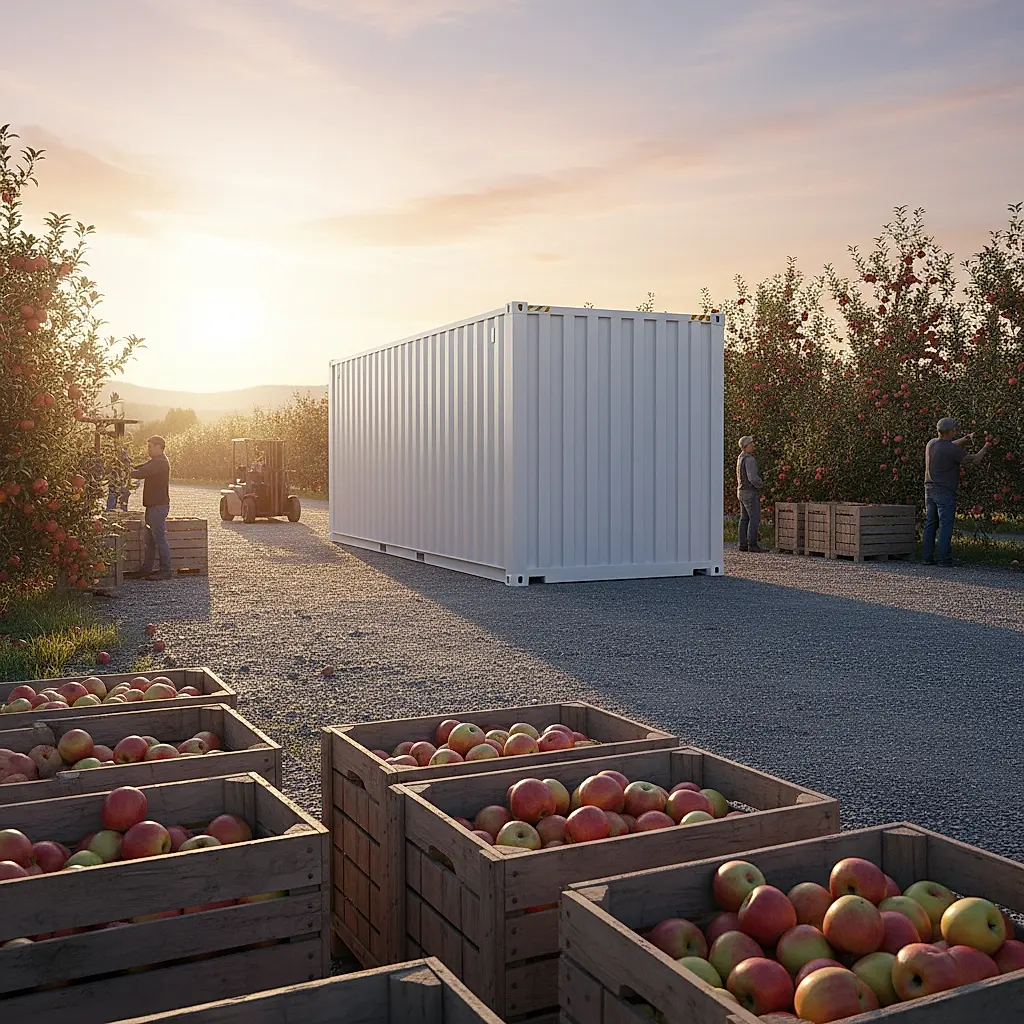
A practical guide to reefer containers for farms: how they work, what to verify, power and site needs, and how to compare used and new units before you buy.
Why Farms Consider a Refrigerated Container
Harvest season puts pressure on every part of a farm's operation. Produce often comes in faster than it can be sold, processed, or shipped, and outdoor temperatures may not cooperate. A refrigerated shipping container — often called a reefer — is one option for creating a temperature-controlled space close to where the work happens.
A reefer is a shipping container built with insulated walls and an integrated refrigeration unit. Because it is a container, it can be moved, placed, and later relocated. Because it has its own cooling system, it can hold conditions that a standard dry container cannot.
That said, a reefer is not a turnkey cold room. It needs a suitable power supply, a level and accessible site, and a realistic plan for airflow, loading, and monitoring. This guide walks through the decisions that matter so you can ask better questions before you buy.
How a Reefer Container Works
The insulated box and the refrigeration unit
A reefer container combines two systems:
- The insulated enclosure. Walls, floor, and ceiling are built with insulation and lined with materials designed to be cleaned. This slows heat gain from outside.
- The refrigeration unit. A self-contained unit mounts at one end and moves heat out of the interior. It typically includes a compressor, condenser, evaporator, fans, and controls.
Most reefer units are designed to hold a set temperature rather than to pull a warm load down quickly. That distinction matters on a farm: if produce goes in warm, the unit may struggle to bring it to temperature. Pre-cooling produce before loading is often part of a workable plan, but the right approach depends on the crop and your operation.
Temperature range and control
Reefer units are generally capable of holding temperatures well below freezing and above it, with adjustable set points. Exact capabilities vary by model, age, and condition. Rather than assume a number, check the specific listing and the unit's own documentation.
Airflow inside the box
Cooling depends on air moving through the load, not just around it. Blocked airflow creates warm pockets. Practical habits include:
- Leaving space between the load and the evaporator end.
- Avoiding stacking product tight against the walls.
- Using pallets or dunnage so air can move under and around goods.
- Keeping the floor clear of loose debris that can block return air.
Matching the Container to Your Harvest
What you plan to store
Different crops have different temperature and humidity preferences. Leafy greens, root vegetables, and tree fruit are not interchangeable. Before choosing a unit, write down:
- Which crops you intend to hold.
- Whether you need above-freezing holding or frozen storage.
- How long product will typically stay in the container.
- Whether you need humidity control, and how you will manage it.
If you are unsure about target conditions for a specific crop, consult your local extension office or a qualified agricultural advisor. No container listing can tell you what your crop needs.
How much space you actually need
Container sizes are described by nominal length. Common options include 20-foot and 40-foot units, and both standard-height and high-cube versions exist. Nominal dimensions are useful for planning, but they are not the same as usable interior volume. Insulation, the refrigeration unit, and internal clearances all reduce the space available for product.
A practical approach:
- Estimate your peak volume in pallets or bins, not just pounds.
- Add room for airflow and access aisles.
- Compare that to the usable interior dimensions in the specific listing.
- Confirm exact dimensions with the Newport team before committing.
Avoid assuming that a given container size fits a given number of rooms, stalls, or pallet positions. Those figures depend on the unit and how you load it.
New, used, and refurbished units
Reefer containers are sold in a range of conditions. A used unit may show cosmetic wear, and its refrigeration unit may have service history. A newer or refurbished unit may cost more but need less attention early on.
Questions worth asking about any unit:
- What is the condition of the refrigeration unit, and when was it last serviced?
- Are the controls and display functioning?
- Is the insulation intact, and are there signs of water intrusion?
- What documentation is available for the unit?
- Has the container been used for anything that would affect food contact surfaces?
Power, Site, and Installation Planning
Electrical supply
This is where many projects stall. A reefer needs a suitable power source, and the requirements differ by unit. You will need to know the voltage, phase, and amperage the unit expects, plus whether your site can supply it. A licensed electrician should evaluate your service and make the connection.
Do not assume a standard household outlet will run a reefer. Do not assume a generator is sized correctly without checking. Confirm the electrical requirements for the specific unit with the Newport team and your electrician.
Siting the container
A reefer needs a stable, level surface and enough clearance for the unit to breathe. The condenser end must be able to reject heat, which means it cannot be boxed in.
Site considerations:
- Level, compacted ground or a prepared pad.
- Clearance around the refrigeration unit for airflow and service access.
- A route wide enough for the delivery truck and any equipment used to set the container.
- Drainage so water does not pool around the base.
- Distance from your power source, and how you will run the feed.
Delivery and access
Delivery requirements vary by location, container size, and the equipment available. Overhead obstacles, soft ground, narrow gates, and sloped driveways can all affect whether a delivery can be completed as planned. Share photos and details of your site with the Newport team early so any issues can be identified before delivery day.
Permits and local rules
Rules about placing a container on a property vary by jurisdiction and by how the container will be used. Some locations treat a refrigerated container differently from a dry one because of power, noise, or refrigeration considerations. Contact your local planning or zoning office to confirm what applies to your site. Do not rely on general advice about container permits.
Operating a Reefer on the Farm
Loading and unloading habits
Good habits extend the life of the unit and improve results:
- Keep doors closed as much as possible.
- Load pre-cooled product when practical.
- Leave the evaporator end clear.
- Use pallets or racks rather than placing product directly on the floor.
- Clean up spills promptly.
Monitoring temperature
A reefer's built-in controls show set point and often return air temperature. For product you care about, consider an independent temperature monitor or data logger inside the box. That gives you a record you can review later.
Maintenance basics
Routine attention helps avoid surprises:
- Keep the condenser coil clean and free of chaff, dust, and debris.
- Check door gaskets for wear and sealing.
- Inspect for condensation, ice buildup, or water intrusion.
- Schedule service with a qualified refrigeration technician.
- Follow the manufacturer's guidance for the specific unit.
When a reefer may not be the right answer
A reefer container is not always the best fit. Consider alternatives if:
- Your power supply cannot support the unit.
- Your volumes are small and a smaller cold room or cooler would serve better.
- You need precise humidity control beyond what the unit provides.
- Your site cannot accommodate delivery or service access.
Being honest about these constraints early saves money later.
Comparing Listings Without Getting Lost
When you review reefer listings, compare like with like. A short checklist:
- Size and height: nominal length, standard or high cube.
- Unit condition: age, service history, and current operating status.
- Electrical requirements: voltage, phase, amperage.
- Interior condition: lining, floor, insulation, door seals.
- Documentation: what is included with the unit.
- Location and delivery: what it takes to get it to your site.
Pricing depends on size, condition, unit type, and availability. Confirm current pricing and availability with the Newport team rather than relying on any general figure.
Frequently Asked Questions
Can I run a reefer container on a standard farm power supply?
It depends on the unit and your service. Reefer units have specific electrical requirements, and those vary by model. Have a licensed electrician review the unit's requirements against your available power before you buy. Confirm the electrical details for the specific listing with the Newport team.
Do I need to pre-cool produce before loading it into a reefer?
Many reefer units are designed to hold temperature rather than rapidly pull down a warm load. Whether you need to pre-cool depends on your crop, your harvest practices, and how quickly product goes in. Talk with an agricultural advisor about your specific crops.
How do I know what temperature to set?
Set points depend on the crop and how long you plan to store it. There is no single setting that works for everything. Use crop-specific guidance from a qualified source, then verify with an independent monitor inside the container.
Can a reefer container be placed on grass or gravel?
Placement depends on the surface, drainage, and how level the site is. A stable, level base is important, and the refrigeration end needs clearance for airflow. Share site details and photos with the Newport team so delivery and placement can be planned realistically.
Do I need a permit for a refrigerated container?
Requirements vary by jurisdiction and by use. Some locations have specific rules that may apply to refrigerated units. Contact your local planning or zoning office to confirm what is required for your property.
Next Steps
Start by writing down your crops, your peak volume, your target conditions, and your available power. That short list will make every conversation more productive.
Then browse current options at our shop and reach out through our contact page with your site details, electrical setup, and timeline. The Newport team can help you confirm listing specifics, availability, pricing, and delivery requirements so you can make a decision that fits your farm.
Plan the next step
Confirm the container and the delivery plan.
Browse current listings, then speak with the Newport team to verify the unit, total pricing, site access, and delivery requirements before payment.