
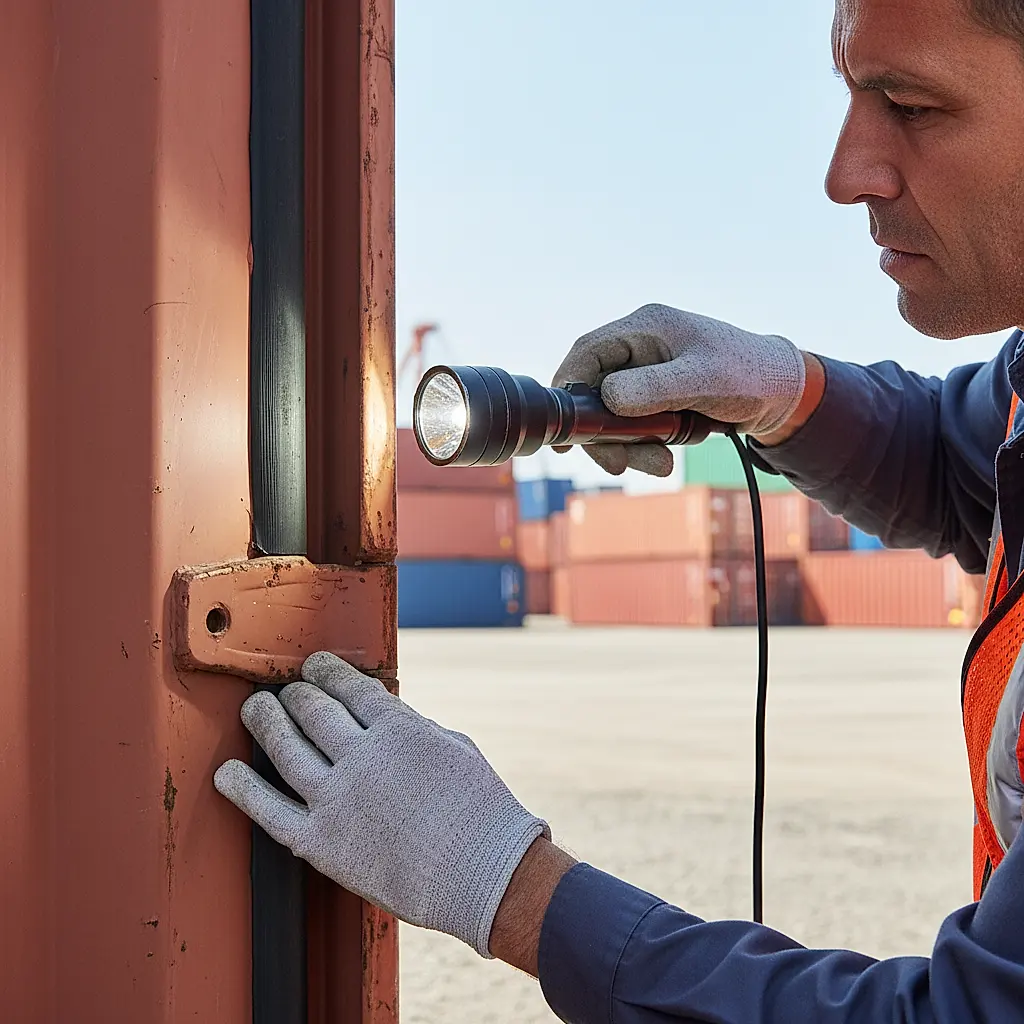
A field-ready guide to inspecting a used shipping container before you buy, covering structure, doors, seals, floors, rust, and the questions to ask the seller.
Start With the Big Picture, Then Work Down to Details
Inspecting a used shipping container is less about finding a perfect box and more about understanding what you are actually buying. Used containers have lived a working life at sea, on chassis, and in yards. Cosmetic wear is normal. What matters is whether the structure is sound, the doors operate, and the weather envelope still does its job.
Bring a flashlight, a small notebook, work gloves, and a camera. If you can, inspect in daylight with the doors open so shadows do not hide problems. Ask the seller to leave the container accessible and not blocked by other units.
This guide walks through a practical order of inspection. It also flags the points where you should stop and confirm details with the Newport team or an independent inspector rather than assume.
Before You Travel: Questions to Ask the Seller
A few questions before you make the trip can save hours.
- What is the container's history? Ask whether it was used for general cargo, whether it has been modified, and whether it has been stored indoors or in a yard.
- What condition category is it sold under? Sellers often describe containers with general terms such as wind and water tight, cargo worthy, or as-is. Ask what that means for this specific unit.
- Has it been repainted or repaired? Fresh paint can hide repairs. Ask directly.
- Can you see photos of the actual unit? Stock photos do not tell you about the container you will receive.
- What are the access and pickup details? Confirm hours, site rules, and whether you or a driver need anything special to enter.
If the answers are vague, treat that as useful information. A seller who cannot describe the unit clearly may not be the right source.
Exterior Inspection: Structure, Rust, and Repairs
Walk the full perimeter. Look at the container the way water and stress look at it.
Corner Posts and Corner Castings
The eight corner castings are the lifting and stacking points. Check for cracks, deep gouges, or deformation. Look at the corner posts for bends. A minor dent may be cosmetic; a twisted post can affect how doors align and how the container stacks.
Top and Bottom Rails
Run your hand along the top rail and look for standing water, soft spots, or heavy rust. Check the bottom rail for impact damage from forklifts. Bottom rails take a lot of abuse in yards.
Side and Roof Panels
Look down the side of the container from one end. A straight sight line helps you spot bowing or bulging. Small dents are common. Large, sharp creases or panels pushed inward deserve a closer look. On the roof, check for pinholes, deep rust, and previous patch repairs. Roof leaks are one of the most common ways a used container disappoints a new owner.
Rust: Read It in Categories
Rust is not one thing. It helps to sort what you see.
- Surface rust: Light discoloration or scaling on the surface. Often manageable, but it will keep progressing if ignored.
- Scale rust: Flaking layers you can lift with a putty knife. The metal underneath is thinning.
- Perforating rust: Holes or soft spots where the metal has rusted through. This is a structural and weather-tightness concern.
Pay extra attention to the bottom of side panels, around door hardware, and along the roof edges. Those are the places water collects.
Repairs and Welds
Ask whether panels have been replaced or welded. A tidy repair can be fine. A rough patch with sealant smeared over it is a warning sign. If you are not confident judging welds, say so and ask for an independent inspection.
Doors, Hardware, and Seals
Doors are where most day-to-day frustration lives. Open and close them yourself.
Door Operation
- Swing each door through its full range. It should move without binding.
- Check the hinges for play, cracks, and missing pins.
- Confirm the locking bars rotate and the handles cam over properly.
- Look at the door gaskets for tears, flattening, or gaps.
The Seal Check
A door seal that does not compress evenly will let water and pests in. Close the doors and look for daylight around the edges. If you see light, ask what the seller plans to do about it. Do not assume a new gasket is included unless it is stated in the listing.
Locking and Security
Check that the lockbox or locking points are intact if the container has them. Ask what locking hardware is included. Security details vary by unit, so confirm rather than assume.
Floor Inspection: The Step Buyers Skip
The floor carries your cargo, your equipment, and your foot traffic. It also hides problems well.
Walk the Whole Floor
Step across the entire floor, not just the center. Listen for soft or spongy spots. Look for delamination, where the top layer of plywood separates. Check for stains that suggest long-term moisture.
Look Under and Around the Edges
Inspect where the floor meets the side and end walls. Water often enters at the edges. If the container has a wooden floor, look for rot, insect damage, and previous patch pieces. If it has a steel or other floor, check for rust and coating wear.
Odor and Residue
Smell matters. Strong chemical, fuel, or mildew odors can be difficult to remove and may matter depending on your intended use. Ask what the container previously carried if you plan to store sensitive items.
The CSC Plate and Documentation
Most containers carry a CSC safety approval plate. The plate can help you identify the container and understand its approval history, but plates can be missing, painted over, or expired. Do not treat a plate as a guarantee of condition.
If certification or documentation matters for your use, ask the Newport team what paperwork is available for the specific unit and confirm requirements with your local authority. Rules vary by location and intended use, and this article cannot tell you what your situation requires.
Decision Points: When to Walk Away or Ask More
Use these as prompts, not as a scoring system.
- Walk-away signals: Perforating rust in structural areas, twisted corner posts, doors that will not close, a floor with widespread soft spots, or a seller who will not let you inspect.
- Negotiate or plan for work: Surface rust, worn gaskets, minor dents, or a floor with isolated damage.
- Ask for expert help: Any uncertainty about structural integrity, repairs, or certification.
If you are comparing options, remember that a container's suitability depends on your use. A unit that is fine for dry storage may not suit a project with different demands. Confirm the details of the individual listing before you commit.
Frequently Asked Questions
How long should a used container inspection take?
A careful exterior and interior walkthrough often takes 20 to 45 minutes for one unit. Allow more time if you are inspecting several containers or if you plan to photograph details for a second opinion.
Is surface rust a dealbreaker?
Not automatically. Surface rust is common on used containers and can often be managed with cleaning and coating. Perforating rust or rust in structural areas is a different matter and should prompt questions or an inspection.
What does wind and water tight mean?
It is a general description sellers use to indicate a container is expected to keep out weather under normal conditions. It is not a standardized guarantee, so ask what it means for the specific unit and inspect the seals, roof, and floor yourself.
Can I inspect a container if I am buying remotely?
You can ask for current photos and video of the actual unit, including the roof, floor, doors, and CSC plate. If that is not possible, consider whether you are comfortable buying without seeing it, or arrange for someone local to look on your behalf.
Should I hire a third-party inspector?
If you are spending a significant amount or the container will carry valuable contents, an independent inspection can be worth the cost. Ask the seller whether an inspector can access the unit and what notice is required.
Next Steps
A used container can be a practical, long-lasting asset when you know what you are looking at. Use this checklist as a starting point, then confirm the specifics of any unit you are considering.
Browse current options at our shop and reach out with questions at our contact page. The Newport team can help you confirm listing details, availability, and site access requirements before you decide.
Plan the next step
Confirm the container and the delivery plan.
Browse current listings, then speak with the Newport team to verify the unit, total pricing, site access, and delivery requirements before payment.