
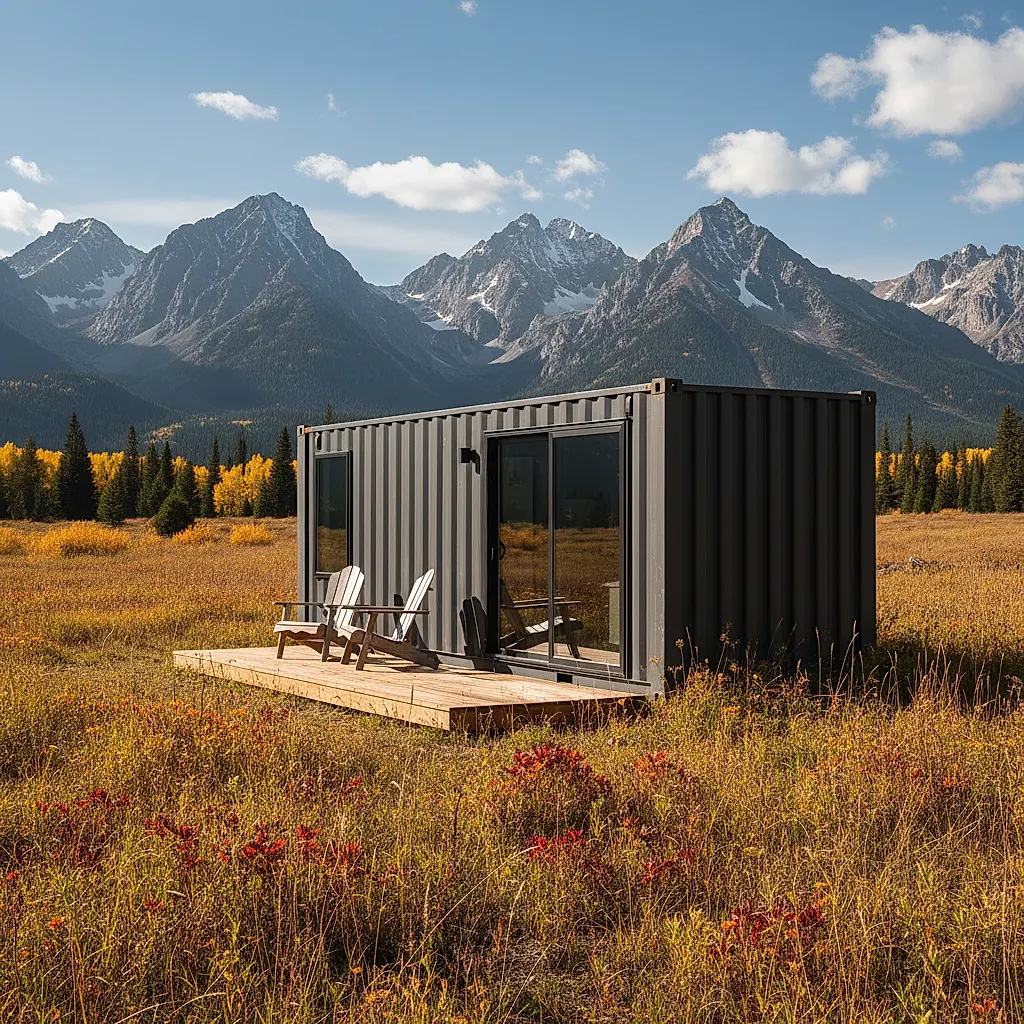
A practical guide to planning a shipping container home when you do not have a set budget, including how to compare listings, evaluate site readiness, and ask the right questions before you buy.
Planning a container home project is less about finding a single perfect listing and more about matching a container, a site, and a build plan that work together. If you are starting without a fixed budget, the goal is to understand the decision points early so you can compare options honestly and avoid expensive surprises later.
This guide walks through what you can reasonably evaluate on your own, what only a listing, a CSC plate, a delivery team, or a local authority can confirm, and how to move forward with confidence.
Start With the Project, Not the Price
A container home is a construction project that happens to use a shipping container as part of its structure. The container is one line item. Site work, foundation or footings, utilities, framing, insulation, interior finishes, and labor usually make up the larger share of a build.
Because of that, shopping by container price alone can be misleading. Two containers with similar nominal dimensions may differ in condition, door style, flooring, ventilation, and history. Those differences affect how much preparation your build requires.
Questions to answer before you compare containers
- What is the intended use? A full-time residence, a guest unit, a workshop, or a storage structure each has different needs.
- Where will it sit? Confirm the site is yours to build on and check local rules with the appropriate authority.
- How will it be delivered? Access, surface conditions, and overhead clearance matter, and only the delivery team can confirm what a specific site requires.
- Who will do the work? A licensed local contractor can help you scope the build and identify what inspections apply.
- What is your contingency? Renovation and site work frequently uncover conditions that were not visible at the start.
Write down your answers. They become the checklist you use when you review any listing.
Reading a Container Listing Carefully
Listings vary in how much detail they provide. Treat every listing as a starting point and confirm the specifics with the seller before you commit.
What to look for in the description
- Nominal length and height, such as 20-foot or 40-foot, and standard versus high-cube height.
- Door type and configuration, since door placement affects how you plan openings and interior layout.
- Condition notes, including any mention of rust, dents, repairs, or prior modifications.
- Whether the container is described as wind and water tight, and what that means in the listing's own words.
- Any included features such as flooring, vents, or locking systems.
What to verify directly
- Exact dimensions and internal measurements for your layout planning.
- The CSC plate or equivalent identification information, if applicable to the unit.
- Current availability, since inventory changes.
- Pricing and any fees, including delivery, which depend on your location and site.
- Photographs or an inspection opportunity, if available.
If a listing does not state something, ask. A short written answer from the seller is more useful than an assumption.
Understanding Container Sizes in General Terms
Container sizes are usually described by nominal length. Common examples include 20-foot and 40-foot containers, and height is often described as standard or high cube. These nominal figures are useful for early planning, but they are not a substitute for exact measurements.
Why nominal size is not enough
- Interior dimensions differ from exterior dimensions.
- Door openings limit what can pass through and how you frame interior spaces.
- Corrugation and structural elements affect where you can cut and how you finish walls.
- High-cube height changes headroom and may affect transport planning.
For any specific unit, use the measurements provided in the listing and confirm them with the Newport team. Do not rely on a general size chart when you are finalizing a design.
Site Access and Delivery Planning
Delivery is one of the most common places where projects slow down. The container has to physically reach the placement point, and the equipment needed depends on the site.
Information to gather before delivery day
- The route from the road to the placement spot, including turns and any narrow sections.
- Surface type and condition along that route.
- Overhead obstacles such as wires, branches, or structures.
- Ground conditions at the placement point, especially after rain.
- Whether any permits or escorts are required by the local authority.
Only the delivery team can confirm what a particular site requires. Share photos, measurements, and a clear description of the route, and ask them to review it before scheduling. If access is uncertain, plan for a site visit or an alternate placement option.
Budgeting Beyond the Container
Even without a fixed number, you can organize costs into categories. This helps you see where a project can be phased and where it cannot.
Typical cost categories
- Container purchase and any modifications made before delivery.
- Delivery and placement.
- Site preparation, foundation, or footings.
- Utilities: power, water, and waste connections where available.
- Structural work: openings, framing, and reinforcement.
- Envelope work: insulation, cladding, roofing, and weather sealing.
- Interior finishes: walls, floors, fixtures, and cabinetry.
- Permits, inspections, and professional fees.
- Contingency for unknowns.
You do not need exact figures to plan. You need to know which categories apply and which you can defer. A phased approach can make a project more manageable, but confirm with your contractor and local authority that phasing is allowed for your intended use.
When to Ask for Help
Some decisions are best made with a professional who can see your site or review your plans.
Situations that call for expert input
- You plan to cut large openings in a container.
- You are connecting to utilities or installing systems.
- You are unsure whether your intended use requires a permit.
- Your site has slope, drainage, or access concerns.
- You need to confirm structural capacity for a specific design.
A local contractor, engineer, or code official can answer questions that a general guide cannot. Newport can help with container-specific questions about the units we offer, but site and code decisions belong with the appropriate local professionals.
Frequently Asked Questions
Can I use a shipping container as a home?
Containers are used in home projects, but whether a specific container and design are suitable depends on your local building requirements, your site, and your plans. Confirm allowed uses with your local authority and work with qualified professionals on structural and life-safety details.
How do I know which container size to choose?
Start with your layout needs and site constraints, then compare nominal sizes and exact measurements from the listing. There is no universal size that fits every project. Ask the Newport team for the measurements of a specific unit and review them with your designer or contractor.
What does wind and water tight mean?
It is a condition description used in container listings. Ask the seller what it means for the specific unit you are considering, and request details about any repairs, rust, or seals. Do not assume it means the container is ready for habitation without further work.
Do I need a permit for a container home?
Permit requirements vary by location and intended use. Contact your local planning or building department for the rules that apply to your property. Do not rely on general statements about container projects.
Can Newport deliver to my site?
Delivery depends on your location and site conditions. Share your address, route details, and placement information with the Newport team so they can review it and confirm what is possible.
Next Steps
A good next step is to narrow your options before you commit. Browse current listings to see what is available, then write down the questions each listing leaves unanswered.
- Review containers in the shop and note the nominal size, height, and condition details for each.
- Contact the Newport team with your site information and questions about a specific unit.
- Confirm availability, pricing, delivery requirements, and exact specifications before you buy.
- Talk to local professionals about permits, site work, and structural plans.
Taking these steps in order keeps the project grounded in verified details rather than assumptions, and it gives you a clearer path from browsing to building.
Plan the next step
Confirm the container and the delivery plan.
Browse current listings, then speak with the Newport team to verify the unit, total pricing, site access, and delivery requirements before payment.