
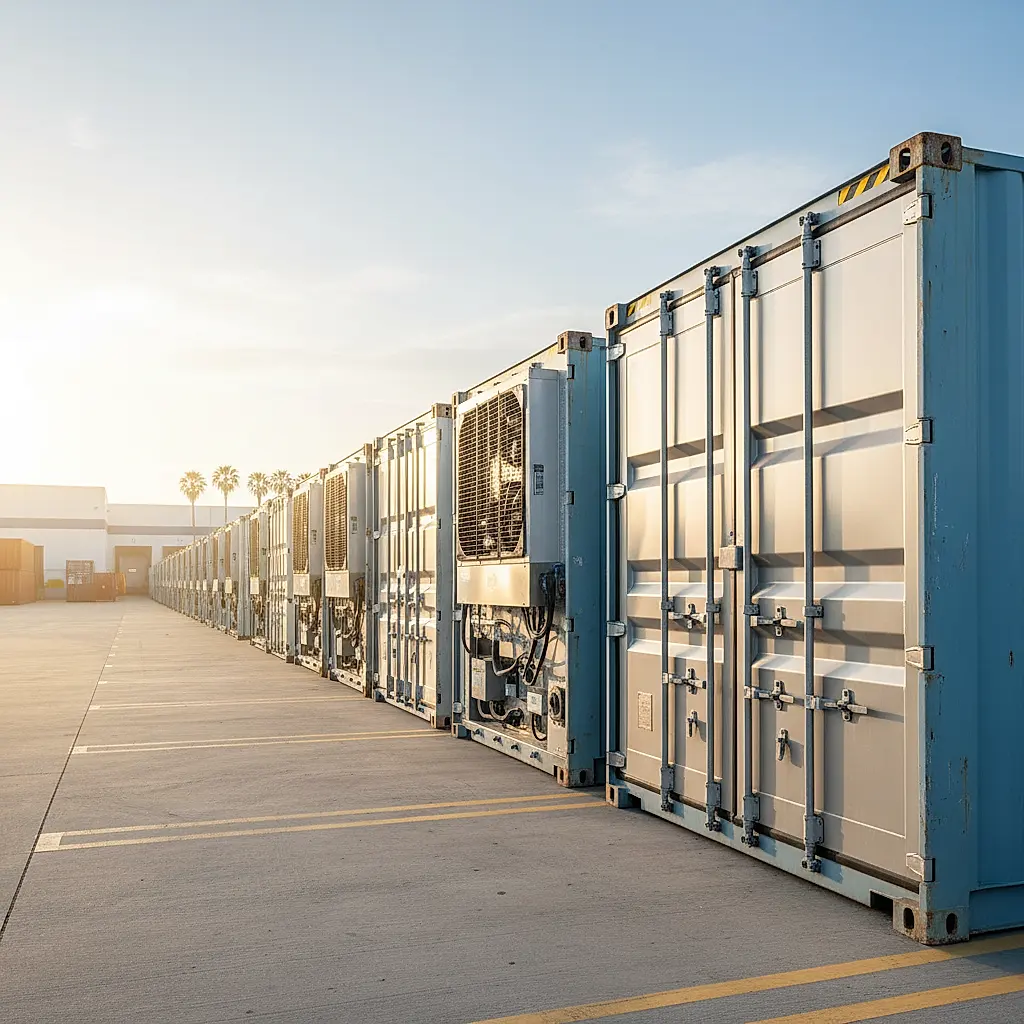
Learn how refrigerated shipping containers work, what drives rental and purchase costs, and how to prepare your site so you can make a confident cold storage decision.
Cold storage is often the missing link in a growing food, floral, pharmaceutical, or event business. A refrigerated shipping container — commonly called a reefer — can give you insulated, temperature-controlled space without constructing a permanent building. But the decision involves more than picking a size. This guide walks through how reefers work, what affects cost, how to plan a site, and what to confirm with the Newport team before you commit.
How a Refrigerated Container Works
A reefer is a shipping container built with insulated walls, floor, and ceiling, plus a refrigeration unit mounted at one end. The unit draws power, moves air through the cargo space, and holds a set temperature range. Because the box itself is insulated, the refrigeration unit is not starting from scratch every time the door opens.
The Container Shell
Most reefers follow standard container footprints. You will see nominal lengths around 20 feet and 40 feet, with widths near 8 feet. Heights vary between standard and high-cube profiles. Exact internal dimensions, door openings, and weight limits differ by manufacturer and unit, so always check the individual listing and the CSC plate on the container for the specifications that apply to that specific box.
Insulation is the defining feature. Compared with a dry van container, a reefer's walls are thicker, which reduces usable internal volume for the same external footprint. That trade-off is the price of temperature stability.
The Refrigeration Unit
Refrigeration units are available in different configurations and power requirements. Some are designed for transport and can run from a generator set or a ship's power supply. Others are set up for stationary use with a local power connection. The unit's condition, hours, and service history matter as much as the container shell.
Ask what power the unit needs, whether it has been serviced, and what temperature range it can realistically hold in your climate. A unit that performs well in a mild season may work harder in extreme heat or cold. Your Newport contact can help you understand what is available and what questions to ask about a specific unit.
What Drives Rental and Purchase Costs
There is no single market rate for cold storage containers. Costs move with equipment availability, season, location, and the condition of the unit. Rather than quoting a number that may not apply to you, it helps to understand the levers.
Equipment Condition and Age
Newer units with lower hours typically command more than older units with more wear. A well-maintained older reefer can still be a practical choice for many applications, but it may need more frequent attention. Inspect the unit or ask for detailed condition information before deciding.
Seasonality and Demand
Demand for refrigerated space tends to rise during harvest, holiday, and event seasons. If your need lines up with a busy period, plan earlier. Off-season timing can sometimes open more options, but availability is never guaranteed. Confirm current availability with Newport rather than assuming a pattern.
Rental Term and Commitment
Short-term rentals usually carry a higher effective rate than longer commitments because the supplier has to cover repositioning and turnaround. If your project has a defined window, a term that matches that window may be more economical than renewing month to month.
Delivery Distance and Site Access
Transport is a meaningful part of the total. Distance from the depot, road conditions, and how easily a truck can reach the placement spot all affect the logistics plan. Narrow lanes, low branches, soft ground, and tight turns can change what equipment is needed. Do not assume a standard delivery will work — describe your site accurately so the delivery team can plan.
Power and Ongoing Operating Cost
A reefer is not a one-time cost. It consumes electricity continuously while running. The amount depends on the unit, the set temperature, the ambient conditions, and how often the door is opened. If you are comparing a reefer against another cold storage option, include ongoing power in the comparison.
Matching Capacity to Your Actual Need
One of the most common planning mistakes is choosing a size based on a rough guess. A better approach is to work from what you actually need to store.
Start With the Load, Not the Box
List the pallets, racks, bins, or cases you expect to hold. Note their dimensions and how much aisle space you need to move them. Then compare that against the internal dimensions of a candidate container. Remember that the refrigeration unit occupies space at one end and that airflow around stored goods matters for consistent temperature.
Consider Airflow and Loading Patterns
Cold air needs to circulate. Packing a reefer tightly against the walls or blocking the return air path can create warm spots. Leave room for air movement and plan how you will load and unload without leaving the door open longer than necessary.
Plan for Growth and Seasonality
If your volume peaks during certain months, decide whether you want capacity for the peak or whether you can stage inventory differently. A container that is too large for your baseline may run inefficiently; one that is too small creates pressure during busy periods. There is no universal right answer — it depends on your operation.
Site Planning and Power Readiness
A reefer needs a suitable place to sit and a reliable power source. Getting these right before delivery prevents expensive surprises.
Ground Conditions and Placement
Containers are heavy, and a loaded reefer is heavier still. A level, well-drained surface reduces stress on the container and makes door operation easier. Gravel, compacted soil, or a concrete pad can all work depending on your situation. If the ground is soft or sloped, discuss it with the delivery team in advance.
Access for Delivery Equipment
Delivery typically involves a truck and, depending on the site, additional handling equipment. Clearance overhead, gate width, and turning radius all matter. Walk your site as if you were driving a large vehicle through it, and note any obstacles. The Newport delivery team can advise on what information they need from you.
Electrical Supply
Confirm what voltage and amperage the refrigeration unit requires and whether your site can supply it safely. This may involve an electrician and possibly a dedicated circuit. Do not assume a standard outlet will run a reefer. If you are renting, ask whether the unit is configured for the power available at your location.
Permits, Zoning, and Local Rules
Requirements vary widely by jurisdiction and by how the container will be used and for how long. Some places treat a temporary container differently from a permanent structure; others do not. Because rules change and are location-specific, check with your local planning or zoning authority. Do not rely on general advice about what is or is not allowed.
Rental vs. Purchase: A Decision Framework
Both paths can make sense. The right choice depends on duration, flexibility, and how much control you want over the equipment.
When Renting May Fit
- Your need is temporary, seasonal, or tied to a specific project.
- You want to avoid maintenance responsibility.
- You are testing whether cold storage works for your operation before committing.
- You need capacity quickly and want to avoid a long procurement process.
When Buying May Fit
- You expect to need cold storage for years.
- You want to customize the unit or place it permanently.
- You prefer to own the asset rather than pay ongoing rental fees.
- You have the site and power infrastructure to support it long term.
In either case, ask about service expectations, who handles repairs, and what happens at the end of a rental term. Get these details in writing.
Inspecting a Reefer Before You Commit
Whether you rent or buy, inspection protects you. If you cannot visit in person, ask for detailed photos, unit hours, and service records.
What to Check
- Container shell: Look for rust, dents, soft spots in the floor, and door seal condition.
- Refrigeration unit: Ask about service history, hours, and whether it holds temperature under load.
- Electrical components: Check for damaged wiring, corroded connections, and controller function.
- CSC plate: This plate carries key safety and specification information. Read it and confirm it matches what you were told.
- Door hardware: Doors should open, close, and latch smoothly, with seals that are not cracked or compressed.
Questions to Ask the Seller or Lessor
- What temperature range has this unit held recently?
- What maintenance has been performed, and when?
- What power supply does it require?
- Are there any known issues or repairs pending?
- What is included in the rental rate, and what is billed separately?
Frequently Asked Questions
How cold can a refrigerated container get?
Reefers are designed to hold a range of temperatures, from chilled above freezing down to frozen. The exact range depends on the unit, its condition, and ambient conditions. Ask about the specific unit you are considering and confirm it can hold the temperature your goods require.
Can I run a reefer on a standard household outlet?
Not necessarily. Refrigeration units have specific power requirements that vary by model. Confirm the voltage and amperage needed and have a qualified electrician verify your supply before delivery.
Do I need a permit for a cold storage container?
Permit and zoning rules vary by location, use, and duration. There is no single answer. Contact your local planning or zoning office to find out what applies to your site and situation.
How much does it cost to rent a reefer container?
Rates depend on equipment condition, rental term, location, delivery distance, and season. Because these factors change, contact the Newport team for current pricing and availability rather than relying on a general figure.
Can a reefer be used outdoors in all seasons?
Reefers are built for outdoor service, but performance and power consumption change with weather. In extreme heat or cold, the unit works harder. Discuss your climate and intended use with the Newport team so you can plan accordingly.
Next Steps
Start by defining your storage volume, temperature range, power situation, and timeline. Then browse current options at our shop and reach out through our contact page with your site details. The Newport team can help you confirm specifications, availability, pricing, and delivery requirements so you can move forward with confidence.
Plan the next step
Confirm the container and the delivery plan.
Browse current listings, then speak with the Newport team to verify the unit, total pricing, site access, and delivery requirements before payment.