
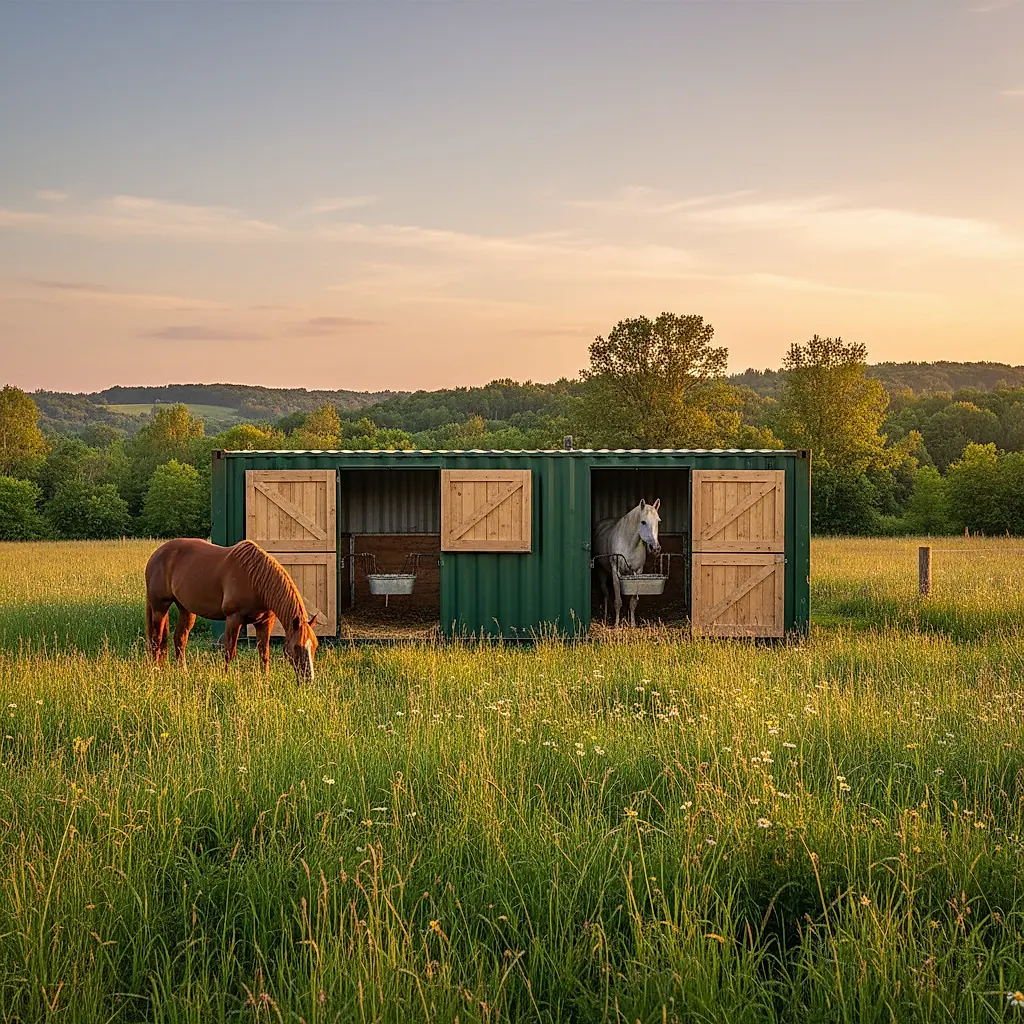
Planning an insulated shipping container horse stall? Learn the cost factors, modification choices, and site considerations to discuss with Newport before you buy.
Why Insulated Shipping Containers Appeal to Horse Owners
Shipping containers are steel structures built to move freight across oceans, and that durable shell is exactly what draws some horse owners to them as a starting point for stalls or run-in shelters. Add insulation and interior framing, and you can moderate interior temperatures and reduce condensation, which matters in climates with wide swings between day and night.
But an insulated container stall is not a single product with a single price. It is a project. The final cost depends on the container you start with, how much insulation and lining you add, how the interior is divided, ventilation, doors, flooring, and site work. This guide walks through the decisions that drive cost so you can ask better questions and compare quotes fairly.
Newport Shipping Containers LLC is based in Newport, TN. Exact pricing, current inventory, and delivery coverage change over time, so confirm those details with the Newport team before you commit to a plan.
The Main Cost Drivers for an Insulated Container Stall
When people ask what an insulated container stall costs, the honest answer is that it depends on scope. Here are the categories that typically move the number up or down.
1. The container itself
- Size: Nominal lengths are commonly referenced as 20-foot and 40-foot containers, with standard and high-cube heights. A longer or taller container generally costs more than a smaller one, but condition and availability matter too.
- Condition: New one-trip containers, cargo-worthy used containers, and wind-and-water-tight units sit at different points. A unit with cosmetic rust or dents may cost less but could need prep before insulation.
- Door configuration: Standard double doors at one end are typical. Additional openings, roll-up doors, or custom cut openings change both material and labor cost.
2. Insulation approach
Insulation is where the "insulated" part of the project lives, and there are several ways to do it:
- Spray foam: Conforms to irregular surfaces and can act as an air barrier. It usually requires a professional applicator.
- Rigid foam boards: Predictable thickness and R-value per inch, but seams need sealing and the boards need a protective interior finish.
- Framed walls with batt insulation: Common in stick-built barns, but inside a steel container the framing and vapor management need careful detailing.
Each method has different material and labor costs, and each affects how much interior space you lose. A container's outside dimensions are fixed; insulation thickness eats into usable width and length.
3. Interior lining and finish
Horse-safe interiors usually need a smooth, cleanable surface that resists kicks, moisture, and chewing. Options include plywood over framing, metal panels, or rubber mats on lower walls. The more layers you add, the more the project costs.
4. Ventilation and airflow
Sealed steel boxes trap heat and humidity. Without planned ventilation, an insulated stall can become stuffy or damp. Options range from passive vents and ridge vents to powered exhaust fans. Ventilation design should account for the number of stalls, ceiling height, and local climate.
5. Doors, dividers, and hardware
- Stall fronts and doors: Sliding or swing doors, grill panels, and feed openings are common.
- Dividers: If you split a container into two or more stalls, you need structural dividers and a plan for shared airflow.
- Hardware: Latches, hinges, and edge protection should be chosen for livestock use, not just human traffic.
6. Flooring
Container floors are typically wood or plywood over steel cross members. For horses, many owners add rubber mats or a poured or panelized surface. Floor prep, leveling, and drainage considerations add cost.
7. Site work and utilities
- Pad preparation: A level, well-drained base is important. Gravel, crushed stone, or a concrete pad all have different costs.
- Access: The delivery truck needs a route to the pad. Trees, fences, gates, and overhead wires can affect placement.
- Power and water: If you want lights, fans, or automatic waterers, you need a plan for running utilities.
Because these categories vary so much, treat any single "cost per stall" figure you see online as a starting point for conversation, not a quote.
Modification Choices That Affect Both Cost and Horse Safety
Modifications are where a container project becomes a horse facility. The right choices depend on your climate, how many horses you will house, and how much time you can spend on maintenance.
Ventilation first, insulation second
It is tempting to focus on insulation because it is the headline feature. But airflow is what keeps an insulated box from becoming a humid box. Plan high and low vents so air can move, and consider whether fans are needed during hot months. Discuss vent placement with your builder so it does not compromise the container's structure.
Condensation control
Steel surfaces can sweat when warm, moist air meets a cold wall. Insulation helps, but vapor management and ventilation work together. Ask how the proposed assembly handles moisture at the floor, walls, and ceiling.
Interior height and headroom
A standard-height container has less interior headroom than a high-cube unit. After you add a ceiling liner or insulation, usable height drops further. If you plan to house tall horses or add ceiling-mounted fixtures, confirm interior dimensions from the actual listing rather than assuming.
Stall sizing
There is no universal rule that maps a container length to a number of stalls. Stall dimensions for horses are typically discussed in terms of length and width that allow a horse to stand, lie down, and turn comfortably. Because insulation and framing reduce interior space, measure the finished interior, not the exterior, when planning stall count.
Doors and emergency access
Every stall needs a way for a person to enter safely and for a horse to exit in an emergency. Consider how a handler would move a horse out if a door failed, and include at least one secondary access point in your plan.
Fire and electrical safety
If you add lighting, outlets, or fans, use components and installation methods suited to a barn environment. Keep electrical work away from areas where horses can reach or chew. Consult a qualified electrician and your local code office for requirements.
Site Planning and Permitting: What to Confirm Locally
A container stall is a structure, and structures usually come with local rules. Requirements vary by jurisdiction, zoning district, and intended use.
- Zoning and land use: Some areas treat container structures differently from conventional barns. Ask your local planning office how they classify your project.
- Permits: Do not assume a particular size or type avoids permits. Confirm with your local authority what is required for your specific site and use.
- Setbacks and easements: Placement rules may limit how close you can put the container to property lines or utilities.
- Homeowners association rules: If you are in an HOA, review covenants before ordering.
- Site access: Confirm the delivery route, gate widths, turn radius, and ground conditions. A loaded container truck needs space and a firm surface.
- Drainage: Water should move away from the pad and the container. Standing water around the base can shorten the life of the floor and steel.
Because these details are local and specific, verify them with the appropriate office and with the Newport delivery team. Do not rely on general advice from an article, including this one.
Comparing Quotes Without Getting Misled
When you request quotes, ask each builder to itemize so you can compare like with like.
- Container source and condition: Is the container included, or are you supplying it?
- Insulation type and thickness: What material, and how are seams and edges sealed?
- Interior finish: What surfaces will the horse actually touch?
- Ventilation: What is included, and is it passive or powered?
- Doors and dividers: How many, what type, and what hardware?
- Flooring: What is the base, and what surface goes on top?
- Electrical and water: Included or excluded?
- Site work: Is pad prep part of the quote?
- Delivery: What is included, and what site conditions are required?
- Timeline and responsibilities: Who handles permits, and what happens if the site is not ready?
A low quote that omits ventilation, lining, or site prep is not really a lower-cost project. It is a smaller scope.
Maintenance and Long-Term Considerations
Steel containers are durable, but they are not maintenance-free.
- Inspect for rust: Check the roof, corners, and floor edges periodically. Touch up as needed.
- Keep vents clear: Dust, cobwebs, and bedding can block airflow.
- Manage bedding and moisture: Damp bedding contributes to interior humidity. Remove wet material promptly.
- Check hardware: Latches and hinges should be inspected regularly for wear.
- Watch the pad: Cracks or settling can affect doors and alignment.
A realistic maintenance routine protects your investment and keeps the space safer for horses.
Frequently Asked Questions
How much does an insulated shipping container horse stall cost?
There is no single price because the cost depends on the container, insulation method, interior finish, ventilation, doors, flooring, utilities, and site work. The best approach is to define your scope, then request an itemized quote from Newport Shipping Containers LLC. Confirm current pricing and availability directly with the team.
Can I insulate a shipping container myself?
Some owners do partial work, such as installing rigid foam boards or rubber mats. However, insulation and vapor management in a steel structure are easy to get wrong, and mistakes can lead to condensation, mold, or reduced structural integrity. If you plan to do part of the work, discuss the assembly with your builder first.
How many stalls fit in a container?
There is no reliable formula that converts container length into stall count. Insulation, framing, dividers, and door placement all reduce usable interior space. Plan from the finished interior dimensions and the stall dimensions appropriate for your horses, and confirm exact interior measurements from the specific listing.
Do I need a permit for a container stall?
Permit requirements vary by location and intended use. Do not assume a particular structure or size is exempt. Contact your local planning or building office to confirm what applies to your site, and ask the Newport team about documentation they can provide.
What about delivery and site access?
Delivery requirements depend on the container size, the truck, and your site. Gates, trees, overhead lines, soft ground, and slope can all affect placement. Share photos and measurements with the Newport delivery team so they can help you assess access before delivery day.
Next Steps: Define Your Scope, Then Confirm Details
Start by writing down what you want: how many horses, what climate, whether you need power or water, and how much interior space you can afford to lose to insulation. Then review available units and options so you can compare real specifications rather than assumptions.
- Browse current container options at our shop.
- Share your project details and site questions with the team at our contact page.
Newport Shipping Containers LLC can help you think through the container side of the project and connect the details to your site. Confirm listing specifics, availability, pricing, delivery coverage, and site requirements directly with the Newport team before you finalize any plans. For structural, electrical, permitting, and animal-safety decisions, work with qualified local professionals who can see your site in person.
Plan the next step
Confirm the container and the delivery plan.
Browse current listings, then speak with the Newport team to verify the unit, total pricing, site access, and delivery requirements before payment.