
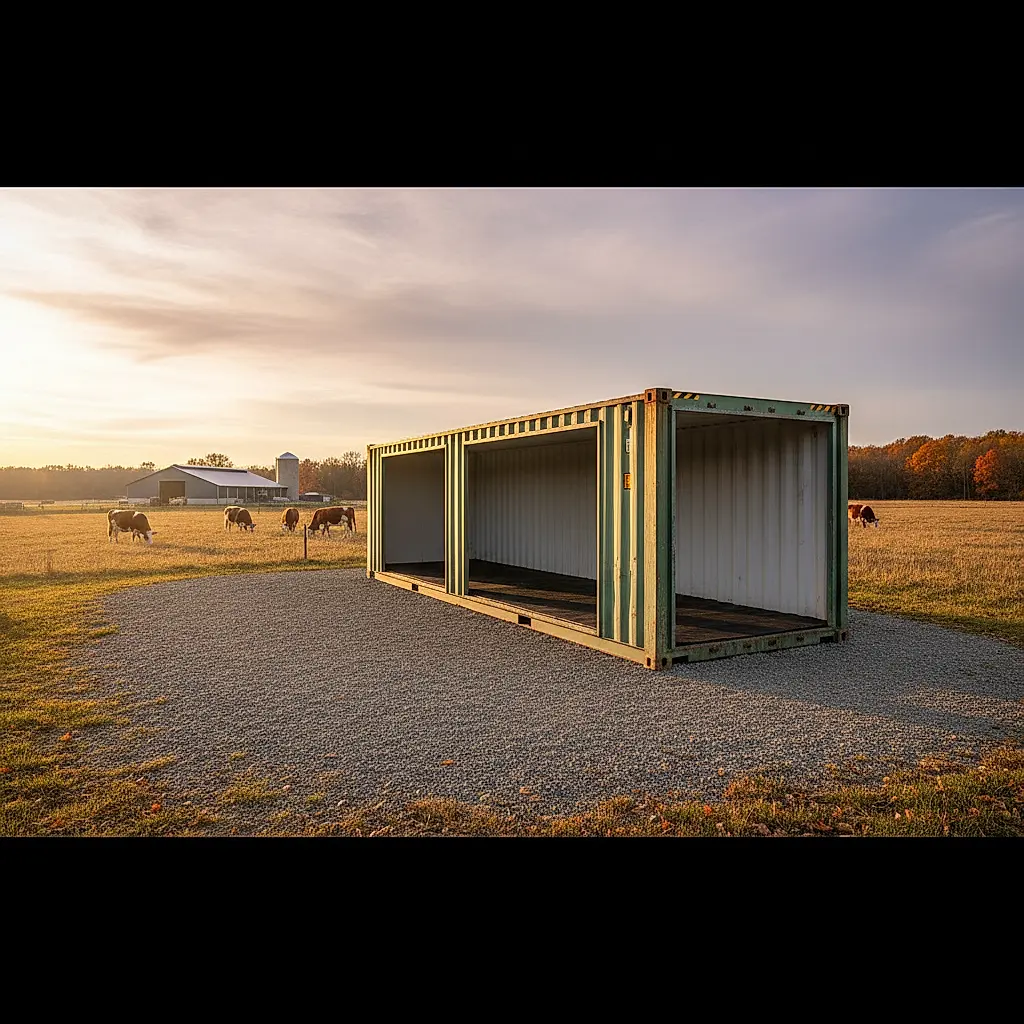
Considering an insulated shipping container for livestock shelter? Learn how to compare costs, plan ventilation, and avoid common pitfalls before you buy.
Why Insulated Shipping Containers for Livestock Shelter?
Farmers and homesteaders often look at insulated shipping containers as a potential solution for livestock shelter. The appeal is straightforward: a steel structure that can be modified with insulation, ventilation, and access points. But whether it makes sense for your operation depends on your animals, climate, budget, and local requirements.
This guide walks through the practical considerations—cost factors, insulation choices, ventilation needs, and site planning—without promising specific prices or outcomes. For exact specifications, availability, and delivery details, always confirm with the Newport team and your local authorities.
Cost Factors to Compare: Container vs. Traditional Build
When comparing an insulated shipping container to a traditional barn or shed, focus on total project cost rather than just the container price. The container itself is only one line item.
Typical cost categories
- Container purchase: A used or new container, in standard or high-cube height. Condition and size affect price.
- Insulation materials and labor: Spray foam, rigid boards, or other methods. Costs vary by R-value, thickness, and local labor rates.
- Ventilation and climate control: Vents, fans, louvers, or passive systems to manage humidity and ammonia.
- Access modifications: Doors, roll-up openings, windows, or cutouts for animals and equipment.
- Interior finishes: Kick panels, flooring, dividers, or wash-down surfaces.
- Site prep and delivery: Grading, gravel pad, foundation, and delivery access.
- Permits and inspections: Requirements vary by jurisdiction and intended use.
- Utilities: Power, water, and lighting if needed.
Traditional build cost categories
- Foundation and framing
- Roofing and siding
- Insulation and interior lining
- Doors, windows, and ventilation
- Labor and contractor overhead
- Permits and site work
A traditional build may offer more design flexibility, while a container may offer speed and a secure steel shell. Neither is automatically cheaper. Get itemized quotes for both approaches and compare like-for-like features.
Why "cost per square foot" can mislead
Container dimensions are nominal. Usable interior space shrinks after insulation and framing. Traditional buildings also lose space to walls and structure. Compare usable area, not just exterior footprint.
Insulation Choices and Their Trade-offs
Insulation is the core of an "insulated" container. The right choice depends on your climate, animals, and how airtight you want the space.
Common insulation methods
- Spray polyurethane foam: High R-value per inch, seals gaps, but requires professional application and can be costly.
- Rigid foam boards: Easier to install, moderate cost, but seams need sealing.
- Fiberglass batts: Lower material cost, but moisture management is critical in a steel shell.
- Reflective or radiant barriers: May help in some climates but are not a substitute for insulation.
Key trade-offs
- Cost vs. performance: Higher R-value generally costs more.
- DIY vs. professional: Spray foam is usually not a DIY job.
- Moisture risk: Insulation can trap moisture against steel, leading to corrosion. Vapor management matters.
- Animal safety: Exposed foam or loose fibers can be chewed or ingested. Protect insulation with durable liners.
What to ask your installer
- What R-value is appropriate for my climate and animals?
- How will you manage condensation on the steel walls and ceiling?
- Will the insulation be covered or protected from livestock?
- Does the method affect the container's structural integrity?
Ventilation, Humidity, and Animal Health
A sealed steel box with insulation can become a damp, ammonia-heavy environment if ventilation is inadequate. This is one of the most common planning gaps.
Ventilation goals
- Remove moisture from breath, urine, and manure.
- Reduce ammonia and other gases.
- Manage heat in summer and drafts in winter.
- Provide fresh air without creating dangerous drafts on young or sick animals.
Ventilation options
- Passive vents: High and low openings to promote natural airflow.
- Louvers and adjustable vents: Allow seasonal control.
- Exhaust fans: Mechanical removal of stale air; requires power.
- Circulation fans: Move air inside but do not replace fresh air.
- Openings for animals: Doors or roll-up sides can double as ventilation.
Humidity and condensation
Steel surfaces can sweat when warm, moist air meets a cold wall. Insulation helps, but ventilation and moisture control are also essential. Consider bedding management, drainage, and whether you need a vapor barrier.
Ask before you buy
- How will air enter and exit the container?
- What happens on a still, humid day?
- Can vents be closed during storms?
- Is there a plan for power outages if fans are critical?
Site Planning and Delivery Considerations
Where the container goes matters as much as what it is. Poor site planning can add cost or make the shelter unusable.
Site checklist
- Level, well-drained ground: Prevent settling and water intrusion.
- Access for delivery truck and trailer: Confirm turning radius, gate width, and overhead obstacles.
- Proximity to power and water: If needed for fans, lights, or heaters.
- Distance from property lines and other structures: Check local setback rules.
- Prevailing wind and sun: Orient vents and openings for comfort.
- Manure and runoff management: Plan for cleaning and drainage.
Delivery questions for the Newport team
- What type of truck will deliver, and what access is required?
- Can the container be placed directly on my prepared pad?
- Are there limitations on placement angle or surface?
- What site conditions could prevent delivery?
Delivery coverage and equipment vary. Confirm your specific address and site conditions with Newport before ordering.
Permits, Zoning, and Local Rules
Do not assume a container shelter is exempt from permits. Rules vary widely by county, state, and intended use. Agricultural exemptions may exist, but they often have conditions.
What to check
- Zoning classification for your property.
- Whether an insulated container counts as a structure or an accessory building.
- Setback and height limits.
- Building code requirements for animal housing.
- Environmental rules for waste and runoff.
- Any homeowners association or deed restrictions.
Contact your local planning or building department early. Ask specific questions about shipping containers used for livestock. Keep written records of what you are told.
Modifications: What Is Possible and What to Watch
Containers can be modified, but every cut affects structure and weather resistance.
Common modifications
- Doors and openings: Roll-up doors, sliding doors, or cut-out openings.
- Windows and vents: For light and airflow.
- Interior partitions: To separate animals or create feed storage.
- Flooring: Rubber mats, concrete, or washable surfaces.
- Electrical: Lights, fans, or heaters.
- Water access: Troughs or lines.
Cautions
- Cutting structural members can weaken the container.
- Poorly sealed openings leak and corrode.
- Electrical work should meet code and be safe around animals and moisture.
- Insulation and liners must be animal-safe and cleanable.
Ask a qualified fabricator or engineer about any structural modifications. Confirm with Newport what modifications may affect the container's condition or any applicable warranty.
Comparing Alternatives Honestly
An insulated container is not the only option. Consider:
- Traditional wood or metal barn: Flexible, familiar, but may take longer to build.
- Fabric or hoop structure: Lower upfront cost, less durable in some climates.
- Modular panels: Quick to assemble, variable insulation.
- Existing building retrofit: Often the lowest-cost path if you have usable space.
List your must-haves: space, ventilation, durability, budget, timeline, and permit path. Score each option against those needs.
Frequently Asked Questions
Is an insulated shipping container good for livestock shelter?
It can be, if it is properly ventilated, insulated, and modified for animal safety. The steel shell is secure and durable, but without ventilation it can become humid and unhealthy. Suitability depends on your animals, climate, and management.
How much does an insulated container shelter cost?
Costs vary widely based on container size and condition, insulation method, modifications, delivery, and site work. There is no single price. Request itemized quotes and compare them to traditional build quotes for your specific plan.
Do I need a permit for a container livestock shelter?
Often you should check with your local planning or building department. Requirements vary by jurisdiction and use. Do not assume an exemption. Confirm rules before you buy or modify.
Can I insulate a container myself?
Some methods, like rigid foam boards, are more DIY-friendly than spray foam. However, moisture management, animal safety, and structural concerns make professional guidance wise. Poor insulation can trap moisture and corrode the steel.
How do I control humidity inside?
Combine insulation with deliberate ventilation, moisture management, and drainage. Passive vents, fans, and clean, dry bedding help. Monitor conditions and adjust seasonally.
Next Steps: Plan, Confirm, and Shop
Before you commit, gather your requirements and verify the details that matter:
- Define your needs: Number and type of animals, space, climate, and budget range.
- Check local rules: Zoning, permits, setbacks, and agricultural exemptions.
- Plan ventilation and insulation: Decide on methods and who will install them.
- Prepare your site: Level, drained, and accessible for delivery.
- Request quotes: Compare container-based and traditional options.
When you are ready to explore container options, browse our current inventory at our shop. For questions about sizes, condition, modifications, delivery planning, or availability, contact the Newport team. We will help you confirm listing details and next steps so you can make an informed decision for your livestock shelter project.
Plan the next step
Confirm the container and the delivery plan.
Browse current listings, then speak with the Newport team to verify the unit, total pricing, site access, and delivery requirements before payment.