
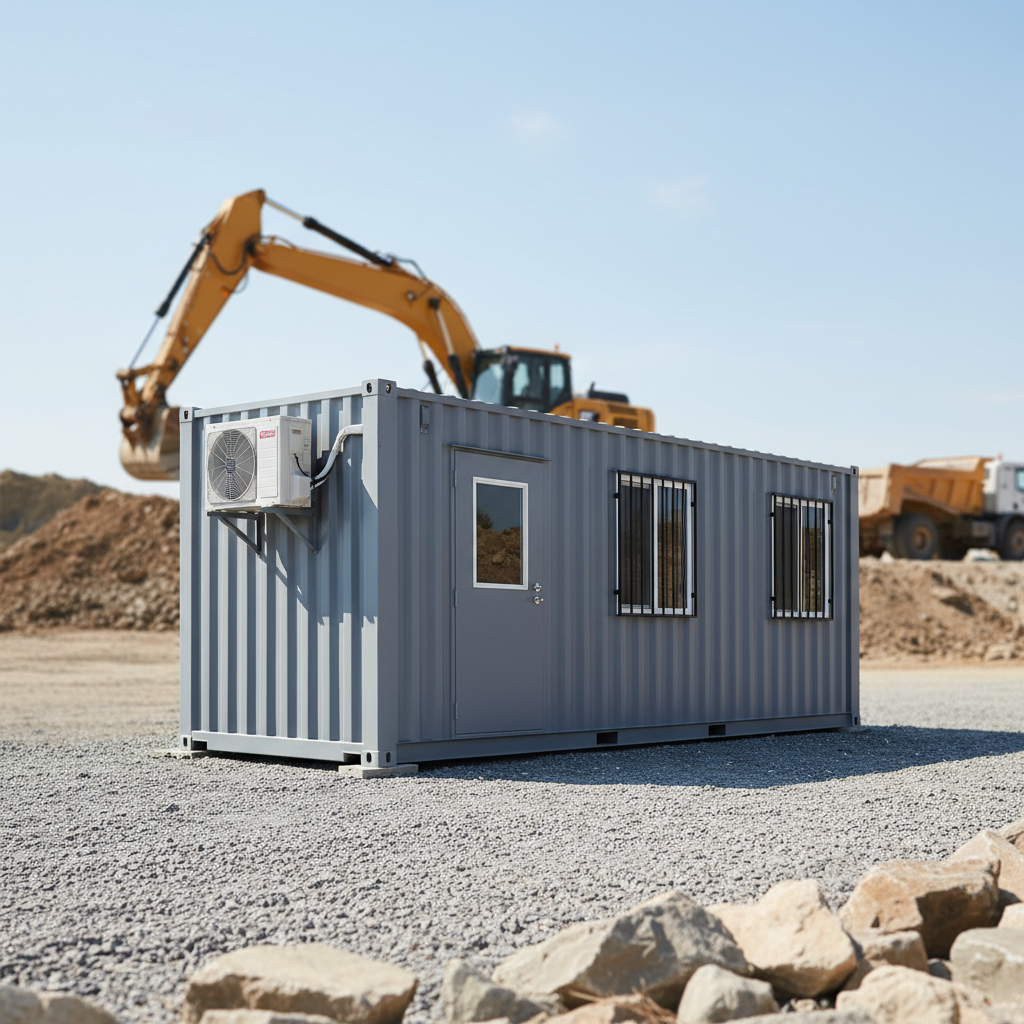
Planning a mobile office container for your job site? Learn the real cost drivers, where savings come from, and how to compare ground-level and heavy-duty units without guessing.
A mobile office container can be one of the most practical investments a job site makes. It gives your team a secure, weather-tight space for paperwork, meetings, tool checkout, or a break area — without the cost and lead time of a permanent structure. But the price you see advertised is rarely the price you pay. Site access, condition, configuration, and delivery logistics all move the number up or down.
This guide walks through the cost drivers, the savings you can realistically expect, and the questions you should ask before you buy. It is written for contractors, facility managers, and project planners who want a straight answer, not a sales pitch. Because container pricing and availability change constantly, confirm current details with the Newport team before you budget.
What Drives the Cost of a Mobile Office Container
The container itself is only part of the equation. When you compare quotes, make sure you are comparing the same scope of work.
Container condition and grade
A used, wind-and-water-tight (WWT) container is the lowest-cost starting point. It may show surface rust, dents, or faded paint, but it still locks and sheds water. A one-trip or new container costs more because it has seen little or no cargo service. A modified office container — with insulation, wall panels, electrical, and HVAC — costs more again because labor and materials are added.
Ask the seller to describe the condition in plain terms: floor condition, door operation, roof condition, and whether the CSC plate is present and legible. The CSC plate tells you the container was built and maintained to a safety standard, but it does not tell you the current condition. Inspect or request photos.
Size and height
Standard containers are nominally 20 feet or 40 feet long and about 8 feet wide. Height is usually either standard or high cube. High-cube units give more interior headroom, which matters if you plan to finish the interior with insulation and ceiling panels. A 20-foot unit is easier to place on tight sites; a 40-foot unit gives more floor area but needs more room to maneuver. Do not assume a size based on a bedroom count — container sizes are not equivalent to room counts, and interior layouts vary widely.
Configuration and build-out
A bare container with a desk and a window unit is not the same product as a fully finished office. Common add-ons include:
- Insulation and interior wall lining
- Electrical panel, outlets, and lighting
- Heating and cooling
- Windows and a personnel door
- Flooring and ceiling finishes
- Shelving, workbenches, or a restroom
Each item adds cost. The more you specify, the more you should expect to pay — and the longer the lead time may be.
Delivery and site access
Delivery is a major variable. A tilt-bed truck, a roll-off truck, and a crane each have different requirements and different costs. Narrow gates, overhead wires, soft ground, and tight turns can turn a simple drop into a complicated lift. Do not assume delivery requires a crane; do not assume it does not. The only reliable answer comes from the delivery team after they see your site.
Permits and local rules
Some jurisdictions treat a temporary office container differently from a permanent building. Others do not. Do not assume one size needs fewer permits than another. Zoning, fire access, and setback rules vary by location. Contact your local authority for requirements before you buy.
Where the Savings Actually Come From
Mobile office containers are often cheaper than site-built offices, but the savings come from specific places. Understanding them helps you evaluate a quote honestly.
Speed to occupancy
A container office can be delivered and put into service far faster than a stick-built structure. That speed reduces the cost of downtime, temporary rentals, and idle supervision. The exact schedule depends on whether the unit is already built out or needs modification.
Reuse across projects
A container is portable. When one job ends, it can move to the next. That spread-over-projects value is one of the strongest arguments for buying rather than renting, provided you have a way to move and store it.
Lower site prep
A container sits on the ground or on simple blocking. It does not usually require a concrete foundation, which can save both money and time. Confirm site prep requirements with your delivery team and local authority.
Reduced theft and damage
A steel container with a lockable door is harder to break into than a trailer or a tent. Fewer tool losses and less water damage can offset part of the purchase price over a long project. This is a general benefit, not a guaranteed outcome.
Rental avoidance
If you would otherwise rent an office trailer for many months, the cumulative rental cost can approach or exceed the purchase price of a basic container. Run the math for your own timeline. Rental rates, purchase prices, and project durations vary too much for a universal rule.
How to Compare Ground-Level and Heavy-Duty Options
Not every job site needs the same unit. Match the container to the work.
Ground-level office containers
These are built for easy access — no stairs, no ramp, no elevated deck. They are often preferred on sites where crews need to walk in and out frequently, or where accessibility matters. Ground-level units may cost more than a standard container because of the additional fabrication, but they can reduce the need for steps, railings, and landings.
Heavy-duty units
Heavy-duty containers use thicker steel, reinforced frames, or additional structural members. They are a better fit for harsh environments, repeated relocation, or sites where the unit may take abuse. They cost more up front. Whether that premium pays off depends on how long you keep the unit and how rough the handling will be.
Standard vs. high cube
High-cube containers offer more interior height. If you plan to insulate and finish the interior, that extra height helps preserve usable headroom. If you do not need the height, a standard unit may be the more economical choice.
New vs. used
New containers offer clean surfaces and a known history. Used containers offer lower entry cost. Neither is automatically better. The right choice depends on your budget, your tolerance for cosmetic imperfections, and how long you plan to keep the unit.
A Practical Cost-Planning Checklist
Use this list to gather the information a seller or delivery team needs to give you a useful quote.
- Intended use. Office, break room, tool storage, or a combination?
- Occupancy. How many people will use it at once?
- Duration. Weeks, months, or years?
- Site access. Gate width, overhead clearance, ground surface, and turning room.
- Placement. Where exactly will it sit, and how will it be leveled?
- Utilities. Do you need power, lighting, heating, cooling, or data?
- Climate. Will the unit face extreme heat, cold, wind, or salt air?
- Security. What locking and monitoring do you need?
- Permits. What does your local authority require?
- Future moves. Will you relocate the unit, and how?
Bring this information to the conversation. It reduces back-and-forth and helps you get a quote that reflects reality.
Common Mistakes That Raise the Final Cost
- Buying on price alone. The cheapest unit may need repairs, painting, or a new floor.
- Ignoring delivery. A low container price can be erased by an expensive lift or a failed delivery attempt.
- Skipping the site visit. Photos and measurements prevent surprises.
- Assuming permits. Check with the local authority, not with a forum.
- Underestimating utilities. Running power to a container can be a significant line item.
- Forgetting maintenance. Steel containers need periodic inspection, especially around the roof and door seals.
Frequently Asked Questions
How much does a mobile office container cost?
There is no single price. Cost depends on size, height, condition, whether it is modified, the level of build-out, delivery distance, and site access. A bare used container, a one-trip container, and a fully finished office container are three different products with three different price ranges. Confirm current pricing and availability with the Newport team for the specific unit you are considering.
Is a 20-foot or 40-foot container better for a job site office?
It depends on how much space you need and how much room you have to place it. A 20-foot unit fits tighter sites and is easier to reposition. A 40-foot unit offers more floor area but requires more maneuvering room. Neither size is inherently better, and container sizes do not map to a specific number of rooms or occupants. Review the individual listing and discuss your layout with the team.
Do I need a permit for a container office?
Permit requirements vary by jurisdiction and by how the unit is used and how long it stays. Do not assume that one size or configuration needs fewer permits than another. Contact your local planning or building authority for the rules that apply to your site.
Can I move a container office between job sites?
Yes, containers are designed to be lifted and transported, but moving one requires the right equipment and planning. Confirm lifting points, weight, and route access with a qualified transporter. The CSC plate and listing details provide reference information, but the delivery team should confirm handling requirements.
What should I inspect before buying a used container?
Check the floor for soft spots, the doors for smooth operation and seal condition, the roof for standing water or rust, and the walls for deep dents or corrosion. Ask whether the CSC plate is present and legible. If you cannot inspect in person, request clear photos and ask direct questions about condition.
Next Steps
Start by writing down your intended use, occupancy, site access details, and timeline. That information will make every conversation faster and more accurate.
When you are ready to look at options, browse the current inventory at our shop. For questions about a specific unit, delivery planning, or site requirements, reach out through our contact page. The Newport team can help you confirm listing details, availability, pricing, and delivery requirements so you can plan with confidence.
Remember: container specifications, pricing, and availability change. Always verify the details for the exact unit you are considering, and confirm site access and permit requirements with the appropriate local authority before you commit.
Plan the next step
Confirm the container and the delivery plan.
Browse current listings, then speak with the Newport team to verify the unit, total pricing, site access, and delivery requirements before payment.