
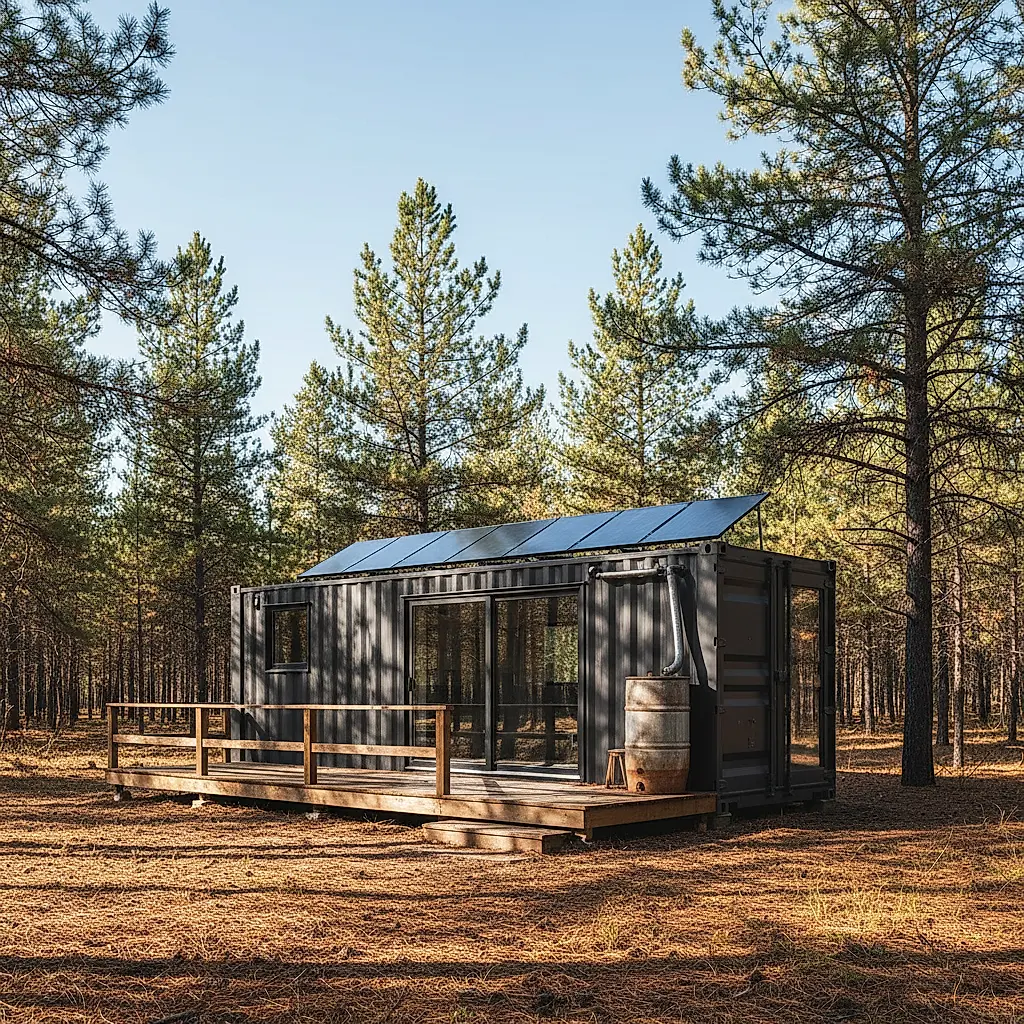
A practical guide to the cost categories and decisions behind an off-grid shipping container cabin, from insulation and solar to water collection and site access.
Start With a Realistic Cost Framework
Converting a shipping container into an off-grid cabin is a project with many moving parts. The container itself is only one line item. The larger question is how you plan to live off the grid: how much power you need, where your water comes from, how you handle waste, and how you keep the interior comfortable in your climate.
This article walks through the major cost categories you should expect to research and price locally. It does not quote prices because material and labor costs vary widely by region, season, and site. Instead, use it as a checklist for getting accurate quotes and making informed decisions.
One important note: this is a planning guide, not a construction manual. Always confirm the exact specifications, condition, and features of any container with the Newport team, and verify local building, zoning, and environmental requirements with the appropriate authorities before you commit to a design.
The Container Shell: Your Starting Point
Condition and Grade
Containers are generally sold in different condition grades, from basic wind-and-water-tight units to newer one-trip boxes. The condition affects both the purchase cost and how much prep work you will need to do. A unit with surface rust, dents, or older paint may cost less upfront but require more labor and materials to make suitable for a living space.
Ask about the container's history, its current condition, and whether it has been inspected. Confirm details in the individual listing rather than assuming.
Size and Height
Standard containers come in nominal lengths such as 20 feet and 40 feet, with a nominal width around 8 feet. Height is typically either standard or high cube. These nominal dimensions are a starting point, but exact internal and external measurements vary by manufacturer and model. Always check the listing and the container's CSC plate for exact specifications.
A larger container gives you more floor area but also more surface area to insulate, finish, and power. Think about your actual living needs rather than assuming bigger is better.
Modifications
Cutting openings for doors, windows, and vents is a common part of a cabin conversion. This work affects structural integrity and weather tightness, so it should be planned carefully and done by someone experienced with container modifications. Costs depend on the number and size of openings, the type of framing, and local labor rates.
Insulation, Climate Control, and Comfort
Why Insulation Matters Off Grid
Steel is an excellent conductor of heat and cold. Without insulation, a container interior will swing dramatically with outside temperatures. For an off-grid cabin, insulation is not just a comfort issue; it directly affects how much power you need for heating and cooling.
Insulation Options
Common approaches include rigid foam boards, spray foam, and batt insulation with a proper vapor strategy. Each has different cost, thickness, and performance trade-offs. The right choice depends on your climate, your budget, and how you plan to finish the interior walls.
Key decision points:
- How much interior space are you willing to give up to insulation thickness?
- Will you condition the space year-round or only seasonally?
- Do you need to manage moisture and condensation, especially in humid climates?
Ventilation and Air Quality
Off-grid cabins need intentional ventilation. Without it, moisture, cooking odors, and indoor air pollutants can build up. Options range from simple passive vents to powered fans. If you plan to use a wood stove or propane heater, follow the manufacturer's clearances and ventilation requirements exactly, and confirm local code requirements.
Heating and Cooling
Heating and cooling are often the largest energy loads in a small cabin. A wood stove, propane heater, or mini-split system each has different installation and operating implications. For off-grid use, the choice affects how large your solar and battery system must be. Do not size your power system until you have a realistic estimate of your heating and cooling demand.
Power Systems for an Off-Grid Container Cabin
Estimating Your Load
Before pricing solar, make a list of every device you plan to run and estimate how many hours per day you will use it. This is called a load estimate. It is the foundation of any off-grid power design. Underestimating loads is one of the most common and expensive mistakes.
Consider:
- Lighting and small electronics
- Refrigeration and cooking appliances
- Water pumping and treatment
- Fans, pumps, or blowers
- Any power tools or shop equipment
Solar, Batteries, and Backup
An off-grid solar system typically includes panels, a charge controller, batteries, an inverter, and the wiring and safety equipment to tie it together. The size and cost depend on your load estimate, your location's solar resource, and how many days of cloudy weather you want to ride through.
Many off-grid owners also include a backup generator or a secondary charging source. This adds cost and maintenance but can reduce the size of the battery bank you need.
Working With a Qualified Designer
Off-grid power systems involve electrical code, safety, and equipment compatibility. Work with a licensed electrician or a qualified off-grid designer who can review your load estimate and site conditions. Confirm all equipment ratings and installation requirements with the manufacturer and local authority.
Water, Waste, and Site Infrastructure
Water Collection and Storage
Rainwater collection is a common option for off-grid sites. A typical system includes a catchment surface, gutters, first-flush diversion, filtration, and storage tanks. The amount of water you can collect depends on your roof area and local rainfall, which varies significantly by region.
If you plan to use rainwater for drinking, you will need a treatment method appropriate to your water quality. Test your water and follow local health guidelines.
Other water options include a drilled well, a hauled-water arrangement, or a connection to a shared system if one is available. Each has different upfront and ongoing costs.
Waste Management
Off-grid waste options include composting toilets, incinerating toilets, and septic systems. The right choice depends on local regulations, soil conditions, and your budget. Some areas have specific requirements for greywater and blackwater. Check with your local health department before installing any system.
Access and Site Preparation
Delivery and site access are critical cost factors that are easy to overlook. A container is heavy and requires a suitable approach, a firm surface, and enough space for the delivery truck and unloading equipment. Confirm access requirements with the Newport delivery team before you order.
Site preparation may include:
- Clearing and grading
- A gravel or concrete pad
- Drainage to keep water away from the container
- Utilities trenching if you are bringing in power or water
Permits, Zoning, and Legal Considerations
Off-grid living is regulated differently across jurisdictions. Some areas have specific rules about habitable structures, septic systems, water use, and renewable energy. Others may have restrictions on temporary or alternative dwellings.
Do not assume that a container cabin is exempt from permits because of its size or construction. The requirements depend on your local zoning code, your intended use, and your site. Contact your local planning and building departments early in the process. Ask specific questions about habitable structures, utility requirements, and inspections.
If you are working with a contractor or designer, confirm who is responsible for permits and inspections. Getting this wrong can be expensive and time-consuming.
Budgeting for Uncertainty
Every construction project has unknowns, and off-grid projects tend to have more than most. Site conditions, material availability, labor rates, and regulatory requirements can all change your numbers.
A practical approach is to build a budget with three parts:
- Known costs you have quotes for
- Estimated costs you have researched but not finalized
- A contingency for surprises
Review your budget at each stage. As you get real quotes, replace estimates with actual numbers. If the total exceeds your comfort level, revisit your design priorities rather than cutting corners on safety or structural work.
Frequently Asked Questions
How much does an off-grid container cabin cost?
There is no single answer. Costs depend on the container, modifications, insulation, power system, water system, waste system, site work, and local labor rates. The best approach is to price each category with local quotes and build a project-specific budget.
Can I use a standard shipping container for an off-grid cabin?
Yes, many people do. However, you will need to address insulation, ventilation, moisture control, and structural modifications. Confirm the container's condition and specifications with Newport, and check local building requirements before you begin.
How much solar power do I need?
The size depends on your daily energy use, your location's solar resource, and how many days of backup you want. Start with a detailed load estimate and work with a qualified off-grid designer to size the system.
Do I need a permit for an off-grid container cabin?
Permit requirements vary by location and intended use. Contact your local planning and building departments to confirm what applies to your project. Do not rely on general assumptions.
How do I handle water and waste off grid?
Common water options include rainwater collection, wells, and hauled water. Waste options include composting toilets and septic systems. Each has different costs and regulatory requirements. Check with local health and environmental authorities before choosing a system.
Next Steps for Your Project
Planning an off-grid container cabin is a process of research, quotes, and local verification. Start by confirming the container that fits your needs and site. Browse current listings at our shop to see available units and specifications. When you are ready to talk through access, delivery, or container options, contact the Newport team with your questions. They can help you confirm listing details, availability, and delivery requirements so you can move forward with accurate information.
Plan the next step
Confirm the container and the delivery plan.
Browse current listings, then speak with the Newport team to verify the unit, total pricing, site access, and delivery requirements before payment.