
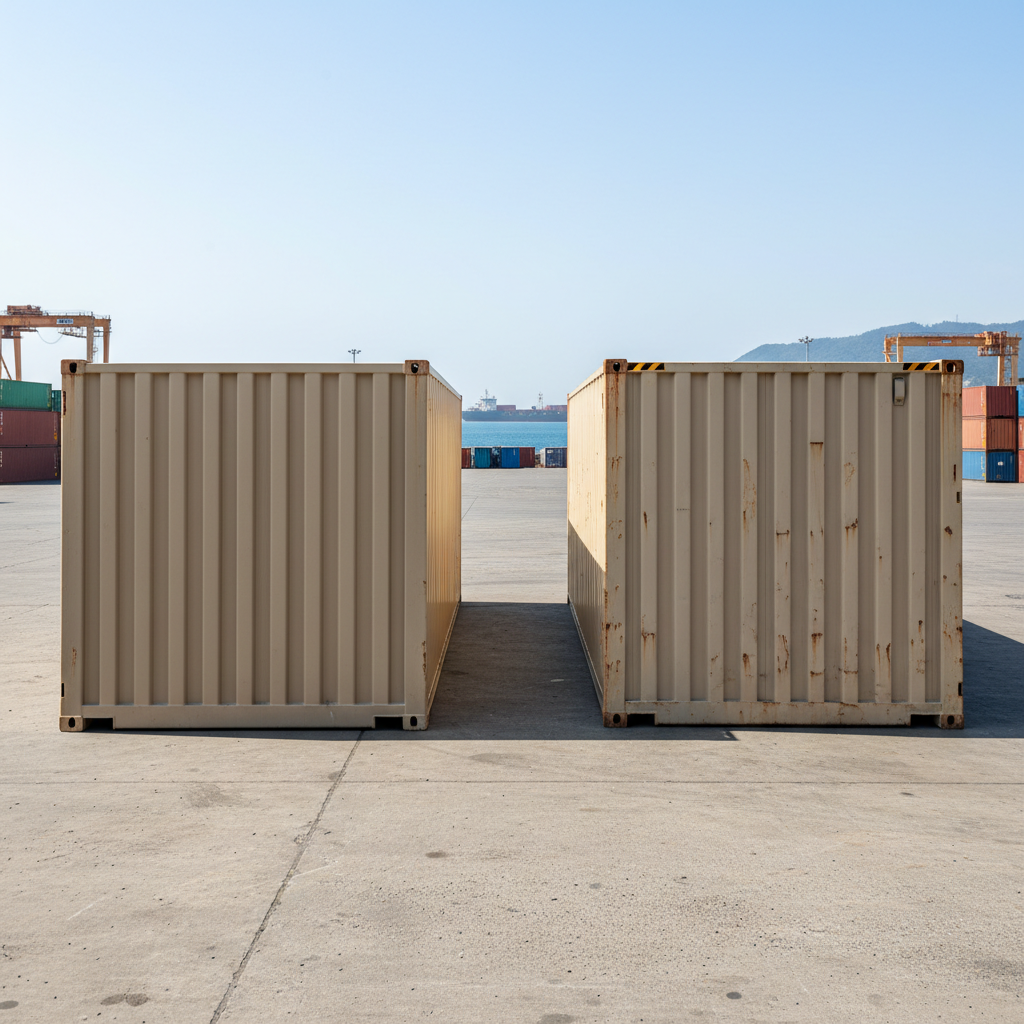
Compare one-trip and wind and water tight shipping containers on condition, resale value, and long-term durability so you can choose the right unit for your project.
Start With the Condition, Not the Label
When you shop for a used shipping container, you will see two common condition grades: one-trip and wind and water tight (often shortened to WWT). The names describe condition and history, not a brand or a formal warranty. Understanding what each label generally means, and what it does not guarantee, helps you compare listings fairly.
A one-trip container is generally understood to have made a single cargo voyage before being retired from international shipping. A wind and water tight container has typically seen more service and is sold on the basis that it keeps wind and water out, even if it shows cosmetic wear. Those are useful starting points, but condition varies by individual unit, so the listing and a physical inspection matter more than the category name.
This guide walks through the practical differences buyers care about: appearance, repair history, resale value, and how each grade tends to hold up in long-term storage or modification projects. It does not quote prices or promise outcomes, because those depend on current market conditions, unit specifics, and how you plan to use the container.
What One-Trip and WWT Actually Mean
One-trip containers
A one-trip container is generally a newer unit that has completed a single international shipment. Because it has carried cargo only once, it often shows fewer dents, less surface rust, and fresher paint than containers that have been in service longer. Many buyers choose one-trip units when appearance matters, such as for an office conversion, a retail display, or a project where the container will remain visible.
Even so, one-trip does not mean flawless. A unit can pick up minor damage during loading, unloading, or repositioning. Doors, seals, and locking gear still deserve a close look. Ask for current photos and, when possible, inspect in person.
Wind and water tight containers
A wind and water tight container is sold on the basis that it keeps out wind-driven rain and does not leak under normal conditions. These units have often seen multiple voyages and may show dents, scuffs, surface rust, or older paint. The key promise is weather resistance, not cosmetic perfection.
WWT is a practical choice for storage, job-site use, and many modification projects where appearance is secondary. However, wind and water tight is a condition description, not a certification. Verify the actual condition of the specific unit, including the roof, floor, and door gaskets.
What neither label tells you
Neither term tells you the exact age, the number of trips, the repair history, or how the container was stored between uses. A well-maintained WWT unit can outperform a neglected one-trip unit in day-to-day weather resistance, and a one-trip unit that sat in a corrosive environment can still develop problems. Treat the label as a starting filter, then confirm details for the individual container.
Condition, Appearance, and Repair History
Cosmetic differences
One-trip containers often look newer. Paint may be brighter, dents fewer, and the interior cleaner. WWT containers commonly show more wear, including scratches, minor dents, and surface rust. For some projects, that wear is irrelevant. For others, it means budgeting for prep and paint.
Structural and weather considerations
Both grades should be evaluated for the same essentials:
- Roof condition: Look for rust, pitting, or previous patches. The roof is a common failure point.
- Floor condition: Check for soft spots, delamination, or moisture damage, especially near the doors.
- Door operation: Doors should open and close smoothly. Gaskets should be flexible and intact.
- Corner castings and frame: Inspect for cracks, bends, or heavy rust.
- Ventilation and condensation: Any sealed steel box can sweat under certain conditions. Plan for ventilation if you store moisture-sensitive goods.
Repair history
Ask whether the unit has been repaired, patched, or repainted, and where. A documented repair is not automatically a problem, but undisclosed repairs can hide bigger issues. If you cannot inspect in person, request detailed photos of the roof, floor, doors, and any patched areas.
Resale Value and Long-Term Durability
How resale value tends to behave
One-trip containers generally hold a higher resale position than WWT units of the same size because they start in better cosmetic condition. That advantage can narrow over time as both grades age and as market supply shifts. WWT containers often appeal to buyers focused on function and budget, which can support steady demand for storage and job-site use.
No one can guarantee future resale values. Local supply, transportation costs, and the condition of your specific unit all influence what a future buyer will pay. If resale matters to you, keep records, avoid unnecessary modifications, and maintain the container against rust and moisture.
Long-term durability factors
Durability depends less on the one-trip versus WWT label and more on these factors:
- Initial condition: A sound WWT unit can last many years with basic care.
- Environment: Coastal salt air, heavy snow, and humid climates accelerate wear.
- Maintenance: Prompt rust treatment, roof inspection, and door gasket care extend service life.
- Use: Static storage is gentler than frequent relocation or heavy modification.
- Ventilation: Managing condensation protects both the container and its contents.
Modifications and the grade you choose
If you plan to cut, weld, insulate, or add windows and doors, the starting grade still matters, but the quality of the build matters more. A one-trip unit can be a better canvas for a finished space, while a WWT unit can be a cost-effective shell for a workshop or storage building. In both cases, confirm that local building, zoning, and permit requirements are met before you begin. Requirements vary by jurisdiction, so check with the appropriate local authority.
How to Compare Listings Without Getting Misled
Questions to ask before you buy
- What condition grade is this specific unit, and how was that determined?
- Can you share current photos of the roof, floor, doors, and interior?
- Has the container been repaired, patched, or repainted?
- What are the exact dimensions and height for this listing?
- Is the unit available for inspection, and where is it located?
- What are the delivery requirements for my site?
Red flags to watch for
- Vague answers about condition or repair history.
- Photos that do not show the roof or floor.
- Claims that a container is "certified" without documentation you can review.
- Pressure to buy without an inspection or clear listing details.
Match the grade to the job
- Visible, finished project: A one-trip unit may be worth the premium for appearance.
- Storage or job site: A WWT unit can be a practical, budget-conscious choice.
- Rough service or relocation: Prioritize structural soundness over cosmetics.
- Moisture-sensitive contents: Plan for ventilation and consider a unit with strong door gaskets and a sound roof.
Delivery and Site Planning Basics
Delivery logistics depend on the container size, your site access, and the equipment available in your area. Do not assume that one grade or size requires less equipment than another. Instead, discuss your site with the delivery team before you buy.
Key details to confirm:
- Access route: Width, overhead clearance, and turning radius for the delivery truck and trailer.
- Ground conditions: Firm, level ground reduces the risk of settling or door misalignment.
- Placement plan: Where the container will sit and how doors will open.
- Local requirements: Any permits, homeowner association rules, or setback requirements.
Approximate nominal container lengths, widths, and standard or high-cube heights can help you sketch a plan, but always confirm exact specifications for the individual listing and check the CSC plate for that unit. For site-specific questions, speak with the Newport team.
Frequently Asked Questions
Is a one-trip container always better than a wind and water tight container?
No. One-trip units often look newer, but a well-maintained WWT container can be perfectly suitable for storage or modification. The right choice depends on your budget, appearance needs, and the condition of the specific unit.
Can a wind and water tight container be used for a finished space?
Yes, many buyers convert WWT containers into workshops, offices, and other spaces. The starting condition affects how much prep work is needed, and local building and zoning requirements still apply. Confirm those requirements with your local authority.
How do I verify the condition of a container before buying?
Ask for current photos of the roof, floor, doors, and interior, and request the repair history. When possible, inspect the unit in person or arrange for someone you trust to inspect it. Confirm listing details, availability, and pricing with the Newport team.
Does the condition grade affect delivery?
Delivery depends mainly on container size, site access, and local equipment, not on the condition grade. Share your site details with the delivery team so they can confirm what is needed for your location.
Will a one-trip container hold its value better than a WWT container?
One-trip units often start at a higher resale position because of their cosmetic condition, but future values depend on market conditions, maintenance, and the specific unit. No resale outcome is guaranteed.
Next Steps
Choosing between one-trip and wind and water tight comes down to your project, your budget, and the condition of the individual container. Start by reviewing current listings to see what is available, then reach out with your questions about condition, dimensions, and delivery.
- Browse available containers: Shop containers
- Ask about a specific unit or your site: Contact Newport
Confirm listing details, availability, pricing, site access, and delivery requirements with the Newport team before you buy. They can help you compare options and plan the next step.
Plan the next step
Confirm the container and the delivery plan.
Browse current listings, then speak with the Newport team to verify the unit, total pricing, site access, and delivery requirements before payment.