
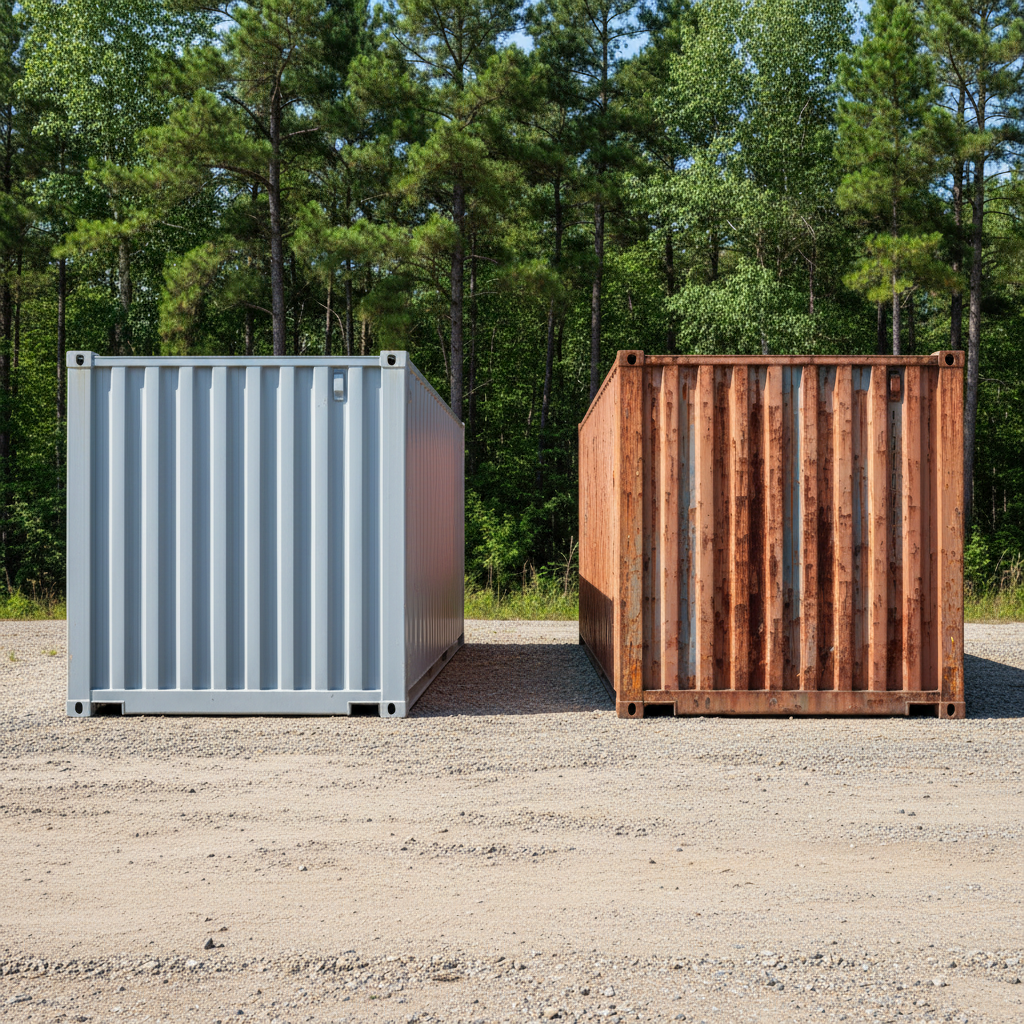
Compare one trip and wind and water tight shipping containers for storage. Learn how condition grades differ, what to inspect, and how to choose with confidence.
When you're shopping for a storage container, you'll quickly run into two common condition grades: one trip and wind and water tight (WWT). Both can serve as secure, weather-resistant storage, but they differ in age, cosmetic condition, and how they've been used. Understanding those differences helps you match a container to your budget, site, and long-term plans.
This guide explains what each grade generally means, how to inspect a container before you buy, and which questions to ask the Newport team so you can confirm the details of a specific listing.
What Do One Trip and Wind and Water Tight Mean?
Container grades are shorthand for condition, not a formal warranty. The terms are used across the industry, but exact standards can vary by seller, so always confirm the specifics of the unit you're considering.
One Trip Containers
A one trip container is generally understood to have made a single international voyage — often carrying cargo from a factory to a destination — before being sold. Because it hasn't been through years of repeated loading, unloading, and ocean crossings, it often shows fewer dents, less surface rust, and fresher paint than older units.
Key characteristics often associated with one trip containers include:
- Relatively clean interior walls and floors
- Original or near-original paint and markings
- Fewer cosmetic blemishes than retired fleet containers
- Doors, seals, and locking gear that have seen limited use
That said, "one trip" is not a guarantee of perfection. A container can still pick up minor damage in transit, and inspection remains essential.
Wind and Water Tight Containers
Wind and water tight describes a container that is expected to keep out wind-driven rain and stay dry inside under normal conditions. WWT containers are typically retired from active shipping service and may show more dents, rust, or repainted areas. The grade focuses on weather resistance rather than appearance.
A WWT container should still have:
- Doors that close and seal properly
- Intact gaskets around door openings
- A roof and walls free of holes or daylight gaps
- A floor that is structurally sound and dry
Cosmetic wear is normal and usually doesn't affect storage performance, but structural issues do. That's why a hands-on inspection or a detailed condition report matters.
How the Two Grades Compare for Storage
| Factor | One Trip | Wind and Water Tight |
|---|---|---|
| Typical age | Newer, often one voyage | Older, retired from service |
| Appearance | Cleaner, fewer dents | More cosmetic wear |
| Weather resistance | Expected to be excellent | Expected to keep out wind and rain |
| Interior condition | Often cleaner | Varies; inspect floor and walls |
| Best for | Buyers who want a newer look | Budget-conscious storage needs |
Neither grade is automatically "better." The right choice depends on what you're storing, how visible the container will be, and how long you plan to keep it.
Matching the Grade to Your Storage Needs
When a One Trip Container May Make Sense
- You want a container that looks newer on your property.
- You plan to store sensitive items and prefer a cleaner interior.
- You may repurpose the container later for an office, workshop, or similar use.
- You want to minimize cosmetic maintenance in the early years.
When a Wind and Water Tight Container May Make Sense
- You need dry, secure storage and are comfortable with cosmetic wear.
- Your budget is a primary consideration.
- The container will sit in a utility area where appearance matters less.
- You plan to paint, modify, or clad the container anyway.
If your priority is keeping contents dry, both grades can work — provided the specific unit passes inspection. If your priority is appearance, a one trip unit is often the closer match.
Inspection Checklist: What to Look At Before You Buy
Whether you're considering one trip or WWT, use a consistent inspection routine. Ask the Newport team for current photos, a condition description, and — where available — the container's CSC plate, which carries identification and specification details. Confirm exact dimensions and ratings against the individual listing rather than relying on general figures.
Exterior
- Roof: Look for standing water, rust-through, or patches. A roof in poor condition is a common source of leaks.
- Walls and panels: Note dents, deep rust, or repairs. Surface rust is usually cosmetic; flaking or perforation is not.
- Doors: Check that they open and close smoothly, and that locking bars operate without excessive force.
- Door gaskets: Look for cracks, gaps, or missing sections. Gaskets are a primary defense against wind-driven rain.
- Corner castings: Inspect for cracks or deformation.
- Paint and markings: Faded paint is normal; bubbling rust may signal deeper issues.
Interior
- Floor: Check for soft spots, delamination, or moisture. A dry, solid floor is essential for most storage.
- Walls and ceiling: Look for daylight, stains, or condensation marks.
- Odor: A strong smell may indicate previous cargo or moisture problems.
- Cleanliness: Residue from prior cargo may require cleaning before you store sensitive goods.
Doors and Seals
- Close the doors and check for light gaps around the perimeter.
- Confirm the gasket compresses evenly.
- Test the locking mechanism and ensure it holds the doors tightly.
Documentation
- Ask for the container's identification details and, if applicable, the CSC plate information.
- Confirm the grade in writing on your quote or order.
- Ask whether any repairs or repainting have been performed.
Common Misunderstandings About Container Grades
- "One trip means brand new." It usually means limited service, not zero wear. Minor transit damage is possible.
- "WWT means it leaks." The grade is about keeping wind and water out. A properly inspected WWT container should be dry inside.
- "Grade tells you everything." It doesn't. Two containers of the same grade can differ in condition. Inspection and listing details matter more than the label alone.
- "Any container works for any site." Site access, surface, and local requirements vary. Confirm delivery logistics and any local rules with the Newport team and your local authority.
Questions to Ask Before You Decide
- What grade is this specific container, and how is that grade defined by the seller?
- Can I see current photos of the actual unit, including the roof, floor, and door seals?
- Has the container been repaired, repainted, or used for anything unusual?
- What are the exact dimensions and ratings for this listing?
- What does delivery involve for my address, and what site access is required?
- What should I do if I notice an issue after delivery?
Clear answers to these questions reduce surprises and help you compare options fairly.
Frequently Asked Questions
Is a one trip container better than a wind and water tight container?
Not universally. One trip containers often look newer and may have cleaner interiors, while WWT containers are typically more affordable and still designed to keep wind and rain out. The better choice depends on your budget, appearance preferences, and the condition of the specific unit.
Can I store sensitive items in a wind and water tight container?
Many people do, provided the container is genuinely dry inside. Inspect the roof, door gaskets, and floor carefully, and ask for current photos. If you're storing moisture-sensitive goods, consider ventilation or moisture control measures and confirm the container's condition with the Newport team.
How long will a storage container last?
Lifespan depends on the container's age, condition, local climate, and how well it's maintained. A container kept on a well-drained surface and maintained with touch-up paint and gasket care can serve for many years. There's no single number that applies to every unit.
Does a container need a permit for my property?
Requirements vary by location and intended use. Newport cannot determine local rules for you. Check with your local planning or zoning authority before placing a container, and confirm any site-specific delivery requirements with the Newport team.
What if I'm not sure which grade to choose?
Share how you plan to use the container, your budget range, and how important appearance is. The Newport team can point you to current listings that match your priorities, and you can compare grades side by side before deciding.
Next Steps
Start by browsing current inventory to see available grades, sizes, and conditions. Then reach out with your questions about a specific unit, delivery, or site access.
Confirm listing details, availability, pricing, site access, and delivery requirements with the Newport team before you buy. A few minutes of verification now can save time and frustration later.
Plan the next step
Confirm the container and the delivery plan.
Browse current listings, then speak with the Newport team to verify the unit, total pricing, site access, and delivery requirements before payment.