
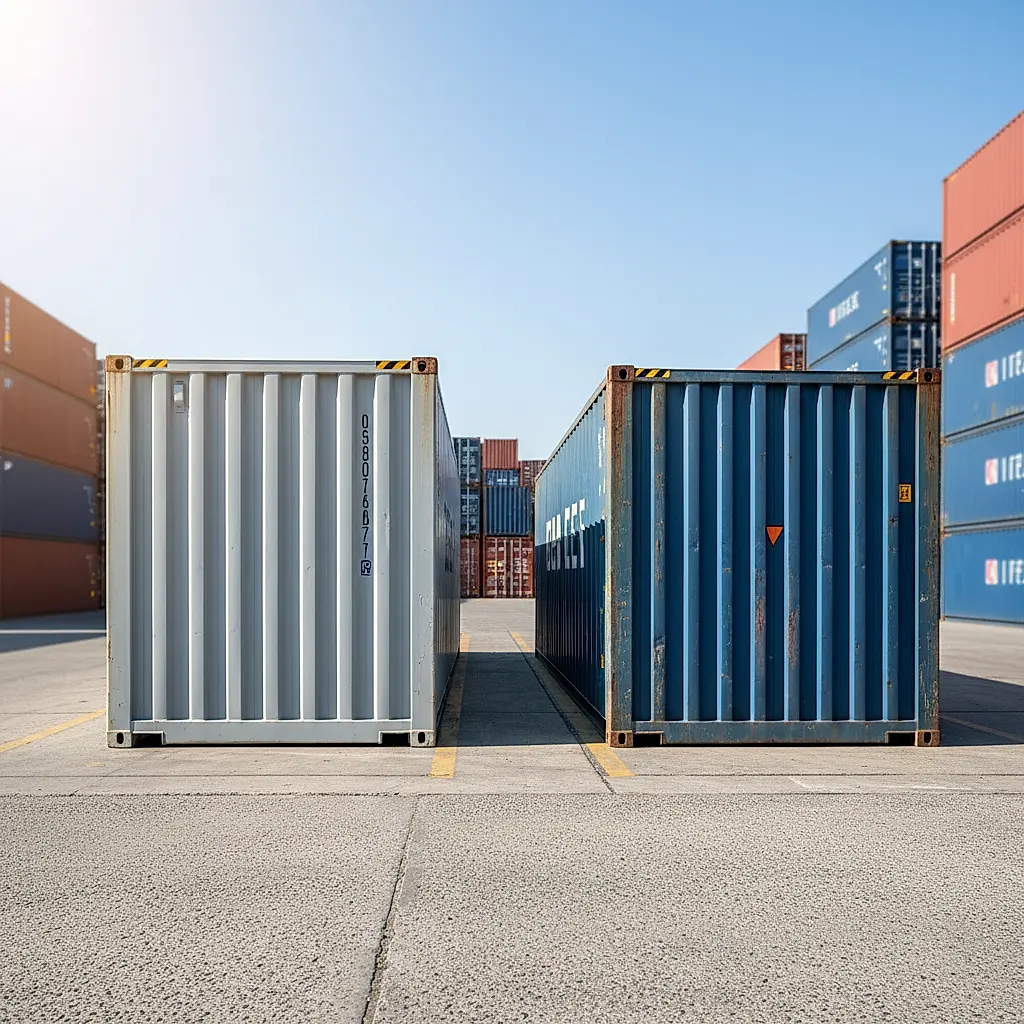
Compare one-trip and wind and water tight (WWT) shipping containers on condition, appearance, and long-term value so you can pick the right unit for storage, modification, or a jobsite.
What One-Trip and WWT Really Mean
When you shop for a shipping container, you will see two labels again and again: one-trip and WWT, which stands for wind and water tight. These are condition grades, not brand names, and they describe how much service a container has seen and what you can reasonably expect from it.
A one-trip container has made essentially one international voyage. It was manufactured, loaded, shipped, and then sold into the secondary market. Because it has not spent years cycling through ports, it usually shows fewer dents, less surface rust, and a cleaner interior than a retired unit.
A WWT container has been in service longer. It has been inspected and judged wind and water tight, meaning it should keep weather out through normal use. It will show cosmetic wear, and it may have dents, scuffs, or surface rust. What matters is whether the structure, doors, seals, and roof still do their job.
Neither label tells you everything. Condition varies unit by unit, so the listing and the container itself are the real sources of truth.
How the Two Grades Compare in Practice
Appearance and first impressions
One-trip units are the closest thing to a new container without buying new. The paint tends to be intact, the floor is usually clean, and the doors operate smoothly. If the container will be visible, such as beside a home, office, or retail space, that appearance can matter as much as function.
WWT units are working containers. They may have faded paint, minor dents, or rust spots. Many buyers find that perfectly acceptable for a storage unit tucked behind a building or used on a jobsite.
Structural condition
Both grades should be structurally sound. The difference is how much wear they have absorbed. With a WWT unit, pay attention to:
- Door seals and gaskets — do they still compress and seal?
- Door hardware — do the locking bars and handles move freely?
- Roof and corners — any soft spots, holes, or heavy rust?
- Floor — is the plywood or steel deck solid and dry?
- Side panels — are dents shallow, or do they affect the frame?
With a one-trip unit, these checks are usually quicker because there is less to inspect, but you should still verify them.
Modifications and customization
If you plan to cut openings, add windows, run electrical work, or insulate and finish the interior, starting with a straighter shell can reduce labor. One-trip containers are often chosen for conversions because there is less bodywork before fabrication begins.
That said, a sound WWT container can absolutely be modified. The question is whether the savings on the container outweigh the extra prep time. A fabricator can tell you what a specific unit needs.
Storage and weather protection
For basic storage, both grades can perform well when the unit is wind and water tight. The deciding factors are usually how sensitive your contents are and how long you need protection. If you are storing equipment, pallets, or tools, a WWT container may be entirely sufficient. If you are storing items that must stay pristine, a one-trip unit reduces the risk of interior moisture, stains, or debris.
The Value Question: Where Your Money Goes
The phrase "best ROI" gets used loosely. For a container, return on investment depends on what you are asking the unit to do.
Consider these scenarios:
- Temporary storage during a renovation: A WWT container may deliver the same practical result for less upfront cost.
- Long-term on-site storage: A one-trip unit may hold its appearance and resale appeal better over time.
- A visible office or studio conversion: One-trip condition often justifies itself in finish quality and reduced prep.
- A jobsite storage box: A WWT unit with solid doors and a dry roof can be the practical choice.
There is no universal winner. The right answer depends on your budget, timeline, tolerance for cosmetic flaws, and plans for the unit.
What to Verify Before You Buy
Because condition grades are broad, confirm the specifics for the exact unit you are considering. Ask the Newport team about:
- Current listing details, including the stated condition grade
- Actual availability, since inventory changes
- Pricing for the specific unit and any options you want
- The CSC plate and any markings on the container
- Door operation, seal condition, and interior appearance
- Whether the unit is suitable for the modifications you have in mind
If you are comparing two units, ask for photos or an in-person look. A short inspection can answer more than a grade label.
Questions to ask about any container
- Is the unit wind and water tight right now?
- Are there dents, rust, or repairs I should know about?
- Do the doors open, close, and lock properly?
- Is the floor solid and dry?
- Has the container been modified or repainted?
- What is included in the price, and what is not?
Delivery and Site Planning Basics
Condition is only half the decision. The other half is whether the container can reach your site and be placed safely.
Container delivery involves a truck and a tilt-bed or roll-off trailer, and the driver needs room to maneuver. Site access, ground conditions, overhead obstacles, and the drop location all matter. Exact requirements vary by location and equipment, so confirm them with the Newport delivery team before you order.
Practical preparation steps include:
- Clear the path for a large truck and trailer
- Identify overhead lines, tree limbs, and low structures
- Choose a firm, level spot for placement
- Confirm the container's final orientation before delivery
- Ask what site conditions the driver will need
If access is tight, discuss it early. It is better to solve a delivery question before the container is on the truck.
Making the Choice: A Simple Decision Framework
Use these questions to narrow your options:
- How visible is the container? If appearance matters, lean toward one-trip.
- How sensitive are your contents? If moisture or stains are a concern, lean toward one-trip.
- Will you modify it? If yes, a straighter shell can save time.
- What is your budget? A WWT unit may free up funds for shelving, locks, or site work.
- How long will you keep it? Longer horizons often favor better initial condition.
- What does the specific unit look like? Grade labels are a starting point, not a guarantee.
If you are still unsure, describe your project to the Newport team. They can point you toward units that fit your use case rather than pushing a single grade.
Frequently Asked Questions
Is a one-trip container always better than a WWT container?
No. A one-trip container usually has better appearance and less wear, but a WWT container that is genuinely wind and water tight can serve storage and jobsite needs very well. The better choice depends on your purpose, budget, and the condition of the specific unit.
Can a WWT container be used for a conversion?
Yes, many WWT containers are converted into offices, workshops, and other spaces. The extra prep work depends on the unit's dents, rust, and overall straightness. A fabricator can assess what a particular container needs before you commit.
How do I know if a container is actually wind and water tight?
Inspect the door seals, locking bars, roof, corners, and floor. Look for daylight around closed doors and check for moisture or staining inside. Ask the Newport team for the unit's condition details and, when possible, view it in person.
Does a one-trip container cost more?
One-trip containers typically command a higher price than WWT units because they have seen less service. Pricing varies by size, condition, and market, so confirm current pricing and availability with the Newport team rather than relying on general ranges.
What size should I choose?
Common nominal lengths are 20 feet and 40 feet, with standard and high-cube heights available. The right size depends on what you are storing, how you will access it, and where it will sit. Review the individual listing for exact specifications and confirm fit with the delivery team.
Next Steps
Start by browsing current units and noting the condition grade, size, and features that fit your project. If you want help comparing a one-trip unit against a WWT option, reach out and describe your intended use, site access, and timeline.
Confirm listing details, availability, pricing, site access, and delivery requirements with the Newport team before you finalize your order.
Plan the next step
Confirm the container and the delivery plan.
Browse current listings, then speak with the Newport team to verify the unit, total pricing, site access, and delivery requirements before payment.