
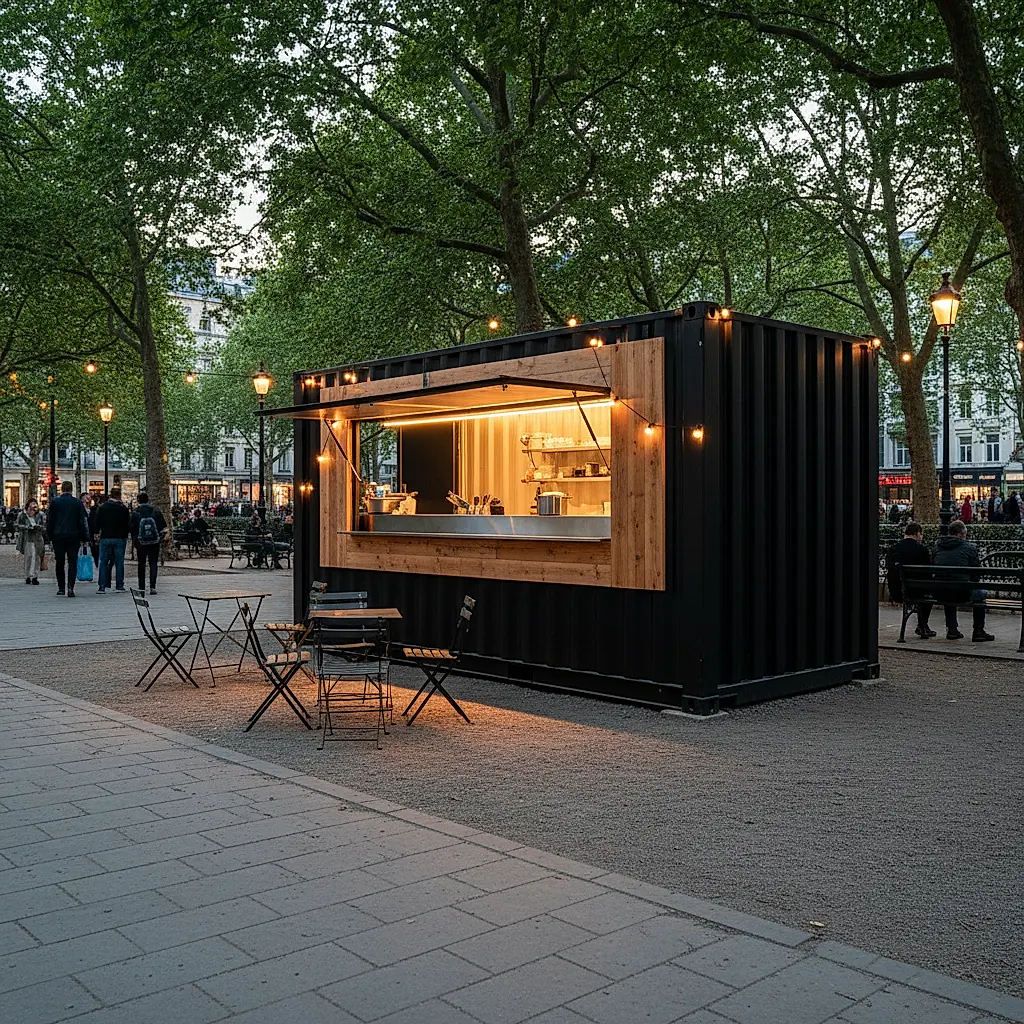
A practical guide to turning a shipping container into a food truck, covering cost factors, 20ft layout planning, and site requirements. Learn what to verify before you buy.
Why Convert a Shipping Container into a Food Truck?
A shipping container food truck—sometimes called a container kitchen or mobile food unit—offers a durable steel shell that can be modified for cooking, prep, and service. Compared with a conventional truck body, a container gives you straight walls, a standard footprint, and a structure that is widely recognized by fabricators. It also raises questions: what will it cost, which size works, and what does your local health department or site require?
This guide walks through the major cost categories, layout decisions, and site-planning steps. It does not quote prices or promise outcomes, because costs vary by region, fabricator, equipment, and code. Instead, it gives you a framework to ask better questions and confirm details with the Newport team and your local officials.
The Main Cost Categories for a Container Food Truck
When you budget a container food truck, think in line items rather than a single number. The total depends on the container itself, the conversion work, the kitchen equipment, and the permits and site work.
1. The container shell
A standard used container is the starting point. Condition matters: a one-trip or lightly used unit may cost more than a weathered unit, but it can reduce prep work. You will also choose between a standard height and a high-cube height. Nominal external lengths are commonly around 20 feet or 40 feet, and nominal width is generally about 8 feet, but exact internal and external dimensions vary by manufacturer and model. Confirm the CSC plate and the individual listing for exact specifications.
2. Structural modification
Cutting service windows, adding a personnel door, reinforcing openings, and framing walls are skilled tasks. A fabricator will assess whether the container needs additional steel around large openings. Costs rise with the number of openings, the size of the service window, and whether you need a fold-down awning or counter.
3. Insulation, walls, and finishes
Food service spaces usually need washable wall panels, sealed floors, and insulation appropriate to your climate. The type of insulation, the wall system, and the floor covering all affect cost. Ask your fabricator how they handle thermal bridging through the steel frame.
4. Kitchen equipment and utilities
This is often the largest variable. Ranges, fryers, grills, refrigerators, freezers, exhaust hoods, sinks, and hand-wash stations are priced separately. You also need to plan for electrical service, propane or natural gas, water supply, and waste tanks. The capacity of your electrical panel and the type of cooking equipment drive much of the utility cost.
5. Plumbing and waste
A mobile food unit typically needs fresh water, gray water, and sometimes black water tanks, plus a water heater and a three-compartment sink. Tank sizes and pump systems vary. Your local health department will have specific requirements for hand sinks, warewashing, and wastewater disposal.
6. Transportation and mobility
If the unit will move, you need to consider how it will be transported. Some operators mount the container on a trailer chassis; others keep it stationary and treat it as a fixed kiosk. A container is heavy, and moving it requires appropriate equipment and planning. Do not assume a standard tow vehicle is sufficient. Discuss transport options with your delivery team.
7. Permits, inspections, and professional fees
Health permits, fire inspections, zoning approval, and business licenses vary by city and county. Some jurisdictions treat a container food truck like any other mobile food unit; others have specific rules for containers. You may need stamped drawings from an engineer or architect. Confirm requirements with your local authority before you buy.
Choosing a 20ft Layout for a Container Kitchen
A 20-foot container is a common starting point for a compact food truck because it is easier to transport and fits smaller sites. A 40-foot container offers more room but is heavier and may be harder to place. The right choice depends on your menu, your service style, and where you will operate.
Workflow first, then equipment
Sketch your menu and the steps to produce it. A simple flow—storage, prep, cook, assemble, serve—helps you avoid a kitchen where staff cross paths. In a narrow container, a linear layout with a service window on one long side is common. An L-shaped or galley layout can work if you have a second opening.
Key zones to plan
- Service window: position it where customers naturally queue and where staff can hand off food without blocking the cook line.
- Cooking line: group equipment that needs exhaust together to simplify hood installation.
- Prep and warewashing: keep clean and dirty sides separate where possible.
- Dry storage and refrigeration: plan for deliveries and daily restocking.
- Utility closet: allow space for electrical panels, water heaters, and tanks.
Height and clearance
Standard-height containers can feel low once you add a ceiling and insulation. High-cube containers provide more interior height, which can matter for hoods and tall equipment. Confirm the interior height of the specific unit you are considering, and check how the ceiling system affects it.
Doors, windows, and security
A personnel door and a service window are typical. Consider how you will secure the unit overnight and whether you need screens or glass. Remember that every opening is a potential leak point and a structural change, so plan them early with your fabricator.
Site Planning and Delivery Considerations
A container food truck is only useful if it can be placed, permitted, and serviced at your location.
Access and surface
Check the route from the road to the pad. Turns, overhead wires, tree limbs, and soft ground can all prevent delivery. A level, compacted surface is generally needed. Do not assume a particular clearance or slope requirement; ask the Newport delivery team to review your site.
Utilities at the site
If you will operate from a fixed location, you may need electrical service, water, and sewer or a holding tank. If you will be fully self-contained, you need enough tank capacity and power for a service day. Discuss your planned menu and hours with your electrician and plumber.
Zoning and health department review
Zoning rules may limit where a mobile food unit can operate and for how long. Health departments may require a commissary, a hand-wash sink, and specific finishes. Some areas require a plan review before construction. Start these conversations early, because changes after fabrication are expensive.
Weather and ventilation
In a hot climate, insulation and ventilation matter. In a cold climate, freeze protection for water lines is important. Your exhaust hood and make-up air system should be sized for your cooking equipment. A qualified kitchen contractor can help you avoid a system that cannot keep up.
Common Budgeting Mistakes to Avoid
- Treating the container as the whole cost. The shell is often a small share of the total once equipment, utilities, and labor are included.
- Skipping the health department early. Requirements can change your layout after walls are closed.
- Underestimating utilities. Electrical service upgrades and gas connections can be significant.
- Forgetting ongoing costs. Insurance, commissary fees, permits, maintenance, and fuel add up.
- Buying before confirming site access. A unit you cannot deliver is a problem.
Frequently Asked Questions
How much does a shipping container food truck cost?
There is no single price. Costs depend on the container, the amount of fabrication, the kitchen equipment, utility work, and local permits. The best approach is to build a line-item budget and get quotes from fabricators and trades in your area. Confirm current pricing and availability with the Newport team for the container portion of your project.
Is a 20ft or 40ft container better for a food truck?
A 20-foot container is easier to transport and fits tighter sites, while a 40-foot container provides more interior space. The right choice depends on your menu, staffing, and location. Compare the interior dimensions on the individual listing and think through your workflow before deciding.
Do I need a permit for a container food truck?
Permit requirements vary by city, county, and state. You may need health, fire, zoning, and business licenses. Contact your local authority to confirm what applies to your project. Do not rely on general advice; rules differ from place to place.
Can I use a standard container or do I need a high-cube?
Both can work. A high-cube container offers more interior height, which can help with hoods and tall equipment. A standard-height container may be sufficient for a simple menu. Confirm the exact interior height of the unit you are considering and how insulation and ceiling finishes will affect it.
How do I get the container delivered to my site?
Delivery depends on your site access, surface, and local rules. Share your address and site details with the Newport team so they can discuss options. Do not assume a particular truck or equipment will be used; that is determined during the delivery review.
Next Steps
Start by defining your menu, your service style, and your likely location. Then review container options and confirm dimensions, condition, and availability. You can browse current listings at our shop and reach out with site questions through our contact page. The Newport team can help you compare container sizes and discuss delivery considerations, while your local officials and contractors confirm code and utility requirements.
Plan the next step
Confirm the container and the delivery plan.
Browse current listings, then speak with the Newport team to verify the unit, total pricing, site access, and delivery requirements before payment.