
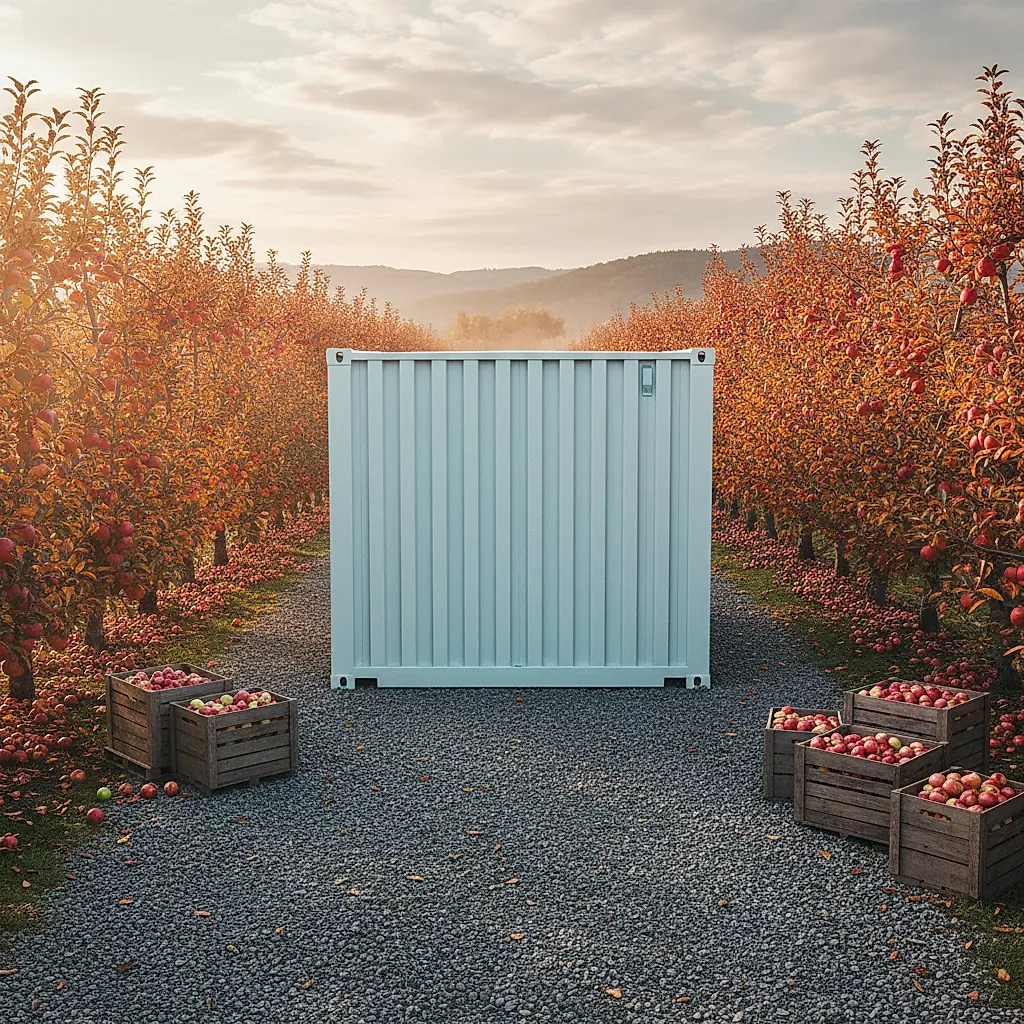
Learn how refrigerated shipping containers support harvest-time cold storage, what to compare beyond a warehouse lease, and which details to confirm before you buy.
Harvest season puts pressure on every part of your cold chain. Produce comes in faster than your permanent cooler can absorb, and delays between field and chill can reduce quality. A portable cold storage container — often a refrigerated shipping container, or "reefer" — is one option growers, packers, and food handlers evaluate when they need flexible chilled capacity. This guide explains how to think through the decision without relying on guesswork.
Why Harvest Timing Makes Cold Storage Capacity So Important
Many crops benefit from rapid cooling after harvest. The window between picking and reaching the right storage temperature varies by crop, but the principle is consistent: the sooner you can remove field heat and hold a stable temperature, the better your ability to protect quality.
That creates a seasonal mismatch. Your permanent cooler may be sized for average volumes, but harvest arrives in peaks. Options include:
- Renting additional refrigerated trailer space during peak weeks
- Building or expanding a permanent cold room
- Leasing off-site warehouse space
- Adding a portable refrigerated container that stays on your property
Each option has trade-offs in cost structure, lead time, site requirements, and how much control you keep over handling. A portable unit can sit near the field or packing area, which may reduce the time and labor involved in moving harvested product.
How a Refrigerated Container Fits Into a Harvest Cold Chain
A refrigerated shipping container is a self-contained cold storage box built around an integrated refrigeration unit. Standard nominal lengths are approximately 20 feet and 40 feet, with widths around 8 feet. Height varies: standard-height containers are roughly 8 feet 6 inches, while high-cube units are taller. Exact dimensions, internal capacity, and refrigeration specifications vary by unit, so confirm them on the individual listing rather than assuming.
What reefers are good at
- Flexible placement. Because the refrigeration unit is part of the container, you are not necessarily dependent on a permanent building.
- Defined storage space. A container gives you a closed, lockable volume that can be dedicated to a specific crop or lot.
- Temporary or seasonal capacity. You can add capacity for harvest and decide later whether to keep, reposition, or resell the unit.
- Separation of commodities. Multiple containers can let you hold different crops or lots apart, which can matter for ethylene sensitivity and odor transfer.
What to evaluate carefully
- Power supply. A reefer needs a suitable electrical connection. The required voltage, amperage, and plug type depend on the unit. Have a qualified electrician confirm what your site can support.
- Temperature range and control. Not every reefer is set up for every temperature band. If you need precise or very low temperatures, verify the unit's capabilities with the seller.
- Airflow and loading practice. Cold air needs to move. Blocking return air paths or stacking product against the evaporator can create warm spots. Follow the unit's operating guidance.
- Defrost and condensate. Refrigeration produces water. Confirm how the unit manages defrost cycles and where condensate drains, especially if the container sits on soil or near a traffic area.
- Monitoring. If you need temperature records for buyers or audits, ask what monitoring or alarm features the unit has and what data you can export.
Comparing a Portable Reefer With a Warehouse Lease
The reference topic suggests comparing reefer storage with traditional warehouse leases. The honest answer is that the better choice depends on your volumes, your timeline, and how much control you need. Rather than quoting savings you cannot verify, here is a framework for your own comparison.
Questions to ask about any warehouse option
- What is the minimum lease term, and what happens if harvest ends early?
- Are there charges for utilities, dock use, after-hours access, or handling?
- How far is the warehouse from your field or packing line, and what does that transport cost in time and fuel?
- Can you store different crops separately, or will space be shared?
- What temperature zones are available, and who controls setpoints?
Questions to ask about a portable reefer
- What is the purchase price, and what financing or payment terms are available?
- What will site preparation, power connection, and delivery cost?
- What maintenance and service does the refrigeration unit need, and who performs it locally?
- What is the realistic resale or redeployment value if your needs change?
- Are there permits, setbacks, or zoning rules that apply to placing a container on your property?
A simple way to frame the decision
- Estimate your peak chilled volume in pallets or bins, not in vague terms.
- Estimate how many weeks per year you actually need that peak capacity.
- List the fixed and variable costs of each option over the same time horizon.
- Add the operational costs that are easy to forget: transport, labor, power, maintenance, and monitoring.
- Weigh control and convenience. Keeping product on site can reduce handling and shrink the time to chill.
If your need is short and highly seasonal, a portable unit may be easier to justify. If you need large volumes year-round with dock access and integrated logistics, a warehouse may fit better. Many operations use a mix.
Site Planning Basics Before You Commit
Site planning is where portable cold storage projects succeed or stall. None of the following is a substitute for local guidance, but these are the items to work through early.
Access and placement
- Measure the route from the road to the pad, including gate widths, turns, overhead lines, and tree limbs.
- Confirm the delivery truck can reach the placement point and that there is room to maneuver.
- Choose a firm, level surface. A container that settles unevenly can be difficult to open and may stress the structure.
- Leave working space around doors and the refrigeration unit for loading, service, and airflow.
Power and utilities
- Have a qualified electrician assess your service capacity and recommend a safe connection.
- Consider whether you want a dedicated circuit, a disconnect, or a generator backup.
- Protect cables and connections from vehicles, livestock, and weather.
Local requirements
- Ask your local planning or zoning office whether a container used for cold storage triggers any permit, setback, or screening requirements.
- Check with your insurance provider about coverage for stored product and equipment.
- If you handle food for sale, confirm your regulator's expectations for the storage space.
Newport's team can talk through what delivery to your specific site involves, but site access and local requirements are things you should confirm directly with the appropriate authorities and your own contractors.
Condition, Documentation, and What to Verify
Refrigerated containers are mechanical assets, and condition matters as much as size.
- CSC plate and data plate. These plates carry identifying and structural information. Review them and ask for clear photos.
- Refrigeration unit hours and service history. Ask what is known about the unit's runtime and maintenance.
- Testing. Request that the unit be run and brought down to temperature before purchase, and ask what was observed.
- Door seals and gaskets. Worn seals let warm, humid air in and drive up run time.
- Interior condition. Check for rust, damaged liners, and residue from previous cargo. Food storage may require additional cleaning or lining considerations.
- Parts availability. Ask whether common service parts for that refrigeration model are readily available in your region.
If a seller cannot answer these questions, treat that as information. It does not automatically disqualify a unit, but it should shape your offer and your inspection plan.
Operating a Reefer Through Harvest: Practical Habits
Once a unit is on site, small habits protect the investment.
- Pre-cool the container before loading, and avoid filling it with warm product all at once.
- Leave space for air to circulate around and between pallets.
- Keep doors closed, and plan loads so you are not opening the unit repeatedly.
- Record setpoints and check them daily during peak season.
- Clean up spills and plant debris promptly.
- Schedule service before harvest, not during it.
- Keep a simple log of temperatures, door openings, and any alarms.
These practices do not replace the manufacturer's operating instructions or your food safety plan, but they reduce avoidable problems.
Frequently Asked Questions
Is a refrigerated shipping container the same as a cold storage warehouse?
No. A refrigerated container is a transportable, self-contained cold storage unit. A warehouse is a fixed building that may offer more volume, dock access, and shared services. They can serve similar purposes, but the cost structure, site requirements, and flexibility differ.
What size refrigerated container should I consider for harvest?
Start with your peak volume in pallets or bins and how you will load and unload. Nominal 20-foot and 40-foot reefers are common, and high-cube units add height. Exact internal dimensions and capacities vary, so confirm them on the specific listing and match them to your handling equipment.
Can I run a reefer on a standard farm electrical service?
That depends on the unit and your existing service. Refrigeration units have specific power requirements, and connecting one safely is an electrician's call. Have a qualified professional evaluate your site before you commit to a unit.
Do I need a permit to place a container on my property?
Requirements vary widely by jurisdiction and by how the container is used. Ask your local planning or zoning office directly. Do not assume that any particular size or use avoids permits.
How do I compare costs fairly against a warehouse lease?
Put both options on the same time horizon and include the costs people forget: delivery, site preparation, power, maintenance, transport, labor, and monitoring. Then weigh control, convenience, and risk. Newport's team can help you understand the container side of that comparison, but only you can weigh it against local warehouse terms.
Next Steps
If harvest cold storage is on your mind, start with a clear picture of your peak volume, your site, and your power situation. Then browse current refrigerated container listings at our shop and reach out to the Newport team at our contact page to discuss availability, listing details, and delivery requirements for your location. Confirm exact specifications, pricing, and site access with the team before you buy.
Plan the next step
Confirm the container and the delivery plan.
Browse current listings, then speak with the Newport team to verify the unit, total pricing, site access, and delivery requirements before payment.