
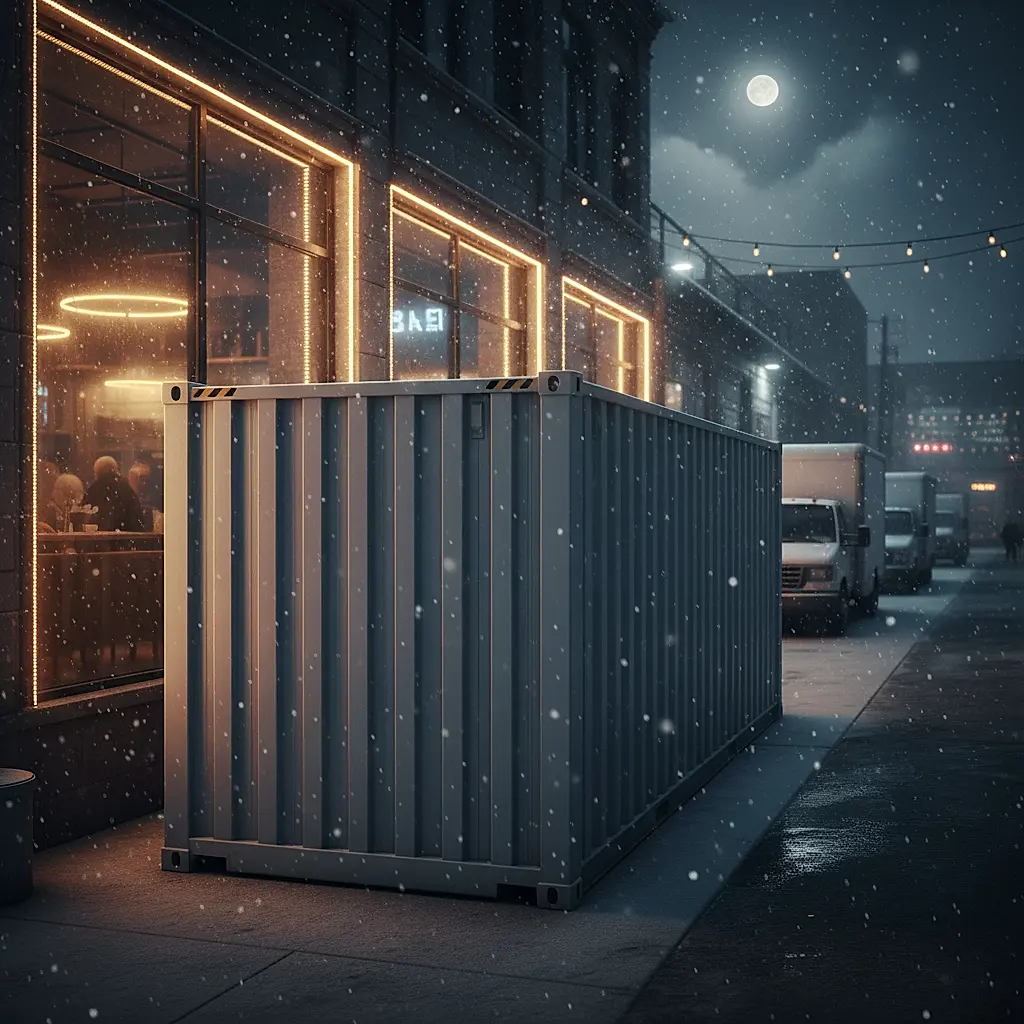
Need extra refrigerated space for seasonal inventory? Learn how portable cold storage containers work, what to plan for, and how to choose between buying and renting.
Why Holiday Inventory Creates a Cold Storage Crunch
For many businesses, the weeks around major holidays bring a predictable but painful squeeze: more inventory arrives, more customers expect it to be fresh, and your existing walk-in cooler or freezer is already full. Grocery stores, florists, caterers, food banks, event vendors, and distributors all face some version of this problem.
A portable cold storage container can be a practical answer. These are shipping containers that have been fitted with refrigeration equipment and insulated interiors so they can hold temperature-sensitive goods on a temporary or long-term basis. They sit outside your building, they can often be placed and powered relatively quickly, and they can be removed when the season ends.
This guide walks through the decisions that matter: how refrigerated containers differ from standard ones, what to check before you commit, how to think about buying versus renting, and what to confirm with the Newport team before delivery.
How Portable Cold Storage Containers Differ From Standard Containers
A standard shipping container is a steel box. A refrigerated container — often called a reefer — is a steel box with a working refrigeration unit, insulated walls, and a controlled interior environment. That difference drives almost everything else about cost, site planning, and maintenance.
Refrigeration unit and power
Reefer containers use an integrated refrigeration unit, typically mounted at one end. The unit needs a power source. Some units are designed for common voltages used in commercial settings, but the exact electrical requirements vary by unit and by the equipment installed. You should not assume a standard household outlet will work. Confirm the power requirements, plug type, and any startup amperage with the Newport team and with a qualified electrician before delivery day.
Insulation and interior condition
Because these containers are built to hold temperature, the interior is lined and insulated. That lining can be damaged by rough loading, so inspect the interior if you are buying used. Ask whether the unit has been tested under load and how recently the refrigeration system was serviced.
Temperature range and control
Refrigerated containers are generally capable of holding refrigerated or frozen ranges, but the achievable range depends on the specific unit, the ambient outdoor temperature, how full the container is, and how often the doors are opened. If you need a narrow temperature band, say so up front. Do not assume a container will hold a precise setpoint in every climate without verification.
Monitoring and alarms
Some units include temperature monitoring or alarm features. If your inventory is high-value or regulated, ask what monitoring options are available and whether you need a separate logging solution. This is a decision point worth settling early, because it affects both cost and how you staff the site.
Planning Your Site Before the Container Arrives
A cold storage container is only useful if it can be delivered, placed, powered, and accessed safely. Site planning is where many seasonal projects succeed or stall.
Access and placement
You need a path from the road to the placement spot that a delivery truck and trailer can use. Turning radius, overhead wires, tree limbs, fences, gates, and soft ground can all affect whether delivery is possible. Describe your site honestly and in detail when you request a quote. Photos and measurements help.
Ground conditions
Containers are heavy, and loaded containers are heavier. A level, stable surface — compacted gravel, concrete, or asphalt — is generally preferred over bare soil or a slope. If your only option is uneven ground, discuss it with the Newport team before delivery rather than after.
Power and utilities
Plan the electrical run before the container lands. You may need a dedicated circuit, a disconnect, or a licensed electrician to install a suitable connection. If the container will sit far from your building, consider the cost and safety of running power versus using another approach.
Drainage and weather
Refrigeration units produce condensate, and standing water around the container can accelerate corrosion and create slip hazards. Think about where water will go. In snowy regions, plan for snow removal around the unit and the doors.
Loading and workflow
How will staff move product in and out? Will you need a ramp, a dock plate, or a forklift? Is there room to open the doors fully? A container that is technically on-site but awkward to load can cost more in labor than it saves in storage.
Security
Containers are lockable, but locks and lock hardware vary. If you are storing high-value inventory, ask about lock options and consider whether your site has lighting or camera coverage.
Buying vs. Renting Cold Storage for a Seasonal Peak
The right choice depends on how long you need the capacity, how often you will need it, and how much control you want over the equipment.
When buying may make sense
- You expect to need cold storage for multiple seasons or year-round.
- You want to customize the interior, shelving, or monitoring setup.
- You have a permanent site with power and access.
- You prefer to own the asset and handle maintenance on your own schedule.
When renting may make sense
- Your need is short and tied to one holiday period.
- You are unsure whether the site will work and want to test it.
- You do not want to manage refrigeration maintenance or repairs.
- You need flexibility to scale up or down next year.
The questions that decide it
Ask yourself: How many weeks per year will I actually use this? What does it cost me to lose a day of cold storage during peak season? Who will service the refrigeration unit if it fails on a holiday weekend? Do I have someone on staff who can monitor temperature and respond to alarms? If the answers are uncertain, renting or a shorter commitment may be the lower-risk path.
Availability, pricing, and rental terms change with the season and with the specific unit. Confirm current options, lead times, and terms with the Newport team rather than relying on general figures.
Size and Specification Considerations
Container sizes are usually described by nominal length. A 20-foot container is roughly 20 feet long, about 8 feet wide, and comes in standard-height and high-cube variants. Exact internal dimensions, door openings, and capacities vary by manufacturer and unit, so treat any general figure as approximate.
What to verify in the listing or on the unit
- Nominal size and whether it is standard or high cube
- Interior dimensions and door opening dimensions
- Refrigeration unit make and model, if available
- Voltage, phase, and amperage requirements
- Temperature range the unit is rated for
- Recent service history or inspection records
- Condition of insulation, flooring, and door seals
- Whether the CSC plate or other data plates are present and legible
Why exact numbers matter
If you are planning racking, pallet counts, or a specific product mix, approximate dimensions are not enough. Measure your pallets and your tallest loads, then compare them to the actual door opening and interior height of the specific unit you are considering. A high-cube unit may give you more vertical room, but only if the listing confirms it.
Do not assume regulatory outcomes
Local rules about temporary structures, refrigeration equipment, electrical connections, and food storage vary widely by jurisdiction. Do not assume a particular container size avoids permits or inspections. Check with your local authority and, where food handling is involved, your health department.
Operating a Cold Storage Container Through the Holidays
Once the container is in place, day-to-day operation determines whether it protects your inventory.
Temperature discipline
Check and record temperatures on a regular schedule. Minimize door-open time. Organize the interior so the items you need most are closest to the door. If you are storing a mix of refrigerated and frozen goods, confirm the unit can handle your target range and consider whether one container is the right solution.
Loading practices
Do not block airflow. Refrigerated containers rely on air circulation around the cargo. Stacking product tight against the walls or over the evaporator can create warm spots. Leave space for air to move.
Maintenance and troubleshooting
Keep the condenser coils clean and free of debris, leaves, and snow. Watch for ice buildup, unusual noises, or temperature drift. Have a plan for who you call if the unit alarms — and know that holiday weekends are exactly when service is hardest to schedule.
Documentation
If you handle food or regulated products, keep records of temperatures and any corrective actions. Your requirements depend on your business and local rules; confirm them with the appropriate authority.
Frequently Asked Questions
Can a refrigerated container be used for both refrigerated and frozen goods?
It depends on the specific unit and its rated range. Some units can hold frozen temperatures, while others are intended for refrigerated ranges. Ambient conditions, load level, and door traffic also affect performance. Ask the Newport team to confirm the capabilities of the exact unit you are considering, and test it under your real conditions before relying on it for critical inventory.
How much power does a cold storage container need?
Power requirements vary by unit, size, and refrigeration equipment. Voltage, phase, and amperage are not universal, and startup draw can differ from running draw. Confirm the electrical specifications for the specific unit and have a qualified electrician review your site before delivery.
Do I need a permit for a portable cold storage container?
Permit requirements depend on your location, how long the container will be in place, and how it will be used. There is no single answer that applies everywhere. Contact your local planning or building authority and, for food-related uses, your health department to confirm what applies to your project.
How far in advance should I arrange seasonal cold storage?
Lead times vary with demand, unit availability, and delivery scheduling, and holiday periods are busy. Start the conversation as early as you can, especially if you need delivery to a constrained site or a specific date. Confirm current lead times and scheduling with the Newport team.
What happens if the refrigeration unit fails during peak season?
That depends on your purchase or rental terms and on the service options available in your area. Before you commit, ask who is responsible for repairs, what response times are realistic, and whether a backup plan is needed. If losing temperature for a few hours would be catastrophic, build redundancy into your plan.
Next Steps
Start by writing down your temperature range, your product volume, your site constraints, and your timeline. Then compare that against available units and terms. You can browse current options at our shop and reach out with your site details at our contact page. The Newport team can help you confirm specifications, availability, delivery requirements, and pricing for your specific situation — and that confirmation is the step that turns a general plan into a workable one.
Plan the next step
Confirm the container and the delivery plan.
Browse current listings, then speak with the Newport team to verify the unit, total pricing, site access, and delivery requirements before payment.