
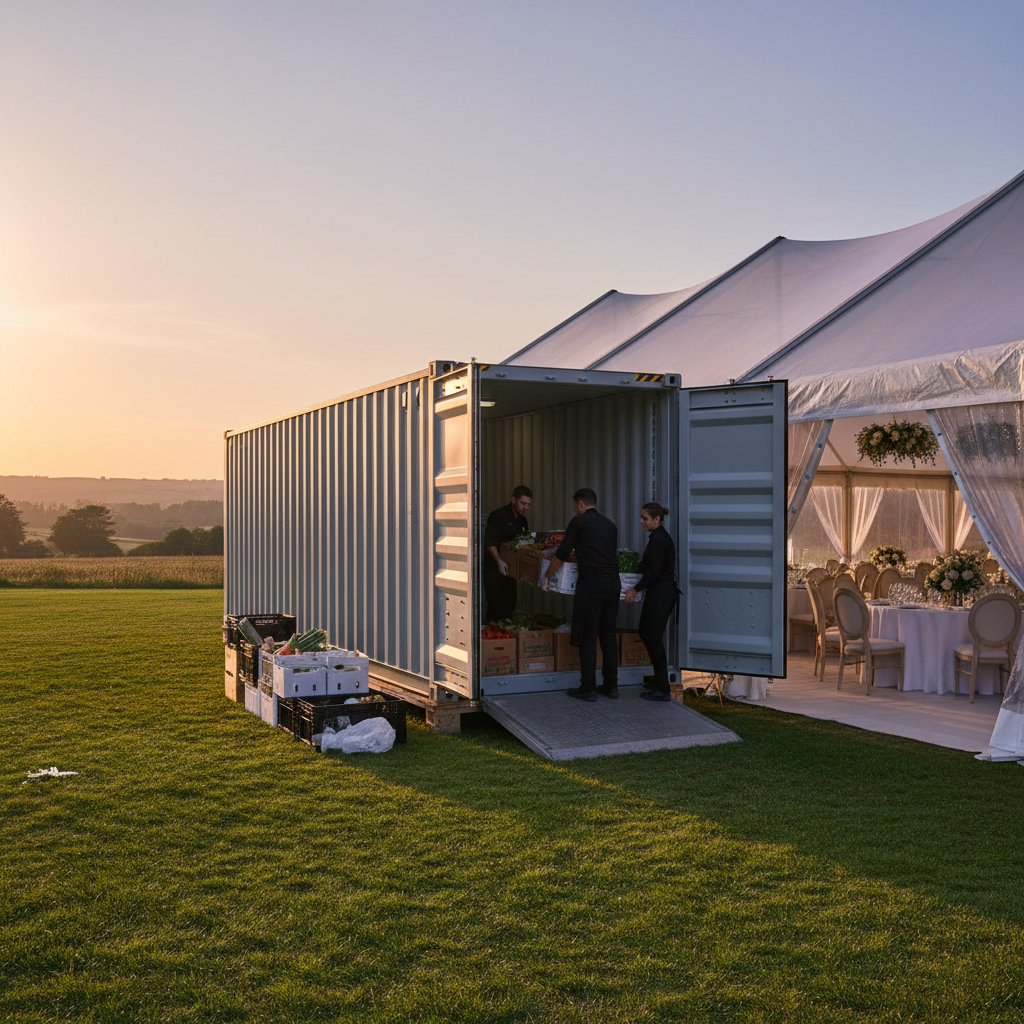
Planning refrigerated container storage for weddings, festivals, and catered events? Learn how to choose, site, and power portable cold storage without guesswork.
When you cater an event, cold storage is not a convenience; it is a critical control point. A refrigerated shipping container can serve as a temporary walk-in cooler or freezer for weddings, festivals, and multi-day productions. This guide explains what to consider, what to verify with the Newport team, and where uncertainty remains so you can plan confidently.
Why Refrigerated Containers Fit Event Catering
Portable cold storage built on a shipping container platform offers a secure, weather-resistant envelope that can be set down on a prepared surface and removed after the event. For caterers, that means refrigerated and frozen goods can stay organized in one place rather than spread across rented trailers or borrowed kitchen space.
Common uses include:
- Holding proteins, dairy, and produce at safe temperatures before service
- Freezing ice, desserts, or prepped items ahead of a festival weekend
- Creating a dedicated cold zone away from hot cooking lines
- Staging beverage and garnish inventory for high-volume bars
A refrigerated container is not automatically a substitute for a licensed commercial kitchen. Local health authorities may have specific requirements for food storage, handwashing, and sanitation at temporary events. Confirm those rules with your local authority before you finalize your layout.
Choosing the Right Refrigerated Container Setup
Refrigerated containers generally fall into two broad categories: integral units with a self-contained refrigeration machine mounted on one end, and units designed to run from an external refrigeration source. Most event caterers gravitate toward integral units because they are self-contained, but the right choice depends on power, noise, and placement.
Integral vs. remote refrigeration
An integral refrigerated container carries its own cooling unit. It needs a power source and ventilation around the machine end. A remote or porthole-style unit relies on an external cooling system, which can be useful when you want the machinery away from the food zone, but it adds setup complexity.
Ask the Newport team which configuration is available and what each requires at the site.
Temperature range and dual-zone expectations
Some units are designed to hold refrigerated temperatures, some can run as freezers, and some can switch between modes. Do not assume a single container can hold both frozen and refrigerated product at the same time unless the listing specifically describes that capability. If you need both, you may need two units or a different approach.
Size and interior layout
Container sizes are described by nominal length, width, and height. Standard-height and high-cube variants affect interior headroom and how you stack shelving. Exact interior dimensions, door openings, and usable volume vary by unit. Check the individual listing and the container's CSC plate for the specifications that apply to that box.
For catering work, interior layout matters as much as size:
- Will you use rolling racks, or will staff carry product in by hand?
- Do you need a ramp or a level transition at the door?
- Where will you place shelving so cold air can circulate?
- Is there a clear path from the door to the farthest shelf?
Condition and food-contact surfaces
Containers are industrial equipment. Interior surfaces, flooring, and any previous cargo history should be discussed with the Newport team. If food will contact surfaces directly, plan for liners, shelving, or food-grade pans rather than relying on the container wall itself.
Site Planning and Power: The Details That Decide Success
Most event cold-storage problems are site problems, not refrigeration problems. Work through these items before the event date.
Ground conditions and placement
A refrigerated container is heavy, and the refrigeration unit adds weight at one end. You need a firm, level surface that can support the load without settling. Gravel, turf, and soft ground can shift under load. Discuss the surface with the Newport delivery team and, where relevant, with the venue.
Power supply
Integral refrigerated containers require a suitable power supply. The exact voltage, amperage, and plug configuration depend on the unit. Do not assume a standard household outlet will run a refrigerated container. Ask the Newport team what the unit requires, then confirm with the venue or an electrician that the supply is available and dedicated.
Questions to resolve early:
- Is there a power source within reach of the container's cable?
- Will the circuit be dedicated to the refrigeration unit?
- What happens if power is interrupted during the event?
- Is a generator needed, and who supplies and fuels it?
Ventilation and heat rejection
The refrigeration machine moves heat out of the box. If the machine end is boxed in by a tent wall, another container, or a fence, performance and reliability can suffer. Leave clearance around the unit and follow the guidance provided for that specific container.
Access, delivery, and removal
Delivery requires a clear path for the truck and the unloading equipment, plus space to set the container down. Overhead lines, tree limbs, gates, and soft shoulders can all affect whether delivery is possible. Confirm site access and delivery requirements with the Newport team before booking. Do not assume a particular trailer or piece of equipment will be used; ask what the delivery plan involves.
Noise and proximity to guests
Refrigeration units produce sound. At a wedding or a quiet reception, placement matters. Put the machine end away from seating, ceremony areas, and audio equipment where possible.
Operations: Running Cold Storage Through an Event
Once the container is set, treat it like any commercial cold room: with discipline.
Temperature monitoring
Use a calibrated thermometer and check temperatures on a schedule. Record readings if your food safety plan requires it. A container that is opened constantly during service will warm up, especially in summer heat. Plan deliveries and pulls to minimize door-open time.
Loading and airflow
Cold air needs to move. Do not block vents, and do not pack product tight against the evaporator. Leave space between racks and the walls. Load frozen and refrigerated items according to your plan, and keep raw proteins separated from ready-to-eat items.
Staff access and security
Decide who can open the container and when. A container door left ajar ruins temperature control and invites pests. Consider a lock or access policy for overnight hours, and make sure the person responsible for locking up knows the plan.
Condensation, floors, and slip risk
Cold surfaces and humid air create condensation. Floors can become slick near the door. Mats, drainage awareness, and a designated drying routine help reduce slip hazards.
Backup plan
Ask yourself what happens if the unit loses power or develops a fault mid-event. Do you have a backup cooler, a refrigerated truck, or a nearby commercial kitchen? A written contingency plan is worth more than optimism.
Buying, Renting, or Leasing: Which Path Fits?
Caterers and event producers approach cold storage differently depending on how often they need it.
- One-off event: Rental or short-term use may make sense, but availability and logistics must be confirmed.
- Seasonal festival circuit: Repeated rentals can be practical if delivery and power are manageable at each site.
- Year-round catering operation: Purchasing a refrigerated container can provide a permanent cold-storage asset at your base, provided you have the space, power, and maintenance capacity.
There is no universal right answer. Compare total cost of ownership, including power, maintenance, and site preparation, against the cost of renting per event. Confirm current pricing and availability with the Newport team rather than relying on assumptions.
Maintenance and Long-Term Care
Refrigerated containers need attention like any refrigeration equipment.
- Keep the condenser and evaporator coils clean and clear of debris.
- Check door seals for wear and replace as needed.
- Have the refrigeration system serviced by a qualified technician.
- Inspect the container structure for rust, floor damage, or water intrusion.
- Keep the CSC plate and any documentation with the unit.
If you buy a used unit, ask what maintenance records exist and what the inspection process covered. The Newport team can tell you what is known about a specific listing; they cannot guarantee future performance of a used machine.
Frequently Asked Questions
Can a refrigerated container be used for both refrigerated and frozen goods at the same time?
Not automatically. Some units operate in a single temperature mode, and dual-zone capability depends on the specific container. If you need both frozen and refrigerated storage simultaneously, ask the Newport team whether one unit can do it or whether two units are required.
What power does a refrigerated container need?
Power requirements vary by unit and are not something to guess. Ask the Newport team for the electrical requirements of the specific container, then confirm with the venue or a qualified electrician that the site can supply it. A standard wall outlet is not a safe assumption.
How much space do I need around the container?
The refrigeration end needs clearance for airflow and service access, and the door end needs room to open and to move product. Exact clearances depend on the unit and its installation guidance. Discuss placement with the Newport team and the venue before delivery day.
Do I need a permit for temporary cold storage at an event?
Permit and health-department requirements vary by jurisdiction and event type. Do not assume one size or setup needs fewer approvals than another. Contact your local authority and event venue to confirm what applies to your situation.
Can I put the container on grass or gravel?
Possibly, but the surface must be firm and level enough to support the load without settling. Soft or uneven ground can create problems. Share site details and photos with the Newport delivery team so they can advise on access and placement.
Next Steps for Your Event Cold Storage Plan
Start by defining your temperature needs, the volume of product you expect to hold, and the power and space available at the site. Then compare those requirements against the refrigerated containers available. Browse current listings at our shop, and when you are ready to talk through access, power, and delivery details, contact the Newport team. They can confirm listing specifics, availability, pricing, and site requirements so your cold chain holds from load-in to load-out.
Plan the next step
Confirm the container and the delivery plan.
Browse current listings, then speak with the Newport team to verify the unit, total pricing, site access, and delivery requirements before payment.