
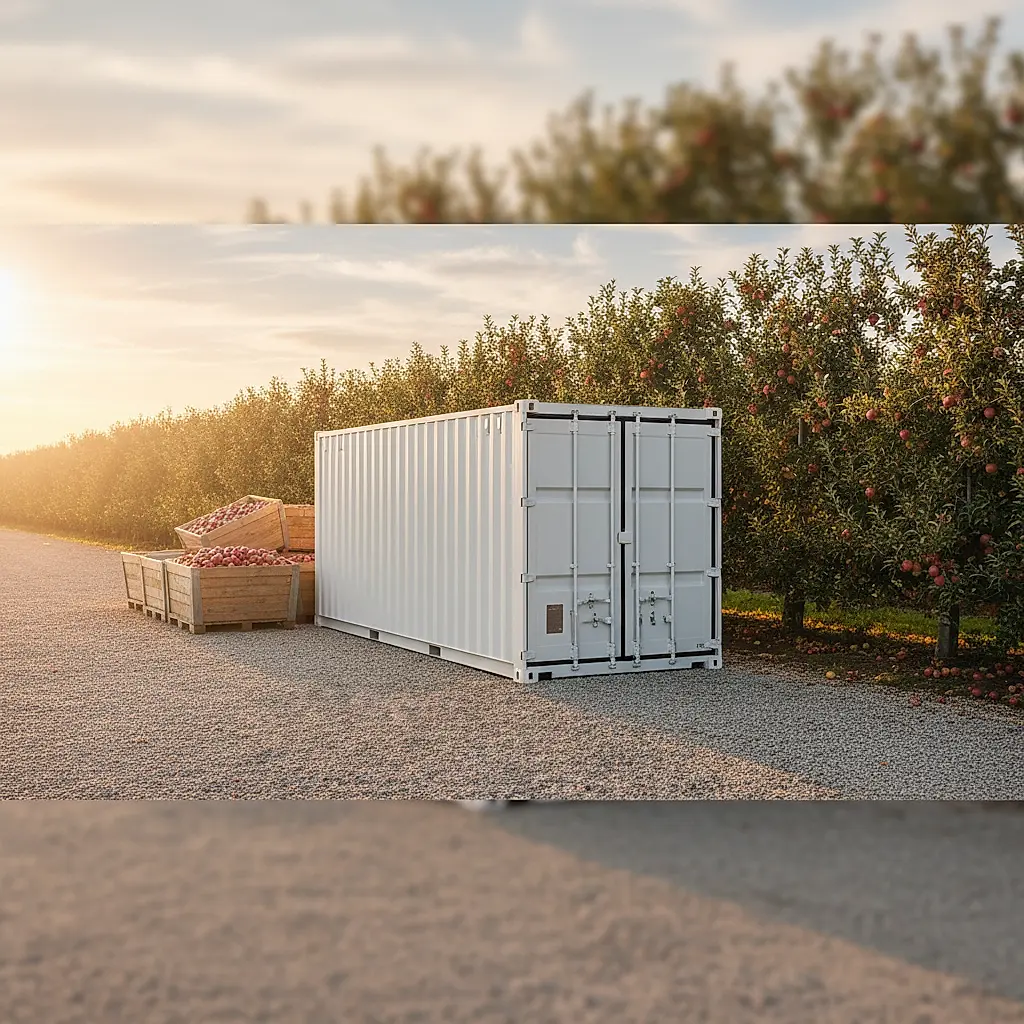
A practical guide to planning portable cold storage for harvest season, including reefer versus insulated container options, cost factors, site needs, and questions to ask before you buy or rent.
Harvest season puts pressure on every part of a farm's post-harvest workflow. Produce comes in fast, ambient temperatures can swing, and the window to cool, hold, and ship crops is short. Portable cold storage can bridge the gap between field heat and your permanent cooler, but the right choice depends on your crops, volumes, power situation, and how long you need the capacity.
This guide walks through the practical decision points for portable cold storage during harvest. It focuses on how to think about cost, what affects performance, and what to confirm with the Newport team before you commit. It does not quote prices or promise specific results, because those depend on the individual listing, your site, and current availability.
What Counts as Portable Cold Storage
In the shipping container world, portable cold storage usually means one of two things: a refrigerated container (often called a reefer) or an insulated dry container used as a passive or semi-passive cold room. They solve different problems, and confusing them is one of the most common planning mistakes.
Refrigerated containers
A reefer container has an integrated refrigeration unit. It can actively pull down temperature and hold a setpoint, which makes it useful when you need reliable cooling rather than simple insulation. The unit needs a power source, and the way it is controlled, monitored, and maintained matters as much as the box itself.
Insulated dry containers
Some operators use an insulated dry container, sometimes with added cooling or airflow, as a lower-complexity cold room. This can work for short holds or for crops that tolerate less precise conditions, but it is not the same as active refrigeration. If your crop needs a tight temperature band, be honest about that early.
When a portable unit makes sense
Portable cold storage tends to make sense when:
- Your permanent cooler is full during peak harvest.
- You need cooling at a second field or packing location.
- You want to test a new crop or market before building permanent infrastructure.
- You need seasonal capacity that can be removed or repurposed later.
If none of those apply, a permanent cooler or a different post-harvest setup may be the better investment.
Reefer Rental vs. Purchase: How to Frame the Decision
Rental and purchase are not just financing choices. They change who handles maintenance, how long you can plan around the asset, and how much risk you carry if the unit underperforms.
Questions that clarify the rental case
- How many harvest weeks do you actually need the unit?
- Is the rental rate quoted per day, per week, or per month?
- Who pays for fuel or electricity, and who handles service calls?
- What happens if the unit goes down during your peak week?
- Are there delivery, pickup, and site-prep charges?
Questions that clarify the purchase case
- Will you use the unit beyond harvest, or is it idle most of the year?
- Do you have the electrical service or fuel supply it needs?
- Who will maintain the refrigeration unit between seasons?
- What is the realistic resale or repurpose value if your needs change?
- Does the unit's condition and documentation match what you need?
A simple way to compare
Rather than chasing a single "cheapest" number, compare total cost of ownership over the period you would keep the unit. That includes acquisition, delivery, site preparation, power or fuel, maintenance, and the cost of downtime. For a short seasonal need, rental often shifts more of that burden to the provider. For a multi-season need, ownership can spread fixed costs over more harvests, but it also concentrates maintenance and storage responsibilities on you.
Cost Factors That Actually Move the Number
Portable cold storage pricing is not a single list price. It reflects the unit, the logistics, and the risk the provider is taking on. The factors below are the ones worth understanding before you ask for a quote.
Unit type and condition
A refrigerated container with a working, well-maintained refrigeration unit is a different product from a basic insulated box. Condition, age, and service history all influence value. Ask what has been inspected and what documentation is available.
Power and fuel
Reefers need a power source. Depending on the unit and setup, that may be electrical service, a generator, or another arrangement. The cost of getting power to the unit, and the ongoing cost of running it, can be significant. Confirm the electrical requirements with the Newport team and with a qualified electrician before you assume a standard outlet will work.
Delivery and site access
Delivery cost depends on distance, equipment, and access. A container needs a clear path, a firm surface, and enough room for the delivery vehicle to maneuver. Soft ground, overhead wires, gates, and tight turns can all change the plan. Do not assume a particular truck or trailer setup is included; confirm delivery requirements with the Newport team.
Duration and seasonality
Harvest timing is not flexible. If you need the unit during a peak demand window, availability and pricing may reflect that. Booking earlier generally gives you more options, but it does not guarantee a specific rate.
Monitoring and controls
Some operations need temperature logging, alarms, or remote monitoring. Others just need a reliable setpoint. The more control and visibility you need, the more you should discuss it up front.
Maintenance and downtime risk
A refrigeration unit is a machine. It needs service, filters, and attention. If a unit fails during harvest, the cost is not just the repair; it is the crop at risk. Ask how service is handled and what your options are if something goes wrong.
Sizing and Site Planning Without Guesswork
Sizing is where good intentions meet real constraints. You want enough capacity to handle your peak, but you also need a unit that fits your site and your power.
Start with your harvest flow
Estimate how much crop you need to cool or hold at one time, how long it stays, and how quickly it moves out. That flow, not a single day's harvest, is what determines whether a unit is adequate.
Understand nominal dimensions
Shipping containers are commonly described by nominal length, width, and height, with standard and high-cube variants. Those nominal figures are a starting point, not a guarantee of usable interior space. Insulation, refrigeration equipment, and internal fittings all affect what you can actually store. For exact specifications, check the individual listing and the unit's CSC plate, and confirm details with the Newport team.
Plan the site before the unit arrives
A practical site plan covers:
- A firm, level surface that can support the loaded unit.
- Clearance for doors, service access, and airflow around the refrigeration unit.
- A safe, code-compliant power connection.
- A path wide enough for delivery and future service vehicles.
- Drainage so water does not pool around the unit.
Do not equate container size to a building
It is tempting to translate a container into a number of rooms or a building equivalent. That comparison usually misleads, because usable space depends on insulation, equipment, racking, and how you load it. Plan around your actual storage method instead.
Operational Practices That Protect Your Crop
A portable cold storage unit is only as good as the way it is run. A few habits make a real difference during harvest.
- Pre-cool before loading when your crop and workflow allow it.
- Avoid blocking airflow around pallets and between the load and the refrigeration unit.
- Keep doors closed and organize loads so you are not opening the unit constantly.
- Track temperature and note any swings so you can catch problems early.
- Clean and inspect between crops to reduce odor, pests, and contamination risk.
- Keep a simple log of service, setpoints, and issues for the season.
None of these replace crop-specific advice. For temperature and humidity targets, follow your own crop guidance and any food safety requirements that apply to your operation.
Compliance, Permits, and Local Requirements
Requirements for portable cold storage vary by location, use, and duration. Zoning, electrical work, food safety rules, and site rules may all apply. Do not assume that one container size needs fewer approvals than another, or that a particular installation is exempt. Check with your local authority and, where food safety is involved, with the appropriate regulator. The Newport team can help you understand the unit and delivery side, but local requirements are yours to confirm.
Frequently Asked Questions
Is a refrigerated container the same as an insulated container?
No. A refrigerated container has an active refrigeration unit that can pull down and hold temperature. An insulated container relies on insulation and, if added, auxiliary cooling or airflow. They suit different needs, and the right choice depends on how tightly you need to control conditions.
Can I run a reefer on a standard farm outlet?
Not necessarily. Refrigerated units have specific power requirements, and the connection must be safe and code-compliant. Confirm the electrical requirements with the Newport team and have a qualified electrician assess your site before you plan around a particular power source.
How long can I keep produce in portable cold storage?
That depends on the crop, the temperature and humidity you maintain, how the produce was handled before loading, and your food safety plan. There is no single answer. Use your crop guidance and monitor conditions closely.
Should I rent or buy for a single harvest season?
For a short, one-season need, rental can reduce your maintenance and long-term storage burden. For repeated seasonal use, ownership may spread fixed costs over more harvests. Compare total cost over the period you would actually keep the unit, not just the headline rate.
What should I confirm before delivery?
Confirm the exact unit, its specifications, availability, pricing, site access, surface conditions, power arrangements, and delivery requirements with the Newport team. Also confirm any local permits or inspections that apply to your site and use.
Next Steps
Start by writing down your harvest flow: what you need to cool, how much, for how long, and where. Then review available units in the shop and reach out through the contact page to discuss specifications, availability, pricing, site access, and delivery requirements with the Newport team. Clear answers up front make harvest season far less stressful.
Plan the next step
Confirm the container and the delivery plan.
Browse current listings, then speak with the Newport team to verify the unit, total pricing, site access, and delivery requirements before payment.