
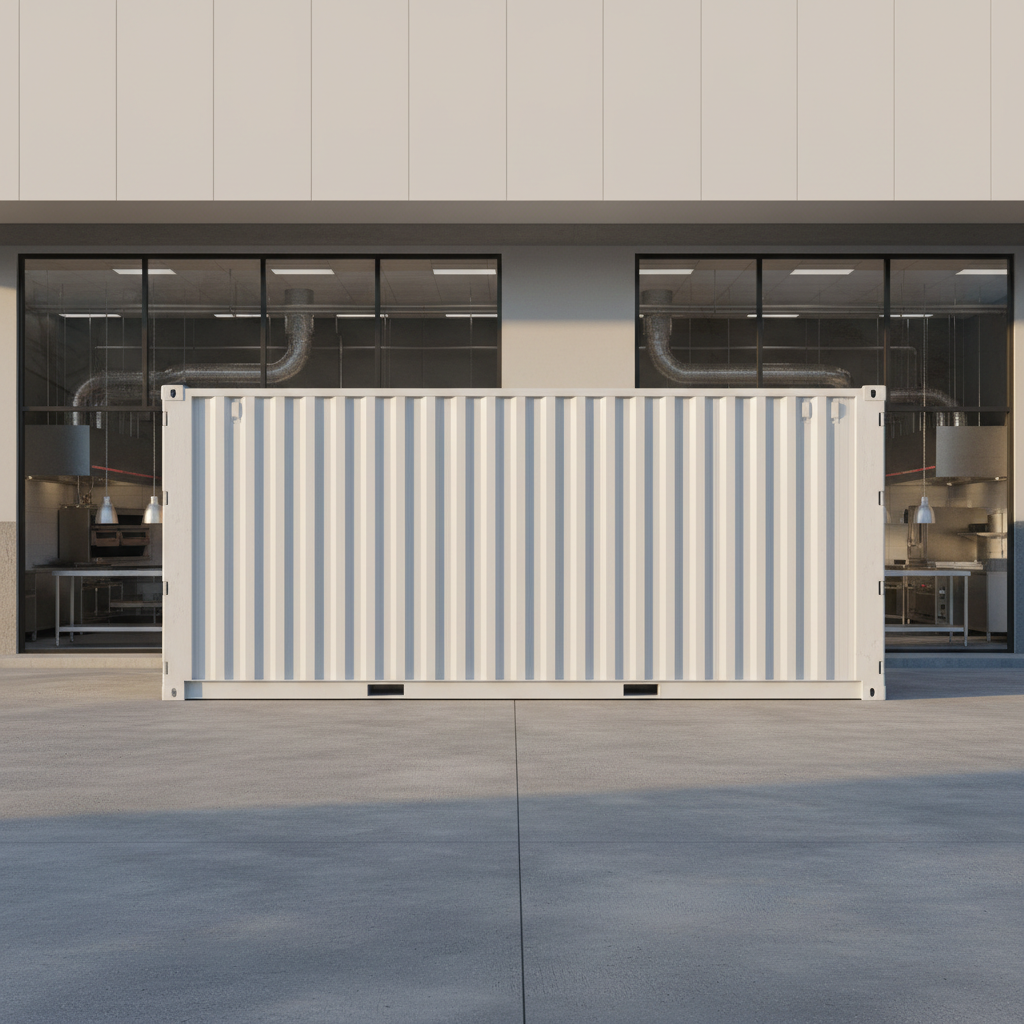
Considering refrigerated container storage for a restaurant, caterer, or food business? Learn how reefer containers work, what to verify, and how to plan delivery and power before you buy.
Why Restaurants Consider Portable Cold Storage
Restaurants, caterers, food trucks, and event vendors often need cold storage that goes beyond what their permanent kitchen can hold. A busy season, a renovation, a temporary pop-up, or a spike in catering orders can strain walk-ins and reach-ins. Portable cold storage built into a shipping container—commonly called a reefer container—is one option that gives you a self-contained, lockable, weather-resistant cold room you can place on a pad or lot.
This guide explains how refrigerated containers work, what to check before buying, how to plan a site, and where the real uncertainties lie. It is written for buyers and project planners who want a practical framework rather than a sales pitch.
How a Refrigerated Container Works
A reefer container is a shipping container fitted with an integrated refrigeration unit. The unit mounts at one end and circulates cold air through the cargo space. Unlike a standard dry container, a reefer has insulated walls, floor, and ceiling, plus a controlled air path designed to move chilled air around stored goods.
Key components
- Refrigeration unit: The engine of the system. It may be a standalone electric unit or a unit designed to run from an external power source. Some units can also operate from a generator or a clip-on genset.
- Insulated envelope: Foam or similar insulation in the walls, ceiling, and floor reduces heat gain and helps the unit hold temperature.
- T-shaped or flat floor: Many reefers use a T-floor that lets air travel under pallets and return to the unit. This affects how you load and stack goods.
- Controller and sensors: A control panel sets the target temperature and monitors return and supply air. Some units offer data logging or remote monitoring.
- Doors and seals: Gaskets and hardware matter. Worn seals let warm, humid air in and force the unit to work harder.
What reefers are good at
Refrigerated containers are often used for chilled or frozen storage, temporary overflow, seasonal capacity, and remote sites where building a permanent cold room is impractical. They can also serve as a backup if a walk-in fails, provided you have power and a plan.
What they are not
A reefer container is not a walk-in cooler with a warranty from a kitchen equipment brand. It is a piece of transport equipment adapted for storage. Performance depends on the unit's condition, ambient temperature, how often doors open, how full the box is, and how well air can circulate. Confirm the specific unit's capabilities with the manufacturer's documentation and the Newport team before you rely on it for a given product.
What to Verify Before You Buy
Because refrigerated containers vary widely by age, unit brand, hours of use, and maintenance history, the listing and inspection matter more than a generic specification sheet. Use this checklist.
1. Confirm the actual temperature range
Ask what temperature range the unit can hold and under what ambient conditions. A unit that holds frozen goods in a mild climate may behave differently in a hot, sunny location. Do not assume a number from a similar-looking container applies to the one you are considering.
2. Review the refrigeration unit
- Brand and model of the unit
- Whether it runs on electric power only or also has engine-driven capability
- Voltage, phase, and amperage requirements
- Service history, if available
- Availability of parts and local technicians for that brand
3. Inspect the box itself
- Wall, ceiling, and floor condition
- Door seals and hardware
- Floor type and condition
- Signs of moisture, delamination, or previous repairs
- Cleanliness and any residual odors
4. Ask about documentation
Request the CSC plate details, any maintenance records, and the unit's data plate information. The CSC plate is a safety approval plate for containers; it is not a food-safety certification. If your business needs food-grade surfaces or specific sanitation documentation, discuss that with the Newport team and your local health authority.
5. Clarify power and controls
Ask how the controller is set, whether it has alarms, and whether it can be monitored remotely. If you need a specific setpoint, confirm the unit can reach and hold it in your climate.
6. Understand what is not included
A listing may not include a generator, fuel tank, extra cable, or a pad. Confirm what ships with the unit and what you must source separately.
Sizing and Layout for Food Operations
Container sizes are described by nominal length. Common options include 10-foot, 20-foot, and 40-foot reefers, with standard-height and high-cube height variants. Nominal length, width, and height are useful for early planning, but exact internal dimensions, door openings, and unit protrusion vary by manufacturer and model. Always check the individual listing and the CSC plate for the specific unit.
Planning questions
- How much product do you need to hold at once, and in what packaging?
- Will you store pallets, rolling racks, or loose cases?
- How often will staff open the door during service?
- Do you need separate zones for chilled and frozen goods, or will one setpoint cover everything?
- Where will the unit sit relative to your kitchen door?
Layout tips
- Keep a clear aisle so air can return to the unit.
- Avoid blocking the air path with tight stacking against the front wall.
- Use shelving or pallets to keep product off the floor where the design calls for airflow.
- Plan a staging area outside the door so staff can load and unload quickly.
Do not guess at capacity
Do not equate a container length to a number of hotel pans, pallets, or meals. Actual usable volume depends on the unit, floor type, and how you load it. Measure and test with your own packaging before committing to a size.
Power, Placement, and Site Planning
A reefer is only as reliable as its power supply and its site. This is where many projects run into surprises.
Power considerations
- Confirm the voltage, phase, and amperage the unit requires.
- Ask whether your panel has capacity for the load, especially if the unit will run alongside kitchen equipment.
- Consider whether you need a dedicated circuit, a disconnect, or an electrician's evaluation.
- If the site lacks grid power, ask about generator options and fuel storage. Do not assume a generator is included.
- Think about what happens during a power interruption. A plan for alarms, backup power, or product relocation is part of responsible cold storage.
Placement considerations
- Firm, level ground is important. A pad or compacted base may be needed.
- Airflow around the refrigeration unit matters. Do not box the unit in against a wall or fence.
- Sun exposure affects performance. Shade or a canopy can reduce load, but confirm it does not block airflow.
- Think about how delivery equipment will reach the spot. Site access, gate width, overhead lines, and turning radius are all variables.
- Confirm local rules. Zoning, permits, and health department requirements vary by jurisdiction. Check with your local authority before you commit.
Delivery is not one-size-fits-all
Delivery method depends on the unit, the site, and the equipment available. Do not assume a particular truck or trailer will work. Share site photos, measurements, and access details with the Newport team so delivery can be planned realistically.
Ongoing Care and Operating Discipline
A reefer container rewards good habits. Small issues can become expensive if ignored.
Routine practices
- Keep doors closed except when loading or unloading.
- Inspect door gaskets regularly and report damage.
- Keep the condenser and unit area clear of debris.
- Watch for frost buildup, unusual noises, or alarms.
- Log temperatures if your operation requires it.
- Schedule service with a qualified technician familiar with the unit brand.
What to ask a service provider
- Can they service this brand and model?
- Do they stock common parts?
- What is their response time?
- Do they offer preventive maintenance plans?
Documentation and food safety
Your local health authority sets the rules for food storage in your area. A reefer container may or may not satisfy specific requirements depending on how it is used, finished, and maintained. Discuss your intended use with the Newport team and your inspector, and confirm any needed approvals before storing food.
Cost Factors to Expect
Pricing for refrigerated containers varies with size, unit brand, age, condition, and market availability. Rather than quoting a number here, use these factors to frame your budget conversation.
- Container size and height: Larger and high-cube units generally cost more.
- Refrigeration unit: Brand, capacity, and whether it is electric-only or dual-mode.
- Condition and hours: Lower-hour, well-maintained units typically command more.
- Accessories: Generators, cables, shelving, and monitoring add cost.
- Site work: Pads, electrical work, and permits are separate line items.
- Delivery: Distance, access, and equipment needs affect the final number.
- Ongoing costs: Power, service, and parts should be part of your operating budget.
Ask the Newport team for current availability and pricing on the specific unit you are considering. Listing details, availability, and pricing should always be confirmed directly.
Frequently Asked Questions
Can I use a refrigerated container as a walk-in cooler?
Many businesses use reefers for cold storage, but a reefer is transport equipment, not a kitchen walk-in. Performance depends on the unit, the climate, door traffic, and how you load it. Confirm the unit's capabilities and check with your local health authority about your intended use.
What size refrigerated container do I need?
Size depends on your product volume, packaging, and workflow. Nominal lengths like 10, 20, and 40 feet are a starting point, but exact internal dimensions vary. Measure your own goods and review the specific listing before deciding.
Do I need a permit to place a container at my restaurant?
Rules vary by city, county, and site. Some locations have zoning or permit requirements; others may not. Check with your local authority before you commit to a placement plan.
How much power does a reefer container need?
Power requirements depend on the refrigeration unit. Ask for the unit's electrical specifications and have a qualified electrician confirm your panel can support it. Do not assume a standard outlet will work.
Can I move a refrigerated container later?
Reefers are portable in principle, but moving one requires planning, equipment, and a new site that meets power and access needs. Discuss logistics with the Newport team before assuming a move is simple.
Next Steps
Start by defining your storage need: what you are storing, at what temperature, for how long, and with what power and access. Then review current listings at our shop to see available units and details. When you are ready to talk through specifications, site access, delivery, and availability, contact the Newport team. We will help you confirm the details that matter for your operation.
Plan the next step
Confirm the container and the delivery plan.
Browse current listings, then speak with the Newport team to verify the unit, total pricing, site access, and delivery requirements before payment.