
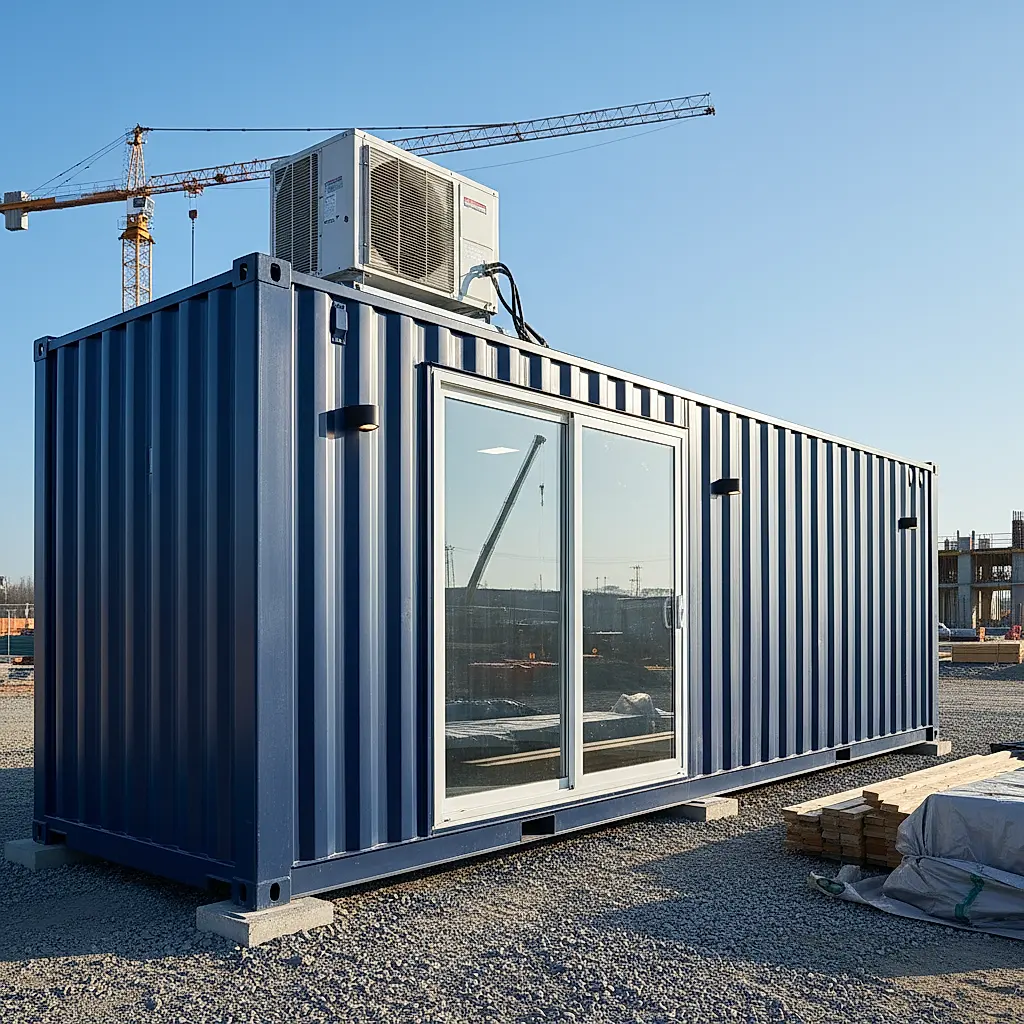
A practical guide to comparing prefab container offices and job site trailers, with the cost factors, site questions, and specification checks that actually shape your decision.
A prefab container office can be a smart answer when a job site needs a secure, weather-tight space for supervision, paperwork, or crew breaks. But the price question is rarely as simple as one number versus another. What you pay depends on the condition and configuration of the container, how it gets to your site, what has to happen before it is usable, and how long you plan to keep it.
This guide walks through the factors that shape cost and value so you can ask better questions, compare options fairly, and avoid surprises. It is written for buyers, owners, and project planners who want a realistic framework rather than a single quoted figure.
Why the Price of a Prefab Container Office Is Hard to Pin Down
A container office is not one product. It is a shipping container that has been adapted, or is intended to be adapted, for people to work inside. That means the price range is wide, and two listings that look similar in a search result can differ substantially once you read the details.
Condition and history matter
Containers are commonly described as new, one-trip, or used. A new or one-trip container generally has fewer cosmetic issues and a more predictable shell. A used container may show rust, dents, repairs, or prior cargo residue. None of that automatically rules a unit out for office use, but condition affects both price and how much prep work you should budget for.
The level of build-out drives the number
At the simplest end, you have a container shell with a basic door and perhaps a small window or vent. At the more finished end, you have insulation, interior wall coverings, lighting, electrical rough-in, HVAC provisions, and a personnel door. The further a unit moves from a plain shell toward a finished workspace, the more the price reflects labor and materials rather than the container itself.
Local market conditions apply
Container availability, transport distances, and local labor rates vary by region and by season. A quote that makes sense in one market may not translate to another. This is why comparing a single line item from two different sources is rarely an apples-to-apples exercise.
Container Office vs. Job Site Trailer: What to Compare
Trailers and container offices both serve job sites, but they solve the problem differently. The useful comparison is not "which is cheaper" in the abstract; it is which set of tradeoffs fits your project.
Mobility and setup
A trailer is built to be towed and is often ready to occupy quickly once it is leveled and connected. A container is typically delivered on a tilt-bed or roll-off truck and set down, then may need site work, steps, or a ramp before it is practical to use. If your project moves frequently, that difference matters. If your site is stable for months, it matters less.
Durability and security
Steel containers are known for taking rough handling and for being difficult to break into when the doors and locks are in good condition. Trailers can be equally secure when maintained, but they often have more windows, doors, and seams to inspect. For remote or high-theft sites, the container's solid shell is often a point in its favor.
Resale and repurposing
A container that has been used as an office can often be sold or repurposed later, though modifications affect value. Trailers tend to have a more established resale market in some regions. Neither outcome is guaranteed, so treat resale as a possible benefit rather than a financial assumption.
When each option tends to fit
- Choose a trailer when you need to relocate often and want a familiar, road-ready format.
- Choose a container when you want a rugged shell, a stable footprint, and the option to customize over time.
- Consider a container when you already have a relationship with a container supplier and can coordinate delivery with other site logistics.
The Cost Factors That Actually Move the Number
Rather than chasing a single price, build a budget from the components. The following categories are where most of the money goes.
The container itself
Condition, size, and whether it is a standard-height or high-cube unit all influence the base cost. Nominal external lengths are commonly described as 20 feet and 40 feet, with widths around 8 feet. Standard and high-cube heights differ. Confirm the exact dimensions and internal clearances on the individual listing, and check the CSC plate for the unit's particulars.
Modifications and finish
Insulation, interior lining, flooring, lighting, outlets, a personnel door, windows, and ventilation are all line items. Each one adds cost and each one adds a dependency. A unit with electrical work needs a plan for how power reaches it. A unit with HVAC needs a plan for where the equipment sits and how it is serviced.
Delivery and placement
Transport is priced by distance, access, and equipment. A site with a wide, firm approach and room to maneuver is easier to serve than a tight urban lot or a soft field. You should confirm access requirements, delivery coverage, and any site preparation needs with the delivery team before you commit. Do not assume a particular truck or lifting method is included.
Site preparation and connections
Level ground, a stable pad, steps or a ramp, and a path for power are common needs. If the container will be occupied, you will also want to think about egress, lighting, and comfort. These costs sit outside the container price but are part of the real project cost.
Ongoing costs
Think about power, heating and cooling, maintenance, and any permit or inspection requirements your local authority may apply. Requirements vary by jurisdiction, so confirm them with the relevant office rather than relying on general advice.
How to Evaluate a Quote Without Getting Misled
A quote is only useful if you know what it includes. Use this checklist to compare offers on equal footing.
- What exactly is included in the base price: the container only, or container plus modifications?
- Is delivery included, and to what point on the site?
- What site access is assumed, and what happens if access is different on arrival?
- Are steps, ramps, or blocking included?
- Is electrical work included, and to what standard?
- What is the condition grade, and are there photos of the actual unit?
- What is the process if the unit arrives with damage or a defect?
If a quote does not answer these questions, ask. A supplier who can explain the assumptions is easier to work with than one who only provides a number.
Specification Checks Before You Buy
Specifications are where optimism meets reality. Before committing, verify the details that affect whether the unit works for your crew.
Dimensions and clearances
Confirm external and internal dimensions, door opening size, and ceiling height. If you plan to install desks, shelving, or equipment, measure against the internal dimensions rather than the advertised length. High-cube units offer more headroom, but confirm the actual figure for the specific unit.
Structural and weather integrity
Ask about the floor condition, roof condition, door seals, and any prior repairs. A container that has been modified for office use should be checked for how penetrations were sealed. Water intrusion is one of the most common ways a container office becomes unusable.
Electrical and ventilation provisions
If the unit has wiring, ask who did it and how it is protected. If it does not, plan for how you will bring power in safely. Ventilation and cooling are important for occupied spaces, especially in warm climates. Confirm what is present and what you will need to add.
Documentation
Ask what documentation is available for the unit, including the CSC plate details. For any code, permit, or inspection question, contact the appropriate local authority. Requirements are location-specific and can change.
Frequently Asked Questions
Is a container office cheaper than a job site trailer?
There is no universal answer. A basic container shell may cost less than a finished trailer, but once you add insulation, power, and comfort features, the gap can narrow or reverse. The better question is which option fits your site, timeline, and how long you need the space. Compare complete, delivered, usable configurations rather than base prices.
Can I use a standard shipping container as an office without modifications?
You can use a container as a sheltered space, but comfort and safety considerations usually push people toward at least some modification. Ventilation, lighting, and temperature control are common additions. Confirm what is required for occupancy in your area with your local authority.
How long does delivery take?
Delivery timelines depend on availability, distance, and scheduling. Rather than estimating, ask the Newport team about current lead times for the specific unit you are considering and confirm site access requirements at the same time.
Do I need a permit for a container office?
Permit requirements vary widely by jurisdiction and by how the unit will be used and how long it will remain. Do not assume one size or configuration avoids permits. Contact your local planning or building office for guidance specific to your site.
What size container should I choose?
Size depends on how many people will use the space, what equipment it will hold, and how it will be laid out. Nominal 20-foot and 40-foot lengths are common, and high-cube units offer more height. Measure your intended layout against the internal dimensions of the specific listing, and ask the Newport team to confirm the details of the unit you are considering.
Next Steps for Your Project
Start by writing down what the space needs to do: how many people, what equipment, how long, and what access your site allows. That brief will make every conversation more productive.
Then review current options in the shop and reach out through contact to confirm listing details, availability, pricing, site access, and delivery requirements with the Newport team. Getting those answers early is the most reliable way to keep your budget and schedule on track.
Plan the next step
Confirm the container and the delivery plan.
Browse current listings, then speak with the Newport team to verify the unit, total pricing, site access, and delivery requirements before payment.