
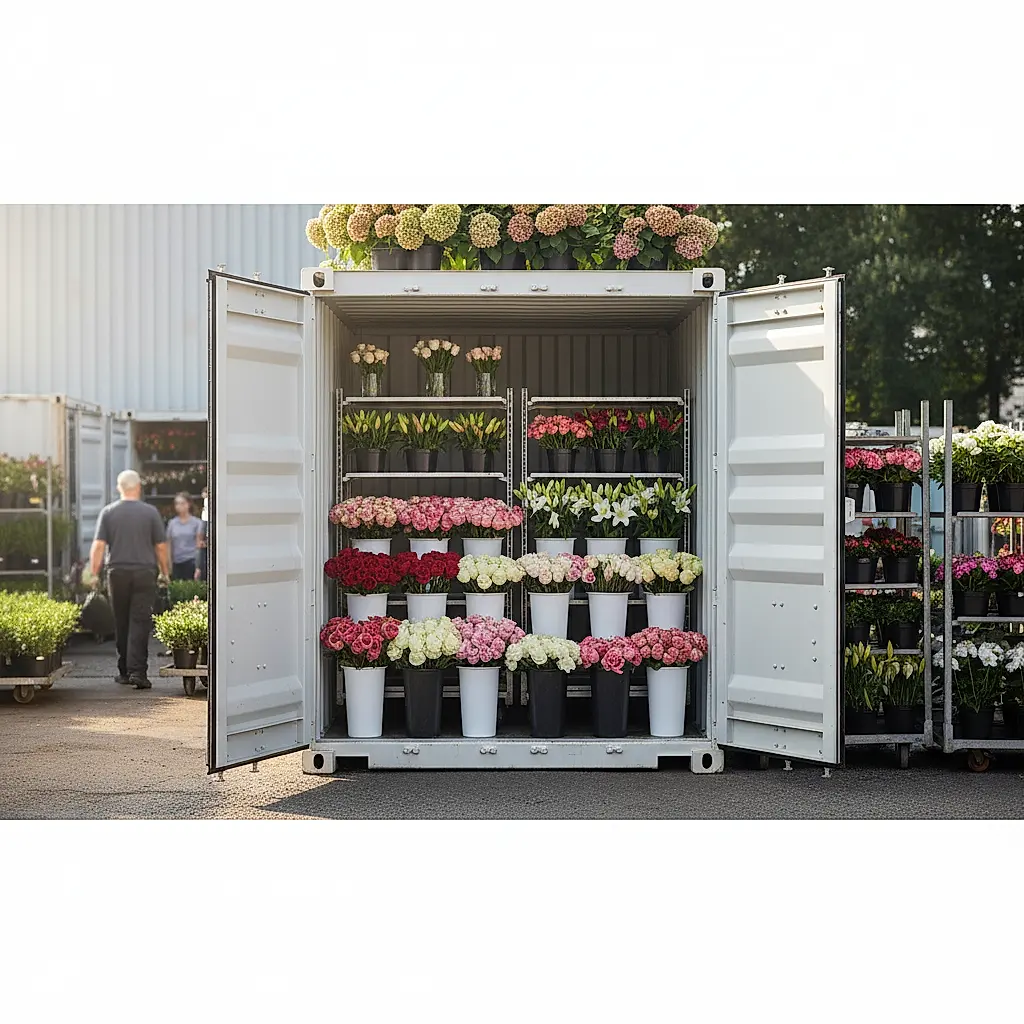
Considering a refrigerated shipping container for floral storage? Learn how to evaluate used reefer units, humidity control, power needs, and delivery logistics before you buy.
Why Florists and Growers Consider Refrigerated Containers
Flowers are perishable, temperature-sensitive cargo. Whether you run a retail shop, a farm stand, a wedding and event business, or a wholesale distribution operation, keeping cut stems in a stable, cool environment can extend usable vase life and reduce waste. A refrigerated shipping container — often called a reefer — is one option some buyers evaluate when they need conditioned storage space that can sit outdoors and be relocated later.
A reefer is essentially an insulated box with an integrated refrigeration unit. Because it is built for transport, it is rugged, weather-resistant, and designed to hold temperature across a range of ambient conditions. That combination appeals to businesses that need cold storage but do not want to construct a permanent building.
That said, a reefer is not automatically the right answer for every floral operation. It is a piece of industrial equipment with real power, maintenance, and siting requirements. This guide walks through the practical questions to ask before you commit, and it points you toward verifying specifics with the Newport team rather than relying on general assumptions.
Understanding Refrigerated Container Basics
How a Reefer Works
A refrigerated container uses a self-contained refrigeration unit mounted at one end. The unit pulls air through the cargo space, cools it, and circulates it back through the container. Insulated walls, floor, and ceiling help hold the set temperature. Most reefers are designed to hold a temperature range rather than to freeze rapidly, and performance depends on the unit's condition, the ambient temperature, and how the container is loaded.
Temperature and Humidity Are Different Controls
Temperature control is the headline feature, but floral storage also involves humidity and air circulation. Too much moisture can encourage mold and botany issues; too little can cause stems and petals to dry. Some refrigeration units offer humidity management features, and some do not. This is one of the most important details to confirm on a specific listing, because it directly affects how well a unit may suit fresh flowers.
Used Versus New
Used reefers are common in the secondary market because shipping lines retire them from service. A used unit may offer meaningful savings, but condition varies widely. The refrigeration unit's service history, the condition of the insulation, door seals, and the container's overall structural integrity all matter. Ask what has been inspected and what is known about the unit's prior use.
Sizing a Reefer for Floral Storage
Common Nominal Sizes
Refrigerated containers are most commonly discussed in nominal lengths such as 20-foot and 40-foot, with height options that include standard and high-cube profiles. Nominal length, width, and height are useful for comparing units, but they are not the same as usable interior dimensions. Insulation and the refrigeration unit reduce the interior space available for cargo, and the equipment end takes up room that you cannot load.
Do not assume that a given nominal size corresponds to a specific number of rooms, stalls, or storage positions. The right size depends on your volume, how you rack or stack product, and how much aisle space you need to work safely.
Matching Size to Your Operation
Ask yourself:
- How much product do you need to hold at peak, not just on an average day?
- Do you need walk-in access with aisles, or will you load and unload in batches?
- Will you store flowers in buckets, boxes, or on rolling racks?
- Do you need space for supplies, packaging, or a work table?
- How much growth do you expect over the next few years?
A unit that is too small creates daily friction. A unit that is much too large can be harder to keep stable and costs more to run. If you are unsure, it is reasonable to start by measuring your current cold storage and adding a margin for growth.
Interior Features That Matter
- Flooring. Some reefer floors are designed for rolling loads and may have T-section or grooved profiles. Confirm what the floor looks like and whether it suits your racks or carts.
- Door type and opening. Consider how often you will open the door and how long it will stay open during loading.
- Lighting. Many reefers do not include interior lighting. Plan for how you will see and work inside.
- Drainage. Melting frost and wash-down water need somewhere to go. Confirm how the unit handles condensate.
Power, Placement, and Site Planning
Electrical Requirements Are a Real Constraint
A refrigerated container needs a reliable power source. The voltage, phase, and amperage requirements vary by unit and by the refrigeration machinery installed. You should not assume a standard household outlet will run a reefer. Before purchase, confirm the electrical specification for the specific unit and have a qualified electrician assess your site.
Questions to resolve early:
- What power is available at the intended location?
- Is the supply stable, or are there frequent outages?
- Will you need a dedicated circuit, a transformer, or a generator backup?
- Who will perform electrical work, and does it meet local code?
Siting and Airflow
The refrigeration unit needs airflow to reject heat. If you place the container tight against a wall, fence, or another container, performance can suffer. Leave room around the machinery end and plan for service access. Also consider sun exposure, prevailing wind, and whether the unit will sit on gravel, concrete, or another surface.
Foundations and Leveling
Containers are heavy, and a loaded reefer is heavier still. A level, well-compacted surface helps doors operate correctly and reduces stress on the structure. Some sites use concrete pads, while others use compacted gravel or railroad ties. The right approach depends on your soil, frost depth, and local requirements.
Permits and Local Rules
Zoning, setback, and permit rules vary by jurisdiction and by how the container is used. Do not assume that one size or configuration needs fewer approvals than another. Check with your local planning or zoning office, and confirm any homeowners association or lease restrictions before delivery.
Buying a Used Reefer: What to Verify
Inspection Priorities
When evaluating a used refrigerated container, focus on the items that are expensive to fix:
- Refrigeration unit condition. Ask about run hours, service records, and whether the unit has been tested.
- Insulation and panels. Look for delamination, soft spots, or impact damage.
- Door seals and hardware. Worn gaskets let warm air in and drive up run time.
- Floor condition. Check for soft spots, delamination, or damage from forklifts.
- Structural integrity. Examine corner castings, rails, and the frame for corrosion or repairs.
- CSC plate and markings. The CSC plate carries safety approval information. Confirm what it says and whether it is current for your intended use.
Questions to Ask the Seller
- What was this unit used for previously?
- Has the refrigeration unit been serviced, and is there documentation?
- Can the unit be powered up and demonstrated?
- What is included — just the container, or also cables, controllers, or accessories?
- What is the return or inspection policy if something is not as described?
Cost Factors Beyond the Unit
Budget for more than the container itself:
- Electrical work and any needed transformer or disconnect
- Site preparation, pad, or foundation
- Delivery and offloading
- Ongoing power consumption
- Preventive maintenance and repairs
- Racking, shelving, or carts
Because prices and availability change, confirm current listing details and pricing with the Newport team rather than relying on general figures.
Delivery and Unloading Considerations
Delivery of a refrigerated container is not the same as delivering a small shed. The truck needs access, turning room, and a safe place to set the unit down. Overhead obstacles such as wires, tree limbs, and building eaves can matter. Ground conditions matter too, especially after rain.
Before scheduling delivery, confirm:
- The delivery address and any gate codes or access windows
- Whether the site can accommodate the truck and any required equipment
- Who is responsible for offloading and final placement
- Any local requirements for placing a container on the property
Do not assume that a particular size will require a particular type of equipment. Requirements depend on the site, the unit, and the delivery method. Discuss the specifics with the Newport team so expectations are clear on both sides.
Maintaining a Reefer in Service
Once a reefer is in use, a little routine attention goes a long way:
- Keep the condenser and evaporator coils clean and free of debris.
- Check door seals regularly and replace them when they harden or tear.
- Keep the interior clean and dry to reduce odor and mold risk.
- Monitor temperature with a separate thermometer so you can catch drift early.
- Schedule professional service for the refrigeration unit rather than attempting complex repairs yourself.
- Keep the area around the machinery clear for airflow and service access.
For floral storage specifically, avoid overloading the unit in a way that blocks air circulation. Air needs to move around the product for consistent conditions.
Frequently Asked Questions
Can a refrigerated shipping container be used for flower storage?
A reefer can provide conditioned storage, but suitability depends on the unit's temperature range, humidity management, condition, and how you load it. Confirm the specific unit's capabilities and whether it matches the conditions your flowers need.
Do I need a humidity-controlled reefer for flowers?
Humidity matters for fresh flowers, but not every reefer manages humidity in the same way. Ask whether the specific unit has humidity features and how they are controlled. If humidity control is essential for your product, make that a priority in your search.
What size refrigerated container should I choose?
There is no universal answer. Size depends on your volume, how you store product, and your access needs. Measure your current cold storage, add room for growth, and review the specific listing dimensions rather than assuming a nominal size will fit.
Can I run a reefer on standard building power?
Not necessarily. Electrical requirements vary by unit. Have a qualified electrician review the unit's specifications and your site's supply before you buy or install.
Do I need a permit to place a refrigerated container on my property?
Rules vary by location and use. Contact your local planning or zoning office to confirm requirements for your specific site and situation.
Next Steps
If you are weighing a refrigerated container for floral storage, the most useful thing you can do is define your requirements clearly: temperature range, humidity needs, interior space, power availability, and site access. Then compare those requirements against specific units rather than general descriptions.
Browse current options on our shop page, and when you are ready to talk through specifications, availability, delivery, and site requirements, contact the Newport team. We can help you confirm the details that matter for your operation so you can make a confident decision.
Plan the next step
Confirm the container and the delivery plan.
Browse current listings, then speak with the Newport team to verify the unit, total pricing, site access, and delivery requirements before payment.