
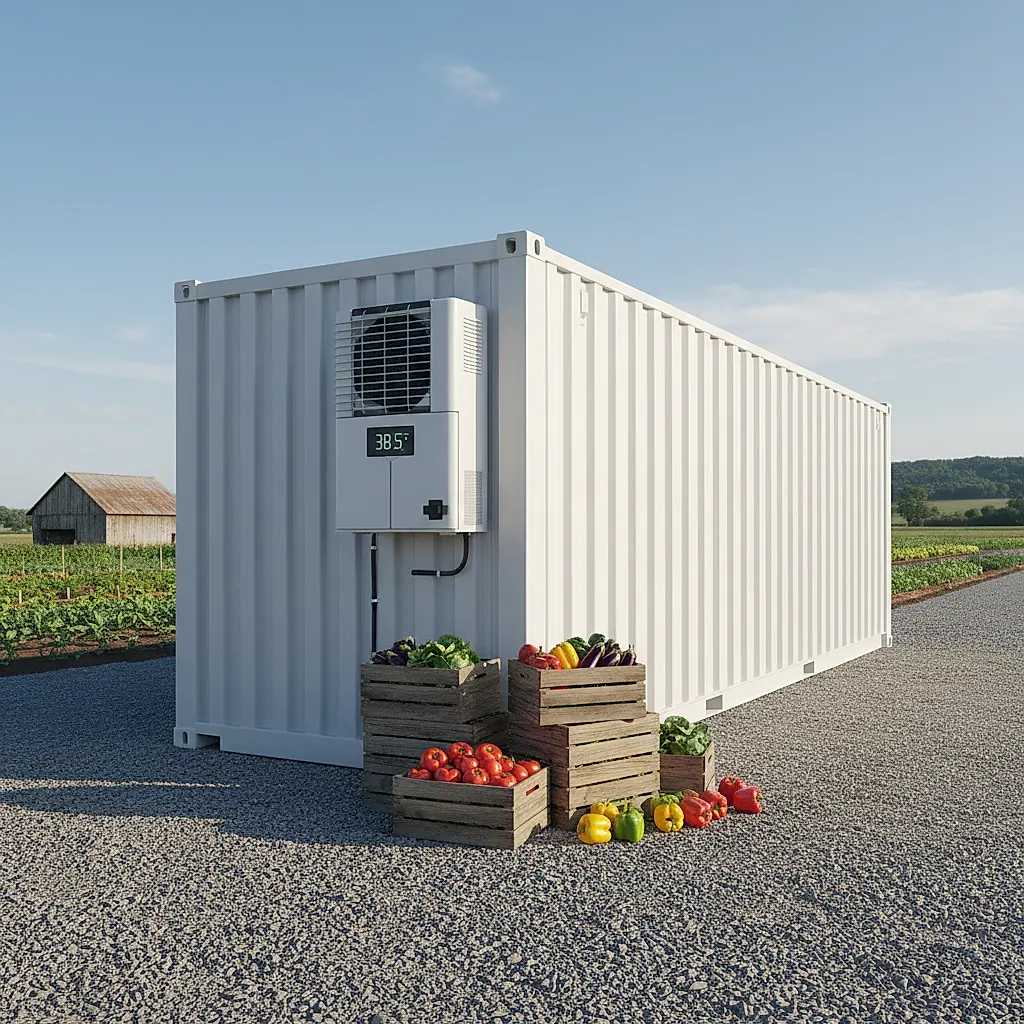
Learn how refrigerated shipping containers support produce storage, what to check before buying, and how to plan power, placement, and cold-chain workflow.
A refrigerated shipping container can be a practical cold-storage asset for farms, food hubs, and produce operations that need dependable temperature control close to the harvest. Also called a reefer container, it combines an insulated box with an integrated refrigeration unit, so it can hold a cold environment without a separate walk-in cooler building. This guide explains how reefers work, what to evaluate, and how to plan a purchase that fits your operation. For exact specifications, availability, and delivery details on any unit, confirm with the Newport team and the individual listing.
What a Refrigerated Container Is and How It Works
A refrigerated container is a shipping container built with insulated walls, ceiling, and floor, plus a refrigeration unit mounted at one end. The unit pulls heat out of the interior and discharges it to the outside air. Most reefer units run on electric power, and some can also run from an onboard generator set or a clip-on genset. The container itself is typically a standard nominal length and width, with a standard-height or high-cube height. Exact internal dimensions, weight limits, and electrical characteristics vary by unit, so always check the listing and the CSC plate for the specific container.
The insulated box
The insulated envelope is what separates a reefer from a dry van. Better insulation and intact door seals help the unit hold temperature with less run time. During inspection, look at wall and ceiling panels, the floor, and the door gaskets. Any breach in the envelope can undermine performance.
The refrigeration unit
Reefer units are available from several manufacturers, and controls vary. Some have simple set-point dials, while others have digital controllers with defrost cycles and alarms. Ask what the unit's controller supports, whether it has been serviced, and what documentation is available. Do not assume a used unit will hold any particular temperature until it has been checked by a qualified refrigeration technician.
Power and controls
Most units operate on three-phase or single-phase power depending on the model and voltage. You will need an electrician to confirm the circuit, breaker, disconnect, and receptacle match the unit. If the container will run in a location without grid power, discuss generator options and fuel storage with qualified suppliers.
Why Produce Operations Consider a Reefer Container
Cold storage is often the bottleneck in a produce operation. A reefer container can add refrigerated space without constructing a permanent building, and it can be relocated if the operation changes. That flexibility is useful for harvest-season peaks, temporary packing sites, and farms that need cold capacity near the field.
Benefits to weigh
- Speed: A container can be placed and powered more quickly than a stick-built cooler in many cases, though site work and electrical connections still take time.
- Mobility: If you lease land or rotate fields, a reefer can move with the operation.
- Insulation: The insulated envelope helps buffer outdoor heat and supports more stable conditions.
- Resale and reuse: Containers hold value and can be repurposed if needs change.
Trade-offs to consider
- Power demand: Refrigeration loads can be significant, and electrical service may need an upgrade.
- Maintenance: Reefer units have compressors, fans, and controls that need periodic service.
- Humidity and airflow: Produce needs proper airflow and humidity management; a reefer is a tool, not a complete storage plan.
- Site access: Delivery and placement require a suitable approach and a level, stable pad.
Matching Storage Conditions to the Produce You Handle
Different crops have different temperature and humidity preferences. Some produce is chilling-sensitive and should not be stored at the coldest settings, while other items benefit from near-freezing conditions. Rather than guessing, work from reputable postharvest guidance for each commodity and confirm settings with your own measurements.
Temperature
Set points should be based on the specific crop, its stage of maturity, and how long it will be stored. A single container may not be ideal for mixing crops with very different requirements. If you store multiple commodities, consider zoning, scheduling, or separate units.
Humidity and airflow
Airflow around and through pallets helps remove field heat and prevents warm pockets. Do not block evaporator returns or stack product against the unit. Humidity control may require additional equipment or practices, depending on the crop and the unit's capabilities.
Monitoring
Use calibrated thermometers and data loggers to verify conditions at multiple points in the container, not just at the controller. Record temperatures regularly and review them, especially during the first weeks of operation and during extreme weather.
Planning Power, Placement, and Site Access
A reefer is only as good as its installation. Plan the site before you commit to a container.
Electrical service
Have a licensed electrician review the unit's nameplate and your service capacity. Confirm voltage, phase, amperage, disconnect type, and whether the unit needs a dedicated circuit. If the run from the panel is long, voltage drop and conductor sizing matter. Ask the electrician to account for startup current, not just running load.
Placement and airflow
The refrigeration unit needs unobstructed air intake and discharge. Do not place the container where the unit discharges into a wall, hedge, or another container. Leave space for service access and for the doors to open fully. A level, well-drained pad helps the doors operate correctly and reduces stress on the frame.
Delivery access
Delivery equipment and site conditions vary. Confirm the approach, turning radius, overhead clearance, and ground bearing capacity with the Newport team and the delivery provider before scheduling. Do not assume a particular trailer or crane is included. If the site has gates, low wires, soft ground, or tight corners, say so early so the team can plan accordingly.
Security and pest control
Reefers are lockable, but you should still plan for access control, lighting, and pest exclusion. Keep the area around the container clean and inspect door seals and drains periodically.
Buying a Used Reefer: What to Inspect
Used refrigerated containers vary widely in condition. A careful inspection can prevent expensive surprises.
Structural checks
- Look for rust, delamination, and repairs on walls, ceiling, and floor.
- Check the door panels, hinges, and gaskets for damage or poor sealing.
- Inspect the frame and corner castings for cracks or heavy corrosion.
- Confirm the CSC plate is present and legible, and review its details.
Refrigeration checks
- Ask for service records if available.
- Have a qualified technician run the unit and verify it reaches and holds a set point.
- Check for unusual noise, vibration, oil stains, or damaged wiring.
- Confirm the controller, sensors, and defrost function operate correctly.
Documentation and questions
Ask about the unit's history, prior use, and any known issues. Confirm what is included, such as power cable, controller, and any spare parts. Because listings and inventory change, confirm current details with the Newport team rather than relying on a general description.
Operating Practices That Support Cold Chain
Good equipment works best with good habits.
- Pre-cool: Remove field heat before or during loading when the crop and handling plan allow.
- Load efficiently: Leave space for airflow and avoid blocking the evaporator.
- Minimize door openings: Plan picks and put-aways to reduce warm air entry.
- Clean regularly: Remove debris and clean floors and drains to reduce odors and pests.
- Monitor and log: Track temperatures and review logs for trends or excursions.
- Service on schedule: Follow the manufacturer's recommended maintenance intervals.
Cost Factors and Budget Planning
Reefer pricing depends on size, age, condition, unit model, and market availability. Rather than quoting a number here, confirm current pricing with the Newport team for the specific unit you are considering. Beyond the container, budget for:
- Electrical work and any service upgrade
- Site preparation, pad, and drainage
- Delivery and placement
- Ongoing power consumption
- Maintenance and repairs
- Monitoring equipment and supplies
A total-cost view helps you compare a reefer container against other cold-storage options.
Frequently Asked Questions
Can I use a refrigerated container to store any produce?
Not every crop stores well under the same conditions. Temperature, humidity, and sensitivity to chilling vary by commodity. Use reputable postharvest guidance for your specific crops and verify conditions with your own monitoring. A reefer gives you control, but the right set points and airflow still matter.
Do I need special electrical work for a reefer container?
In most cases, yes. Reefer units have specific voltage, phase, and amperage requirements, and a licensed electrician should confirm your service can support the unit. Do not connect a reefer to an existing circuit without that review.
How much space does a reefer need around it?
The refrigeration unit needs clear air intake and discharge, and you need room for service and door swing. Exact clearances depend on the unit and site. Ask the Newport team and your technician what the specific container requires.
Can a reefer container be used outdoors in hot climates?
Yes, reefers are designed for outdoor service, but performance depends on the unit, insulation, and maintenance. In extreme heat, the unit runs more and may need more frequent service. Monitor temperatures and discuss expectations with a technician.
What should I check before buying a used reefer?
Inspect the structure, doors, seals, and CSC plate, and have a qualified technician verify the refrigeration unit. Ask for service records and confirm what is included. Because condition varies, review the individual listing and confirm details with the Newport team.
Next Steps
If you are evaluating refrigerated storage for produce, start by defining your temperature range, daily volume, power availability, and site access. Then review current options in our shop and reach out through our contact page to confirm specifications, availability, pricing, and delivery requirements for your location. The Newport team can help you compare units and plan a practical installation.
Plan the next step
Confirm the container and the delivery plan.
Browse current listings, then speak with the Newport team to verify the unit, total pricing, site access, and delivery requirements before payment.