
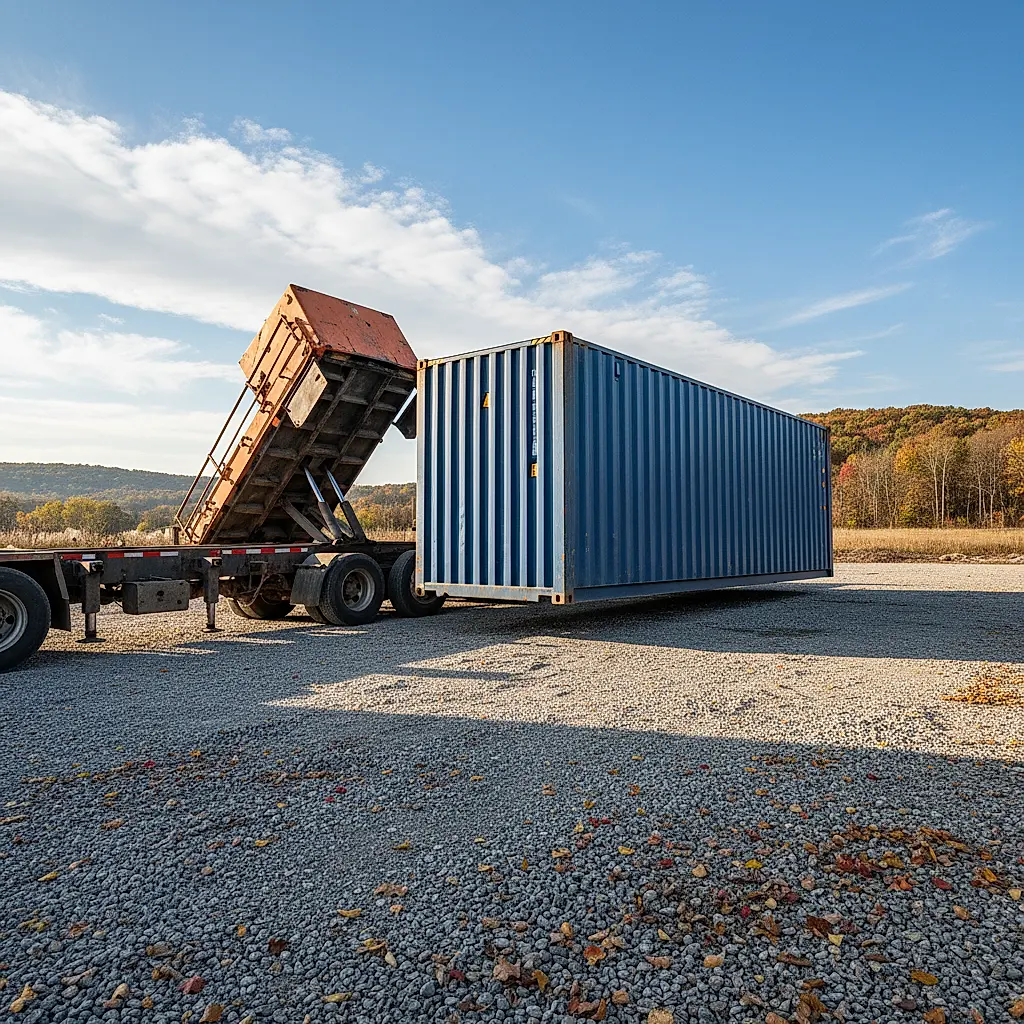
Rent-to-own can make a shipping container more accessible, but the details matter. Learn how to evaluate terms, inspect units, and plan delivery.
Rent-to-own shipping containers can be an appealing path if you want to spread out payments instead of paying in full upfront. But the phrase means different things to different sellers, and the details of any agreement matter far more than the headline. This guide walks through what to examine, what to ask, and how to decide whether rent-to-own is right for your project.
What "Rent to Own" Usually Means
In most rent-to-own arrangements, you make recurring payments over a set period. At the end of that period, depending on the contract, you may own the container outright, have the option to buy it, or have the option to return it. The specifics vary widely.
Because there is no single standard, treat every offer as its own contract. Read it carefully, and ask for anything unclear in writing.
Common Structures You May Encounter
- Lease-to-own: Payments apply toward ownership, and title transfers after a defined term.
- Rental with purchase option: You rent for a period, then decide whether to buy at a set price.
- Rent-to-own with a balloon: Smaller monthly payments with a larger sum due at the end.
- Rent-to-own with a return option: You can walk away at the end instead of buying.
Each structure shifts risk differently. A lease-to-own with a clear payoff schedule is easier to plan around than one with an open-ended final payment.
Questions to Ask Before You Sign Anything
This is where a little homework saves a lot of frustration. Ask these questions and get answers in writing.
About the Agreement
- What is the total cost if I complete all payments?
- How much would I pay if I paid in full today instead?
- Are there fees for late payments, early payoff, or returned payments?
- What happens if I miss a payment?
- Who maintains and insures the container during the term?
- When exactly does ownership transfer, and what paperwork confirms it?
- Can I cancel, and what happens to payments already made?
About the Container
- Is the unit new (one-trip) or used (cargo-worthy or wind-and-watertight)?
- What condition grade is it, and what does that grade mean in practice?
- Has it been modified, and if so, by whom?
- Are there signs of structural repair, and can I see documentation?
- What are the approximate nominal dimensions, and is it standard height or high cube?
For exact specifications, always refer to the individual listing and the container's CSC plate. Nominal sizes are a starting point, not a guarantee of interior measurements or usable space.
Understanding Container Condition and Grade
Condition is one of the biggest variables in price and suitability. Two containers of the same nominal size can differ substantially in appearance, door operation, floor condition, and rust.
Typical Condition Categories
- New / one-trip: Generally the cleanest and most uniform, often used for modifications or visible placements.
- Cargo-worthy (CW): Built to carry cargo; may show cosmetic wear but is structurally sound.
- Wind-and-watertight (WWT): Keeps weather out but may not be certified for cargo.
- As-is: Sold with known issues; suitable for some storage or non-critical uses.
Ask which category applies and inspect the unit if you can. If you cannot inspect in person, ask for current photos of the doors, floor, roof, and corner castings.
What to Inspect
- Doors: Open and close smoothly, seals intact, locking bars functional.
- Floor: No soft spots, delamination, or strong odors.
- Roof and walls: Look for dents, holes, and heavy rust.
- Corner castings: Check for cracks or deformation.
- CSC plate: Confirm it is present and legible if certification matters to you.
How Rent-to-Own Compares to Buying Outright
Rent-to-own is not automatically better or worse. It depends on your cash flow, how long you need the container, and how certain you are about keeping it.
When Rent-to-Own May Make Sense
- You need the container now but prefer smaller recurring payments.
- You are testing a use case, such as temporary storage, before committing long term.
- You want to preserve cash for other parts of a project.
When Buying Outright May Make Sense
- You have the funds available and want the lowest total cost.
- You plan to modify the container, which is easier when you own it outright.
- You want to avoid contract complexity and potential fees.
Run the numbers both ways. Compare the total of all rent-to-own payments against the outright purchase price, and factor in any fees. If the difference is significant, decide whether the flexibility is worth it to you.
Delivery and Site Planning Basics
Delivery is often the part of a container purchase that surprises people. A container is large and heavy, and the equipment needed depends on the site, the load, and the access route.
What to Have Ready
- A clear path for the delivery vehicle to enter and exit.
- A level, firm pad or surface where the container will sit.
- Enough overhead clearance along the route.
- A plan for how the container will be set down and whether you need it placed precisely.
What to Confirm With the Delivery Team
- Whether your site is accessible for the equipment they plan to use.
- Any local requirements that may apply to placing a container on your property.
- Whether you need a permit, and from which authority.
- Any site-specific limitations, such as soft ground, slopes, or tight turns.
Do not assume a particular size requires fewer permits or that delivery will need specific extra equipment. Requirements vary by location and site. Confirm with the Newport team and your local authority.
Modifications, Permits, and Local Rules
If you plan to modify a container, understand that modifications can affect structural integrity, insurance, and compliance with local codes. Common modifications include doors, windows, insulation, electrical, and plumbing.
Before you modify:
- Check with your local planning or building department about what is allowed.
- Ask whether a permit is required for your intended use.
- Confirm that modifications will not void any warranty or certification.
- Use qualified professionals for structural, electrical, and plumbing work.
Rent-to-own agreements sometimes restrict modifications during the term. Read your contract before cutting, welding, or painting.
Payment, Insurance, and Record Keeping
Keep good records throughout the term. This protects you if a dispute arises.
- Save a copy of the signed agreement.
- Keep receipts for every payment.
- Note the date ownership transfers, if applicable.
- Keep photos of the container's condition at delivery.
- Store insurance documents if insurance is required.
If insurance is required during the rental period, confirm what it must cover and who is responsible for arranging it.
Frequently Asked Questions
Is rent-to-own the same as a lease?
Not necessarily. Some agreements are leases with an option to buy, while others apply payments toward ownership. The terms depend entirely on the contract. Ask for the specifics in writing before you commit.
Can I pay off a rent-to-own container early?
Many agreements allow early payoff, but some include prepayment penalties or adjust the total. Ask about early payoff terms and get the answer in writing.
What condition are rent-to-own containers usually in?
Condition varies by seller and by unit. Ask for the grade, request current photos, and inspect in person if possible. For exact specifications, refer to the individual listing and the CSC plate.
Do I need a permit to place a container on my property?
Permit requirements vary by location and intended use. Contact your local planning or building department to confirm what applies to your situation. Do not rely on general rules of thumb.
What should I confirm before delivery?
Confirm site access, surface conditions, overhead clearance, and any local requirements. Ask the delivery team what equipment they plan to use and whether your site can accommodate it. Confirm availability, pricing, and delivery details with the Newport team.
Next Steps
Rent-to-own can be a practical option, but it works best when you understand the contract, the container's condition, and the delivery logistics. Start by browsing current listings to see what is available, then reach out with your questions.
- Review options on our shop page.
- Contact us at Newport Shipping Containers to confirm listing details, availability, pricing, site access, and delivery requirements.
We are happy to walk through the details with you so you can make a confident decision.
Plan the next step
Confirm the container and the delivery plan.
Browse current listings, then speak with the Newport team to verify the unit, total pricing, site access, and delivery requirements before payment.