
Renting can make sense for short projects, while buying often pays off for long-term storage and modifications. Here's how to compare the real trade-offs without guessing at costs.
Many projects start with the same question: should you rent a shipping container or buy one? The right answer depends less on a single break-even month and more on how long you need the container, what you plan to do with it, and how flexible you need to stay. This guide walks through the practical factors so you can make a confident decision and confirm the details with the Newport team.
Start With the Job, Not the Price Tag
Before comparing rental and purchase options, define what the container actually needs to do. A storage container used for a few months on a job site is a very different purchase than a container you plan to modify, insulate, or keep on a property for years.
Ask yourself:
- How long will I need the container? Weeks, months, or indefinitely?
- Will it stay in one place, or move between sites?
- Do I need to modify it, cut openings, add power, or insulate it?
- Who is responsible for maintenance, locks, and condition during use?
- Do I need to return it at the end, or would owning it be simpler?
If the answer to any of these is uncertain, that uncertainty is itself useful information. Short or unclear timelines tend to favor renting. Long or open-ended timelines tend to favor buying.
How Renting Works in Practice
Rental arrangements vary by company and region, so treat any general description as a starting point only. In most cases, a rental involves a container delivered to your site for an agreed period, with terms covering the rental rate, delivery, pickup, and the condition the container must be in when returned.
What renters typically pay for
- The rental period itself, often billed monthly
- Delivery to your site
- Pickup when the rental ends
- Potential charges for damage, missing parts, or excessive dirt
- Possible extension fees if you keep it longer than planned
Where renting shines
- Short projects. If you need storage for a season, a renovation, or a temporary event, renting avoids a long-term commitment.
- Uncertain timelines. If you do not know when the project ends, renting keeps your options open.
- No long-term plans for the container. If you have no interest in keeping or modifying it, ownership may be unnecessary.
- Less upfront cash. Renting usually lowers the initial outlay compared with buying.
Where renting can frustrate
- Ongoing payments. The longer you rent, the more you pay, and those payments do not build ownership.
- Modification limits. Most rentals do not allow cutting, welding, painting, or permanent changes.
- Return condition rules. You may need to clean the container and ensure it is in comparable condition.
- Scheduling. Pickup depends on the rental company's timeline, which may not match yours.
How Buying Works in Practice
Buying a container gives you an asset you control. You can keep it as long as you like, move it when you are ready, and modify it within local rules and your own plans.
What buyers typically consider
- The container's condition grade and whether it is wind and water tight
- One-trip versus used condition
- Standard height versus high cube
- Delivery access and unloading requirements at your site
- Any permits, zoning, or homeowners association rules that apply locally
- Ongoing care such as rust prevention, roof checks, and door maintenance
Where buying shines
- Long-term storage. If you need the container for years, ownership often makes more sense than paying indefinitely.
- Modification plans. Workshops, offices, and custom builds require a container you own.
- Resale or repurposing. A container you own can be sold, moved, or converted later.
- Predictable cost. After purchase and delivery, you are not making monthly rental payments.
Where buying needs more thought
- Upfront cost. Purchase plus delivery is a larger initial expense.
- Site readiness. You need a level, accessible spot and a plan for placement.
- Maintenance. Ownership means you handle upkeep.
- Local rules. Some areas restrict container placement or require approvals.
The Break-Even Question, Handled Honestly
You will see simple break-even formulas online, often expressed as a number of months. Those formulas can be useful as a thinking tool, but they depend entirely on numbers that change by supplier, location, container condition, and rental terms. We do not publish a universal break-even month because it would not be accurate for your situation.
A more reliable approach is to build your own comparison using quotes you actually receive.
A simple framework
- Get a written rental quote that includes delivery, pickup, and the monthly rate.
- Get a written purchase quote that includes the container and delivery.
- Estimate how many months you will realistically need the container.
- Multiply the monthly rental rate by that number, then add delivery and pickup.
- Compare that total with the purchase plus delivery total.
- Add the value of flexibility, modification rights, and ownership to your decision.
Factors that shift the break-even point
- Rental rate. Higher monthly rates shorten the time before buying looks better.
- Delivery and pickup fees. These can repeat with rentals and add up.
- Planned duration. Longer use favors buying.
- Modification needs. If you must modify the container, renting is usually not an option.
- Resale value. If you might sell later, ownership can recover part of the cost, though resale values are not guaranteed.
If your timeline is genuinely uncertain, consider renting first and revisiting the decision once your plans firm up. That is a legitimate strategy, not a failure to decide.
Size and Specification Basics Without the Guesswork
Container sizes are usually described by nominal length, and the common options are 20-foot and 40-foot containers. Standard height and high cube height are also common distinctions. Exact internal and external dimensions, door openings, and weight limits vary by container and should always be confirmed on the individual listing or the container's CSC plate.
When comparing rental and purchase options, make sure you are comparing like with like:
- Same nominal size
- Same height category
- Similar condition grade
- Similar door and floor condition
- Comparable delivery requirements
A rental quote for one size and condition is not directly comparable to a purchase quote for a different one. Ask for the specifics in writing so the comparison is fair.
Site Access, Delivery, and Local Rules
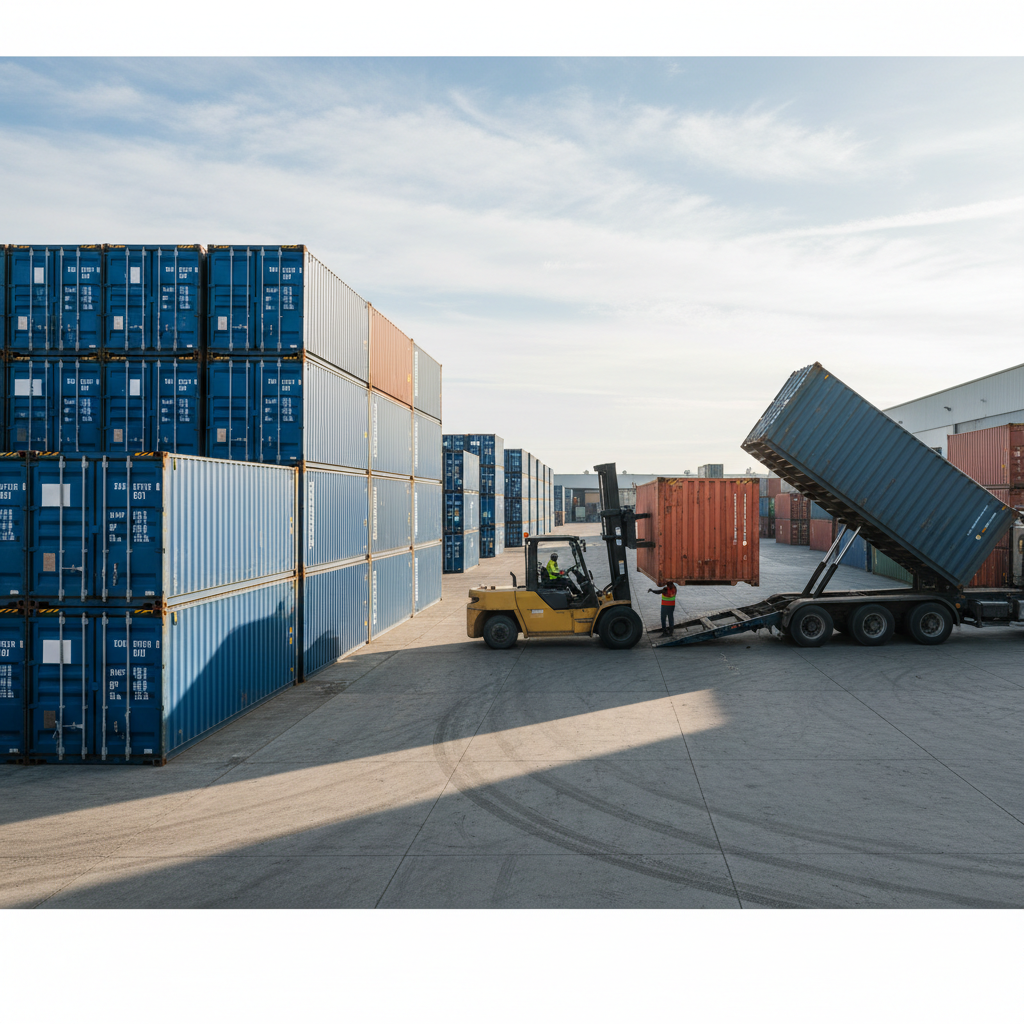
Delivery is often the most underestimated part of the decision. A container is large and heavy, and the equipment needed to move it depends on your site. Rather than assume what your site requires, describe your access honestly when requesting a quote.
Useful details to share with the delivery team:
- Surface type: gravel, dirt, asphalt, concrete
- Slope and drainage
- Gate width and overhead obstructions
- Distance from the road to the placement spot
- Presence of wires, trees, or low branches
- Whether the container will sit on blocks, a pad, or the ground
Local rules also matter. Zoning, permits, and property rules vary widely, and we cannot tell you what your area requires. Contact your local authority for guidance before committing to a placement plan.
Condition, Maintenance, and Long-Term Care
If you buy, plan for basic upkeep. If you rent, understand what condition you must return the container in.
For buyers
- Inspect doors, seals, and the roof
- Keep the container slightly off the ground where practical
- Address rust and standing water promptly
- Keep the interior dry and ventilated
For renters
- Document the container's condition at delivery
- Avoid modifications without written permission
- Keep the container reasonably clean
- Confirm the return condition expectations upfront
Frequently Asked Questions
Is renting always cheaper than buying?
No. Renting usually costs less upfront, but ongoing payments can exceed a purchase price over a long period. The better option depends on your timeline, your modification plans, and the quotes you receive.
Can I modify a rented container?
Generally, no. Most rental agreements prohibit permanent changes such as cutting, welding, or painting. If modification is part of your plan, buying is usually the more suitable path.
How long should I plan to keep a container before buying makes sense?
There is no universal answer. Build your own comparison using real quotes and your realistic timeline. Longer, more certain timelines tend to favor buying, while short or uncertain timelines tend to favor renting.
What size container should I choose?
Start with what you need to store and how you will access it. Common nominal sizes are 20-foot and 40-foot, with standard and high cube heights available. Confirm exact dimensions and weight limits on the individual listing or CSC plate.
Do I need a permit for a shipping container?
Requirements vary by location and use. We cannot determine what applies to your property. Check with your local authority before placing a container.
Making the Call
Renting and buying are both reasonable choices. Renting favors flexibility and short timelines. Buying favors long-term use, modification, and ownership. The most useful thing you can do is gather real quotes, be honest about your timeline, and confirm site and local requirements before you commit.
If you are ready to compare options, browse current listings at our shop and reach out with your project details at our contact page. The Newport team can help you confirm availability, specifications, and delivery requirements so you can decide with accurate information rather than assumptions.
Plan the next step
Confirm the container and the delivery plan.
Browse current listings, then speak with the Newport team to verify the unit, total pricing, site access, and delivery requirements before payment.