
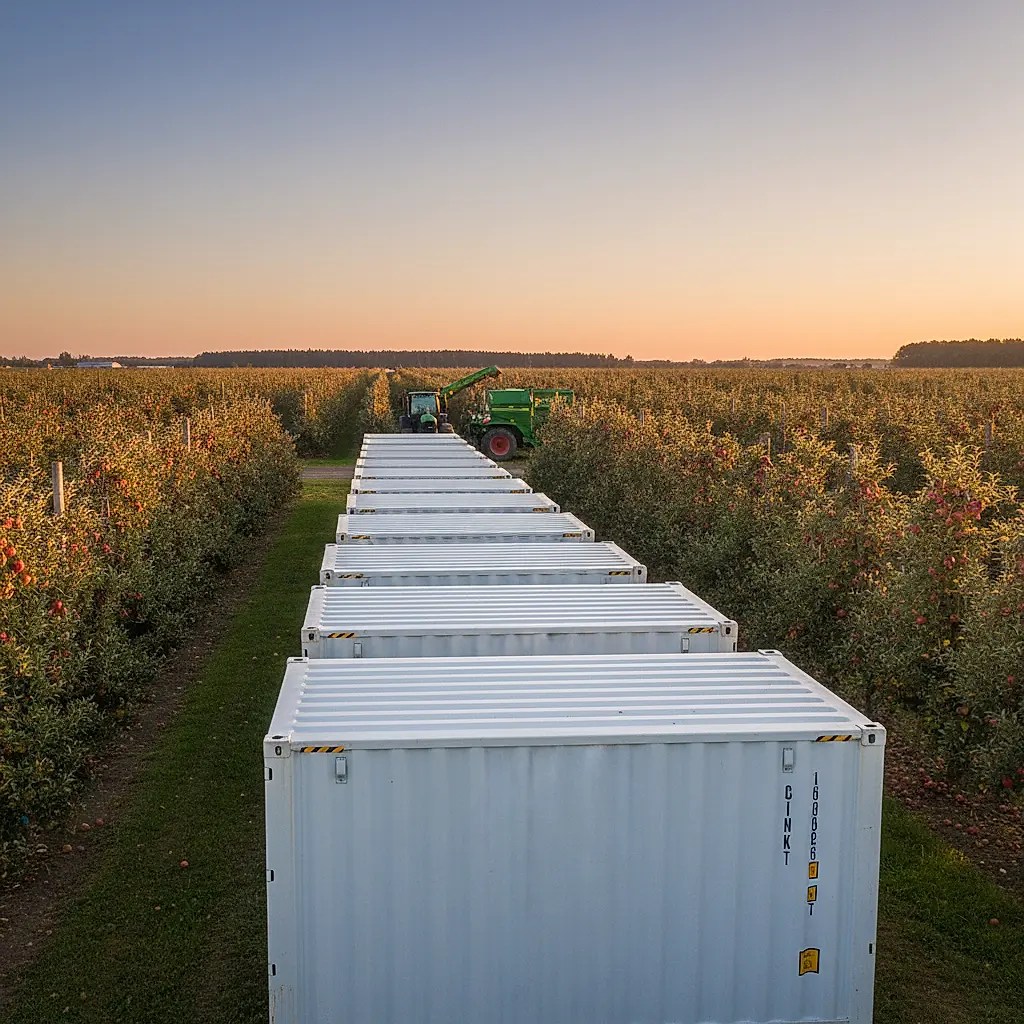
When harvest exceeds your walk-in capacity, a refrigerated shipping container can bridge the gap. This guide explains how to plan, compare options, and ask the right questions before you commit.
When harvest season peaks, your permanent cold storage may not keep up. A refrigerated shipping container—often called a reefer—can serve as temporary or semi-permanent overflow space. This guide walks through the practical and financial questions to ask before you rent, buy, or repurpose a container for cold storage.
Why Harvest Overflow Happens and What It Costs You
Farms often face a mismatch between peak harvest volume and fixed cold storage capacity. A single strong week can push more produce through your packing line than your walk-in cooler was designed to hold. When that happens, you have a few choices: move product faster, rent temporary refrigeration, or add a refrigerated container.
The cost of not solving overflow can show up as:
- Reduced shelf life for crops that need rapid cooling.
- Lost sales when you cannot hold grade or volume for buyers.
- Emergency spending on rushed hauling or spot rentals.
- Wasted labor when crews repack or resort product that warmed up.
A refrigerated container is not a perfect substitute for a purpose-built cold room. It has different airflow, door size, and power needs. But for many farms it fills a real gap during the busiest weeks.
How Refrigerated Containers Work for Farm Storage
A reefer is an insulated shipping container with an integrated refrigeration unit. Most units are designed to hold a set temperature rather than to pull down a warm load quickly. That distinction matters: if you load room-temperature produce into a reefer, the unit may take a long time to reach your target, and some crops need faster pre-cooling than a container can provide.
Key features to understand
- Insulation and door seals affect how well the unit holds temperature.
- Airflow matters. Do not block the floor or the return air path with pallets or bins.
- Power supply is a planning item. You will need to confirm voltage, amperage, and whether your site can support the unit.
- Defrost cycles and controls vary by model. Ask how the unit is set and monitored.
- Remote monitoring may be available on some units, but do not assume it is included.
What a reefer is not
A reefer is not a freezer for every product, and it is not a substitute for a properly engineered cold room if you need precise humidity control or rapid pull-down. For some crops, a container works well as short-term holding. For others, you may need a different solution.
Comparing Rental, Purchase, and Shared Use
There is no single right answer. The best choice depends on how many weeks you need the space, how much you want to spend up front, and how much risk you can carry.
Temporary rental or leasing
Renting can make sense when your need is short and predictable. You avoid a large capital outlay and you can return the unit when the season ends. Trade-offs include:
- Rental terms, minimum periods, and delivery zones vary by provider.
- You may pay for fuel, power, and monitoring separately.
- Availability can tighten during peak harvest windows.
- You may not control the exact model or condition of the unit.
Buying a used reefer
Buying can make sense if you expect to need overflow space for multiple seasons or want the unit on site year-round. Trade-offs include:
- Up-front cost and the risk of repair bills.
- The need for a place to park and power the unit.
- Maintenance and monitoring responsibilities.
- Resale or repurposing options when you no longer need it.
Shared or cooperative use
Some growers share a unit with a neighbor or a local group. This can reduce cost per user, but it requires clear agreements about scheduling, cleaning, temperature settings, and who pays for power and repairs. Put the arrangement in writing.
Planning Your Site and Power Before You Commit
A refrigerated container needs more than a flat spot. Before you choose a unit, walk your site and answer these questions.
Access and placement
- Can a truck and trailer reach the drop point without blocking roads or gates?
- Is the ground stable and level enough to support the container and keep doors operating smoothly?
- Is there room to open the doors fully and work around the unit?
- Will the unit sit in direct sun? Shade can reduce the load on the refrigeration system.
Power and utilities
- What voltage and amperage does the unit require?
- Does your service panel have capacity for the added load?
- Will you need an electrician to run a dedicated circuit?
- How will you handle a power interruption? A backup plan may be necessary for high-value crops.
Monitoring and daily operation
- Who checks the temperature and records it?
- What is the plan if the unit alarms or fails?
- How will you keep the floor clear for airflow?
- What is your cleaning and sanitation routine between loads?
Confirm all site access, power, and delivery requirements with the Newport team and your electrician before you finalize any plan. Do not assume a unit will fit or run without verifying the details.
What to Ask Before You Buy or Rent
Use this checklist when you talk with any supplier, including us.
- What is the exact model and year of the unit?
- What temperature range is it designed to hold?
- What is the condition of the refrigeration unit, doors, and seals?
- Has it been tested under load, and can you share the results?
- What maintenance history is available?
- What power requirements does it have?
- What is included in the price or rental rate, and what is extra?
- What are the delivery, pickup, and site-access terms?
- What happens if the unit fails during the season?
If a seller cannot answer these questions, treat that as a warning sign. Ask for the listing details, the CSC plate information, and any documentation they can provide. For exact specifications, always refer to the individual listing and the plate on the unit.
Common Mistakes to Avoid
- Assuming a container is plug-and-play. Power, placement, and monitoring all need planning.
- Loading warm product and expecting fast cooling. Most reefers hold temperature; they do not rapidly chill a full load.
- Blocking airflow. Stacking pallets against the floor or return air path defeats the system.
- Skipping a backup plan. A power outage or unit failure can put a whole load at risk.
- Ignoring local rules. Zoning, permits, and site requirements vary. Check with your local authority.
- Buying on price alone. A cheap unit with a failing refrigeration system is not a bargain.
Frequently Asked Questions
Can I use a refrigerated shipping container for any crop?
Not every crop. Some produce needs rapid pre-cooling, precise humidity, or specific airflow that a container may not provide. Others hold well in a reefer for short-term storage. Talk with your buyer or a post-harvest specialist about your specific crop and target conditions before you commit.
How do I know what size container I need?
Start with the volume you need to hold at peak, the pallet or bin dimensions you use, and the aisle space you need to work. A container's nominal length and width are starting points, but usable space is reduced by the refrigeration unit and airflow clearances. Review the individual listing for exact interior dimensions and confirm with the Newport team.
Do I need a permit to place a container on my farm?
Requirements vary widely by location and land use. Some areas treat temporary agricultural storage differently than permanent structures. Contact your local planning or zoning office to confirm what applies to your site. Do not rely on general advice.
What happens if the power goes out?
That depends on your setup. A reefer needs power to hold temperature. For high-value or temperature-sensitive crops, plan for backup power or a rapid response plan. Discuss your risk tolerance and options with your electrician and the Newport team.
Should I rent or buy?
Rent if your need is short, predictable, and you want to avoid capital outlay. Buy if you expect multi-season use and can handle maintenance and site setup. Run the numbers for your own operation, and ask about total cost including power, delivery, and any repairs.
Next Steps
Start by writing down your peak volume, your target temperature, your available power, and your site access. Then review current listings at our shop and reach out to our team with your questions. We can help you confirm availability, compare options, and understand what to verify before delivery. Always confirm listing details, pricing, site access, and delivery requirements directly with the Newport team.
Plan the next step
Confirm the container and the delivery plan.
Browse current listings, then speak with the Newport team to verify the unit, total pricing, site access, and delivery requirements before payment.