
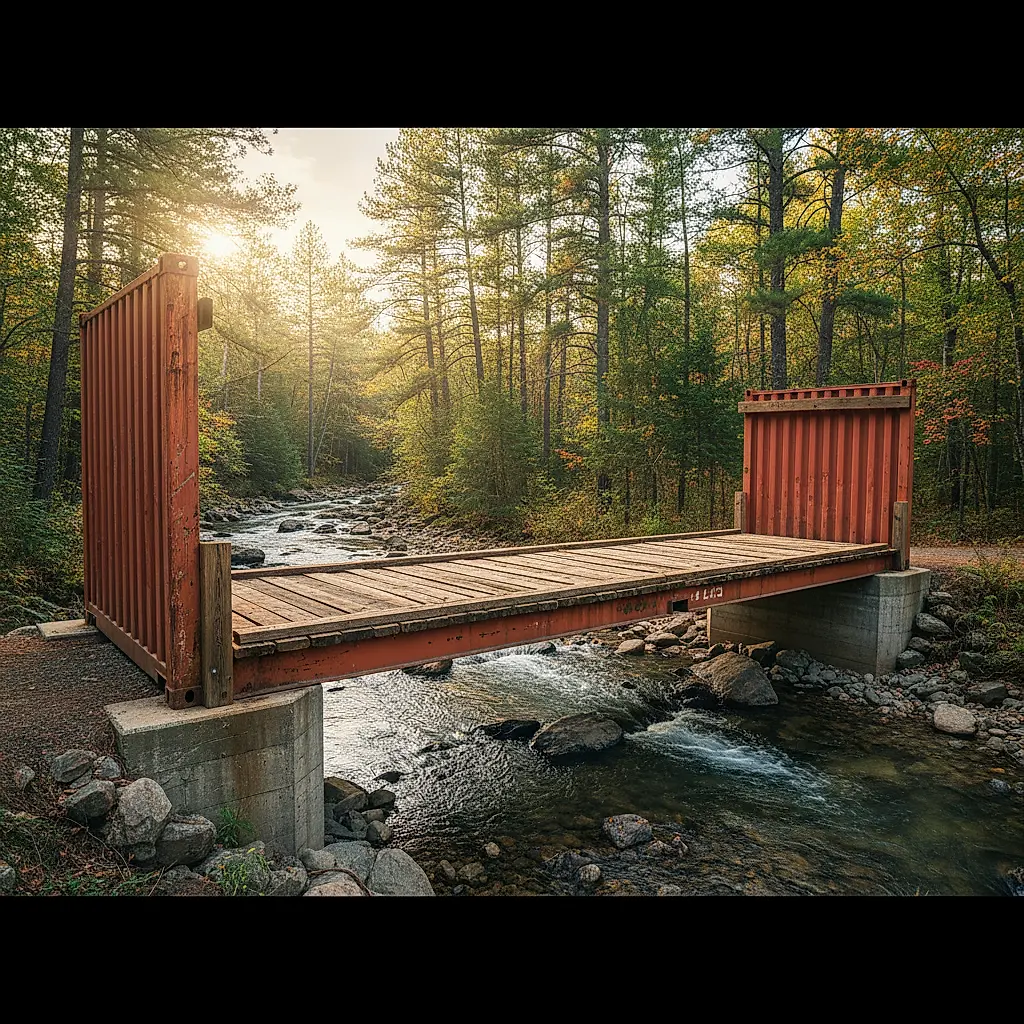
Planning a shipping container bridge conversion? Learn how flat rack footings, load paths, and site conditions shape a safe, buildable crossing—and what to verify before you buy.
A shipping container bridge conversion can turn a flat rack or container into a durable crossing over a ditch, creek, or low spot. But it is not a one-size-fits-all project. The difference between a safe, long-lasting bridge and a costly mistake comes down to engineering, footing design, and honest site assessment.
This guide explains the main decision points: how flat rack footings work, why load path matters more than container size, what to check before buying a used flat rack, and how to coordinate with your delivery team and local authority. It does not provide stamped engineering or site-specific load ratings. Those must come from a qualified professional who can inspect your site.
Why a Flat Rack Is Often Considered for Bridge Conversions
A flat rack is a container without fixed side walls and a roof. It has a heavy steel base and end frames, which can make it attractive for bridge or crossing projects where you want an open deck and the ability to attach railings or decking.
Standard containers can also be used, but their enclosed sides and roof change the design. A flat rack’s open structure may simplify decking and inspection, while still providing a robust steel platform when properly supported.
Key points to understand:
- Nominal dimensions vary. Containers are commonly described by nominal length and width, and flat racks come in standard and high-cube height variants. Exact dimensions, corner casting positions, and base structure should be confirmed in the individual listing and on the CSC plate.
- The container is only one part of the bridge. Footings, abutments, decking, railings, and connections often determine overall performance.
- Used equipment has a history. A used flat rack may have been repaired, modified, or overloaded. Inspection matters more than appearance.
Footing and Foundation Options for Container Bridges
The footing is what transfers the bridge load into the ground. For a container bridge, the two ends typically rest on abutments or footings. The type you choose depends on soil, span, water flow, and local requirements.
Common footing approaches
- Concrete abutments. Poured or precast concrete structures can spread load and resist movement. They require excavation, forming, and curing time.
- Helical piles or driven piles. These can work where soil is soft or where you need to reach bearing strata. Installation usually requires specialized equipment.
- Cribbing or block foundations. Sometimes used for temporary crossings, but they can shift and may not suit permanent installations.
- Engineered pad footings. Reinforced pads sized by a professional can work for shorter spans and suitable soils.
What to verify before choosing a footing
- Soil bearing capacity. A geotechnical evaluation or a licensed engineer’s assessment is the only reliable way to know what your soil can support.
- Water behavior. Will water rise, scour, or flow against the footing? Erosion can undermine even a strong bridge.
- Frost depth and seasonal movement. In many regions, freeze-thaw cycles affect footing depth and stability.
- Local codes and permits. Contact your local building or environmental authority early. Requirements vary by jurisdiction and site.
Do not assume that a particular container size reduces permitting needs. Permit triggers depend on the crossing, waterway, land use, and local rules—not on the container alone.
Load Path, Span, and Why Engineering Comes First
A bridge works by moving load from the deck, through the container structure, into the footings, and into the ground. Every connection in that path matters.
Questions an engineer will ask
- What is the maximum live load the bridge must carry?
- How long is the clear span between supports?
- Will the container act as a beam, or will additional beams be added?
- How are the container corners supported and restrained?
- What lateral forces—wind, water, or vehicle movement—must be resisted?
- How will decking and railings attach without weakening the container?
Why you should not guess at capacity
Container markings and CSC plates provide information about the container’s original design and testing, but they do not automatically authorize a bridge conversion. Cutting, welding, corrosion, and support conditions change how a container behaves. A qualified engineer should review the specific container and connection details.
Similarly, do not rely on general rules of thumb about how much a container can hold. Actual capacity depends on span, support, load distribution, and the condition of the steel.
Sourcing a Used Flat Rack: What to Inspect and Confirm
If you are considering a used flat rack for sale, treat it like any structural steel purchase. Condition and documentation matter.
Inspection checklist
- Corner castings. Look for cracks, deformation, or repairs around the corner fittings.
- Base structure. Check for rust, delamination, bent cross members, and previous weld repairs.
- End frames. Confirm they are straight and free of significant damage.
- CSC plate. Review the plate for original specifications and any markings. Ask the seller to confirm what the plate indicates.
- Previous modifications. Any cut, welded, or patched area should be evaluated by an engineer before use in a bridge.
- Coating and corrosion. Surface rust may be manageable; deep section loss is a structural concern.
Questions to ask the seller
- What is the exact nominal size and height variant?
- Are there photos of the corner castings and base underside?
- Has the unit been repaired or modified?
- Is the CSC plate present and legible?
- Can you provide the listing details for review?
At Newport Shipping Containers LLC, we encourage buyers to confirm listing details, availability, pricing, and condition with our team before making decisions. We do not publish unverified specifications or performance claims.
Site Access, Delivery, and Installation Coordination
A container bridge project often involves moving a large steel unit to a site that may have limited access. Delivery planning is not just about the truck; it is about the path and the placement.
Site access considerations
- Road width and turning radius. A delivery truck needs room to approach and position.
- Overhead obstacles. Trees, wires, and bridges can limit clearance.
- Ground conditions. Soft ground can prevent heavy equipment from reaching the site.
- Placement area. You need a safe zone to set the container down, even temporarily.
Delivery and installation questions to confirm
- What delivery equipment is available for your location?
- Does the site require a crane or other lifting method?
- Who is responsible for rigging and final placement?
- Are there weight or access restrictions on local roads?
- What site preparation is needed before delivery day?
Do not assume that delivery includes any particular equipment or that a given container size will fit through a specific opening. Confirm these details with the Newport team and your contractor.
Permits, Environmental Review, and Local Authority Approvals
Bridges over waterways or drainage features often trigger environmental and building reviews. Even small crossings can require permits.
Steps to take early
- Contact your local building department or planning office.
- Ask whether a floodplain or wetland review applies.
- Confirm whether the crossing is considered temporary or permanent.
- Ask what engineering documentation is required for approval.
- Keep records of all approvals and inspections.
Requirements differ by state, county, and municipality. No article can tell you whether your specific project needs a permit or which one. Your local authority is the source of truth.
Designing for Safety and Longevity
A bridge conversion should be designed for the life you expect and the loads it will actually see.
Practical design features
- Railings and barriers. Protect users and prevent falls.
- Decking. Choose a surface that suits traffic, drainage, and maintenance.
- Drainage. Prevent water from pooling on the deck or around footings.
- Corrosion protection. Coatings and detailing can extend service life.
- Inspection access. Make it possible to check connections and footings over time.
Maintenance planning
- Schedule regular inspections after storms or high water.
- Check for rust, loosened connections, and footing movement.
- Keep vegetation cleared around abutments.
- Document repairs and modifications.
Frequently Asked Questions
Can any shipping container be used for a bridge?
Not automatically. A container must be evaluated for its condition, span, support method, and intended loads. A qualified engineer should determine whether a specific container is suitable for a bridge application.
Are flat racks better than standard containers for bridges?
Flat racks offer an open deck, which can simplify decking and inspection. Standard containers provide enclosed sides and a roof. The better choice depends on your design, load requirements, and site conditions—not on a general rule.
Do I need a permit for a container bridge?
Permit requirements vary widely by location and by the nature of the crossing. Contact your local building, planning, or environmental authority to learn what applies to your project. Do not assume a particular container size avoids permits.
How do I confirm the specifications of a used flat rack?
Ask for the listing details, photos of the CSC plate and corner castings, and any available documentation. Confirm exact dimensions and condition with the seller. At Newport, our team can help you review listing information before you buy.
Can Newport help with delivery and placement?
Delivery coverage and equipment depend on your location and site. Contact the Newport team to discuss your address, access, and placement needs. We will confirm what is possible before you commit.
Next Steps for Your Bridge Project
Start with the site and the engineering, not the container. A clear plan for footings, span, loads, and permits will tell you what kind of flat rack or container you actually need.
When you are ready to look at options, browse our current inventory at our shop. If you have questions about a specific unit, dimensions, condition, or delivery to your site, contact our team. We will help you confirm the details that matter and point you toward the right next step.
Plan the next step
Confirm the container and the delivery plan.
Browse current listings, then speak with the Newport team to verify the unit, total pricing, site access, and delivery requirements before payment.