
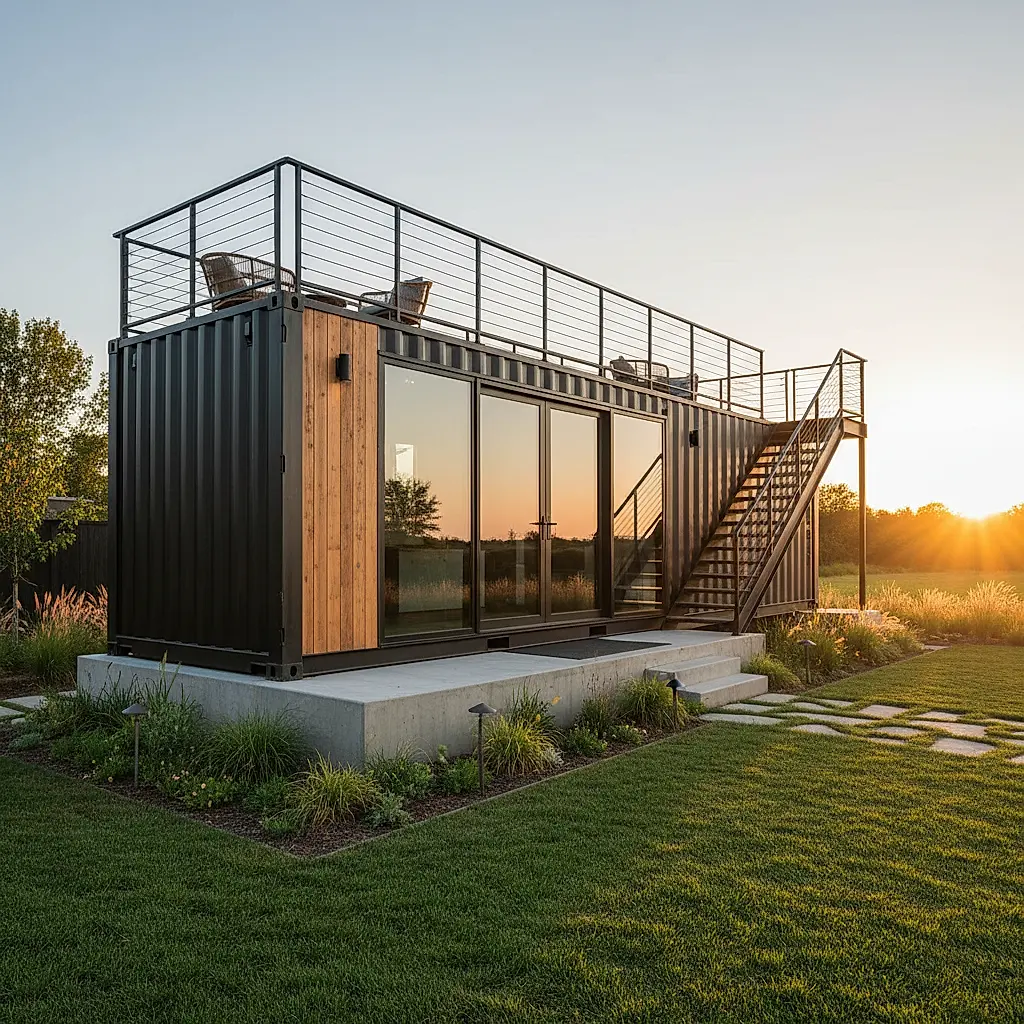
Planning a container guest house? Learn the real cost categories, site work decisions, and questions to ask before you buy a container.
A shipping container guest house can be a smart way to add flexible space to your property, but the total cost is rarely a single number. It depends on the container you start with, how much site work your land needs, how finished you want the interior, and what your local building department requires.
This guide walks through the major cost categories so you can build a realistic budget and ask better questions. It does not quote prices, because container prices, labor rates, and permit fees vary by location and change over time. Instead, treat this as a framework for gathering your own numbers.
Start With the Container Itself
The container is usually the smallest line item in a finished guest house, but it shapes everything else. You are generally choosing between a standard height container and a high-cube container, and between new (one-trip) and used condition.
Standard height vs. high cube
Standard containers are approximately 8 feet wide and about 8 feet 6 inches tall. High-cube containers are also about 8 feet wide but roughly 9 feet 6 inches tall. That extra foot of interior height can matter a great deal in a guest house, because insulation, flooring, and ceiling finishes all eat into headroom.
Length is commonly described in nominal terms such as 20 feet or 40 feet. Actual exterior and interior dimensions vary by manufacturer and model, so confirm the exact figures on the individual listing before you design around them.
Condition and what it means for your budget
- One-trip or newer containers generally have fewer dents, less surface rust, and a cleaner starting point. They often cost more up front but may reduce prep work.
- Used containers can be perfectly serviceable, but condition varies widely. Inspect the floor, roof, door seals, and corner castings.
- Wind and water tightness matters more than cosmetics. A container that leaks will cost more later.
Ask to see the CSC plate and any available condition details for the specific unit you are considering. The plate carries identification and rating information, and it is a good reference point when you talk with your builder or engineer.
Site Work, Foundation, and Access
This is where budgets most often surprise people. A container is heavy, rigid, and delivered on a truck that needs room to maneuver.
Access questions to answer early
- How wide is the driveway or gate the truck must pass through?
- Are there low branches, power lines, or tight turns?
- Is the ground firm enough for a loaded truck and trailer?
- Where can the driver safely set the container down?
Delivery requirements vary by carrier, equipment, and site. Confirm access and placement requirements with the Newport team before scheduling, and be honest about slopes, soft ground, and overhead obstructions. A site visit or clear photos can prevent a failed delivery.
Foundation options
Container guest houses are typically set on one of a few foundation types:
- Concrete piers or grade beams — common where frost depth or soil conditions require engineered support.
- A poured slab — can simplify flooring and utilities but usually requires more site prep.
- Helical or screw piles — sometimes used where soil and access conditions favor them.
Your choice depends on soil, frost line, local code, and your builder's preference. A local engineer or contractor should confirm what your site needs. Do not assume a container is light enough to skip a proper foundation.
Utilities and site connections
Even a small guest house needs decisions about:
- Electrical service and panel capacity
- Water supply and freeze protection
- Wastewater handling, such as septic or sewer connection
- Heating, cooling, and ventilation
- Internet and television cabling
Each of these can require trenching, permits, and inspections. Get written estimates rather than verbal ranges.
Fabrication, Finishes, and Interior Build-Out
The container is a steel shell. Turning it into a comfortable guest house involves cutting, framing, insulating, and finishing.
Structural modifications
Cutting openings for doors and windows changes how the container carries load. A qualified fabricator or engineer should plan the reinforcement. This is not a place to improvise, and it is a cost category worth budgeting carefully.
Insulation and moisture control
Steel conducts heat and cold efficiently. Insulation strategy, vapor control, and ventilation all need to work together to avoid condensation and mold. In a humid climate, this deserves extra attention. Ask your builder how they plan to manage thermal bridging and interior moisture.
Interior finish levels
Costs scale quickly with finish level. A simple bunkhouse-style interior costs far less than a fully finished guest suite with tile, custom cabinetry, and premium fixtures. Decide early which category you are building:
- Basic: insulation, simple wall panels, basic flooring, minimal fixtures
- Mid-range: finished walls, durable flooring, standard kitchenette and bath
- High-end: custom millwork, premium surfaces, upgraded mechanical systems
Windows, doors, and exterior treatment
Exterior paint or cladding, awning placement, and window selection affect both cost and long-term durability. In sunny or wet climates, shading and proper flashing details matter.
Permits, Inspections, and Local Rules
This is the most location-specific part of the budget and the hardest to generalize. Requirements depend on your zoning, whether the structure is considered a dwelling, an accessory structure, or something else, and how your local authority interprets the applicable codes.
Do not assume that any particular container size avoids permits. That is a decision for your local building and zoning office, not for a supplier or a website.
What to ask your local office
- Is a container guest house allowed on my property and zoning district?
- What is the required setback from property lines?
- What permits and inspections apply?
- Are engineered drawings required for the foundation or modifications?
- Are there restrictions on septic capacity or utility connections?
What to ask your contractor
- Who pulls the permits?
- What is included in the bid, and what is excluded?
- How are change orders handled?
- What is the estimated timeline, and what could delay it?
Get answers in writing. A clear scope prevents disputes later.
How to Build a Realistic Budget
Rather than chasing a single national average, build your own estimate from categories. A simple worksheet:
- Container purchase — unit, condition, and any customization ordered before delivery
- Delivery and placement — confirm requirements and any access limitations with the carrier
- Site prep and foundation — clearing, grading, piers or slab, engineering
- Utilities — trenching, connections, septic or sewer, electrical service
- Structural modifications — openings, reinforcement, framing
- Insulation and mechanical — HVAC, ventilation, moisture control
- Interior finishes — walls, floors, fixtures, cabinetry
- Exterior finishes — paint, cladding, roofing details, shading
- Permits and inspections — fees plus any required professional drawings
- Contingency — a buffer for surprises, because site work often reveals them
Add a contingency line. Renovation and site work projects rarely land exactly on the first estimate.
Frequently Asked Questions
How much does a shipping container guest house cost?
There is no single reliable figure. The container itself is only one part of the project. Site work, foundation, utilities, modifications, insulation, finishes, and permits often make up a large share of the total. Build your budget from categories and get local quotes rather than relying on a national average.
Is a 20-foot or 40-foot container better for a guest house?
It depends on how you want to use the space and what your site allows. A 20-foot container is roughly half the length of a 40-foot container, which affects both interior layout and how much room the delivery truck needs. Confirm exact dimensions on the listing and discuss layout goals with your designer or builder.
Do I need a permit for a container guest house?
Permit requirements depend on your local jurisdiction, zoning, and how the structure will be used. Do not assume that any size or configuration avoids permits. Contact your local building and zoning office for a definitive answer before you buy.
Can I insulate a shipping container for year-round use?
Yes, but the approach matters. Steel is highly conductive, so insulation, vapor control, and ventilation need to be designed together. A qualified builder can recommend a system suited to your climate.
What should I confirm before ordering a container?
Confirm the exact listing details, dimensions, condition, availability, and pricing with the Newport team. Also confirm site access and delivery requirements, since those can affect whether and how the container can be placed.
Next Steps
A container guest house is a project, not a purchase. The most useful thing you can do first is clarify your site, your intended use, and your local requirements.
- Browse available units and confirm current listing details on our shop page.
- Talk through access, placement, and delivery questions with our team on the contact page.
- Contact your local building and zoning office about permits and allowed use.
- Get written estimates from local contractors for foundation, utilities, and finishes.
When you are ready, the Newport team can help you confirm what is available and what your site needs for a smooth delivery.
Plan the next step
Confirm the container and the delivery plan.
Browse current listings, then speak with the Newport team to verify the unit, total pricing, site access, and delivery requirements before payment.