
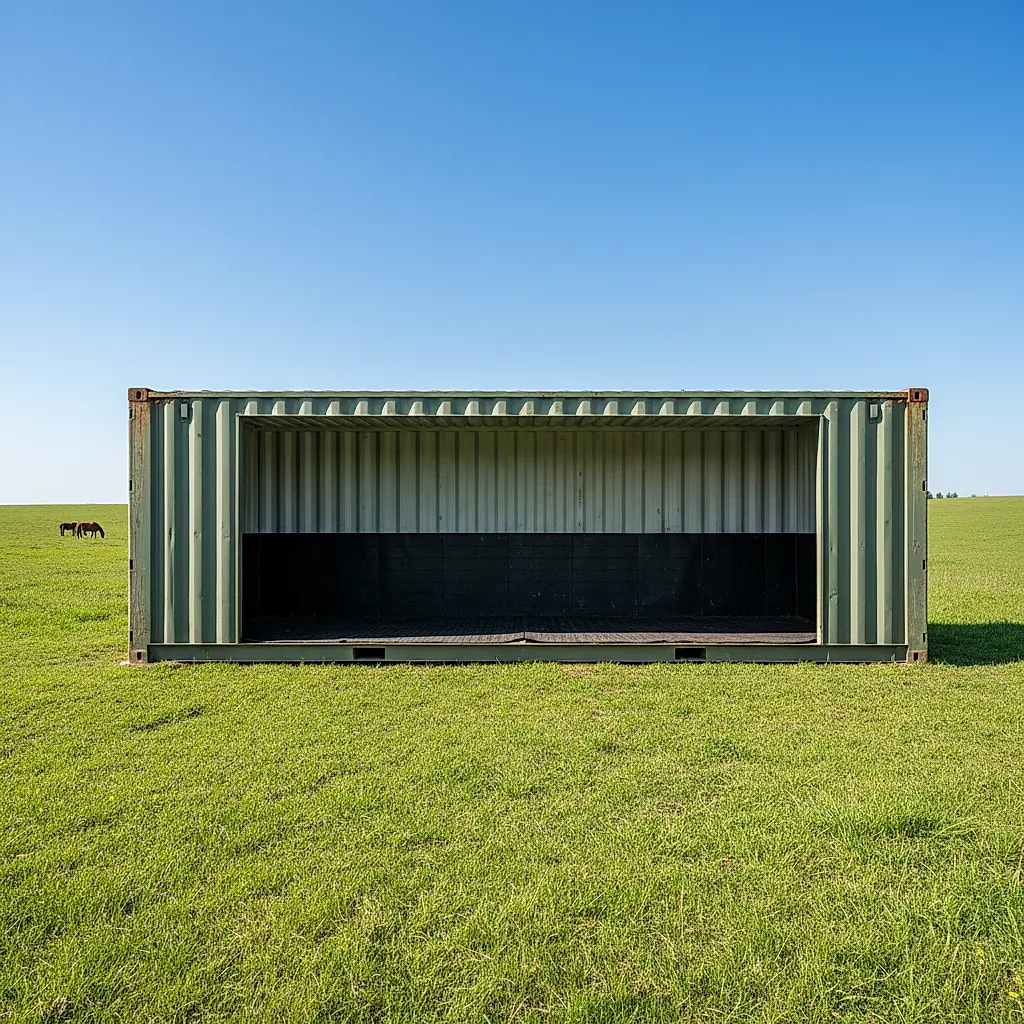
Convert a shipping container into a practical livestock shelter. Learn ventilation, insulation, layout, and site-planning considerations before you modify.
A shipping container can serve as a durable, secure shell for a livestock shelter, feed room, or equipment bay on a working farm. But the same qualities that make containers tough — sealed steel walls, limited openings, and a solid floor — also mean that turning one into a safe animal space takes planning. This guide walks through the practical decisions: ventilation, insulation, interior layout, floor protection, and site access. It focuses on what to think about rather than promising a single right answer, because the best setup depends on your animals, climate, and how you plan to use the building.
Why a Container Can Work as a Livestock Shelter
Containers are modular, stackable, and resistant to weather, pests, and rot. That makes them attractive for farm structures where you want a secure shell that can be locked, moved, or expanded later. They also arrive as a finished enclosure, so you are not starting from bare ground.
That said, a standard container is not an animal-ready building out of the box. Steel holds heat and cold, condensation can form on interior surfaces, and airflow is minimal when doors are closed. Any livestock use should begin with a clear plan for ventilation, moisture control, and safe interior surfaces.
Common Farm Uses
- Short-term shelter for animals during extreme weather or transport staging.
- Feed and supply storage kept separate from animal areas.
- Equipment and tool room with a lockable door.
- Isolation or recovery pen when biosecurity and separation matter.
- Utility or wash-down bay with drainage planned in advance.
Each use changes what modifications you need. A feed room may only need ventilation and shelving. An animal pen needs airflow, moisture management, and surfaces that can be cleaned.
Ventilation and Air Quality Come First
Air quality is the single most important design issue in any animal enclosure. Ammonia, dust, and moisture build up quickly in a sealed steel box. Without planned airflow, condensation and odor problems are likely.
Passive Ventilation Options
- High and low openings on opposite walls to encourage cross-flow.
- Ridge or roof vents to let warm, moist air escape upward.
- Gable or end-wall vents sized to the space and animal load.
- Adjustable louvers so you can close down in storms or cold snaps.
Active Ventilation Options
- Exhaust fans to pull stale air out and draw fresh air in.
- Circulation fans to keep air moving inside without creating drafts directly on animals.
- Thermostat or humidity controls to run fans only when needed.
Whatever you choose, openings must be protected against rain, birds, rodents, and predators. Insect and rodent screening is a common addition. Confirm any electrical work with a licensed electrician and check local codes before cutting into the structure.
A Simple Decision Checklist
- How many animals, and what size?
- How long will they be inside each day?
- What is the local climate — hot summers, cold winters, or both?
- Will the space be washed down?
- Can you rely on power for fans, or do you need passive-only ventilation?
Insulation, Condensation, and Climate Control
Steel is an excellent conductor, which is why an unmodified container can be uncomfortably hot in summer and cold in winter. Insulation helps moderate interior temperatures and reduces condensation on interior surfaces.
Insulation Choices to Discuss With a Contractor
- Rigid foam board installed between furring strips.
- Spray foam for a tight seal around framing and penetrations.
- Mineral wool or similar where fire performance is a concern.
- Reflective or radiant barriers as part of a layered wall system.
Moisture Management
- Avoid trapping moisture between insulation and steel.
- Plan a vapor strategy appropriate to your climate.
- Keep bedding dry and replace it regularly.
- Consider ventilation that removes moisture at the source rather than only moving air around.
Flooring Considerations
Container floors are typically wood or plywood over steel cross-members. In an animal space, that floor will see moisture, urine, and manure. Options include:
- Sealed or coated floors for easier cleaning.
- Rubber mats for comfort and slip resistance.
- Removable panels so you can replace sections over time.
- Drainage planning so wash water has somewhere to go.
Any coating or mat should be safe for the animals that will use the space. Ask suppliers for product documentation, and confirm with your veterinarian or extension service if you are unsure.
Layout, Access, and Safety
A container is a long, narrow box. How you divide it matters as much as what you add.
Interior Layout Ideas
- Center aisle with pens on one or both sides.
- End-to-end run for animals that need to move through.
- Separate feed and animal zones with a partition.
- Tack or supply nook near the entry.
Doors and Openings
- Keep the original cargo doors for large access, or replace with a framed personnel door and a separate animal opening.
- Add a second exit if the space will hold animals, so no one is trapped if a door jams.
- Use gates and latches that animals cannot open.
- Consider a covered vestibule to reduce drafts and rain entry.
Safety Details
- Eliminate sharp edges, exposed fasteners, and protruding hardware.
- Cover or guard electrical fixtures.
- Keep feed and water containers stable and easy to reach.
- Provide non-slip footing near waterers.
- Store chemicals, fuels, and medications away from animal areas.
Lighting
Natural light helps you work safely. LED fixtures are common in farm buildings, but any electrical work should be done by a qualified electrician and matched to the conditions in the space.
Site Planning and Delivery
Where the container sits affects how well it works and how easily it can be serviced.
Site Considerations
- Level, stable ground or a prepared pad.
- Drainage that moves water away from the container.
- Access for delivery equipment, including turning space and overhead clearance.
- Distance from property lines and any local setback rules.
- Wind exposure and prevailing weather direction.
- Proximity to water and power if you plan to run utilities.
Questions to Confirm Before Delivery
- What are the exact dimensions and weight of the unit you are considering?
- What equipment will the delivery team use, and what access do they need?
- Are there gates, trees, wires, or slopes that could affect placement?
- What surface preparation is required?
- Are permits or site approvals needed in your area?
Because requirements vary by location and by the specific unit, confirm these details with the Newport team and your local authority before you commit to a placement plan. Do not assume that a given size or modification avoids permitting or site-review requirements.
Modification Priorities by Use Case
Animal Shelter
- Ventilation first, then insulation.
- Durable, cleanable floors.
- Safe partitions and a second exit.
- Predator-resistant openings.
Feed or Supply Room
- Moisture control to protect feed.
- Secure locks and rodent screening.
- Shelving and a clear aisle.
- Separate ventilation from animal areas.
Equipment or Utility Bay
- Wide access and a level floor.
- Lighting and power for tools.
- Ventilation for fumes or dust.
- Lockable storage for valuables.
Isolation or Recovery Space
- Easy-to-clean surfaces.
- Independent airflow from other animals.
- Hand-wash and boot-change station nearby.
- Clear separation from the main herd.
Working With Contractors and Confirming Details
Modifications involve cutting, welding, framing, electrical, and sometimes plumbing. A few practical steps reduce risk:
- Get a written scope describing materials, dimensions, and finishes.
- Ask about weather sealing around every new opening.
- Confirm structural implications before cutting into load-bearing areas.
- Check that electrical work meets local code and is inspected if required.
- Request product documentation for insulation, coatings, and mats.
- Plan maintenance — what will you inspect, and how often?
Because container modifications are not one-size-fits-all, treat every specification as something to verify against the individual listing, the container's CSC plate where applicable, and the guidance of qualified tradespeople.
Frequently Asked Questions
Can any shipping container be used for livestock?
Not automatically. The unit should be structurally sound, dry, and free of residues from previous cargo that could be harmful to animals. Ventilation, insulation, and flooring need to be planned for the specific animals and climate. Confirm the condition and history of the individual unit with the Newport team before purchase.
Do I need ventilation if the doors stay open?
Open doors are not a substitute for designed airflow. Wind direction, temperature, and animal density all affect air quality, and doors may need to be closed in bad weather. A planned combination of high and low openings, plus fans where appropriate, gives you more control.
How do I keep the container from getting too hot or too cold?
Insulation and ventilation are the main tools. Shade, orientation, and roof treatment can also help. The right combination depends on your climate and how the space will be used. Discuss options with a contractor who understands both containers and farm buildings.
Will I need a permit or site approval?
Requirements vary widely by location and by how the structure will be used. Do not assume that a container shelter is exempt. Check with your local planning or zoning office, and confirm site and delivery details with the Newport team.
Can I add power and water later?
Often yes, but it is easier to plan for utilities before modifications are finished. Running conduit and planning penetration locations early can reduce rework. Any electrical or plumbing work should be done by qualified professionals and meet local code.
Next Steps
Start by defining how you want to use the space, how many animals it will hold, and what your climate demands. Then review available units and confirm dimensions, condition, and delivery logistics with the Newport team.
- Browse current inventory on the shop page.
- Discuss your project, site access, and modification questions on the contact page.
Confirm listing details, availability, pricing, site access, and delivery requirements directly with Newport Shipping Containers LLC before making decisions.
Plan the next step
Confirm the container and the delivery plan.
Browse current listings, then speak with the Newport team to verify the unit, total pricing, site access, and delivery requirements before payment.