
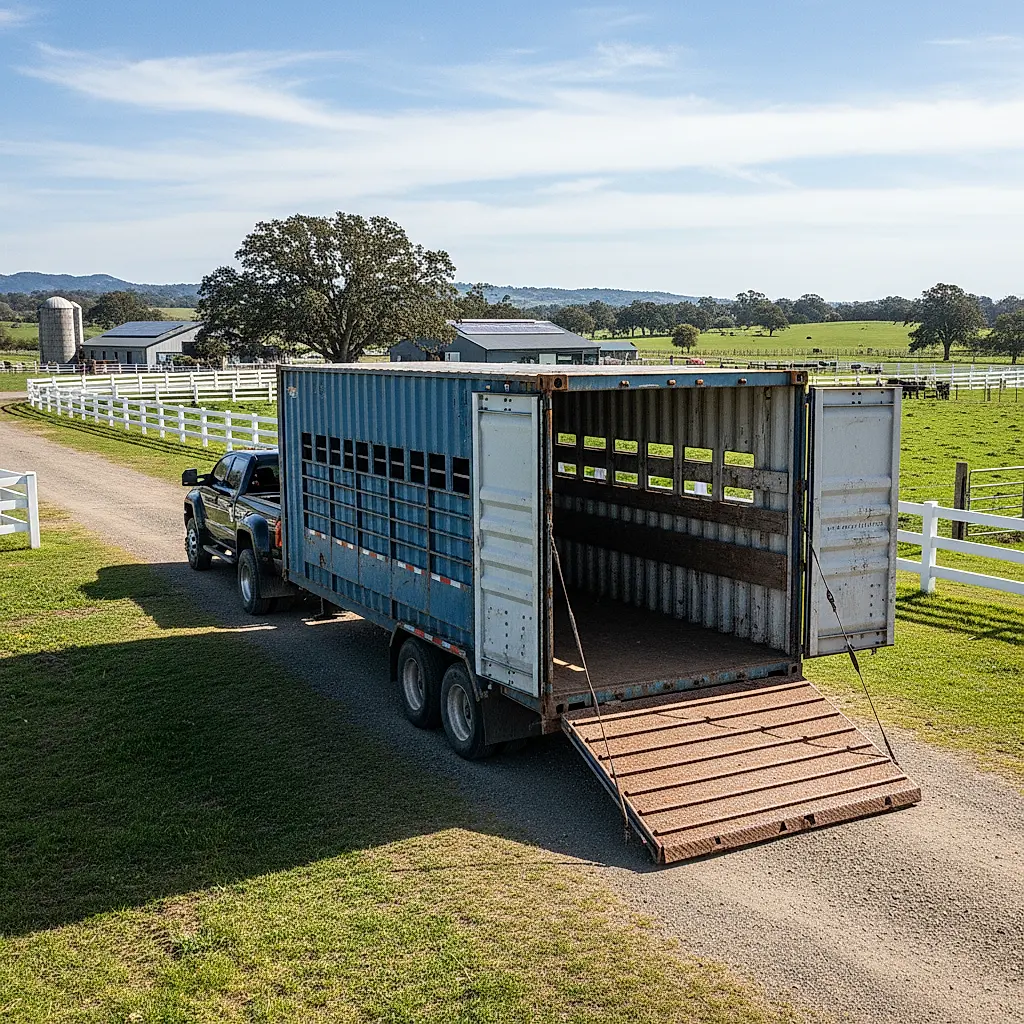
Thinking about converting a shipping container into a livestock trailer? This guide walks through the real cost drivers, structural questions, and planning steps so you can budget with confidence.
Converting a shipping container into a livestock trailer is a serious fabrication project, not a simple purchase. The final cost depends on dozens of variables—from the container itself to the chassis, axles, ventilation, flooring, and the labor to tie it all together. This guide breaks down the major cost categories, explains where uncertainty lives, and helps you ask the right questions before you commit.
Why Container-Based Livestock Trailers Are a Custom Build
A standard shipping container is engineered to stack and travel on ships, trains, and trucks. It is not engineered to be a road-legal trailer. Turning one into a livestock trailer means adding a chassis, running gear, lighting, brakes, and a ventilation and flooring system suitable for animals. That is a one-off fabrication project, and the cost reflects that.
What You Are Actually Buying
When you see a price quoted for a "container livestock trailer," it may cover only part of the project. Ask any builder or fabricator to itemize:
- The container itself (condition, size, and whether it is wind and water tight)
- The trailer chassis and running gear
- Axles, suspension, brakes, and tires
- Coupler, safety chains, and breakaway system
- Ventilation openings and covers
- Interior flooring, kick panels, and dividers
- Lighting and wiring
- Any paint, corrosion protection, or finishing
- Labor for cutting, welding, and fitting
If a quote does not list these separately, you cannot compare it to another quote.
Why No Single Number Exists
There is no universal price for a container livestock trailer. Two builds using the same container size can differ dramatically based on:
- Whether the chassis is new or used
- Whether the container is a standard height or high cube
- How much ventilation and how many access doors are required
- Whether the interior needs removable dividers or a specific floor surface
- Local labor rates and fabrication shop availability
- Whether the trailer must meet specific state registration or inspection requirements
Treat any single figure you see online as a starting point for a conversation, not a final budget.
The Main Cost Drivers to Budget For
The Container: Condition and Size
Containers are commonly available in nominal lengths such as 20 feet and 40 feet, with standard and high-cube heights. A 20-foot container is often considered for a smaller trailer because it is lighter and easier to maneuver, while a 40-foot container offers more floor space but demands a much heavier chassis and tow vehicle.
Condition matters. A used container that is wind and water tight but cosmetically worn will cost less than a newer or one-trip container. For a livestock trailer, structural integrity and a sound roof and floor are more important than appearance. Inspect the CSC plate and the container's condition report, and confirm exact dimensions and weight with the seller.
The Chassis and Running Gear
The chassis is often the largest single cost after the container. It must be rated for the combined weight of the container, the interior build-out, and the animals. That means:
- Axles rated for the load, often in a tandem or triple configuration
- Suspension suited to the road conditions you expect
- Brakes on the appropriate axles
- Tires and wheels matched to the load and speed rating
- A coupler and hitch system matched to your tow vehicle
Because payload and gross weight depend on the specific chassis and axles chosen, confirm all weight ratings with the fabricator and your state licensing authority. Do not assume a container's nominal size tells you what it can legally carry.
Ventilation and Animal Comfort
Livestock need airflow. A sealed steel box is not suitable for animals without significant modification. Ventilation can be added through:
- Cut openings with louvers or adjustable covers
- Roof vents
- Removable side panels
- Powered fans in some designs
The more openings and the more complex the covers, the higher the fabrication cost. Also consider shade, insulation, and how you will manage heat in summer and cold in winter. These are design decisions that affect both cost and animal welfare.
Flooring, Dividers, and Interior Fit-Out
Steel container floors are not ideal for hooves. Many builds add a wooden or rubberized floor overlay, plus kick panels and internal dividers. Removable dividers add flexibility but also cost and weight. Discuss with your fabricator what species and how many animals you plan to haul, and let that drive the interior design rather than guessing.
Labor, Location, and Logistics
Fabrication labor varies widely by region. A shop with container conversion experience may charge more per hour but waste less material and time. You will also pay for moving the container to the shop and delivering the finished trailer. Confirm site access, delivery requirements, and any permits with the Newport team and your local authorities before assuming a delivery method.
How to Compare Quotes Without Getting Misled
Ask for a Line-Item Breakdown
A quote that says only "container livestock trailer: $X" is not useful. Ask for a breakdown by major component and labor. This lets you see where the money goes and where you might adjust scope.
Separate the Container From the Conversion
If you already own a container, you may be able to supply it to the fabricator. If you are buying one, confirm its condition, size, and exact specifications. Mixing these two costs in one number makes comparison difficult.
Clarify What Is Not Included
Common exclusions include:
- State registration, titling, and inspection fees
- Insurance
- Delivery beyond a certain distance
- Any custom paint or branding
- Spare tire and mounting
- Tie-downs or loading ramps
Knowing the exclusions prevents surprise costs later.
Check Compliance Early
Trailer lighting, brakes, and dimensions must meet the requirements of the states where you will operate. Requirements vary. Contact your state department of transportation or motor vehicle agency to confirm what applies to your build. Do not rely on a forum post or a generic checklist.
Alternatives and Trade-Offs to Consider
Buying a Used Livestock Trailer Instead
A conventional used livestock trailer may cost less upfront and is already road-legal. The trade-off is that it may not offer the security, durability, or customization of a container build. If your priority is lowest initial cost, a used trailer is worth pricing before you commit to a conversion.
Renting or Hiring Hauling
For occasional hauling, hiring a hauler or renting a trailer may be more economical than building a specialized unit. Run the numbers based on how often you actually move animals.
A Smaller or Simpler Build
If budget is tight, consider a smaller container or a simpler ventilation and interior layout. Reducing custom fabrication is usually the fastest way to control cost. Just do not compromise on brakes, axles, or ventilation—those are safety and welfare items.
Frequently Asked Questions
How much does a shipping container livestock trailer cost?
There is no single price. The total depends on the container, chassis, running gear, ventilation, flooring, and labor. The best approach is to request itemized quotes from fabricators and compare the same scope. Confirm current pricing and availability with the Newport team for the container portion of your project.
Can I convert a container myself?
Some owners do part of the work, but the chassis, brakes, and structural modifications require welding and engineering judgment. If you are not experienced with trailer fabrication, work with a qualified shop. You are responsible for making sure the finished trailer is safe and legal to tow.
What size container is best for a livestock trailer?
It depends on how many animals you haul, your tow vehicle, and your route. A 20-foot container is often chosen for smaller setups, while a 40-foot container offers more space but needs a heavier chassis. Confirm exact dimensions and weights with the seller and your fabricator.
Do I need special permits or a different license?
Possibly. Trailer registration, weight limits, and licensing rules vary by state. Contact your state motor vehicle agency and, if applicable, your local government to confirm requirements before you build.
How long does a conversion take?
Timelines vary with shop workload, material availability, and design complexity. Ask your fabricator for a realistic schedule and build in buffer time. Do not plan around a promised date that has no contingency.
Next Steps for Your Project
Start by defining your actual hauling needs: how many animals, how far, how often, and in what conditions. Then get itemized quotes for the container and the conversion separately. If you need a container for your build, browse current listings at our shop and confirm condition, dimensions, and availability. For site access, delivery questions, or to discuss your project, contact the Newport team. We will help you confirm listing details and next steps without guesswork.
Plan the next step
Confirm the container and the delivery plan.
Browse current listings, then speak with the Newport team to verify the unit, total pricing, site access, and delivery requirements before payment.