
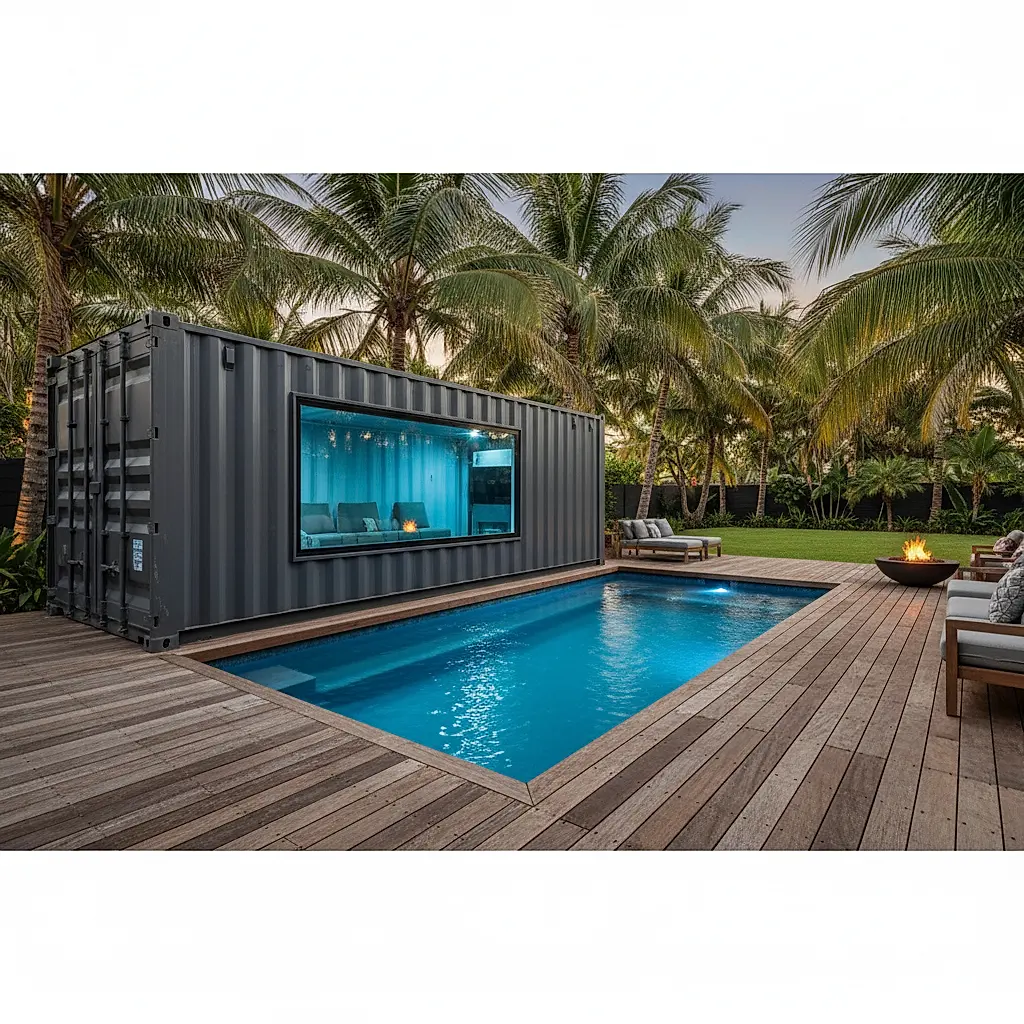
Planning a container pool? Learn the real cost drivers, site prep questions, and how to compare quotes without relying on unverified price lists.
A shipping container pool can be a striking, durable centerpiece for a backyard or commercial property. But the phrase "shipping container pool cost" hides a wide range of possible numbers, because the final price depends on the container you start with, how it is modified, how it is delivered, and what local rules apply. This guide walks through the decisions that shape your budget so you can ask better questions and compare quotes fairly.
What Actually Drives the Cost of a Container Pool
A container pool is not a single product with one price. It is a small construction project. Two buyers can start with the same nominal container size and end up with very different totals. The main cost buckets are the container itself, the conversion work, the pool systems, delivery and placement, and site preparation.
The container: condition, size, and height
Containers are commonly described by nominal length, such as 20-foot or 40-foot, and by width and height. Standard and high-cube heights exist, and the difference matters for both interior depth and how the unit sits in your space. Exact dimensions, corner casting details, and structural condition should be confirmed on the individual listing and the container's CSC plate.
Condition is a major variable. A one-trip or newer container generally costs more than a used, wind-and-water-tight unit. For a pool, the container is going to be cut, lined, and finished, so some buyers prioritize a straight, rust-managed shell over cosmetic appearance. Others want the newest shell available. Neither choice is automatically right; it depends on your finish plan and budget.
Conversion and fabrication
Cutting a container for a pool is skilled work. The walls and floor are structural, and removing material changes how the box carries loads. A fabricator will typically plan reinforcement, openings for steps or a skimmer, and a method for supporting the pool shell. The scope you choose drives cost:
- Full custom fabrication with reinforced openings and integrated steps
- A simpler plunge-pool layout with minimal cutting
- A prefabricated insert or liner system versus a sprayed or tiled finish
- Interior finishes ranging from basic to high-end
- Exterior finishes, paint, cladding, or decking
Ask each fabricator to list what is included and excluded. "Conversion" can mean anything from a rough cut shell to a finished, swimmable pool.
Pool equipment and systems
Filtration, circulation, heating, lighting, and water treatment are separate line items. A small plunge pool needs less equipment than a large one, but the equipment still has to be sized correctly. Salt systems, cartridge filters, and heat pumps are common topics, but the right choice depends on your climate, usage, and maintenance preferences. Confirm equipment specifics with the pool professional handling your build.
Delivery, placement, and site access
A container is heavy and awkward to move. Delivery cost depends on distance, the equipment needed to unload, and how far the container must travel from the truck to its final resting place. Site access is the make-or-break factor. Narrow gates, overhead wires, soft ground, slopes, and tight turns can all change the plan. Do not assume a standard delivery truck can place the container exactly where you want it. Walk the route with the delivery team and confirm requirements before you buy.
Site preparation and utilities
Excavation, leveling, a concrete pad or engineered foundation, drainage, electrical runs, and water supply are often underestimated. A container pool may sit above ground, partially buried, or fully in-ground. Each approach changes the structural and waterproofing requirements. Local codes, permits, setback rules, and inspection requirements vary by jurisdiction. Contact your local building authority early, and confirm requirements with the Newport team where relevant.
Why You Will Not Find One Firm "2026 Price"
Search results often promise instant pricing for ready-to-ship kits. That framing can be misleading. A kit price may cover only part of the project, or it may assume site conditions that do not match yours. Rather than publish a number that will not apply to most buyers, it is more useful to understand the variables and get itemized quotes.
Questions that reveal the real number
When you request a quote, ask:
- What exactly is included in the base price?
- Is the container new, one-trip, or used?
- What reinforcement is planned for any cut openings?
- Who handles waterproofing, and what warranty applies to that work?
- What pool equipment is included, and who installs it?
- Is delivery to the final placement point included, or curbside only?
- What site conditions are assumed, and what triggers extra charges?
- Who pulls permits, and what inspections are required?
A quote that answers these questions is far more useful than a headline number.
Budget ranges versus firm quotes
You may see broad ranges online, but treat them as planning aids only. Material costs, labor rates, local demand, and equipment choices shift over time and by region. For current availability, pricing, and lead times, confirm details with the Newport team rather than relying on a generic figure.
Planning Your Project: A Step-by-Step Approach
A container pool rewards careful sequencing. Skipping steps tends to add cost later.
1. Define how you will use it
A cool plunge pool for hot afternoons is a different project from a large pool for swimming laps or entertaining. Use case drives size, depth, equipment, and finish level.
2. Check your site honestly
Measure gates, fences, and the path from the street. Note slopes, trees, utility lines, and drainage. Photograph the route. Share those photos with your delivery and fabrication contacts.
3. Talk to your local authority
Ask about permits, setbacks, fencing, electrical bonding, and any rules about pools. Requirements differ widely, so do not rely on general advice from another state or county.
4. Get itemized quotes
Compare quotes line by line, not just by total. A lower total with vague exclusions can become the more expensive project.
5. Confirm the container listing details
Review the specific listing for nominal size, height, condition, and any notes. Verify exact specifications against the CSC plate and the listing before purchase.
6. Plan delivery day
Confirm the delivery window, equipment, and placement plan. Clear the route and protect surfaces. Make sure someone with authority is on site to direct placement.
Common Mistakes That Raise the Final Cost
- Buying a container before confirming site access
- Assuming a kit includes installation, plumbing, and electrical
- Underestimating foundation, drainage, or retaining work
- Choosing a finish before understanding maintenance needs
- Skipping the permit conversation until after fabrication
- Comparing totals without comparing scope
Each of these can add change orders, delays, or rework. A little planning upfront is usually cheaper than correcting a placement problem later.
Above Ground, Partially Buried, or In-Ground?
The installation style affects cost, structural design, and waterproofing.
Above ground
Simplest to place and service, and often the least invasive to the site. It may require screening, decking, or landscaping to look finished. Structural support and access for equipment still matter.
Partially buried
A popular middle ground that can reduce the visual height while keeping some equipment accessible. It introduces soil pressure and drainage considerations that must be engineered.
Fully in-ground
The most construction-intensive option. Excavation, shoring, waterproofing, and foundation work all come into play. This approach typically requires the most coordination with local authorities and experienced contractors.
Maintenance and Long-Term Ownership
A container pool is still a pool. Budget for routine water testing, cleaning, filter maintenance, and equipment service. Inspect the container shell and coatings periodically for rust or coating failure, especially around cut openings and fittings. Address small issues before they become structural or waterproofing problems. Long-term cost depends heavily on how well the pool is maintained and how well the original fabrication was done.
Frequently Asked Questions
How much does a shipping container pool cost in 2026?
There is no single verified price. Cost depends on container size and condition, conversion scope, pool equipment, delivery, site access, and local requirements. Ask for an itemized quote based on your specific site and finish choices, and confirm current pricing with the Newport team.
Is a 20-foot or 40-foot container better for a pool?
It depends on how you plan to use the pool and how much space you have. A 20-foot container is often considered for plunge pools, while a 40-foot container offers more length. Do not assume a size fits a particular use without checking dimensions and your site plan. Review the individual listing for exact specifications.
Can I install a container pool myself?
Some owners handle site work or finishing, but cutting and reinforcing a container and installing pool systems are specialized tasks. Structural changes, waterproofing, electrical bonding, and plumbing typically require qualified professionals. Confirm what your local authority requires before starting.
Do I need a permit for a container pool?
Permit rules vary by location and by how the pool is installed. Contact your local building department to learn what applies to your project. Do not rely on another area's rules or on general online advice.
What should I confirm before buying a container for a pool?
Confirm the listing details, nominal size and height, condition, and the CSC plate information. Also confirm delivery requirements, site access, and placement with the Newport team. If you are unsure whether a container suits a pool conversion, ask before you buy.
Next Steps
Start by clarifying your use case, site access, and local requirements. Then compare itemized quotes and confirm container details. When you are ready to look at available units, browse our current inventory at our shop. For questions about availability, specifications, site access, or delivery requirements, reach out to the Newport team through our contact page. We are glad to help you plan the next step with accurate information rather than guesswork.
Plan the next step
Confirm the container and the delivery plan.
Browse current listings, then speak with the Newport team to verify the unit, total pricing, site access, and delivery requirements before payment.