
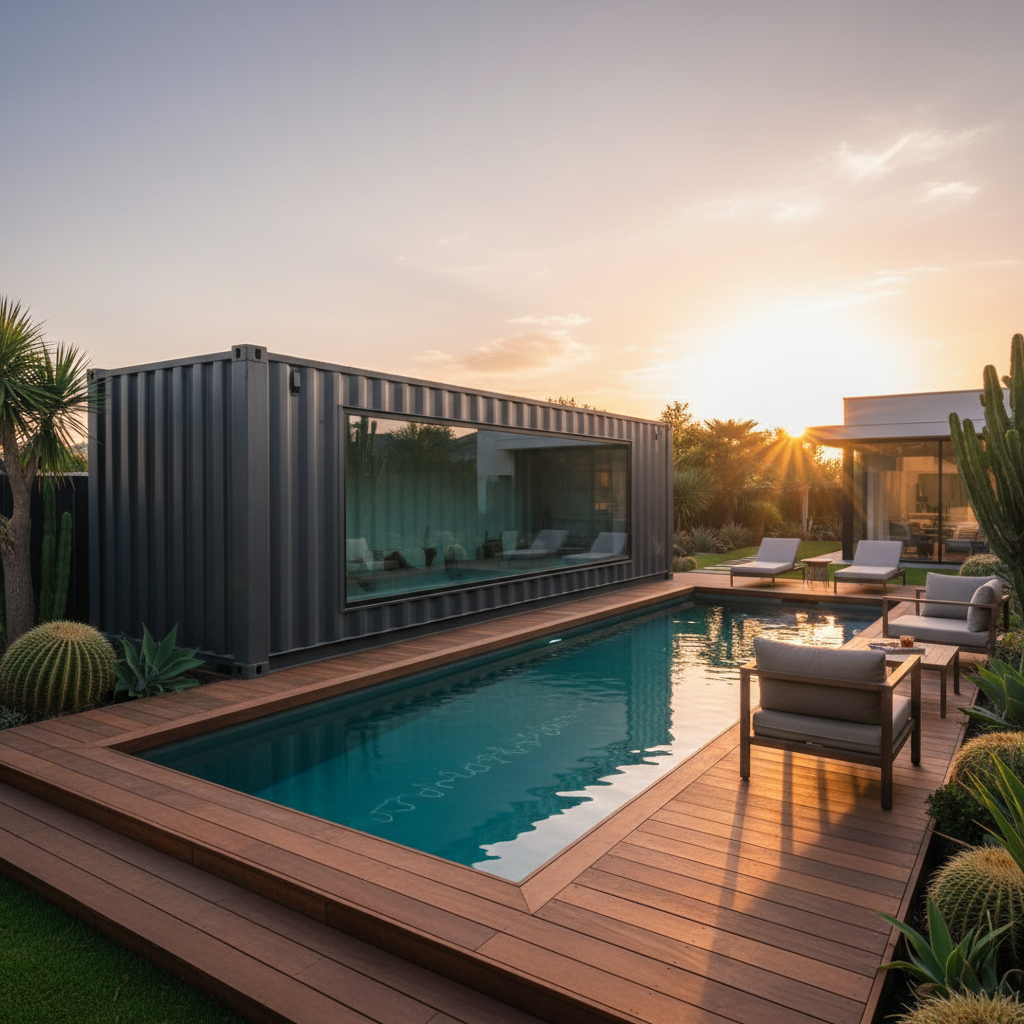
Compare shipping container pools and inground pools on cost drivers, site work, maintenance, and timeline. Learn what to confirm before you commit.
Why Buyers Compare Container Pools and Inground Pools
A backyard pool is a major purchase, and the two paths buyers ask about most are a shipping container pool and a traditional inground pool. They are not the same product, and they do not carry the same cost structure. One is built from a repurposed steel container that is modified for water; the other is typically a concrete or gunite shell built on site.
This guide explains the cost drivers behind each option, where uncertainty lives, and what to confirm before you sign anything. It does not quote prices, because real numbers depend on your site, your local market, and the specific build. Treat every figure you see online, including 2026 estimates, as a starting point for a conversation, not a quote.
How Container Pool Costs Are Built
A container pool starts with a steel container. That container is then cut, reinforced, coated, and plumbed. The final cost reflects the amount of fabrication, the finish level, and how easily the unit can be placed on your property.
The container itself
Containers come in nominal lengths such as 20 feet and 40 feet, with standard and high-cube heights. Exact internal and external dimensions vary by unit and should be confirmed on the individual listing and the CSC plate. A container that is structurally sound and dry is a better starting point than a cheap one with hidden corrosion.
Fabrication and waterproofing
Cutting a container for a pool means removing structural steel and replacing that strength. Expect interior coatings, edge treatment, and plumbing penetrations. The quality of the coating system matters more than the marketing name on it. Ask how the interior will be protected and how seams and welds will be sealed.
Equipment and finishes
Pumps, filters, heaters, lighting, steps, and decking are separate line items. A bare-bones build and a finished build with a heater and custom deck can differ substantially. Decide early which items are must-haves.
Site work and placement
Delivery, crane or forklift time, and site access are common budget surprises. Narrow gates, overhead wires, soft ground, and slopes can change the plan. Confirm access and delivery requirements with the Newport team before assuming a container can be placed where you want it.
How Inground Pool Costs Are Built
An inground pool is a construction project. The shell is only part of the total. Excavation, steel, plumbing, electrical, finishes, and decking all add up, and local conditions can move the number significantly.
Excavation and soil
Rock, high water tables, and tight access can increase excavation cost. A soil report or a site visit helps reduce guesswork.
Shell and interior finish
Concrete, gunite, or vinyl-liner shells each have different labor and material profiles. Plaster, tile, and pebble finishes vary widely in price and lifespan.
Equipment, decking, and fencing
Pumps, filters, heaters, sanitizers, lighting, and automation are separate decisions. Decking square footage and fencing requirements can rival the pool cost itself.
Permits and inspections
Inground pools almost always involve permits and inspections, and requirements differ by jurisdiction. Confirm local rules with your authority having jurisdiction. Do not assume one option needs fewer permits than the other; that depends on where you live and what you are building.
Side-by-Side Comparison of Cost Drivers
| Cost driver | Container pool | Inground pool |
|---|---|---|
| Core structure | Modified steel container | Concrete, gunite, or liner shell |
| Site work | Placement and access dependent | Excavation and soil dependent |
| Finish options | Coatings, liners, decking | Plaster, tile, pebble, liner |
| Equipment | Pump, filter, heater, lighting | Pump, filter, heater, sanitizer, automation |
| Timeline | Often shorter, fabrication dependent | Often longer, weather and trade dependent |
| Permits | Local rules apply | Local rules apply |
| Maintenance | Surface and steel care | Surface and water chemistry care |
Neither column is automatically cheaper. A simple container pool on an easy site can beat a complex inground build. A high-end container pool with extensive decking can approach or exceed a modest inground project. The only reliable comparison is a written scope for your specific site.
Maintenance and Long-Term Ownership
Ongoing cost is where the two options diverge in ways buyers often overlook.
- Water chemistry: Both need balanced water. Container pools have less surface area to finish but steel walls still need protection.
- Interior surfaces: Inground finishes are replaced on a schedule. Container interiors depend on the coating or liner system used.
- Structure: Steel can corrode if coatings fail. Concrete can crack. Both need inspection.
- Equipment life: Pumps, filters, and heaters have similar service lives regardless of pool type.
- Winterization: Climate matters. Ask what winterizing looks like for your build.
Ask any builder for a maintenance schedule in writing. If they cannot provide one, that is a signal to slow down.
Site Planning Questions to Answer First
Before comparing quotes, answer these questions. They will shape both options.
- Where will the pool go, and what is the access path?
- What is the ground like, and has anyone inspected it?
- Are there overhead wires, trees, or easements in the way?
- What local permits and setbacks apply?
- How will power and water reach the equipment?
- What decking and fencing do you want?
- What is your realistic budget range, including contingency?
If you are considering a container, review the individual listing and confirm dimensions, condition, and delivery requirements with the Newport team. If you are considering an inground build, get a site-specific plan from a local builder.
Common Mistakes That Raise Cost
- Choosing a container before confirming site access.
- Skipping a soil or site assessment.
- Underestimating decking, fencing, and landscaping.
- Assuming a low purchase price equals a low total project cost.
- Forgetting permits, inspections, and utility connections.
- Comparing a bare container price to a fully finished inground quote.
A fair comparison uses the same scope on both sides. Write down what is included and what is not.
Frequently Asked Questions
Is a shipping container pool cheaper than an inground pool?
It can be, but not always. A simple container pool on an easy site may cost less than a complex inground build. A highly finished container pool with extensive decking can cost as much as a modest inground project. The only meaningful answer comes from a written scope and site-specific quotes.
How long does each option take to install?
Timelines vary with fabrication, site work, weather, and local trades. Container pools are often faster to place, but fabrication and finish work still take time. Inground pools typically involve excavation, shell construction, and curing before finishes. Ask each provider for a schedule with dependencies listed.
Do I need a permit for a container pool?
Permit rules depend on your jurisdiction, the pool's use, and local codes. Do not assume one option requires fewer permits than the other. Contact your local building department or authority having jurisdiction and confirm requirements before you buy.
Can I install a container pool myself?
Some owners handle site prep and finishing, but structural modification, waterproofing, and electrical work are not typical DIY tasks. Electrical connections should be done by a licensed professional. Confirm what your local codes require and what the seller's scope covers.
What should I confirm before ordering a container?
Confirm the individual listing details, dimensions, condition, CSC plate information, availability, pricing, site access, and delivery requirements with the Newport team. Those details determine whether a container is the right starting point for your project.
Next Steps
Start by defining your scope, not by picking a price. List what you want, what your site allows, and what your local rules require. Then compare like-for-like quotes.
If a container pool is on your shortlist, browse current options at our shop and review the details on each listing. When you are ready to talk through dimensions, condition, and delivery, reach out through our contact page. The Newport team can help you confirm listing details, availability, pricing, site access, and delivery requirements so you can plan with fewer surprises.
Plan the next step
Confirm the container and the delivery plan.
Browse current listings, then speak with the Newport team to verify the unit, total pricing, site access, and delivery requirements before payment.