
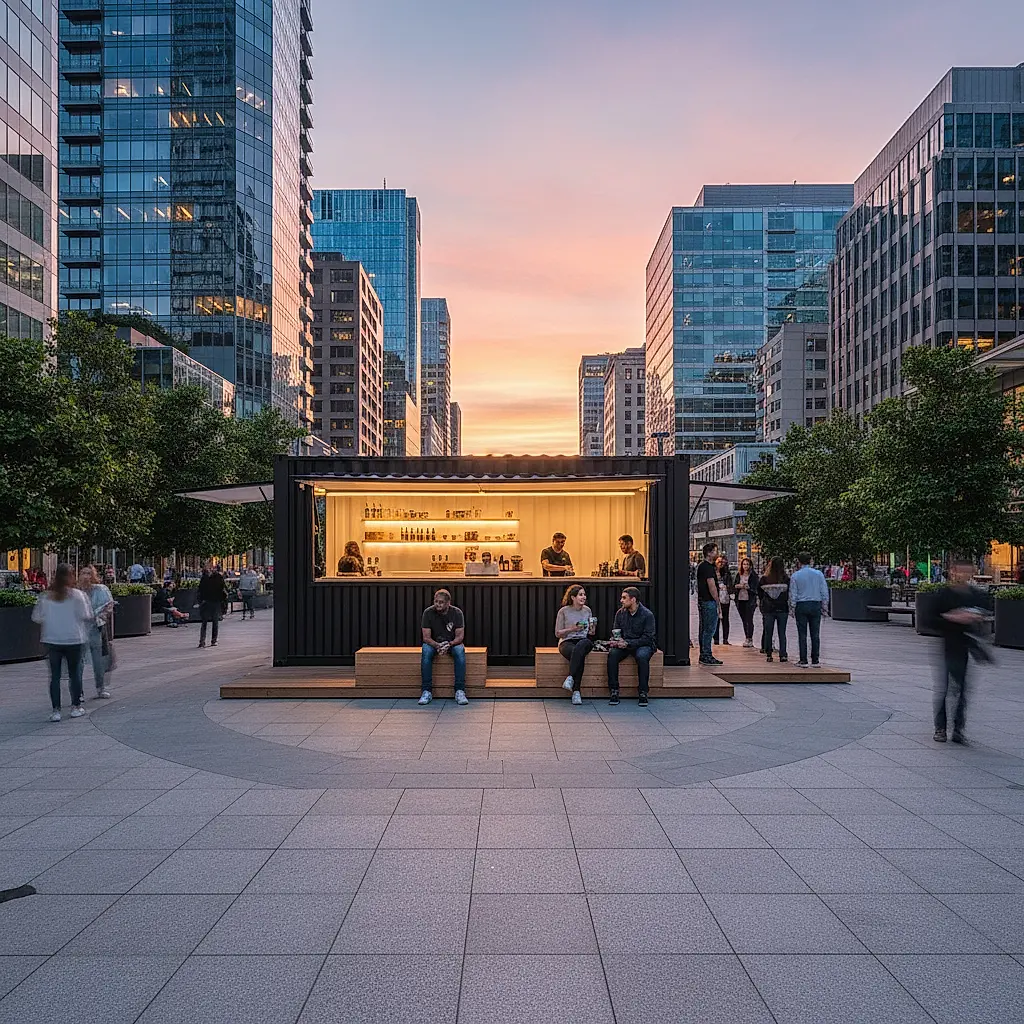
Thinking about a container pop-up shop? Learn how to plan a retail kiosk, compare rent vs. buy, and prepare your site before you commit.
A shipping container pop-up shop can give your retail idea a distinctive, lockable home without the cost and permanence of a traditional storefront build-out. But a container is not a plug-and-play retail space out of the box. The gap between a used container and a customer-ready kiosk is where most of the important decisions live.
This guide walks through the practical questions: what you actually need inside and out, how to think about renting versus buying, what site and delivery conversations to have early, and how to avoid surprises. Because container condition, modifications, and local rules vary widely, treat every detail here as a starting point for a conversation with the Newport team and your local officials, not as a final specification.
What a Container Pop-Up Shop Really Involves
A pop-up shop in a container is usually a standard steel container that has been modified for retail use. Some are simple: a clean box with a service window, lighting, and a lockable door. Others are more finished, with insulation, interior wall coverings, flooring, counters, and climate control.
The right level of finish depends on your climate, your merchandise, how long you plan to operate, and whether you need power and water. A seasonal outdoor market stall has very different needs than a year-round boutique in a parking lot.
Common configurations
- Service-window kiosk: A container with a cut-out window and counter for walk-up sales. Good for tickets, coffee, merchandise pickup, or event vending.
- Walk-in retail unit: A container with a personnel door, lighting, shelving, and a small checkout area. Better for browsing and longer visits.
- Hybrid unit: A walk-in interior plus an exterior service window, useful for peak periods.
What drives cost and complexity
- Condition of the base container. A newer, one-trip container is generally cleaner and straighter than a heavily used unit. Confirm the actual unit's condition in its listing and, where possible, its CSC plate.
- Modifications. Cutting a service window, adding a door, insulating, wiring, and finishing interior surfaces all add work and cost.
- Utilities. Power, lighting, heating, cooling, and any water service need to be planned with a qualified electrician or contractor.
- Mobility. If the unit will move between events, that affects weight, anchoring, and how it is transported.
Rent or Buy: How to Frame the Decision
Renting and buying solve different problems. Neither is automatically better.
When renting tends to make sense
- You need the unit for a short, defined period, such as a season or a single event series.
- You want to test a location or concept before committing capital.
- You do not want to manage storage, maintenance, or resale.
- Your site access or permit situation is still uncertain.
When buying tends to make sense
- You expect to use the unit for multiple seasons or locations.
- You want to customize the interior and exterior to your brand.
- You have a place to store and maintain it between uses.
- You are comfortable handling transport, setup, and eventual resale or repurposing.
Questions to ask either way
- What exactly is included: the container only, or modifications, delivery, setup, and removal?
- Who handles permits, site preparation, and utility connections?
- What condition is the unit in, and what is excluded from any warranty or guarantee?
- What are the terms for extending, returning, or purchasing the unit?
- Who is responsible if the unit is damaged, vandalized, or needs repair?
Availability, rental terms, and pricing change over time. Confirm current options, listing details, and any rental or purchase terms directly with the Newport team.
Site Planning and Delivery: What to Sort Out Early
Most pop-up shop problems trace back to site access, ground conditions, or local rules that were not checked early. Work through these before you finalize a unit or a location.
Access and placement
- Approach route. Consider the width of streets, gates, and turns, plus overhead obstacles such as wires, tree limbs, and awnings. A delivery truck and trailer need room to maneuver.
- Placement surface. Containers are heavy. A level, stable, well-draining surface matters. Gravel, asphalt, and concrete behave differently, and soft ground after rain can be a problem.
- Support. Many installations use timber or concrete supports at the corners rather than resting the floor directly on the ground. Discuss the right approach for your surface with the delivery team.
- Working space. Leave room to open doors, install steps or a ramp, and service the unit.
Utilities and comfort
- Power. Determine whether you need a temporary service, a generator, or a connection to an existing panel. Have a licensed electrician assess the load for lighting, point-of-sale equipment, and any HVAC.
- Climate. Steel conducts heat and cold. Insulation and climate control are usually necessary for comfortable year-round operation, and they affect power needs.
- Water and waste. If you plan to serve food or drinks, plumbing and local health rules come into play. Check requirements with the appropriate local authority.
Permits, zoning, and business rules
Requirements vary by jurisdiction, use, and duration. A temporary retail use in one place may be treated very differently in another. Do not assume that a container is exempt because it is movable or temporary. Ask your local planning or zoning office about:
- Whether a temporary or conditional use permit is needed
- Setbacks, parking, and signage rules
- Fire safety and egress requirements for occupied structures
- Health department rules if you handle food or beverages
- Any homeowners association or landlord approvals
Get answers in writing where you can, and keep them with your project file.
Designing the Interior for Real Retail Use
A container interior is a narrow, linear space. Good design works with that shape instead of fighting it.
Layout basics
- Flow. Decide whether customers walk in and turn, or move straight through. Keep the entry clear.
- Counter placement. A checkout near the door reduces congestion and lets staff watch the entrance.
- Storage. Use vertical space for shelving and overhead cabinets. Plan for backstock, bags, and cleaning supplies.
- Lighting. Layered lighting, including task lighting at the counter and general lighting overhead, usually reads better than a single bright fixture.
Materials and finishes
- Choose durable, easy-to-clean surfaces for floors and counters.
- Consider moisture and condensation management, especially in humid climates.
- Plan ventilation for any heat-generating equipment.
- Think about security: locks, door hardware, window shutters, and, if needed, an alarm or camera system.
Branding and visibility
- Exterior color, signage, and lighting do a lot of the marketing work.
- A service window or glass door helps passersby understand what you sell.
- Check local sign rules before ordering signage.
Practical Checklist Before You Commit
Use this as a conversation starter with the Newport team and your contractors.
- Define your use: what you sell, how long you will operate, and your peak hours.
- Confirm the exact unit in the listing, including condition and any included modifications.
- Decide rent versus buy based on duration, customization, and storage.
- Verify site access, surface, and placement with the delivery team.
- Get utility and climate-control requirements estimated by a licensed professional.
- Check zoning, permits, fire, and health rules with local authorities.
- Plan security, insurance, and who handles maintenance.
- Set a realistic timeline that includes permitting and site prep, not just delivery.
- Confirm pricing, availability, delivery scope, and site requirements with Newport before relying on any figure.
Frequently Asked Questions
How long does it take to get a pop-up shop container ready?
It depends on the unit, the modifications, permitting, and site preparation. A simple service-window kiosk using an available container may move faster than a fully finished walk-in retail space, but timelines vary with workload and local approvals. Ask the Newport team for a realistic schedule based on your specific project, and build in buffer for permits and utilities.
Can I run a container pop-up shop without a permit?
Do not assume that. Rules depend on your location, the use, and how long the unit stays. Some jurisdictions treat temporary retail differently from permanent structures, and others apply similar requirements. Contact your local planning, zoning, and fire officials, and check health department rules if you serve food or drinks.
What size container works best for a pop-up shop?
Standard containers come in nominal lengths of about 20 feet and 40 feet, with widths around 8 feet and heights that are either standard or high-cube. The right choice depends on your layout, merchandise, and site. Review the individual listing for exact dimensions and confirm them with the Newport team before you plan your interior.
Do I need insulation and air conditioning?
Steel containers transfer heat and cold, so insulation and climate control are common for comfortable year-round use. Whether you need both depends on your climate, season, merchandise, and how often you operate. Have a qualified contractor assess your needs and the electrical capacity required.
Who handles delivery and setup?
Delivery scope varies by listing and location. Before you commit, confirm what is included, what site access is required, and who is responsible for placement, leveling, and utility connections. Share photos and measurements of your site with the Newport team so they can flag potential issues early.
Next Steps
Start by writing down your use case, timeline, and site details. Then browse current options at our shop to see what is available, and reach out through our contact page to confirm listing details, availability, pricing, delivery requirements, and site access with the Newport team. A short conversation early can save a lot of rework later.
Plan the next step
Confirm the container and the delivery plan.
Browse current listings, then speak with the Newport team to verify the unit, total pricing, site access, and delivery requirements before payment.