
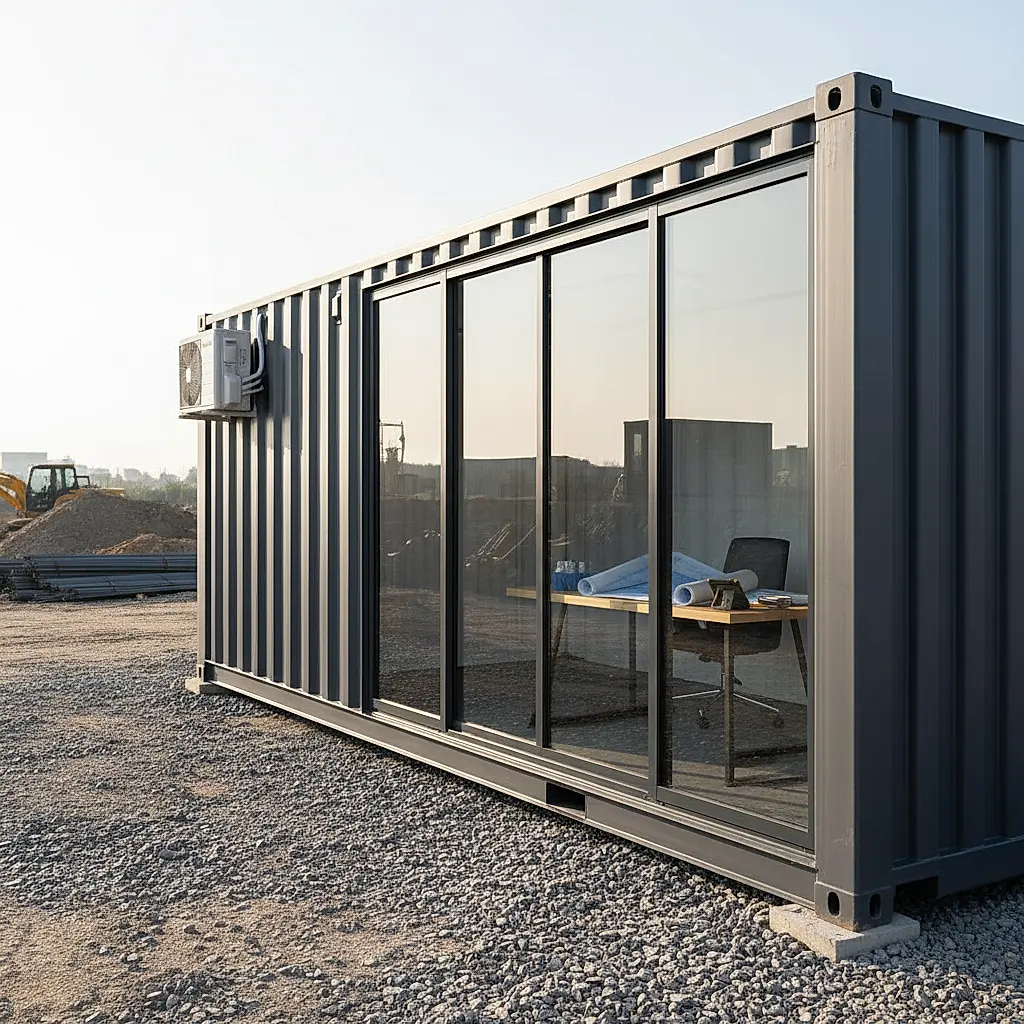
Deciding whether to rent or buy a temporary modular office container? Compare upfront costs, long-term value, customization options, and site requirements to make the right choice.
When your business or project requires immediate, ground-level workspace, modular shipping container offices offer a secure, weather-resistant, and highly mobile solution. Whether you are managing a construction site, setting up a seasonal retail hub, or expanding administrative space during a facility renovation, choosing the right acquisition model is a critical financial decision.
Should you rent a temporary office container, or does it make more sense to purchase one outright? Both paths offer distinct operational and financial advantages. This guide breaks down the key factors—including upfront capital, project duration, customization needs, tax considerations, and logistical requirements—to help you make an informed decision for your organization.
Financial Comparison: Upfront Costs vs. Long-Term Value
The primary differentiator between renting and buying a modular office container is how the expense hits your balance sheet. Understanding the immediate and long-term financial impacts will help you align this decision with your company’s cash flow and capital allocation strategies.
The Cost of Rental Agreements
Renting is often favored for its low barrier to entry. Instead of committing a significant amount of capital upfront, you pay a predictable monthly fee. However, the true cost of renting includes several additional line items:
- Delivery and Pickup Fees: You will pay to have the container delivered at the start of the lease and removed at the end. These mobilization and demobilization costs can sometimes equal several months of rent.
- Security Deposits: Many rental providers require an upfront deposit to cover potential wear and tear.
- No Equity Accumulation: Just like renting real estate, every monthly payment is an operational expense that yields zero equity. Once the lease ends, the asset is returned, and you have no residual value to show for your investment.
The Cost of Direct Purchase
Purchasing a container office requires a larger initial capital outlay, but it transforms the acquisition from an ongoing expense into a tangible corporate asset. Key financial aspects of purchasing include:
- Asset Ownership and Resale Value: High-quality steel shipping containers hold their value remarkably well. If your project ends or your space requirements change, you can sell the unit on the secondary market, recouping a significant portion of your original investment.
- Elimination of Recurring Fees: Once the unit is paid for, your ongoing monthly costs drop to zero, excluding routine maintenance.
- Tax Considerations (Section 179): Under United States tax code guidelines, such as Section 179, businesses may be eligible to deduct the full purchase price of qualifying equipment—including portable office containers—in the tax year it is placed in service. This can result in substantial immediate tax savings. Because tax laws are complex and subject to change, you should always consult a certified public accountant (CPA) to confirm how these deductions apply to your specific business.
Project Duration and Operational Flexibility
How long do you realistically need the office space? Project timeline is often the single most decisive factor when choosing between a lease and a purchase.
Short-Term Projects (Under 12 Months)
For short-term initiatives, renting is almost always the most logical choice. If you only need a field office for a six-month construction phase or a temporary security booth for a seasonal event, purchasing is rarely practical. Renting keeps your capital liquid, simplifies your accounting, and shifts the responsibility of long-term storage or disposal back to the supplier.
Mid-Term Projects (12 to 24 Months)
This is the "gray area" where both options are viable. To determine the best path, calculate the break-even point. Multiply the projected monthly rental rate by the number of months you expect to need the container, then add the delivery and pickup fees. Compare this total to the purchase price of a similar unit plus delivery and estimated resale value. Often, if a project extends past the 18-month mark, purchasing and later reselling the container becomes more cost-effective than continuous renting.
Long-Term and Permanent Needs (24+ Months)
If your organization requires a semi-permanent administrative space, a permanent guard shack, or an ongoing training room, purchasing is highly recommended. Over several years, cumulative rental payments will easily surpass the cost of buying a brand-new or high-quality used unit. Furthermore, owning the container gives you the ultimate flexibility to move it from site to site over a decade or more without renegotiating contracts or paying penalty fees.
Customization and Modification Limits
Your daily operational needs should dictate the physical layout of your office. However, your ability to modify the space depends entirely on who owns the title.
Rental Restrictions
When you rent a modular office, you are borrowing someone else's property. Consequently, rental agreements strictly prohibit permanent modifications.
- You generally cannot paint the exterior to match your corporate branding.
- You cannot cut new openings for custom windows, specialized HVAC units, or additional doors.
- You cannot bolt heavy equipment, custom shelving, or specialized data racks directly into the steel framing.
- Any unauthorized changes can result in hefty restoration fees or forfeiture of your security deposit when the unit is returned.
Ownership Freedom
When you purchase a shipping container office, the asset is yours to modify as you see fit. You can tailor the interior and exterior to meet precise operational requirements:
- Custom Branding: Paint the exterior in your company colors and apply permanent vinyl logos.
- Interior Layouts: Install custom partition walls, built-in desks, specialized cabinetry, or heavy-duty storage racks.
- Advanced Climate Control: Upgrade to specialized HVAC systems, extra insulation, or active ventilation tailored to extreme climates.
- Electrical and Data Upgrades: Run custom conduit, add extra outlets, or install dedicated server racks and fiber-optic entry points.
Logistics, Delivery, and Site Preparation
Regardless of whether you rent or buy, a shipping container office requires careful logistical planning. However, ownership changes how you approach site prep and delivery scheduling.
Site Preparation Requirements
Shipping container offices are heavy, rigid structures. They must be placed on a level, stable surface to ensure doors open and close correctly and to prevent structural warping over time. Proper site prep may include:
- Clearing and Leveling: Removing debris, vegetation, and topsoil.
- Foundation Support: Laying down a compacted gravel pad, concrete footings, or heavy timber skids.
- Utility Connections: Planning for safe electrical hookups and, if applicable, plumbing connections.
When renting, you must ensure that any site preparation you perform can be easily reversed if the land is leased or if the property owner requires the site returned to its original state. When you own the unit and plan to keep it in place for years, investing in a permanent concrete foundation is often highly beneficial.
Delivery and Demobilization
Delivery requires clear access for large tilt-bed or flatbed trucks. You must ensure there are no overhead obstructions, such as tree branches or power lines, and that the ground is firm enough to support the weight of the delivery vehicle.
With a rental, you must also plan for the eventual "demobilization" phase. This means keeping the site accessible for pickup trucks at the end of your contract and ensuring the unit is completely cleared of your personal property, clean, and undamaged to avoid end-of-lease penalties.
Frequently Asked Questions
How long does a project need to last to justify buying over renting?
While every project is unique, the financial break-even point typically falls between 12 and 18 months. If you plan to use the office container for longer than 18 months, purchasing is generally more cost-effective than renting due to the accumulation of monthly lease fees and the potential resale value of the container.
Can I paint or brand a rented office container?
Generally, no. Rental agreements prohibit permanent modifications, including custom paint jobs, decals, or structural alterations. If you require custom corporate branding or specialized paint, purchasing the container is the best path.
What kind of foundation does a container office require?
At a minimum, container offices require a firm, level surface. This can be a compacted gravel pad, concrete asphalt, or heavy wooden timbers (skids) placed under the corners. For permanent installations on land you own, a poured concrete slab or concrete piers are excellent choices.
What happens to a purchased container when I no longer need it?
Because high-quality steel containers are highly durable, they retain significant value. Once your project is complete, you can sell the unit to another business, list it on the secondary market, or repurpose it for storage, a workshop, or a secondary utility space.
Making Your Decision with Newport Shipping Containers
Choosing between renting and buying a temporary modular office depends on your unique operational goals, capital budget, and project timeline. If you need a highly customized, long-term workspace that builds equity, purchasing is an excellent investment. If you need a short-term, hassle-free space for a temporary job site, a lease may align better with your immediate needs.
At Newport Shipping Containers LLC, located in Newport, TN, we help project managers, contractors, and business owners find the exact space solutions they need. We encourage you to explore our available inventory to see what configurations are currently in stock.
Because local availability, delivery logistics, and pricing can vary based on your location and site conditions, please confirm listing details, availability, pricing, site access, and delivery requirements with the Newport team. Ready to discuss your project parameters? Contact our team today to receive a personalized consultation and a detailed quote.
Plan the next step
Confirm the container and the delivery plan.
Browse current listings, then speak with the Newport team to verify the unit, total pricing, site access, and delivery requirements before payment.