
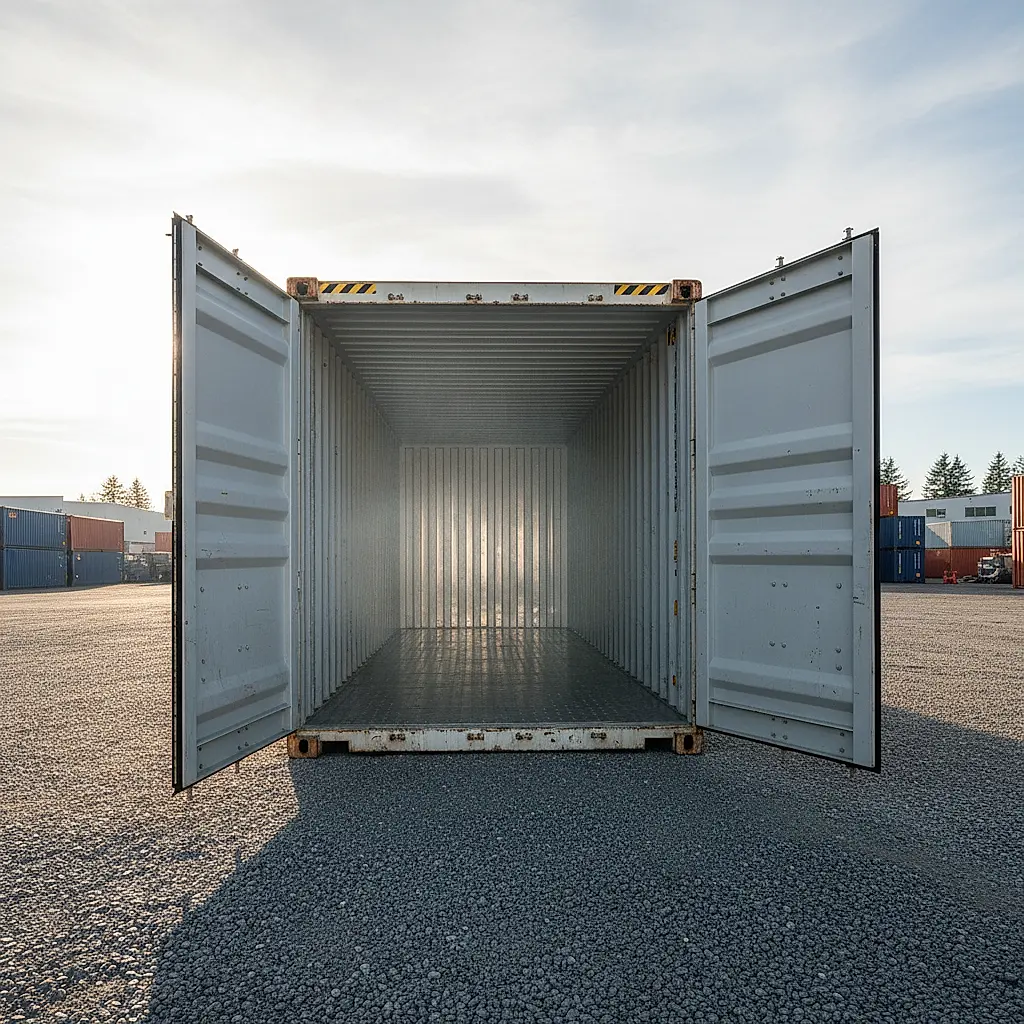
A practical guide to understanding used 40ft reefer container pricing, condition tiers, and delivery factors—without guessing at numbers.
A used 40ft reefer container can be a practical way to add temperature-controlled storage to a farm, jobsite, or small business. But if you have started shopping, you have probably noticed that advertised prices vary widely—sometimes by thousands of dollars—for what looks like the same box. That gap is not random. It reflects real differences in condition, refrigeration equipment, testing history, and logistics.
This guide walks through the factors that shape the cost of a used 40ft reefer, how to evaluate a listing, and what to confirm before you commit. It does not quote prices, because pricing changes with availability, location, and condition. Instead, it gives you the questions and checkpoints that lead to a confident decision.
What a Used 40ft Reefer Container Actually Is
A 40ft refrigerated container (often called a reefer) is an insulated steel box with an integrated refrigeration unit mounted on one end. Unlike a standard dry container, a reefer is built to hold a temperature range, which means it has thicker walls, insulated panels, and a machine that needs power and maintenance.
Nominal dimensions and why they matter
A 40ft reefer is nominally about 40 feet long and 8 feet wide. Height varies: standard-height reefers are roughly 8 feet 6 inches tall, while high-cube reefers are taller. Those are nominal figures only. Actual external and internal dimensions vary by manufacturer and model, and the internal capacity is reduced by insulation and the refrigeration unit. Always check the individual listing and the container's data plate for exact measurements before you plan a layout or a doorway.
Refrigeration unit basics
The reefer's value is tied closely to its refrigeration unit. Common units carry brand names you may recognize, and each has its own service history, parts availability, and power requirements. A used unit may run on three-phase power, single-phase power, or both, depending on configuration. Do not assume a unit will plug into a standard household outlet—confirm the electrical requirements with a qualified electrician and the listing details.
The Main Factors That Drive Used Reefer Pricing
When you compare used 40ft reefer listings, you are really comparing several variables at once. Understanding them helps you judge whether a price is reasonable for what you are getting.
Condition grade
Reefer condition is often described in tiers, though terminology varies by seller. In general:
- Cargo-worthy or serviceable units are typically the most expensive. They may still be suitable for shipping or for demanding temperature-controlled use.
- Used but operational units are common for storage. The box may show cosmetic wear, and the refrigeration unit may or may not hold temperature reliably.
- As-is or non-operational units are the least expensive. The refrigeration unit may not run, or may need repair. These can still work as insulated storage if you do not need active cooling.
Ask the seller exactly what tier a unit falls into and what testing supports that description.
Refrigeration unit health
A working refrigeration unit is often the single largest contributor to price. Relevant questions include:
- When was the unit last serviced, and is there documentation?
- Does it hold temperature across its range, or only in a narrow band?
- Are parts and refrigerant available for that model in your region?
- Does it require three-phase power, and do you have that available?
If the unit does not run, treat the container as insulated storage rather than cold storage, and price it accordingly.
Age, manufacturer, and history
Reefers from different manufacturers have different reputations for durability and parts support. A container's prior service history—what it carried, how often it was washed, and how it was maintained—can affect both condition and price. Sellers may not have complete history, so ask what they do know and factor uncertainty into your offer.
Certification and inspection status
Reefers used in international shipping carry a CSC plate and may have other inspection markings. For storage use, certification status may matter less, but it can affect resale value and whether the unit can be moved internationally later. Confirm what markings are present and what they mean for your intended use. Do not assume a container is certified for a particular purpose without checking the plate and, where relevant, a qualified inspector.
Location and availability
Reefer availability varies by region and season. A unit already near you may cost more than one several states away, but transport on the distant unit can erase the difference. Ask the seller where the unit is located and whether the quoted price includes delivery or is ex-works (pickup at their yard).
Delivery and Site Planning Costs to Expect
Delivery is a major part of the total cost, and it is highly site-specific. Rather than guessing, gather the facts your delivery team needs.
Access and equipment
A 40ft container is large and heavy. Delivery typically requires a truck capable of carrying it and equipment to set it down. The specific equipment depends on the truck, the container, and your site. Do not assume a particular trailer or crane is required—ask the delivery team what they need for your address.
Site conditions
Before you request a quote, check:
- Approach width and turning radius for a large truck.
- Overhead obstructions such as tree limbs, wires, or bridges.
- Ground conditions—soft ground, slopes, or unstable surfaces can complicate placement.
- Placement spot and whether the container can be set directly where you want it.
- Power access if you plan to run the refrigeration unit.
If any of these are uncertain, say so when you request a quote. It is better to plan for a difficult delivery than to discover it on delivery day.
Permits and local rules
Some jurisdictions have rules about temporary or permanent container placement, setbacks, or electrical connections. Requirements vary widely by location and intended use. Contact your local planning or zoning office to confirm what applies to you. Do not assume that one container size needs fewer permits than another—ask.
Ongoing costs
A reefer that runs continuously consumes electricity and needs periodic service. Budget for:
- Electricity at your local rate.
- Refrigeration service and parts.
- Door seals, gaskets, and minor repairs.
- Possible repairs to the unit if it fails.
These ongoing costs can matter as much as the purchase price over several years.
How to Evaluate a Listing Before You Buy
Use this checklist to compare used 40ft reefer listings on equal footing.
- Confirm the exact model and dimensions. Ask for the data plate and internal measurements.
- Ask about the refrigeration unit. Model, power requirements, service history, and whether it currently holds temperature.
- Ask for photos and video. Request images of the interior, doors, seals, floor, and the refrigeration unit, plus a video of the unit running if possible.
- Clarify condition tier and testing. What does the seller mean by "works" or "as-is"? What testing supports that?
- Confirm what is included. Is delivery included? Is the unit sold as-is? Are there any recent repairs?
- Check certification markings. Note the CSC plate and any inspection dates.
- Verify power needs. Confirm voltage, phase, and amperage with the seller and an electrician.
- Plan delivery. Share site photos and access details with the delivery team.
- Compare total cost. Purchase price plus delivery plus any repairs plus ongoing power and service.
If a seller cannot answer basic questions about the unit, that is useful information. It may mean the price should reflect greater uncertainty.
When a Used Reefer Makes Sense—and When It May Not
A used 40ft reefer is often a good fit when you need:
- Temperature-controlled storage for produce, flowers, or other perishables.
- A weather-tight, insulated space that can be repurposed later.
- A unit that can be moved if your needs change.
It may be a poor fit when:
- You do not have adequate power for the refrigeration unit.
- You need a guaranteed temperature range and cannot verify the unit's performance.
- Your site cannot accommodate a 40ft delivery.
- Your budget cannot absorb potential refrigeration repairs.
Being honest about these tradeoffs early saves time and money later.
Frequently Asked Questions
How much does a used 40ft reefer container cost?
There is no single price. Cost depends on condition tier, whether the refrigeration unit runs, manufacturer, age, location, and delivery. Ask for a quote that separates the container price from delivery and any known repairs so you can compare fairly.
What is the difference between a standard and a high-cube reefer?
High-cube reefers are taller than standard-height reefers, which can affect internal capacity and how the unit fits under overhead obstructions. Nominal heights are often cited, but exact dimensions vary by model. Check the individual listing and data plate.
Can I use a used reefer without running the refrigeration unit?
Yes, many people use non-operational reefers as insulated storage. In that case, the unit functions like a thick-walled box rather than active cold storage. Confirm the condition and price reflect that use.
What power does a reefer need?
Power requirements vary by refrigeration unit. Some need three-phase power, some can run on single-phase, and some support both. Confirm the exact requirements with the seller and a qualified electrician before purchase.
Do I need a permit to place a reefer on my property?
Permit rules vary by jurisdiction and intended use. Contact your local planning or zoning office to find out what applies to your address. Do not rely on general assumptions.
Next Steps
If you are ready to compare options, start by reviewing current listings and then reach out with your site details. You can browse available units at /shop and ask specific questions—about condition, power, dimensions, or delivery—through /contact. The Newport team can confirm listing details, availability, pricing, site access requirements, and delivery logistics for your location. Bringing clear information about your site and intended use will help you get an accurate quote and avoid surprises.
Plan the next step
Confirm the container and the delivery plan.
Browse current listings, then speak with the Newport team to verify the unit, total pricing, site access, and delivery requirements before payment.