
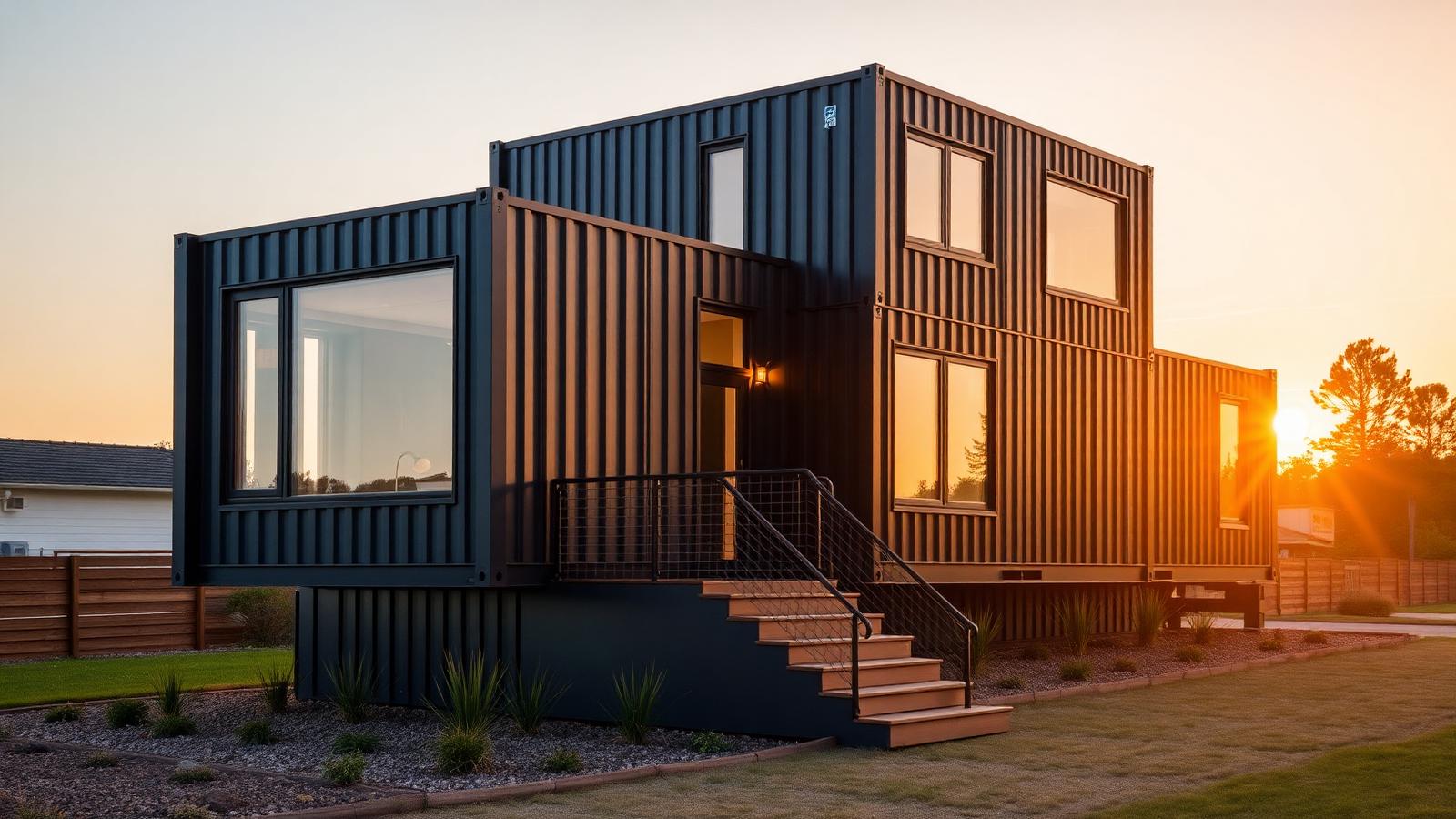
A practical guide to the variables that shape a container home budget in 2026, from container condition to site work, permits, and finishes.
Why Container Home Budgets Vary So Much
If you have seen a wide range of numbers attached to container home projects, that is not a sign that the market is chaotic. It is a sign that "container home" describes a broad category. A single used container with a few cutouts sits at one end of the spectrum. A permitted, insulated, finished home with plumbing, electrical service, and site work sits at the other. The gap between those two projects is mostly labor, site conditions, and finishes, not the container itself.
This article walks through the major cost variables so you can build a realistic budget and ask better questions. It does not quote prices, because material and labor costs shift by region and over time. For current container availability, condition grades, and pricing, confirm details with the Newport team.
The Container Itself: Condition, Size, and Grade
New vs. used (one-trip vs. cargo-worthy)
Containers are generally sold in a few condition categories. One-trip or new containers have seen limited service and tend to show fewer dents and less surface rust. Cargo-worthy used containers are still structurally sound and wind-and-water tight but show cosmetic wear. As-is or budget units may have rust, dents, or door issues that matter more in a home than in storage.
For a home, appearance and tightness matter. Rust that is merely ugly on a storage box can become a finishing problem on a living space, and door seals affect weather resistance. Inspect in person or ask for detailed photos and a description of the condition grade before you commit.
Size and height
Containers are commonly described by nominal length, width, and height. Standard-height and high-cube units differ mainly in interior headroom, which affects ceiling design, insulation space, and how the interior feels. Exact external and internal dimensions vary by unit and manufacturer. Check the individual listing and the CSC plate for the specific container you are considering, and confirm dimensions with the Newport team before you finalize design drawings.
Quantity and layout
One container supports a compact studio-style layout. Two or more containers can be combined side by side or stacked to create larger footprints, but each connection point adds structural work, sealing, and finish labor. More containers usually mean more steel modification, not proportionally less cost per square foot.
Design and Build Path: Turnkey vs. DIY vs. Hybrid
Turnkey builds
A turnkey builder handles design, engineering, permitting support, fabrication, delivery coordination, and construction. You write fewer checks to separate trades, but you pay for project management and you have less control over line items. Turnkey pricing is often quoted as a range per square foot, and that range depends heavily on finishes and site work.
Owner-managed builds
Managing the project yourself can reduce markup, but it shifts risk to you. You coordinate trades, schedule inspections, and absorb delays. If you have construction experience and time, this path can work well. If not, the learning curve can erase the savings.
Hybrid approaches
Many projects split the work. A fabricator handles structural modifications, cutting, framing, and weatherproofing. You or a local contractor handle foundation, utilities, interior finishes, and landscaping. This is often the most practical route because it puts specialized steel work with specialists and leaves finish work to local labor.
Site Work, Foundation, and Utilities
Site costs are the most underestimated part of container home budgets. A container is heavy, and it needs a level, engineered support system. Options include a concrete slab, pier and beam, or a prepared gravel pad with appropriate footings, depending on your design and local requirements.
Key questions to resolve early:
- Access: Can a truck and trailer reach the build site? Are there low wires, narrow gates, soft ground, or steep grades?
- Set and placement: Who unloads and positions the container, and what equipment is needed? Confirm the delivery plan with the Newport team and your local site contractor.
- Utilities: What is the distance to power, water, and sewer or septic? Trenching and connection costs scale with distance.
- Drainage and grading: Water management around a steel structure matters. Plan for it before delivery, not after.
- Zoning and permits: Requirements vary by jurisdiction. Contact your local planning and building authority to confirm what applies to your parcel and design.
Modifications, Insulation, and Finishes
Structural modifications
Cutting openings for doors and windows changes how a container carries load. Those openings typically need engineered framing and reinforcement. This is not a place to improvise. Work with a qualified fabricator and, where required, a licensed engineer.
Insulation and moisture control
Steel conducts heat and cold efficiently, so insulation and thermal breaks are central to comfort. Spray foam, rigid board, and framed interior walls are common approaches, each with different cost and thickness tradeoffs. Moisture management, including ventilation and vapor control, deserves as much attention as insulation. Discuss your climate and design with a qualified builder.
Interior finishes
Finishes are where budgets stretch the most. Flooring, cabinetry, countertops, fixtures, lighting, and HVAC choices range from basic to high-end. A useful exercise is to price two finish packages, a modest one and an upgraded one, so you can see how much of your budget is discretionary.
Permits, Financing, and Insurance
Permits and inspections
Container homes are treated differently across jurisdictions. Some areas have clear pathways; others require additional engineering documentation or variance approvals. Do not assume a container home will need more or fewer permits than a conventional build. Verify requirements with your local authority having jurisdiction before you buy materials.
Financing
Construction lending for unconventional builds can be limited. Some lenders are comfortable with container homes, especially when plans are engineered and permits are in place. Talk to more than one lender and ask specifically about container construction. Be prepared to document your design, budget, and timeline.
Insurance
Insurers vary in how they classify container structures. Ask an insurance professional about coverage for your specific design and location before construction begins.
A Practical Budgeting Framework
Instead of chasing a single number, build your budget in layers:
- Container purchase: quantity, condition grade, and delivery.
- Site preparation: access improvements, pad or foundation, drainage.
- Structural work: cutting, framing, reinforcement, sealing.
- Building envelope: insulation, windows, doors, roofing, exterior finish.
- Systems: electrical, plumbing, HVAC, and utility connections.
- Interior finishes: flooring, walls, kitchen, bath, fixtures.
- Soft costs: design, engineering, permits, inspections, contingency.
Add a contingency line. Renovation and site surprises are common, and a buffer keeps a small issue from becoming a stalled project.
Frequently Asked Questions
How much does a container home cost in 2026?
There is no single reliable number. Cost depends on container condition and size, how much structural modification you need, site access and foundation type, local labor rates, permit requirements, and finish level. Request current container pricing from Newport, then gather local quotes for site work, trades, and finishes to assemble a project estimate.
Is a container home cheaper than a traditional build?
Sometimes, but not automatically. The container can reduce some framing and shell costs, while insulation, moisture control, structural reinforcement, and site work can add cost. The honest answer is that it depends on your design, your site, and your local market. Compare complete project budgets, not just shell costs.
How long does a container home project take?
Timelines vary widely with permitting, fabrication schedules, weather, and trade availability. A simple project can move faster than a complex one, but site work and inspections often set the pace. Ask your builder and local authority about realistic timelines for your specific plan.
Do I need a special foundation?
You need a foundation designed for your soil, climate, and structure. A qualified local engineer or builder should specify it. Do not rely on general advice from the internet for a structural decision.
Can I finance a container home?
Some lenders offer construction or mortgage financing for container homes, and some do not. Availability depends on the lender, your plans, and your location. Speak with multiple lenders and be ready to provide engineered drawings and a detailed budget.
Next Steps
Start with the container, then build outward. Browse current inventory and condition details on our shop page, and note the sizes and grades that fit your plan. When you are ready to talk through availability, dimensions, and delivery considerations for your site, reach out through our contact page. The Newport team can help you confirm listing specifics, while your local officials and contractors confirm permits, foundations, and site requirements. That combination gives you the clearest path to a realistic budget.
Plan the next step
Confirm the container and the delivery plan.
Browse current listings, then speak with the Newport team to verify the unit, total pricing, site access, and delivery requirements before payment.