
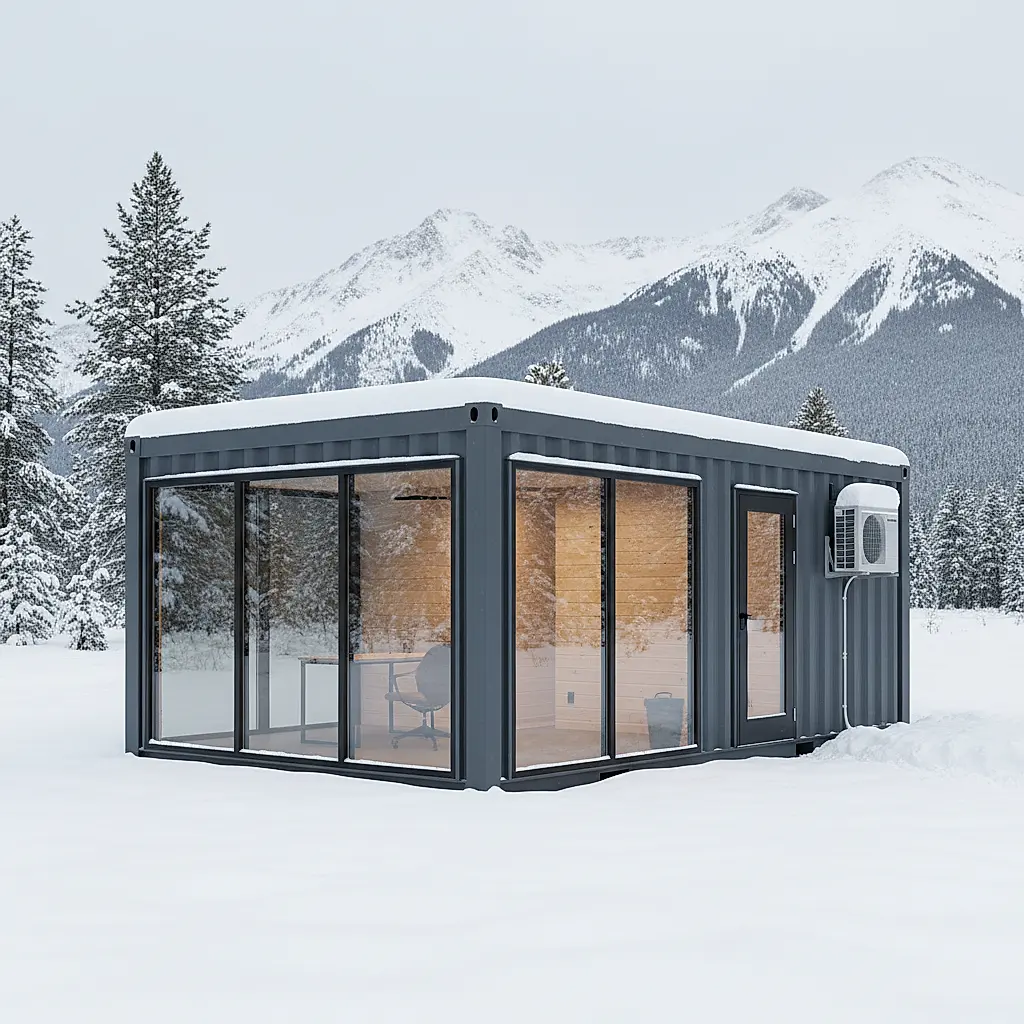
Planning a heated shipping container office? This guide explains the variables that affect winterization and HVAC costs, from insulation to site access, so you can budget with confidence.
Converting a shipping container into a winterized office is a popular way to gain durable, secure workspace. But the cost of a heated container office depends on many factors: insulation choices, HVAC sizing, electrical capacity, code requirements, and site logistics. This guide walks through the key cost drivers, decision points, and questions to ask before you buy. It does not provide fixed prices or guarantees—every project is different. For exact specifications, availability, and pricing, always confirm with the Newport team and your local professionals.
Why Winterizing a Container Office Costs More Than You Might Expect
A basic shipping container is a steel box. Steel conducts heat and cold efficiently, and bare container walls offer little thermal resistance. Without insulation and a heat source, a container office will be uncomfortably cold in winter and prone to condensation. Winterization addresses three things: thermal resistance, air sealing, and moisture control. Each adds cost and complexity.
The core cost drivers
- Insulation type and thickness. Spray foam, rigid board, and mineral wool have different material and labor costs. Spray foam often costs more upfront but can seal gaps and reduce air leakage. Rigid board may be less expensive but requires careful installation to avoid thermal bridging through the steel frame.
- Interior finishes. Once insulation is added, you need wall and ceiling coverings. Options range from plywood and OSB to drywall and composite panels. Finishes affect both cost and durability.
- HVAC system. A heat pump, mini-split, or electric resistance heater may be used. Sizing depends on insulation level, climate, and internal heat gains from people and equipment. Oversizing can waste energy; undersizing leaves cold spots.
- Electrical service. HVAC equipment, lighting, and outlets require a safe electrical supply. If the site lacks power, you may need a generator, solar setup, or a new service drop. These are significant cost variables.
- Ventilation and moisture control. Sealing a container tightly can trap moisture. A ventilation strategy—such as an ERV or HRV—may be needed to maintain indoor air quality and prevent mold.
- Windows and doors. Adding windows and a personnel door improves comfort and code compliance but creates thermal weak points. High-performance glazing and proper flashing add cost.
Because these variables interact, two projects with the same container size can have very different price tags. A turnkey winterized office from one provider may include design, insulation, HVAC, electrical, and finishes, while another may be a shell only. Always compare scope, not just a lump sum.
Insulation and HVAC Options: Trade-offs to Weigh
There is no single best system for every container office. The right choice depends on your climate, budget, intended use, and how long you plan to keep the unit.
Insulation methods
- Spray polyurethane foam. Applied directly to container walls and ceiling, it expands to fill gaps. It offers high R-value per inch and acts as an air barrier. It typically requires professional installation and may need a thermal barrier for fire safety.
- Rigid foam boards. Polyiso or XPS boards are cut to fit between or over framing. They are cost-effective and DIY-friendly but require careful sealing of seams to prevent air leakage.
- Mineral wool or fiberglass batts. These are common in traditional construction but need a framed cavity and a separate air barrier. In a container, they can be used with a stud wall system.
- Closed-cell vs. open-cell foam. Closed-cell foam has higher R-value and resists moisture; open-cell is softer and usually less expensive but may require a vapor barrier.
HVAC considerations
- Mini-split heat pumps. These provide both heating and cooling and are efficient in moderate to cold climates. Cold-climate models can operate at lower temperatures, but performance varies. Confirm the rated operating range with the manufacturer.
- Electric resistance heaters. Lower upfront cost but higher operating cost. They may be suitable for mild winters or as backup.
- Propane or natural gas furnaces. Require fuel storage or a gas line and venting. They can be efficient but add complexity and safety requirements.
- Ventilation. A heat recovery ventilator (HRV) or energy recovery ventilator (ERV) brings in fresh air while recovering heat. This can improve comfort and indoor air quality but adds cost.
When comparing quotes, ask for the assumed insulation R-values, HVAC capacity, and outdoor design temperature. Those assumptions determine whether the system will actually keep the office warm.
Site Planning, Permits, and Installation Realities
Even the best-insulated container office needs a proper site. Delivery and installation logistics can affect your total cost as much as the building itself.
Site access and foundation
- Access route. Container delivery requires a truck and often a tilt-bed or crane. Confirm that the route to your site can accommodate the vehicle and that there are no low bridges, narrow roads, or overhead wires. Newport can discuss delivery requirements, but site access is ultimately the buyer's responsibility to verify.
- Foundation. A level, stable foundation is essential. Options include concrete pads, gravel, or helical piers. An unlevel foundation can twist the container and cause door or window problems.
- Clearance. Leave space around the container for installation, maintenance, and future service of HVAC equipment.
Permits and codes
Building codes vary by jurisdiction. A container office may be classified as a temporary structure, an accessory building, or a permanent structure, depending on local rules. Insulation, electrical, and HVAC work may require permits and inspections. Some jurisdictions have specific requirements for shipping container structures. Always check with your local building department before purchasing. Do not assume that a particular container size or configuration will avoid permits.
Electrical and utility connections
If you plan to run HVAC, lighting, and computers, you need a reliable power source. A licensed electrician should assess your service capacity and install proper wiring, disconnects, and grounding. If grid power is unavailable, you may need a generator or solar array with battery storage. These systems have their own costs and maintenance needs.
Condensation and moisture
Steel containers can sweat when temperature and humidity differences are large. Insulation helps, but a vapor barrier and ventilation are also important. In winter, warm moist air inside can condense on cold steel. A properly designed assembly keeps the dew point from reaching the steel. Ask your builder how they handle vapor control.
How to Budget for a Winterized Container Office
Because prices vary by region, scope, and market conditions, no article can give you a reliable number. Instead, build a budget by breaking the project into categories and getting multiple quotes.
Cost categories to include
- Container purchase (new or used, standard or high cube)
- Delivery and offloading
- Site preparation and foundation
- Insulation and air sealing
- Interior framing and finishes
- Windows, doors, and hardware
- HVAC equipment and installation
- Electrical service and wiring
- Ventilation and moisture control
- Permits and inspections
- Furniture, lighting, and network equipment
- Ongoing energy and maintenance
Questions to ask each vendor
- What is included in the quoted price? What is excluded?
- What R-value and air-sealing strategy do you use?
- How did you size the HVAC system? What outdoor temperature did you design for?
- Who handles permits and inspections?
- What is the lead time, and what site conditions do you require?
- What warranty or service support do you provide?
Comparing answers helps you avoid apples-to-oranges quotes. A lower price may reflect thinner insulation, a smaller HVAC unit, or missing electrical work.
Frequently Asked Questions
How much does a winterized container office cost?
There is no single price. Costs depend on container size, insulation method, HVAC type, electrical work, finishes, and local labor rates. The best approach is to define your requirements, then request itemized quotes from multiple providers. Newport can discuss current options and pricing for the containers and related products they offer, but you should confirm all details directly.
Can I insulate a shipping container myself?
Some insulation methods, such as rigid foam boards, are feasible for experienced DIYers. Spray foam usually requires professional equipment and training. Electrical and HVAC work should be done by licensed professionals. If you insulate yourself, pay close attention to air sealing, vapor control, and fire safety.
What HVAC system works best for a container office in winter?
A cold-climate mini-split heat pump is a common choice because it provides both heating and cooling and is relatively efficient. However, the right system depends on your climate, insulation level, and available power. Ask an HVAC contractor to perform a load calculation rather than guessing based on square footage.
Do I need a permit for a container office?
Permit requirements vary widely by location. Some areas treat container structures as temporary or accessory buildings; others require full permits for structural, electrical, and mechanical work. Contact your local building department early in the planning process. Do not rely on general statements about container offices avoiding permits.
How do I prevent condensation inside a winterized container?
Condensation control involves insulation, air sealing, vapor management, and ventilation. In cold weather, warm moist air from people and equipment can condense on cold steel. A continuous insulation layer, a properly placed vapor barrier, and mechanical ventilation can help. Discuss the assembly with your builder or a building science professional.
Next Steps: Confirm Details and Plan with Newport
A winterized shipping container office can be a comfortable, durable workspace when it is designed and built for your climate and site. Start by listing your must-haves: office size, number of occupants, equipment, climate, and power availability. Then gather quotes that clearly state insulation, HVAC, electrical, and finish scope. Verify container dimensions, condition, and any certifications on the individual listing. Confirm site access and delivery requirements with the Newport team before you commit.
To browse available containers and related products, visit our shop. When you are ready to discuss your project, contact us to talk through options, availability, and next steps. We are happy to help you ask the right questions, even if you are still in the early planning stage.
Plan the next step
Confirm the container and the delivery plan.
Browse current listings, then speak with the Newport team to verify the unit, total pricing, site access, and delivery requirements before payment.