
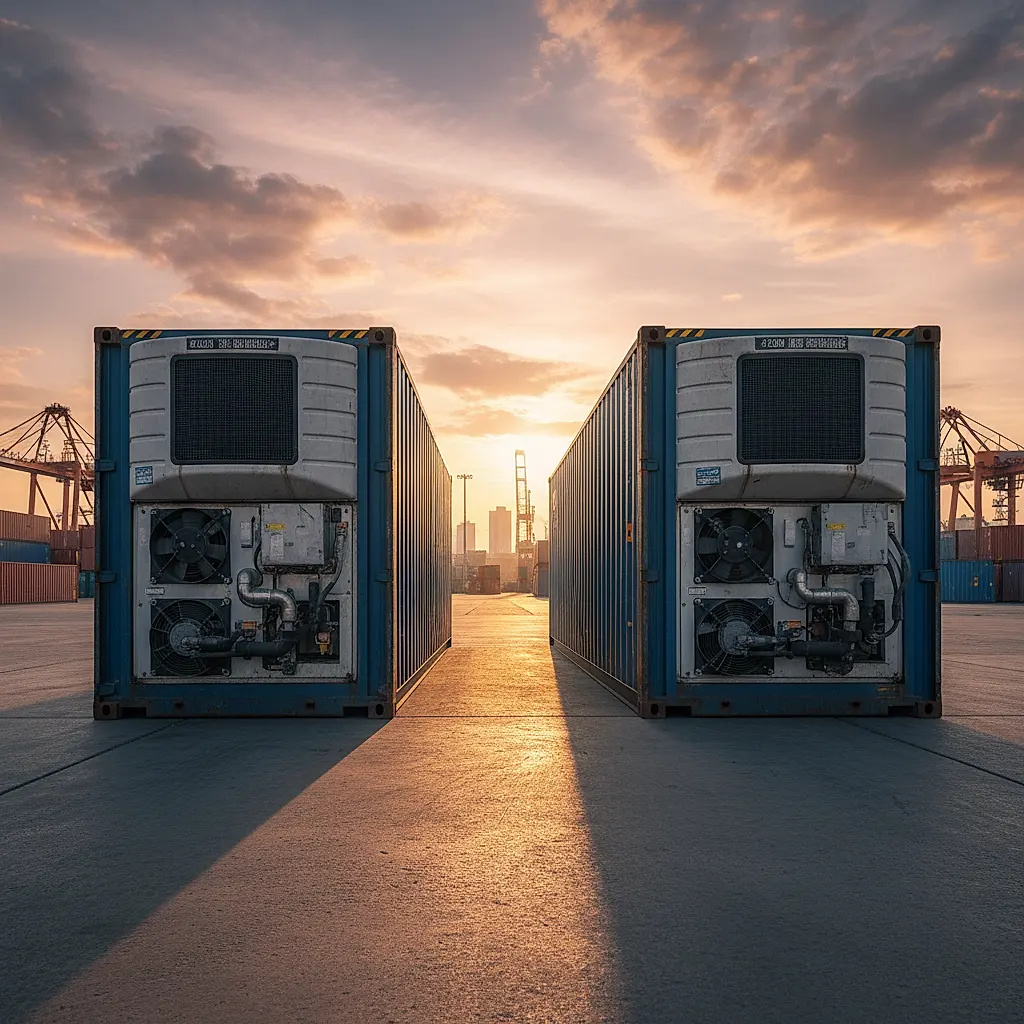
A practical guide to comparing 20ft and 40ft refrigerated containers for cold storage, including capacity, power, site planning, and cost factors to confirm with Newport.
Choosing between a 20ft and a 40ft refrigerated container is less about finding a single "best" size and more about matching the container to your actual cold storage needs, your site, and your power supply. This guide walks through the practical differences so you can ask better questions and confirm exact details with the Newport team.
Start With What You Need to Store, Not the Container Size
Before comparing dimensions, describe your load in plain terms. A reefer container is a working cold room, so the useful question is not "how many square feet is a 40ft?" but "what do I need to keep cold, and how do I need to access it?"
Make a short list:
- What products or materials need temperature control?
- What temperature range do they require, and does it stay constant?
- How will items be loaded and unloaded — pallets, racks, bins, or loose cartons?
- How often will the door be opened during a shift or day?
- Do you need aisle space inside for picking, or is this bulk storage?
- Will you need to move the container later, or is this a permanent placement?
These answers shape whether a 20ft or 40ft unit makes sense. A smaller unit that is opened frequently can lose cold air quickly, while a larger unit may be more than you need if your volume is modest.
How 20ft and 40ft Reefer Containers Differ in Practice
Nominal footprint and internal space
Reefer containers follow standard container footprints. A 20ft unit is nominally about 20 feet long and 8 feet wide, and a 40ft unit is nominally about 40 feet long and 8 feet wide. Heights vary between standard and high-cube versions. Those are approximate nominal figures — the exact internal dimensions, door openings, and usable volume for any specific unit should be confirmed on the individual listing and the container's CSC plate.
What matters for planning:
- A 40ft unit roughly doubles the floor area of a 20ft unit, but the refrigeration machinery takes up space at one end, so usable internal length is less than the nominal length.
- Internal height affects whether you can stack pallets or use tall racking.
- Door opening dimensions affect what equipment and pallets can physically pass through.
Refrigeration machinery and airflow
Both sizes use a refrigeration unit mounted at one end. Inside, air needs to circulate around and through your load. Blocking the floor channels or stacking tight against the evaporator can cause uneven temperatures. This is true in both sizes, but a larger container gives you more room to leave proper clearance.
Power and running considerations
Refrigerated containers require a power source, and the electrical requirements vary by unit, voltage, and operating conditions. Do not assume a 20ft unit uses half the power of a 40ft unit. Power draw depends on the refrigeration unit, the temperature setpoint, ambient conditions, how often the door opens, and how well the load is arranged.
Before you commit, confirm with the Newport team and a qualified electrician:
- The voltage and amperage the specific unit requires.
- Whether you need a dedicated circuit or generator.
- How the unit will be monitored if it runs unattended.
- What happens during a power interruption.
Cost Factors to Compare Beyond the Container Itself
Buyers often focus on the container price and overlook the surrounding costs. A realistic comparison includes:
- Purchase or rental cost of the specific unit, which depends on condition, age, refrigeration unit, and availability. Confirm current pricing on the listing.
- Delivery and placement costs, which depend on distance, site access, and the equipment needed.
- Site preparation, such as a level, load-bearing pad.
- Electrical connection, including any trenching, conduit, or panel work.
- Ongoing power costs, which depend on your local rates and how hard the unit works.
- Maintenance and service access, including room to reach the refrigeration unit.
- Insurance and permitting, which vary by location and use.
A 20ft unit may cost less to buy and place, but if it fills up and you need a second unit, two smaller units can mean two power connections and two service points. A 40ft unit may offer more storage per placement, but it needs more space and a larger delivery footprint. Neither is automatically cheaper over time — it depends on your volume, your site, and how long you plan to keep it.
A simple way to frame the decision
Ask yourself:
- Will my storage needs grow in the next few years?
- Is my site large enough for a 40ft container and the equipment to place it?
- Can my electrical service support the unit I am considering?
- Do I need to move this container later?
- Is access for loading and unloading practical at my location?
If you answer "no" or "not sure" to site or power questions, resolve those before choosing a size.
Site Access, Placement, and Delivery Planning
Delivery is where many cold storage projects run into surprises. A container needs a safe path from the road to its final resting spot, and a level surface that can support the loaded weight.
Plan around these points:
- Approach and turning room for the delivery vehicle and any lifting equipment.
- Overhead clearance along the route, including wires, branches, and structures.
- Ground conditions — soft ground, slopes, and unstable fill can be a problem.
- Placement orientation so doors open where you need them and the refrigeration unit has service clearance.
- Drainage so water does not pool around the container.
Because delivery equipment and site requirements vary, confirm your specific situation with the Newport team before scheduling. They can tell you what information they need about your site, and you should verify any local requirements with your own local authority.
Permits and local rules
Rules about temporary or permanent container placement, electrical connections, and land use vary widely by jurisdiction. Do not assume that one container size needs fewer approvals than another. Check with your local planning or zoning office and, for electrical work, use a licensed electrician.
Matching the Container to Your Operation
When a 20ft reefer may fit
- Your volume is modest and predictable.
- Your site has limited space or difficult access.
- You want a smaller initial investment and a simpler electrical connection.
- You may relocate the unit in the future.
When a 40ft reefer may fit
- You need more storage in one location.
- You want to reduce the number of units, power connections, and service points.
- Your site can accommodate a longer container and the equipment to place it.
- You expect your cold storage needs to grow.
Questions that apply to both sizes
- What temperature range do you need, and how tight is the tolerance?
- How will you monitor temperature and respond to alarms?
- Who will service the refrigeration unit, and how often?
- How will you handle defrost cycles and condensation?
- What is your plan if the unit goes down?
Frequently Asked Questions
Is a 40ft reefer always more expensive to run than a 20ft?
Not necessarily. Running cost depends on the refrigeration unit, temperature setpoint, ambient conditions, door openings, load arrangement, and local power rates. A larger unit that is well loaded and rarely opened may run efficiently, while a smaller unit that is opened frequently may work harder. Confirm the electrical requirements of the specific unit with the Newport team and a qualified electrician.
Can I use a reefer container as a freezer?
Refrigerated containers are designed for temperature-controlled transport and storage, and some can hold frozen temperatures depending on the unit and setpoint. The exact capability varies by unit, so check the listing details, the CSC plate, and the refrigeration unit documentation, and confirm with the Newport team before relying on it for frozen goods.
How much space do I need for delivery?
There is no single answer. It depends on the delivery vehicle, the equipment used, your approach route, overhead clearance, and ground conditions. Share photos and measurements of your site with the Newport team so they can help you assess feasibility. You should also verify any local access or permit requirements with your local authority.
Do I need a concrete pad?
A level, stable, load-bearing surface is important for any container, but the right solution depends on your soil, drainage, and how long the container will stay. Some sites use gravel, some use concrete, and some use other prepared bases. Discuss your site with the Newport team and, where needed, a local contractor.
Can I move a reefer container after it is placed?
Yes, containers can be relocated, but moving a loaded refrigerated container requires planning, equipment, and a power plan for the new location. Ask the Newport team about what is involved before you commit to a placement.
Next Steps
Choosing between a 20ft and 40ft reefer container comes down to your load, your site, your power, and your long-term plans. Start by writing down your storage volume, temperature needs, and site constraints. Then review available units at our shop and reach out through our contact page with your questions. The Newport team can help you confirm listing details, availability, pricing, site access, and delivery requirements so you can make a decision with fewer surprises.
Plan the next step
Confirm the container and the delivery plan.
Browse current listings, then speak with the Newport team to verify the unit, total pricing, site access, and delivery requirements before payment.