
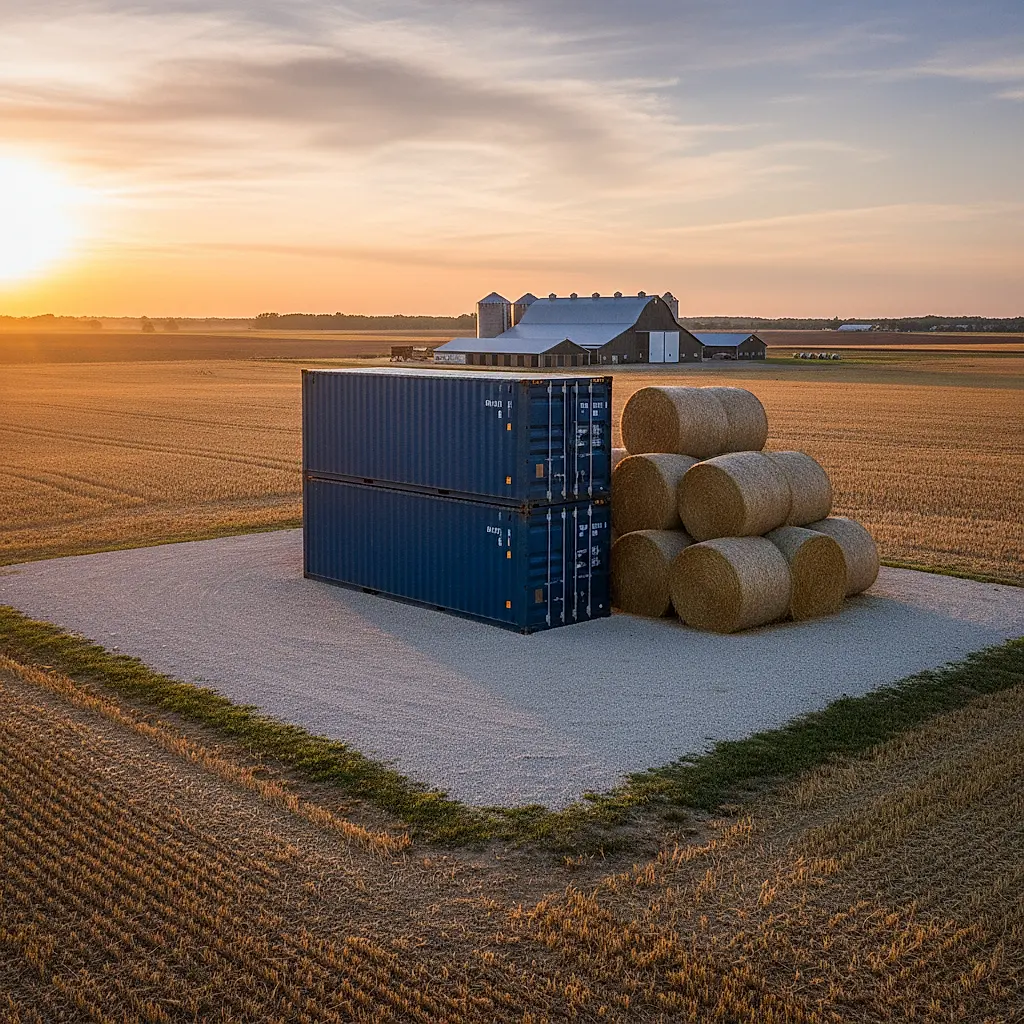
A practical guide to using shipping containers for hay and feed storage, covering moisture control, ventilation, site planning, and questions to confirm with the Newport team.
Using a shipping container for hay and feed storage can work well when you plan for moisture, airflow, and access. A steel box keeps weather and pests out, but it can also trap humidity if you close it up and forget about ventilation. This guide walks through the practical decisions, from container choice to site prep, and points you to the right people to confirm exact details.
Why a Container Can Work for Hay and Feed
Shipping containers are built to keep cargo dry across oceans. That same weather-tight construction is useful on a farm or ranch where rain, snow, and rodents threaten stored feed.
- Weather protection: A closed container sheds rain and snow and keeps ground moisture away from bales and bags.
- Security: Locking bars and a solid door make casual theft harder than in an open-sided shed.
- Durability: Steel walls resist wind, sun, and most pest entry better than many temporary structures.
- Modular placement: Containers can sit on a prepared pad near where you feed, reducing hauling distance.
That said, a container is not a climate-controlled barn. Hay and feed release moisture, and steel walls can condense humidity. Success depends on how you manage airflow and moisture inside.
Choosing the Right Container for Feed Storage
Size and height considerations
Containers come in nominal lengths such as 20 feet and 40 feet, with standard and high-cube heights. A 20-foot container is often easier to place on a tight farm site, while a 40-foot unit offers more linear storage. High-cube models add interior height, which can matter if you stack bales or use shelving.
Exact interior dimensions, door openings, and weight ratings vary by unit. Always check the individual listing and the CSC plate on the container itself for verified specifications before you commit.
Condition: one-trip vs. used
- One-trip containers have usually carried cargo once and tend to have fewer dents and less surface rust.
- Used containers cost less up front but may need patching, fresh paint, or door seal attention.
- Wind and water tightness matters more than cosmetics for feed storage. Ask the Newport team how a specific unit has been inspected.
Doors and access
Double end doors are standard. If you plan to load with a tractor or skid steer, confirm the door opening height and width on the listing. Some buyers add a second access point, but modifying a container can affect its structure and warranty. Discuss any modification plans with the Newport team first.
Flooring
Most containers have marine-grade plywood or bamboo floors over steel cross members. Wood floors can absorb moisture and odors. A plastic liner, rubber mat, or raised pallet system can keep feed off the floor and improve airflow underneath.
Moisture Control: The Make-or-Break Factor
Hay and grain release water vapor. In a sealed steel box, that vapor has nowhere to go. Without management, you can get condensation on walls and ceilings, mold, and spoiled feed.
Practical moisture strategies
- Dry feed before storage. Bale and bag only when moisture content is appropriate for your crop and climate. Use a moisture meter and follow local extension guidance.
- Raise it off the floor. Pallets or a slatted base allow air to move under stored feed.
- Leave air gaps. Do not pack bales tight against all four walls. A gap along the walls and a center aisle help air circulate.
- Ventilate deliberately. Passive vents, a solar-powered fan, or screened openings can move humid air out. Any opening must be screened against rodents and birds.
- Use desiccants or dehumidifiers carefully. These can help in some climates but need monitoring and power. They are not a substitute for dry feed and airflow.
- Inspect regularly. Open the doors on dry days, check for damp spots, and rotate older feed to the front.
What not to assume
No container is truly airtight in a way that guarantees zero moisture movement. Do not assume a container alone will keep high-moisture hay from heating or molding. If you are storing large volumes of hay, plan ventilation and monitoring as part of the system, not an afterthought.
Site Planning and Delivery Preparation
A container needs a level, well-drained pad. Good site planning prevents door binding, floor sag, and water pooling around the base.
Pad and foundation options
- Compacted gravel is common and drains well when properly graded.
- Concrete pads offer a stable, long-term base but cost more.
- Railroad ties or timber beams can raise the container, but they must be level and rated for the load.
Access for the delivery truck
The delivery truck and trailer need room to approach, turn, and set the container down. Overhead wires, tree limbs, fences, and soft ground can all create problems. Requirements vary by location and equipment, so confirm site access and delivery requirements with the Newport team before scheduling.
Placement tips
- Keep the doors facing away from prevailing wind and driving rain if possible.
- Leave working space in front of the doors for loading and unloading.
- Avoid low spots where water collects.
- Consider sun exposure. Shade can reduce interior heat, but trees drop debris and attract pests.
Permits and local rules
Zoning, setback, and permit rules vary by county and use. Do not assume a container for agricultural storage is exempt. Check with your local planning or zoning office, and confirm any requirements before delivery.
Organizing Hay and Feed Inside the Container
A little layout planning saves time every day.
- Create zones. Keep hay on one side and bagged feed on the other to reduce cross-contamination and pest transfer.
- Use the front for rotation. Load newer feed toward the back and pull older feed from the front.
- Stack safely. Keep stacks stable and below the point where they block airflow or fall when the doors open.
- Label bags and lots. Dates and supplier names help you track quality.
- Keep a clear path. A center aisle makes inspection and cleaning easier.
- Store tools separately. Oils, fuels, and chemicals should not share space with feed.
Pest and rodent management
Steel walls help, but rodents can enter through gaps, vents, and worn door seals. Keep the area around the container mowed, seal obvious gaps with appropriate materials, and set traps or monitoring stations outside the container. Avoid rodenticides near feed.
Temperature swings
Steel containers heat up in direct sun and cool quickly at night. That swing can drive condensation. Insulation, shade, or a reflective roof coating may help in some climates, but results vary. Ask the Newport team what options are available for the units you are considering.
Cost Factors to Think About
Rather than quoting numbers that may not apply to your situation, think in terms of categories:
- Container purchase price, which depends on size, condition, and availability.
- Delivery charges, which depend on distance, access, and equipment needed.
- Site preparation, including gravel, concrete, or grading.
- Moisture and ventilation add-ons, such as fans, vents, liners, or dehumidifiers.
- Ongoing monitoring, including your time and any replacement parts.
Pricing and availability change. Confirm current listing details and pricing with the Newport team rather than relying on older information.
Frequently Asked Questions
Will a shipping container keep hay completely dry?
A container blocks rain and ground water, but it does not eliminate humidity from the feed itself. Dry hay, airflow, and monitoring are still essential. If you seal wet hay in a container, you risk mold and heating.
Do I need ventilation in a container used for feed?
In most cases, some airflow is wise. Passive vents or a small fan can help move humid air out. Any opening should be screened to keep rodents and birds out. The right approach depends on your climate and what you store.
Can I put a container on grass or dirt?
You can, but it may settle unevenly and hold moisture underneath. A compacted gravel or concrete pad usually performs better. Confirm site preparation recommendations with the Newport team.
Do I need a permit for a storage container on my property?
Rules vary by location and intended use. Contact your local planning or zoning office to confirm requirements. Do not assume agricultural storage is automatically exempt.
How do I know which container size to choose?
Estimate your volume, access needs, and available space. Then review the individual listing for exact dimensions and door openings. The Newport team can help you compare options, but only you can confirm what fits your site and operation.
Next Steps
Start by measuring your site, estimating your storage volume, and checking local rules. Then browse current listings at our shop and reach out with your questions at our contact page. The Newport team can confirm availability, pricing, site access, and delivery requirements for your location. Planning ahead is the best way to avoid surprises on delivery day.
Plan the next step
Confirm the container and the delivery plan.
Browse current listings, then speak with the Newport team to verify the unit, total pricing, site access, and delivery requirements before payment.