
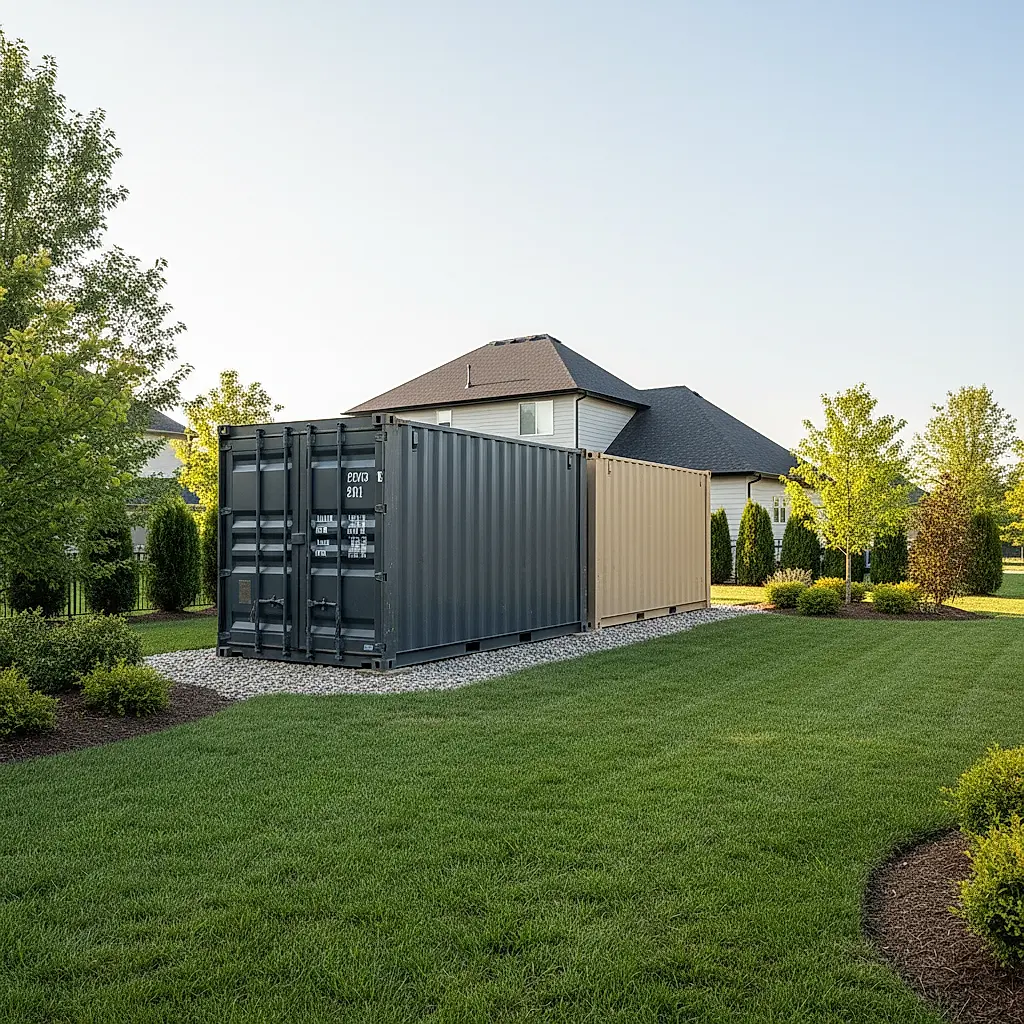
A practical, no-hype comparison of 20ft and 40ft shipping containers for backyard storage. Learn how footprint, height, access, and local rules affect your choice, and how to confirm details with Newport before you buy.
Choosing between a 20ft and a 40ft container for backyard storage usually comes down to two questions: how much room do you have, and how much stuff do you need to protect? The answers are more about your site and your habits than about any universal rule. This guide walks through the trade-offs so you can ask better questions before you buy.
Start With Your Yard, Not the Container
Before comparing container sizes, measure the space you actually have. A container needs room to sit, room to be placed, and room to open its doors. Those three needs are not the same.
Measure the pad, not just the footprint
Walk your yard and identify a flat, firm area. Consider:
- Length and width of the pad. A container's nominal length and width are a starting point, but the pad should extend beyond the footprint so you can walk around it and inspect the sides.
- Door swing and working space. You need clear room in front of the doors to open them and to move items in and out. A container packed against a fence or tree line becomes frustrating fast.
- Overhead obstacles. Low branches, power lines, and roof overhangs can matter during placement. Your delivery team can advise on what they need to see.
- Drainage and grade. Water should move away from the container, not pool against it. A slightly raised, well-draining pad helps.
Think about how the space will be used
A backyard container is not just storage. It may become a workshop, a garden supply shed, a seasonal gear locker, or a project space. If you plan to stand inside and work, you will care about interior height and door clearance, not just floor area. If you only plan to stack totes and boxes, floor area matters more.
Write down what you plan to store and how often you need to reach it. Items you access weekly should not be buried behind items you access once a year.
How 20ft and 40ft Containers Differ in Practice
Shipping containers are built to standard nominal dimensions, but exact measurements can vary by manufacturer, age, and condition. Always confirm the specifics on the individual listing and, where available, the container's CSC plate.
Nominal size and footprint
A 20ft container is roughly 20 feet long and about 8 feet wide. A 40ft container is roughly 40 feet long and about 8 feet wide. The width is similar, so the main difference is length. That means a 40ft container takes up roughly twice the linear space along a fence line or driveway edge.
Height also matters. Standard-height containers and high-cube containers are both common. High-cube units are taller, which can be helpful if you want more vertical storage or headroom, but they can also affect placement and access. Check the listing for the actual height of the unit you are considering.
What the difference means for storage
- 20ft: Easier to fit into smaller yards, tighter side yards, and shorter driveways. Often a good fit when you want dedicated storage without dominating the outdoor space.
- 40ft: More floor length for long items, shelving runs, or a larger volume of goods. It can feel like a small garage, but it also demands more yard and more commitment to one location.
Neither size is inherently better. The right choice is the one that fits your site and your storage plan without creating a daily annoyance.
Door and access considerations
Both sizes typically have doors at one end, though some units have different door configurations. Think about which end you want facing your work area. If you will load from a vehicle, you may want a clear path from the parking spot to the doors. If you will carry items from the house, a shorter walk matters more than a wider pad.
Site Access and Delivery Planning
Delivery is where many backyard container projects succeed or stall. The container has to get from the road to your pad, and that path has to work for the truck and the equipment being used. Do not assume a particular method or equipment. Instead, describe your site accurately and let the delivery team confirm what is possible.
What to document before you call
- Gate width and height. Measure the narrowest point along the route.
- Driveway surface and slope. Note gravel, pavement, soft spots, and steep sections.
- Turns and obstacles. Trees, mailboxes, fences, low wires, and parked cars all matter.
- Ground conditions. Wet, soft ground can change what is feasible on delivery day.
- Your pad location. Mark it clearly and note any nearby structures.
Take photos and short videos from the road to the pad. This helps the Newport team give you accurate guidance rather than guesses.
Questions to ask the delivery team
- What access do you need to place the container?
- Are there site conditions that would make placement difficult?
- What should I have ready before the truck arrives?
- How should I prepare the pad?
Delivery coverage, scheduling, and site requirements vary. Confirm all of that with the Newport team for your specific address.
Local Rules, Permits, and Neighbor Considerations
Rules about shipping containers vary widely by jurisdiction, and they can change. Some places treat them as accessory structures, some have time limits, and some have specific setback or screening requirements. Do not assume that a smaller container needs fewer approvals or that a larger one is treated the same way.
How to check your local requirements
- Contact your local planning or zoning office and describe your intended use.
- Ask about setbacks, height limits, and any screening or anchoring rules.
- Ask whether a permit is required and what the application involves.
- If you are in a homeowners association, review the covenants before you buy.
This is a step where a short phone call can save a lot of frustration. Local authorities are the source of truth for what is allowed on your property.
Being a good neighbor
A container changes the view from adjacent yards. Consider placement, screening, and how the doors will face. A little planning can prevent a lot of friction later.
Matching Container Size to What You Store
Instead of guessing by room count or vague comparisons, list your actual categories of goods. This makes the size decision concrete.
A simple planning exercise
- List major categories: tools, lawn equipment, seasonal decor, bikes, patio cushions, business inventory, archive boxes.
- Estimate how much floor space each category needs, including aisles.
- Decide which items need frequent access and which can go deep.
- Add room for shelving, which uses vertical space but reduces floor area.
- Compare that total to the usable floor area of each container size.
If your list is modest and your yard is tight, a 20ft container may be the more comfortable fit. If your list is long, includes long items, or you want room to work inside, a 40ft container may justify the extra length.
Don't forget airflow and moisture
Containers are weather-tight, which also means they can trap moisture. Practical steps include:
- Avoid storing damp items.
- Use pallets or a raised floor layer to keep goods off the container floor.
- Leave a little space between items and walls for air movement.
- Consider ventilation options and ask the Newport team what is available for your unit.
Security and access habits
A container is only as secure as your habits. Keep a record of who has keys or lock combinations, and check the doors and locks periodically. If the container is visible from the street, think about lighting and screening.
Cost, Condition, and What to Confirm Before Buying
Prices vary by size, condition, location, and market conditions. Rather than rely on general numbers, confirm current pricing and availability for the specific unit you want. Ask about condition details such as dents, rust, door operation, and floor condition, and whether the unit is new or used.
A pre-purchase checklist
- Confirm the exact dimensions and height on the listing.
- Ask about door type and operation.
- Ask about the floor and any repairs.
- Confirm what is included, such as locks or ventilation.
- Confirm delivery requirements and any site limitations.
- Confirm the total cost, including any delivery charges.
- Ask what paperwork you will receive.
If a detail is not stated, ask. It is better to ask twice than to be surprised on delivery day.
Frequently Asked Questions
Is a 20ft container big enough for a typical backyard storage setup?
It depends entirely on what you store and how you organize it. A 20ft container offers a compact footprint that fits many smaller yards, but it fills up quickly if you add shelving, long tools, or bulky equipment. Make a list of your items and compare it to the usable floor area before deciding.
Does a 40ft container need more space for delivery?
A longer container generally needs a longer and straighter path to the pad, but the actual requirements depend on your site, the truck, and the equipment used. Do not assume a specific method or clearance. Share photos and measurements with the Newport team so they can confirm what your site allows.
Can I put a container on grass or dirt?
Containers can be placed on a variety of surfaces, but a level, firm, well-draining pad is generally better than soft or uneven ground. Soft ground can shift, and poor drainage can lead to moisture problems. Ask the Newport team for guidance based on your site conditions.
Do I need a permit for a backyard container?
Permit rules vary by location and can depend on size, placement, and how the container is used. Contact your local planning or zoning office for the requirements that apply to your property. Do not assume that one size avoids permits while another requires them.
Should I choose a high-cube container for extra height?
High-cube containers offer more interior height, which can help with vertical storage or headroom. The trade-off is that height can affect placement and access. Check the specific listing and confirm with the Newport team whether a high-cube unit suits your site.
Next Steps: Confirm Your Size and Site
A backyard container is a long-term addition, so take the time to match the size to your yard and your storage plan. Start by browsing current options, then talk through your site access and delivery questions with the team.
- Review available units and sizes on the shop page.
- Gather your measurements and site photos.
- Contact the Newport team at our contact page to confirm availability, pricing, delivery requirements, and site access for your address.
With a few measurements and a clear list of what you need to store, you can choose between a 20ft and 40ft container with confidence.
Plan the next step
Confirm the container and the delivery plan.
Browse current listings, then speak with the Newport team to verify the unit, total pricing, site access, and delivery requirements before payment.